Blinds, glare and summer comfort: what to consider before adding a skylight
A skylight is often imagined in winter.
The hallway feels dark. The kitchen bench needs natural light. The bathroom feels enclosed. The home office feels flat after lunch. The idea of daylight from above feels like the obvious answer.
But a good skylight decision must work for the whole year.
In New Zealand homes, that means thinking not only about winter daylight, but also about skylight glare control, summer brightness, heat, privacy, blinds, room use and placement. A skylight that feels perfect in July should not become uncomfortable in January.
The goal is not to avoid skylights because of glare. The goal is to plan them properly.
A fixed skylight, vented skylight, tubular skylight or Sky tube can be a strong daylight solution when the room, roof, placement and comfort needs are considered together. This guide explains what homeowners should think about before installation so the skylight improves the room without creating a new problem.
Why glare matters before installation
Glare is not the same as brightness.
Brightness can be useful. It makes a room feel clearer, more open and easier to use. Glare is uncomfortable brightness. It can make it harder to see, work, relax or sleep.
Glare can show up as:
- Light reflecting on a computer screen
- Brightness on a television
- Strong light bouncing off a glossy benchtop
- Harsh light hitting a mirror or glass shower screen
- Morning light falling directly over a bed
- Intense contrast between a bright skylight and a darker room
- A bright patch that makes the rest of the room feel uneven
A skylight should improve the room. It should not make the room harder to use.
That is why glare should be considered before the skylight is installed, not after.
Summer comfort is part of good skylight planning
Many skylight enquiries begin because a room feels dark in winter.
That is understandable. Winter makes daylight problems obvious.
But the same skylight will still be there in summer, when the sun is stronger and rooms may already be warmer. Depending on the room, roof orientation, skylight size, glazing, blinds and placement, summer comfort may become part of the decision.
Summer comfort can involve:
- Brightness control
- Heat gain
- Ventilation
- Privacy
- Sleep comfort
- Screen glare
- Room use during afternoon heat
- Whether blinds or shades are needed
- Whether a fixed, vented or tubular daylight solution is more appropriate
A good skylight should be planned for winter benefit and summer control.
The strongest decisions work across seasons.
Start with the room’s use
Before choosing a skylight, ask how the room is used.
A kitchen, bedroom, hallway, bathroom, home office and living room all need different daylight behaviour.
Ask:
- Is the room used in the morning, afternoon or all day?
- Does anyone sleep in the room?
- Are screens used in the room?
- Are there mirrors, glass, tiles or glossy surfaces?
- Is the room already warm in summer?
- Is privacy a concern?
- Would blinds be needed?
- Is the goal practical daylight or a stronger visual feature?
- Would a tubular skylight or Sky tube provide enough daylight with less glare risk?
The right skylight should suit the room’s daily life.
A bright skylight over a kitchen bench may be useful. The same brightness over a bed, desk screen or television may be uncomfortable.
Placement is the first glare-control decision
Blinds and glazing matter, but placement is often the first glare-control decision.
A skylight does not always belong in the centre of the ceiling. It belongs where daylight improves the room without creating discomfort.
Placement should consider:
- Where people sit, stand or work
- Where screens are located
- Where mirrors or glossy surfaces are placed
- Where the bed sits
- Where the kitchen work zone is
- Where daylight is needed most
- Whether direct light will hit eyes or reflective surfaces
- Whether blinds may be needed
- Whether the roof position suits the room and weatherproofing requirements
A well-placed skylight can reduce the need for later correction.
A poorly placed skylight may need blinds immediately, or may still create uncomfortable light even with some control.
The best question is:
Where should daylight land, and where should it not land?
Kitchen glare: benches, islands and reflective surfaces
Kitchens often benefit strongly from skylights.
A dark bench, island or preparation zone can become much more usable with overhead daylight. But kitchens also have surfaces that can reflect light: stone benchtops, stainless steel, splashbacks, polished floors, glass pendants and appliances.
What to check before choosing placement
- Where is the main preparation area?
- Is the benchtop glossy or matte?
- Will light reflect into someone’s eyes while cooking?
- Does the skylight sit above the island or beside it?
- Is there a dining table nearby?
- Are there pendant lights or ceiling features?
- Is the kitchen already warm in summer?
- Would a blind or diffused daylight option be useful?
Product thinking
A fixed skylight may suit a kitchen where strong daylight is wanted. A vented skylight may suit some kitchens where high-level airflow is useful, but a rangehood still matters. A tubular skylight or Sky tube may suit a pantry, scullery or compact kitchen where practical daylight is the goal.
The best kitchen skylight brightens the work area without creating harsh reflection.
Home office glare: screens change the rules
A home office is one of the most glare-sensitive rooms.
Natural light can make an office feel less flat, especially in winter. But poorly placed daylight can reflect on screens, create eye strain or make video calls difficult.
What to check before choosing placement
- Where is the desk?
- Which direction does the screen face?
- Is the desk likely to move later?
- Does the existing window already cause glare?
- Is the room used for video calls?
- Is the office used all day or only occasionally?
- Would blinds be needed?
- Would soft, general daylight be better than a strong skylight feature?
Product thinking
A fixed skylight may suit a larger or permanent home office if placement is carefully planned. A tubular skylight or Sky tube may suit a compact office where softer general daylight is enough.
The goal is not maximum brightness.
The goal is comfortable working light.
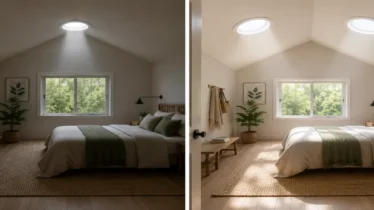
Bedroom glare: sleep, privacy and morning light
Bedrooms need careful daylight control.
A skylight can make a dull bedroom feel brighter and more usable during the day, but it must respect sleep and privacy.
What to check before choosing placement
- Is the room mainly for sleeping, or also for work or study?
- Does anyone sleep late or work shifts?
- Where is the bed?
- Would morning light fall directly over the pillow area?
- Would blinds be needed?
- Is the room already warm in summer?
- Is privacy from side windows a reason for considering overhead daylight?
- Would subtle daylight be enough?
Product thinking
A fixed skylight may suit a larger bedroom, bedroom-office or guest room where stronger daylight is wanted. A tubular skylight or Sky tube may suit smaller bedrooms, dressing areas or spare rooms where soft practical daylight is enough.
A skylight does not always belong above the bed.
In many bedrooms, daylight may be better near the wardrobe, desk, dressing zone or central floor area.
Bathroom glare: mirrors, glass and privacy
Bathrooms can benefit from natural light, especially where small or frosted windows limit daylight.
But bathrooms also contain mirrors, tiles, glass shower screens and reflective surfaces. A skylight placed without care may create brightness in the wrong location.
What to check before choosing placement
- Where is the vanity mirror?
- Is the shower enclosed with glass?
- Does the room have glossy tiles?
- Is the bathroom compact or large?
- Is the main issue daylight, ventilation or both?
- Would a skylight create privacy concerns or solve them?
- Would a tubular skylight provide enough practical daylight?
Product thinking
A tubular skylight or Sky tube may suit a compact bathroom where daylight is the main goal. A fixed skylight may suit a larger bathroom or renovation. A vented skylight may suit some bathrooms where daylight and airflow both matter.
A brighter bathroom can feel fresher, but steam and condensation still need proper ventilation planning.
Living room glare: television, seating and afternoon light
Living rooms often need balanced daylight rather than intense brightness.
A skylight can bring light deeper into a room, especially where a covered deck or eave shades the windows. But living rooms often contain televisions, polished floors, glass tables and seating areas that can be affected by glare.
What to check before choosing placement
- Where is the television?
- Where do people sit most often?
- Does the room already get strong afternoon light?
- Is the darker area behind the seating or beside the dining zone?
- Are floors glossy or reflective?
- Would blinds help control summer brightness?
- Is the goal a design feature or softer daylight balance?
Product thinking
A fixed skylight is often the starting point for living rooms. In some open-plan spaces, two smaller daylight points may create better balance than one large bright opening.
Glare control should be part of placement from the beginning.
A living room should feel easier to use, not harder to relax in.
Hallways, laundries and wardrobes: lower glare risk, but still plan well
Small practical rooms usually have fewer glare issues than living rooms, offices and bedrooms.
Hallways, laundries, wardrobes, pantries and toilets often suit tubular skylights or Sky tubes because they need practical daylight rather than a large skylight feature.
However, placement still matters.
Consider:
- Is the diffuser centred where daylight is needed?
- Is the room long or divided into zones?
- Are there glossy floors or white walls that may amplify brightness?
- Does a laundry also need ventilation planning?
- Would one daylight point be enough, or are multiple points needed?
A tubular skylight can be an excellent solution in these rooms because the daylight is often more diffused and functional.
The goal is quiet improvement, not visual drama.
Blinds: when they are worth considering
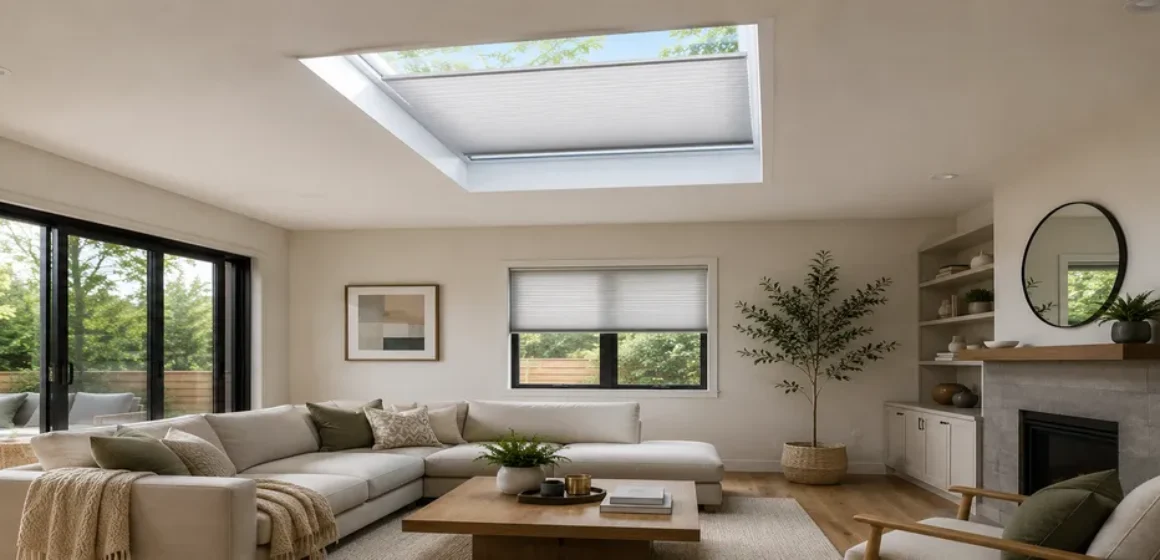
Blinds can give homeowners more control over brightness, privacy and summer comfort.
They may be especially useful in:
- Bedrooms
- Home offices
- Living rooms
- Media rooms
- Rooms with strong summer sun
- Rooms where glare may affect screens
- Rooms where sleep or privacy matters
- Larger fixed or vented skylight installations
Blinds may be less important in some small service spaces, especially where a tubular skylight or Sky tube is used and the goal is practical diffused daylight.
The key is to decide early.
If blinds are likely to be needed, they should be discussed before product selection and installation. Not every product or location will have the same blind options, and access or operation can matter.
A skylight should not leave the homeowner wishing control had been planned earlier.
Glazing and daylight behaviour
Glazing affects how a skylight performs.
Different products may offer different glazing, diffusion or light-control characteristics. For homeowners, the technical details can be discussed during product selection, but the practical questions are straightforward:
- Will the room receive direct or diffused daylight?
- Is glare likely?
- Is summer heat a concern?
- Is privacy important?
- Are blinds or accessories available?
- Does the glazing suit the room’s use?
- Does the product suit the roof pitch and roof type?
A good skylight recommendation should not focus only on bringing in light.
It should consider the quality of that light.
This is especially important in bedrooms, offices, living rooms and kitchens.
Fixed skylight, vented skylight, tubular skylight or Sky tube?
Glare and comfort can influence product choice.
Fixed skylight
Often suitable where stronger daylight and visual openness are wanted.
Best considered for:
- Kitchens
- Living rooms
- Bedrooms
- Offices
- Dining areas
- Larger bathrooms
Blinds, glazing, placement and summer comfort may need careful planning.
Vented skylight
Often considered where daylight and airflow both matter.
Best considered for:
- Bathrooms
- Kitchens
- Upper-level rooms
- Raked-ceiling spaces
- Rooms that feel stuffy
Vented skylights need weather awareness, operation planning and ventilation clarity.
Tubular skylight
Often suitable where practical, diffused daylight is needed in compact or internal rooms.
Best considered for:
- Hallways
- Laundries
- Toilets
- Pantries
- Walk-in wardrobes
- Compact bathrooms
A tubular skylight may reduce the need for larger skylight glare-control measures in rooms where a subtle daylight source is enough.
Sky tube
A Sky tube may suit similar compact spaces where targeted daylight is preferred. It can be useful when the room needs daylight but not a large roof-window feature.
The product should match the room’s light-control needs.
Orientation and time of day
A skylight’s behaviour can change depending on roof orientation and time of day.
The same skylight may behave differently in morning, midday and afternoon light. This matters in rooms used at specific times.
Consider:
- Morning brightness in bedrooms
- Afternoon heat in living spaces
- Midday brightness in kitchens
- Screen glare in offices
- Bathroom use in early morning or evening
- Whether the room is used most in winter, summer or all year
Orientation is one reason a skylight cannot be planned from room photos alone.
The roof and sun path matter too.
A site assessment or detailed review may help confirm the best product and placement.
Summer heat: what a skylight can and cannot control
A skylight can influence summer comfort, but it is only one part of the room.
Heat may also be affected by:
- Roof insulation
- Wall insulation
- Window glazing
- Room orientation
- Ventilation
- Shading
- Blinds or curtains
- Roof colour
- Ceiling height
- Air movement
- Room size
- Existing heat build-up
A skylight should not be blamed for every summer comfort issue, but it should also not be added without considering heat.
For some rooms, blinds, glazing selection, placement or a different daylight product may be important. In other rooms, a tubular skylight or Sky tube may provide enough daylight with less concern than a larger fixed skylight.
The goal is balanced daylight, not uncontrolled brightness.
Ventilation and summer comfort
In some rooms, airflow matters as much as daylight.
A vented skylight may support airflow in suitable rooms, especially where warm air gathers near the ceiling. This may be useful in some kitchens, upper-level rooms, bathrooms, loft spaces and raked-ceiling areas.
However, a vented skylight is not automatically the right answer.
Ask:
- Does the room genuinely need high-level airflow?
- Will the skylight be opened regularly?
- Is the product suitable for the roof and weather exposure?
- Is operation manual or electric?
- Is rain control or accessory planning relevant?
- Does the room still need extraction?
- Will opening it in winter release heat unnecessarily?
Ventilation should be planned for real use, not chosen as a feature that sounds good.
Privacy and blinds
Privacy is one of the reasons homeowners consider skylights.
Overhead daylight can brighten rooms where wall windows face fences, neighbours, driveways or side paths. This can be especially useful in bedrooms, bathrooms, home offices and compact urban homes.
However, privacy still needs thought.
Ask:
- Is the skylight visible from higher neighbouring properties?
- Does the room need light control at night?
- Are blinds needed for bedrooms or bathrooms?
- Is the skylight in a private space or shared living space?
- Would a tubular skylight or Sky tube provide enough daylight with more subtle internal appearance?
A skylight can reduce reliance on side-facing windows, but privacy should still be part of the product and placement decision.
When a tubular skylight or Sky tube may reduce glare concerns
A tubular skylight or Sky tube may be useful when the room needs daylight but not a large skylight feature.
Because the daylight is delivered through a diffuser, it can often feel softer and more practical than a larger roof window style feature.
This may suit:
- Hallways
- Laundries
- Wardrobes
- Toilets
- Pantries
- Compact bathrooms
- Small offices
- Service rooms
A tubular skylight is not the answer for every room. It does not provide a sky view or the same architectural effect as a fixed skylight. But in compact rooms, it may provide the right amount of daylight without unnecessary glare complexity.
This is why product choice should follow the room’s real need.
Common glare-control mistakes
Mistake 1: Thinking about winter only
A skylight should work in summer as well as winter.
Mistake 2: Ignoring screens
Home offices and living rooms need screen glare considered early.
Mistake 3: Placing the skylight over the bed by default
Bedroom placement should consider sleep, blinds and summer comfort.
Mistake 4: Choosing a large skylight when a tubular skylight would suit
Some compact rooms need practical daylight, not a major ceiling feature.
Mistake 5: Forgetting reflective surfaces
Mirrors, glossy benches, tiles and glass can change how light behaves.
Mistake 6: Leaving blinds as an afterthought
If blinds are likely to be needed, discuss them before the product is confirmed.
Questions to ask before choosing a skylight
Before approving a skylight, ask:
- Where will the daylight land?
- Could the skylight create glare?
- Does the room have screens, mirrors or glossy surfaces?
- Is the room used for sleeping, working or watching TV?
- Does the room already get hot in summer?
- Are blinds available or recommended?
- Would a tubular skylight or Sky tube be enough?
- Is a fixed or vented skylight more appropriate?
- Does the room need airflow as well as daylight?
- Does the product suit the roof pitch and roof type?
- Will the placement still work in summer?
These questions help make the decision more complete.
A skylight should be judged by year-round performance, not only by winter appeal.
What to send when asking for advice
For glare and comfort planning, photos are useful.
Send:
- Wide photos of the room
- Ceiling photos
- Photos of the darkest area
- Photos showing desks, beds, screens, mirrors or glossy surfaces
- Photos of windows and what they face
- Ground-level roof photos
- Notes about when the room feels darkest
- Notes about when the room feels brightest or hottest
- Notes about glare, privacy or sleep concerns
- Notes about whether blinds are wanted
- Roof type if known
- Any renovation or re-roofing plans
This helps the skylight specialist understand not only where daylight is needed, but where brightness may need control.
Illustrative example only
A homeowner wants a skylight in a home office because the room feels dull in winter. The desk is positioned against the wall, and the computer screen faces the centre of the room.
A skylight placed directly behind the screen may brighten the room but create glare. A better option may be to shift the skylight placement, consider blinds, or explore whether a tubular skylight or Sky tube could provide softer general daylight.
In another home, a bedroom feels dark during the day, but the bed sits directly under the preferred ceiling location. A fixed skylight may still be possible, but blinds and placement should be discussed before installation.
Both rooms need daylight.
But both need control as well.
The practical takeaway
Good skylight planning is not only about bringing in more light.
It is about bringing in the right light.
A skylight should make a room easier to use in winter without making it uncomfortable in summer. It should improve natural light without causing glare on screens, mirrors, beds or work surfaces. It should suit the room’s use, the roof’s conditions and the homeowner’s need for control.
That may mean a fixed skylight with blinds. It may mean a vented skylight where airflow is useful. It may mean a tubular skylight or Sky tube in a compact room where soft practical daylight is enough.
The best decision balances daylight, comfort and control.
Planning your next step
If you are considering a skylight, include glare, blinds and summer comfort in the early conversation, especially for bedrooms, offices, kitchens and living rooms.
Skylights.co.nz can help you consider whether a fixed skylight, vented skylight, tubular skylight or Sky tube may suit your room, roof type and year-round comfort needs.
To start the process, use the Skylights.co.nz enquiry form:
https://inquiry.skylights.co.nz/inquiry
You may also find these useful:
FAQs
Do skylights cause glare?
Skylights can cause glare if placement, glazing, room use and blinds are not considered. Glare is more likely in offices, bedrooms, living rooms, kitchens and bathrooms with screens, mirrors or reflective surfaces.
How can skylight glare be controlled?
Skylight glare can be managed through careful placement, product choice, glazing, blinds, diffuser-style daylight options and by considering where screens, beds, mirrors and glossy surfaces are located.
Should I get blinds for a skylight?
Blinds may be worth considering for bedrooms, offices, living rooms and rooms that receive strong summer light. They can help control brightness, privacy and comfort depending on the product and room use.
Are tubular skylights less likely to cause glare?
A tubular skylight or Sky tube often provides more diffused, practical daylight through a ceiling diffuser, which may reduce glare concerns in compact rooms. Suitability still depends on placement and room use.
Can a skylight make a room too hot in summer?
A skylight can affect summer comfort depending on size, placement, orientation, glazing, blinds, room insulation and ventilation. This should be considered before installation, especially in bedrooms, offices and living areas.
What information should I send for skylight glare advice?
Send room photos, ceiling photos, roof photos and photos showing screens, beds, mirrors, benches or glossy surfaces. Also explain when the room feels brightest, hottest, darkest or most uncomfortable.