
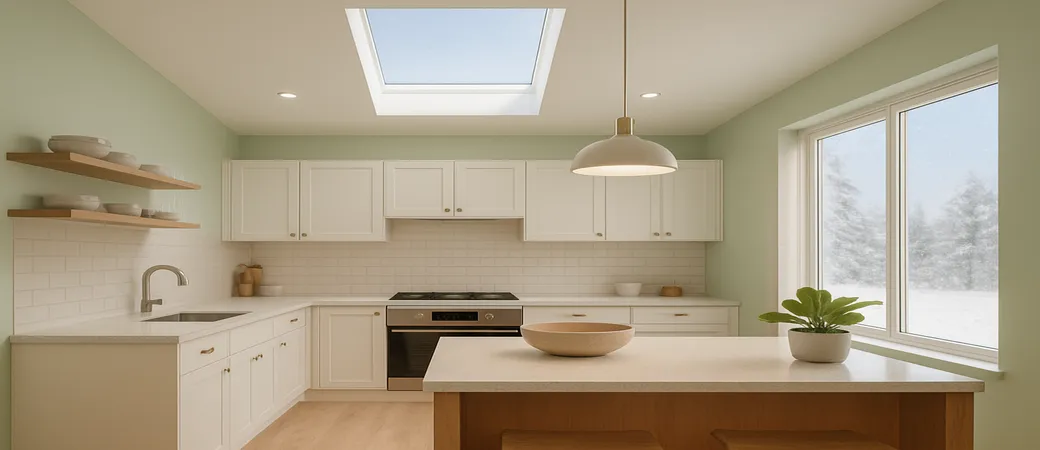
❄️ The Short Answer:
Yes — skylights absolutely work in winter. While the light levels are naturally lower during colder months, modern skylight systems are designed to capture, amplify, and distribute available light efficiently, even on overcast days.
In fact, for many Kiwi homes, skylights are even more valuable in winter — when indoor spaces tend to feel darker, colder, and more confined.
🌤 How Skylights Perform in Winter
- Tubular Skylights:
- Use ultra-reflective shafts to channel light from the roof to your ceiling
- Capture diffuse light on grey days and direct it into the home
- Maintain internal temperature with insulated shafts and domes
- Flat Glass Skylights:
- Still allow ambient daylight to enter from above
- Can be upgraded with double glazing and thermal breaks to reduce heat loss
- Domed or Pyramid Skylights:
- Capture low-angle sun especially well on north-facing roofs
Many homeowners report a noticeable uplift in daylight quality even on rainy or cloudy days — especially in hallways and bathrooms.
🔍 What to Consider in NZ Winters
- Roof Pitch & Orientation: North-facing skylights capture the most sunlight year-round.
- Glazing Matters: Double-glazed units or domes help retain warmth.
- Thermal Performance: Look for models with thermal seals and insulated shafts.
- Humidity Control: Venting models are ideal in bathrooms and laundries to reduce winter condensation.
🧠 Winter Use Case Examples
- Dunedin homeowners installed tubular skylights to counter gloomy hallways — with noticeable results even in mid-winter.
- Wellington villa owners reported reduced electricity usage for lighting after adding a vented skylight in their stairwell.
These aren’t isolated cases — they’re part of a growing trend to maximise daylight as a natural resource during winter.
💬 Want to Winter-Proof Your Home With More Daylight?
We’ll connect you with local experts who can assess your home’s winter light potential.