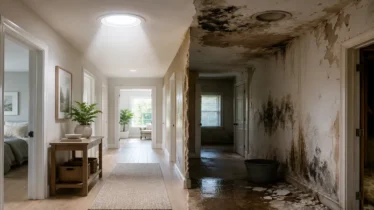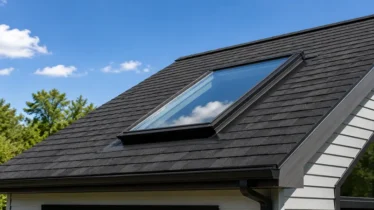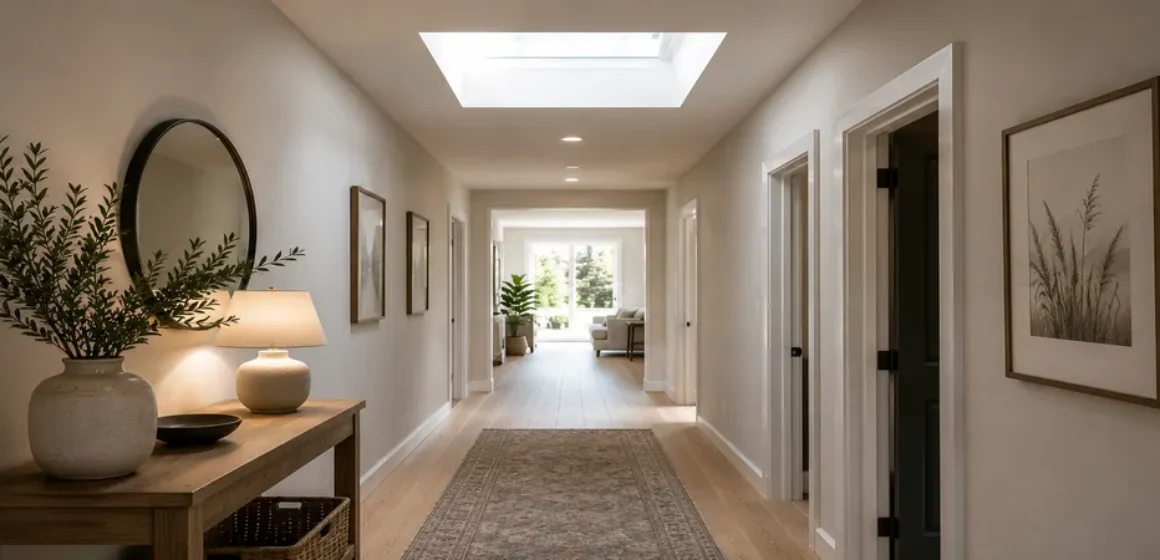
The hallway nobody wants to walk through: fixing the middle of the home before the short days hit
Every home has a space that quietly shapes how the rest of the house feels.
Sometimes it is not the kitchen, the living room or the main bedroom. It is the hallway.
The place everyone walks through but nobody really notices until winter arrives. The place where the light goes on during the day. The place that connects bedrooms, bathrooms, the laundry and the living areas, yet somehow feels separate from all of them.
A dark hallway can make an otherwise good home feel narrower, older and more closed in than it really is.
That is why a dark hallway skylight or sky tube can be one of the most practical daylight upgrades in a New Zealand home. Not because the hallway needs to become a feature. Because the middle of the home should not feel forgotten.
This guide looks at why hallways become so dark, why winter makes the problem more obvious, and how to decide whether a skylight or tubular skylight may be the right solution.
Why hallways are often the darkest part of the home
Hallways usually sit in the centre of the floor plan.
They often have no exterior wall, no proper window and no direct source of daylight. Instead, they borrow light from nearby bedrooms, living areas, glass doors or the front entry.
That borrowed light can work well enough in summer. Doors are open. Curtains are wider. The days are longer. Light moves more easily through the home.
In winter, the pattern changes.
Bedroom doors close. Curtains stay drawn for warmth and privacy. The morning sun is weaker. Cloudy days stretch longer. The hallway begins to show how little natural light it actually receives.
The result is a space that may need artificial lighting even when it is daytime outside.
A homeowner may describe it simply:
“The rooms are fine, but the hallway makes the whole house feel dark.”
That is the hallway problem in one sentence.
The middle-of-home effect
A hallway is not only a passageway. It influences how the home connects.
When the middle of the home is dark, it can make bedrooms feel more closed off. It can make a bathroom feel less inviting. It can make the walk from the living room to the laundry feel dull. It can make the home feel like a collection of separate rooms rather than one connected space.
This is why hallway daylight can create a bigger change than homeowners expect.
You may not spend long periods standing in the hallway. But you move through it constantly.
A brighter hallway can make the home feel:
- More open through the centre
- Easier to move through during the day
- Less dependent on artificial lighting
- More connected between rooms
- Cleaner and fresher in appearance
- More welcoming from the entry or bedroom wing
- Less gloomy during winter mornings
The improvement is often subtle. But because the hallway is used so often, the effect is repeated many times a day.
The hallway light switch test
Before thinking about products, check how often the hallway light is used.
For one week, notice what happens during daylight hours.
Ask yourself:
- Do you turn the hallway light on before 9.00am?
- Is the light still needed around midday on cloudy days?
- Do children or older family members use the light for safety during the day?
- Does the hallway feel darker than the rooms connected to it?
- Does the home feel better when nearby bedroom doors are open?
- Is the hallway darker in winter than the rest of the year?
If the hallway light is used out of habit during the day, the issue may not be the light fitting. It may be the absence of natural daylight.
That is where a skylight or sky tube may be worth exploring.
Why sky tubes often suit hallways so well
A full skylight is not always necessary for a hallway.
Many hallways do not need a large roof window, a view of the sky or a dramatic architectural feature. They simply need daylight delivered to the right part of the ceiling.
This is where a tubular skylight, often called a sky tube, can be a strong option.
A sky tube brings daylight from the roof through a reflective tube and spreads it into the hallway through a ceiling diffuser. From inside the home, the visible part is usually subtle and clean.
For a hallway, this can make sense because:
- The space is often narrow
- The ceiling area may be limited
- A large skylight may feel out of proportion
- The goal is practical daylight, not a design statement
- Privacy is not usually an issue
- The room does not usually need ventilation
- The improvement can affect the centre of the home
A sky tube does not try to turn the hallway into a living room. It simply makes the passageway feel like part of the day.
When a fixed skylight may be better
A fixed skylight may be worth considering if the hallway is wider, longer, more visually prominent or part of an entry space.
For example, a larger skylight may suit:
- A wide central hallway
- A front entry or foyer
- A hallway with higher ceilings
- A stair landing connected to the roofline
- A hallway that forms part of an open-plan transition
- A home where the skylight is intended as a visible design feature
A fixed skylight can create a stronger sense of openness than a sky tube. It may also suit homes where the hallway is not simply a corridor, but a central architectural space.
The trade-off is that a fixed skylight may involve more visual impact, more internal finishing and different roof considerations.
The right choice depends on the hallway’s size, ceiling type, roof position and the outcome you want.
Does a hallway need a vented skylight?
Usually, no.
Most hallways need daylight more than ventilation. They are not typically moisture-producing spaces like bathrooms, kitchens or laundries.
A vented skylight may be worth discussing only if the hallway connects to an upper-level space, stairwell, raked ceiling or area where high-level airflow has a clear purpose. For standard internal hallways, a fixed skylight or sky tube is usually more relevant.
This distinction matters because more features do not automatically mean a better solution.
A hallway skylight should solve the hallway’s actual problem. If the problem is darkness, the solution should focus on daylight.
What causes hallway daylight to fail?
Hallways become dark for several reasons.
No direct windows
Many hallways have no direct external wall. Without a window, the space relies entirely on borrowed light.
Closed doors
Bedroom and bathroom doors often block the light that would otherwise reach the hallway.
Long floor plans
Longer homes, rural homes and older homes can have hallways that stretch deep into the centre of the house.
Extensions
A rear extension, covered deck, garage addition or internal renovation can reduce light to the original hallway.
Small entry glazing
Some homes have a front door or entry window, but it may not provide enough light to reach the middle of the hallway.
Dark finishes
Timber floors, darker carpet, coloured walls or low ceilings can make the hallway feel heavier, but décor is rarely the whole issue.
Winter sun angle
Lower winter sun and shorter daylight hours make borrowed light less reliable.
The best solution depends on which of these factors is causing the problem.
Hallways in older NZ homes
Older New Zealand homes often have strong hallway daylight challenges.
Villas and bungalows commonly have a central corridor with bedrooms on either side. The front rooms may receive decent daylight, but the passageway can remain dim. If the rear of the home has been extended or reconfigured, the original hallway may become even more enclosed.
Mid-century homes may have compact bedroom wings, smaller windows and service areas clustered around internal corridors. Later renovations can sometimes improve living areas while leaving the hallway behind.
In these homes, a hallway sky tube can be especially practical because it introduces daylight without necessarily changing the character of the rooms.
The aim is not to modernise the home aggressively. It is to help the existing floor plan work better.
Hallways in newer homes
Newer homes can also have dark hallways.
Open-plan living does not automatically solve internal daylight. Many modern homes still have bedroom corridors, internal garage entries, powder rooms, walk-in storage zones and long transitions between living and private spaces.
In compact subdivisions, side windows may be limited by neighbouring walls, fences or privacy requirements. In larger homes, the centre of the floor plan can sit far from exterior windows.
A newer home may feel bright in the living area but still have a dark internal spine.
This is why hallway daylight should be assessed by the way the home is used, not by the age of the home.
The safety and comfort factor
A dark hallway is not only an aesthetic issue.
For some households, it can affect comfort and safety.
This is especially relevant for:
- Families with young children
- Older homeowners
- Multi-generational homes
- Homes with steps or level changes
- Narrow hallways
- Hallways connecting bathrooms used at night or early morning
- Homes where the hallway light is left on for visibility
Natural light during the day can make movement through the home feel easier. It can also reduce the need to leave lights on in central areas during daytime hours.
The hallway does not need to become bright like a living room. It needs to feel clear, usable and naturally connected.
What to check before asking for a hallway skylight quote
Before making an enquiry, gather a few simple details.
Take photos
Include:
- A photo looking down the hallway
- A photo from each end of the hallway
- A photo of the ceiling area
- A photo showing nearby rooms or doorways
- A photo of the roof above or near the hallway, if possible
- Any existing ceiling lights, vents or manholes
Note the hallway behaviour
Write down:
- When the hallway feels darkest
- Whether the light is used during the day
- Whether the issue is worse in winter
- Whether nearby rooms provide borrowed light
- Whether the hallway connects to bathrooms, bedrooms, laundry or entry areas
- Whether you want subtle daylight or a stronger skylight feature
Check practical details
If known, note:
- Roof type
- Ceiling type
- Whether there is roof space above
- Whether the hallway sits under a second storey
- Any planned painting, ceiling or roofing work
You do not need all the answers. The purpose is to help the skylight specialist understand the room before recommending a product.
Placement: where should the daylight land?
Placement is critical in a hallway.
A sky tube diffuser or skylight should sit where it improves the hallway’s real problem, not simply where it is easiest to install.
Consider:
- Is the darkest area near the middle of the hallway?
- Does one end receive entry light while the other stays dim?
- Would one diffuser be enough, or is the hallway long enough to need more than one?
- Are there ceiling lights, smoke alarms, vents or manholes to work around?
- Is the hallway narrow, wide, straight or L-shaped?
- Will the daylight improve the connected rooms as well as the hallway?
In some homes, one well-placed sky tube can change the feel of the whole passage. In others, a long hallway may need more detailed planning.
The goal is not just a brighter ceiling. It is a better path through the home.
One sky tube or more than one?
Some hallways need only one daylight point. Others may need more.
A short hallway between bedrooms may be well served by one sky tube. A long central corridor may need two daylight points to avoid one bright patch and one remaining dark end. An L-shaped hallway may need careful placement to spread light where it is actually needed.
The decision depends on:
- Hallway length
- Ceiling height
- Width
- Layout shape
- Roof access
- Existing lighting positions
- How dark the hallway is
- The desired light level
This is where product sizing and placement should be assessed together.
A hallway does not always need the largest possible daylight source. It needs the right daylight distribution.
What a hallway skylight can and cannot do
A hallway skylight or sky tube can:
- Bring natural light into an internal passage
- Reduce the need for daytime artificial lighting in suitable conditions
- Make the centre of the home feel more open
- Help connected rooms feel less cut off
- Improve daily movement through the home
- Make older or narrow hallways feel fresher
It cannot:
- Replace heating or insulation
- Fix moisture issues in nearby bathrooms or laundries
- Guarantee a specific power bill reduction
- Suit every roof or ceiling layout
- Correct unrelated structural or roofing problems
- Provide ventilation unless a vented skylight is specifically installed
Clear expectations lead to better decisions.
The strongest hallway daylight upgrades are practical, not overpromised.
Local NZ conditions that matter
Hallway daylight issues appear across New Zealand, but the reasons can differ by region and home type.
In Auckland, Hamilton and Tauranga, compact sections, boundary shading and covered outdoor areas can reduce borrowed light. In Wellington and coastal areas, homes may stay closed up more often because of wind and weather, making internal darkness more noticeable. In Canterbury, Otago and Southland, colder mornings and lower winter sun can make hallways feel especially flat. In Northland and Bay of Plenty, humidity and shaded interiors can make darker central areas feel less fresh. In rural homes, long floor plans can create internal corridors far from exterior windows.
This is why a hallway skylight recommendation should not be generic. The roof, climate, layout and household use all matter.
Illustrative example only
A family lives in a single-storey home with three bedrooms off a central hallway. The bedrooms have windows, and the living room receives afternoon sun, but the hallway needs the light on most days through winter. The hallway connects the bathroom, laundry and bedrooms, so it is used constantly.
The family first considers repainting the hallway a lighter colour. That may help slightly, but it does not solve the lack of natural light.
A sky tube positioned near the centre of the hallway may be a more targeted solution if the roof and ceiling conditions are suitable.
The result is not a dramatic renovation. It is better than that. The hallway simply stops feeling like the darkest part of the home.
That is the kind of improvement people notice every day.
When a hallway may not be the first priority
A hallway may be dark, but it may not always be the best first skylight location.
Another room may deserve priority if:
- The kitchen is used for long periods and has poor daylight
- The bathroom is both dark and moisture-prone
- A home office is used daily and feels draining
- A living room corner is underused because it is too dim
- A renovation is already planned in another area
The best room for a skylight is the room where daylight will create the greatest everyday value.
That said, hallways often rank higher than homeowners expect because they are used so frequently and affect the feel of the whole floor plan.
The homeowner decision checklist
A hallway may be a strong candidate for a skylight or sky tube if:
- It needs artificial lighting during the day
- It has no direct window
- It sits below or near roof space
- It feels darker in winter
- It connects multiple frequently used rooms
- It makes the home feel closed in
- A large skylight feature is not necessary
- You want practical daylight with a subtle ceiling finish
- Ventilation is not the main issue
- The roof and ceiling layout appear suitable for assessment
If most of these apply, it may be worth requesting advice.
Why the middle of the home deserves attention
Homeowners often focus on feature rooms first.
That is understandable. Kitchens, bathrooms and living rooms carry obvious value. But the middle of the home shapes how those rooms connect.
A dark hallway can make a bright bedroom feel cut off. It can make the bathroom feel less fresh. It can make the route through the house feel less comfortable. It can make the home feel older than it is.
Bringing daylight into the hallway is not about making a passageway beautiful for its own sake.
It is about improving the way the whole home feels in motion.
Planning your next step
If your hallway needs lights on during the day or makes the centre of your home feel closed in, it may be worth exploring whether a skylight or sky tube could help.
Skylights.co.nz can help you consider whether a tubular skylight, fixed skylight or another daylighting option may suit your hallway, roof type and desired outcome.
To start planning your options, use the Skylights.co.nz enquiry form:
https://inquiry.skylights.co.nz/inquiry
You may also find these useful:
FAQs
Is a skylight a good option for a dark hallway?
A skylight can be a good option for some dark hallways, but a tubular skylight or sky tube is often more practical. It can bring daylight into an internal passage without needing a large roof-window feature.
What type of skylight is best for a hallway?
Many hallways suit a sky tube because the goal is usually practical daylight rather than a large skylight. Wider entry halls, landings or feature corridors may suit a fixed skylight depending on roof and ceiling conditions.
Can a sky tube reduce the need for hallway lights during the day?
In suitable homes, a sky tube can reduce the need to switch on hallway lights during daytime hours. The result depends on roof position, tube path, diffuser placement, weather and hallway layout.
Does a hallway skylight provide ventilation?
A standard sky tube or fixed skylight does not provide ventilation. Most hallways mainly need daylight, not airflow. If ventilation is required, a vented skylight would need to be assessed separately.
Can a skylight work in a long hallway?
Yes, but long hallways need careful placement. Some may need more than one daylight point to avoid brightening only one section while leaving the rest dim.
What should I send when asking about a hallway skylight?
Send photos looking down the hallway, the ceiling area, nearby doorways and the roof above or near the hallway if possible. Also note when the hallway feels darkest and whether lights are used during the day.