Why roof pitch matters when choosing a skylight
A skylight decision often starts inside the home.
The hallway is dark. The kitchen bench needs lights on during the day. The bathroom feels enclosed. A bedroom or home office feels dull through winter. From the room below, the question seems simple: where can we bring in more natural light?
But the roof has its own question:
Will this skylight suit the roof pitch?
Roof pitch affects how rainwater moves, how flashings work, which products are suitable and where a skylight can be installed confidently. It can influence whether a fixed skylight, vented skylight, tubular skylight or Sky tube is appropriate. It can also affect the installation method, internal finish, weatherproofing details and whether further assessment is needed before a final quote.
This guide explains skylight roof pitch in plain English for New Zealand homeowners. You do not need to know technical roofing language before enquiring, but understanding why roof pitch matters can help you ask better questions and avoid poor assumptions.
What is roof pitch?
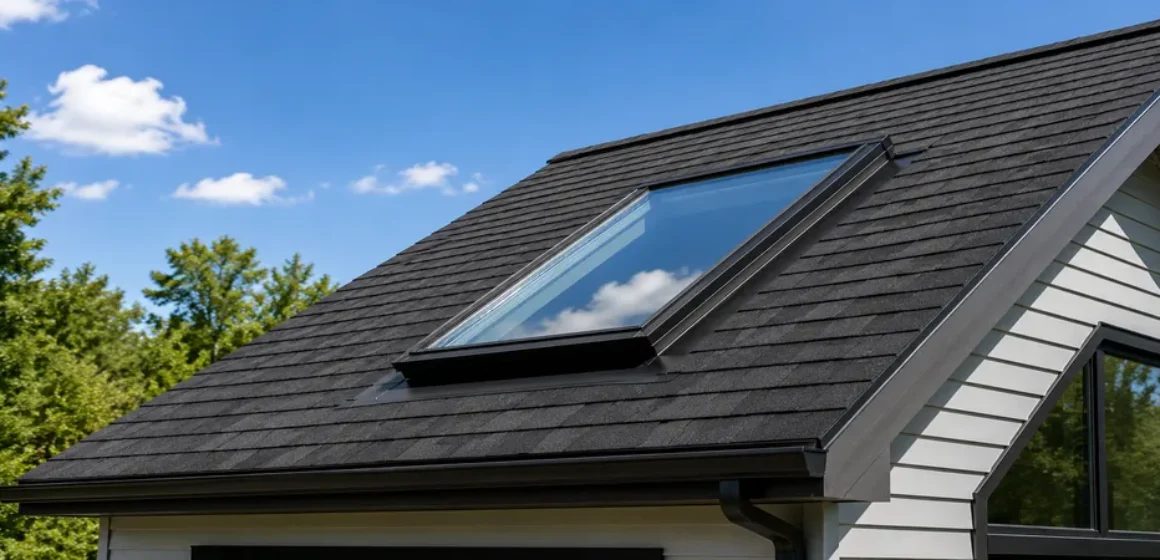
Roof pitch describes the steepness or slope of a roof.
A steeper roof sheds water faster. A lower-pitch roof moves water more slowly. Some roofs appear almost flat, while others have a more noticeable angle.
For skylight work, pitch matters because a skylight becomes part of the roof system. It is not just an interior daylight feature. It must be installed in a way that respects how water moves across the roof.
A skylight that is suitable for one roof pitch may not be suitable for another. Flashings, product type, placement and installation method all need to match the roof conditions.
A homeowner does not need to calculate the pitch before enquiring, but it helps to understand this principle:
The lower the roof pitch, the more carefully water management needs to be considered.
That does not mean low-pitch roofs cannot have skylights. It means product suitability and flashing detail become especially important.
Why pitch affects water movement
Rainwater does not behave the same way on every roof.
On a steeper roof, water moves down the roof more quickly. On a lower-pitch roof, water moves more slowly and can be more affected by roof profile, wind, debris, heavy rain and nearby roof features.
This matters because a skylight interrupts the roof surface. Water needs to be directed around it safely.
Roof pitch affects:
- How quickly water drains away
- How much water may sit around roof penetrations
- Whether a product is suitable for the roof
- Which flashing system is required
- Whether the skylight can be installed in the preferred location
- How nearby roof valleys, ridges or gutters may influence water flow
- Whether wind-driven rain needs extra consideration
A skylight should not fight the roof’s natural water path.
It should be integrated into it.
Flashing and roof pitch work together
Flashing is one of the most important parts of a skylight installation.
In simple terms, flashing helps weatherproof the skylight by directing water around the roof opening. It is not just a tidy trim. It is part of the roof’s water-management system.
Roof pitch influences flashing because water behaves differently depending on the roof angle.
A flashing system must suit:
- Roof pitch
- Roof material
- Roof profile
- Product type
- Skylight size
- Placement
- Local weather exposure
- Manufacturer requirements
- Installation method
A skylight can be high quality, but if the flashing does not suit the roof pitch and profile, the installation may not perform as expected.
This is why homeowners should not think of flashing as an optional detail.
It is central to the job.
Product suitability: not every skylight suits every pitch
Different skylight and daylight products have different suitability requirements.
A fixed skylight may have pitch requirements. A vented skylight may have different considerations because it opens. A tubular skylight or Sky tube still needs a roof collector and flashing that suit the roof angle and material.
This affects product choice.
A product that works well on a steeper metal roof may not be the right choice for a lower-pitch roof. A roof window suited to a raked ceiling may not suit every roof shape. A tubular skylight may be practical in one compact room but still needs roof pitch and flashing reviewed.
The right question is not only:
“Can this product bring in enough light?”
It is:
Is this product suitable for this roof pitch, roof type and room outcome?
A responsible recommendation should answer both.
Low-pitch roofs need extra care
Low-pitch roofs are common in many New Zealand homes, especially in certain additions, modern designs, lean-to sections, verandas, covered decks and some older renovated areas.
A lower-pitch roof can still be suitable for daylighting, but it needs careful review.
Why?
Because water moves more slowly. Heavy rain, wind-driven rain, leaf debris and roof profile can all affect how water behaves around openings and flashings.
A low-pitch roof may require:
- Specific product selection
- Suitable flashing systems
- Careful placement away from problematic roof areas
- Review of water flow from larger roof catchments
- Assessment of nearby valleys, gutters or junctions
- Extra caution around existing roof condition
- A site visit before final confirmation
The key is not to assume.
A low-pitch roof should be assessed before a skylight option is treated as final.
Steeper roofs still need proper planning
A steeper roof may shed water faster, but that does not mean skylight planning can be casual.
Steeper roofs still require:
- Correct product selection
- Correct flashing
- Safe roof access
- Suitable placement
- Roof condition review
- Structural and ceiling cavity assessment
- Internal finishing planning
- Consideration of wind and exposure
A steep roof can also create practical installation challenges because access may be more difficult. In some cases, height, pitch and site conditions may affect safety planning, installation timing or equipment requirements.
Roof pitch is not only about water.
It also affects buildability.
Roof pitch and placement
The ideal skylight position from inside the room may not always be the best position on the roof.
For example, the kitchen bench may need daylight in one location, but the roof above that area may have a valley, low-pitch section, solar panel, vent, ridge, difficult flashing area or unsuitable water path.
Placement needs to balance:
- Where the room needs daylight
- Where the roof can safely accept the skylight
- How water will move around the skylight
- Whether the flashing can work properly
- Whether roof framing and services allow the location
- Whether internal finishing will look right
- Whether glare, privacy or ventilation matters
This is why skylight placement should not be decided from inside the room alone.
The roof has a vote.
Roof pitch and different roof materials
Pitch also interacts with roof material.
New Zealand homes may have corrugated metal, long-run metal, concrete tiles, clay tiles, asphalt shingles, membrane roofs or other roofing systems. Each roof type has its own profile, water movement and flashing considerations.
A pitch that is suitable for one roofing system may need a different approach with another.
Metal roofs
Metal roofs are common across New Zealand. The roof profile, rib direction, pitch and flashing system all matter. Water needs to be managed along the roof profile without creating weak points around the skylight.
Tile roofs
Tile roofs require careful flashing and integration with the tile profile. Pitch, tile type and roof condition can influence product and installation planning.
Asphalt roofs
Asphalt shingle roofs need product and flashing compatibility reviewed. The roof pitch, shingle condition and water path all matter.
Membrane or very low-slope roofs
Membrane or low-slope roof areas may require specialist assessment. Product suitability and waterproofing details are especially important.
The roof type and roof pitch should be considered together, not separately.
Roof pitch and fixed skylights
A fixed skylight brings daylight into the room but does not open.
It may suit kitchens, living rooms, bedrooms, home offices, dining areas and larger bathrooms where the main goal is natural light.
For fixed skylights, roof pitch affects:
- Product suitability
- Flashing choice
- Water drainage around the unit
- Internal light well design
- Placement possibilities
- Glare and daylight angle
- Blinds or accessories if needed
A fixed skylight on the wrong pitch or with unsuitable flashing can create unnecessary risk.
A fixed skylight on the right roof pitch, with correct product and flashing selection, can provide a strong daylight result.
The pitch check is part of making the skylight suitable, not a minor technicality.
Roof pitch and vented skylights
A vented skylight opens for airflow.
This can be useful in bathrooms, kitchens, upper-level rooms and raked-ceiling spaces where daylight and ventilation both matter.
Roof pitch matters for vented skylights because the product needs to operate within suitable roof conditions. The opening function also makes weather awareness more important.
Consider:
- Is the product suitable for the pitch?
- Is the flashing suitable for the roof type?
- Is wind-driven rain a concern?
- Will the homeowner operate the skylight sensibly?
- Is the skylight within reach, or will it need controls?
- Is a rain sensor or accessory relevant, depending on product options?
- Does the room still need extraction or separate ventilation?
A vented skylight should be chosen for a genuine airflow need, not simply because it sounds more complete.
Pitch and weather exposure should be part of that decision.
Roof pitch and tubular skylights or Sky tubes
A tubular skylight or Sky tube may be suitable for hallways, laundries, toilets, wardrobes, pantries, compact bathrooms and internal rooms.
Even though the visible interior finish may be a simple ceiling diffuser, the roof still matters.
Roof pitch affects:
- Roof collector suitability
- Flashing requirements
- Water movement around the roof penetration
- Tube angle and path
- Placement of the roof collector
- Distance between roof collector and ceiling diffuser
- Whether bends are required
- Installation access and weatherproofing
A tubular skylight may be a practical daylight solution for compact rooms, but it is still a roof installation.
The roof collector must be suitable for the pitch and roof material.
What if you do not know your roof pitch?
Most homeowners do not know their roof pitch.
That is normal.
You do not need to calculate it before submitting an enquiry. Helpful information can still be provided through photos and plain-English notes.
Useful things to send include:
- Ground-level photos of the roof above or near the room
- A wider photo of the roofline
- Photos showing roof material and profile
- The room location inside the home
- Whether the room is single-storey, upstairs or under another level
- Whether the roof appears low, medium or steep
- Any known roof type or recent roof work
- Any existing leaks, stains or roof concerns
A site visit or professional assessment can confirm roof pitch where needed.
The goal is not for the homeowner to become a roofer.
The goal is to provide enough context for the right next step.
Roof pitch and water catchment
A skylight location is affected not only by the local roof pitch, but also by where water comes from.
Some roof areas receive more water than others because a larger roof section drains toward them. Valleys, hips, ridges and gutters all influence water flow.
A skylight should generally avoid locations where water flow is concentrated or where flashing would be more difficult than necessary.
Important questions include:
- Is the skylight below a large roof catchment?
- Is there a valley above or beside it?
- Is it near a gutter, ridge or roof junction?
- Does water already collect or overflow in that area?
- Are there leaves or debris from nearby trees?
- Is the roof low pitch in that section?
Water catchment is one reason a preferred interior placement may need adjustment.
The best skylight location respects how the roof drains.
Roof pitch and wet or exposed regions
In wetter, windier or coastal areas, roof pitch becomes even more important.
Heavy rain and wind-driven rain can test roof penetrations more strongly. Coastal exposure can also affect durability considerations. In high-rainfall regions, roof condition, flashing and installation timing deserve careful attention.
This does not mean skylights should be avoided in rainy regions.
It means the planning should be more careful.
A skylight in an exposed location should consider:
- Roof pitch
- Roof profile
- Product suitability
- Flashing detail
- Wind-driven rain
- Roof condition
- Safe access
- Weather window for installation
- Maintenance around gutters and debris
Wet weather does not automatically rule out skylights.
It raises the importance of correct specification and installation.
Roof pitch and internal light quality
Roof pitch can also influence how daylight enters the room.
The skylight angle, orientation and placement can affect whether the room receives softer diffused light, stronger direct light at certain times, or daylight that needs to be controlled with blinds.
This matters in:
- Home offices where screen glare is a concern
- Bedrooms where sleep and summer comfort matter
- Kitchens with reflective benchtops
- Living rooms with televisions or polished floors
- Bathrooms with mirrors or glass screens
Pitch is not the only factor. Orientation, skylight size, glazing, roof shape and room layout also matter.
But pitch is part of how the skylight behaves.
Good skylight planning considers both weather performance and daylight quality.
Roof pitch and internal finishing
When a fixed skylight is installed above a flat ceiling, the roof pitch can affect the internal light well.
A light well is the shaft or lined opening that connects the roof skylight to the ceiling below. The shape, depth and angle of that light well can affect how the skylight looks and how light spreads.
A steeper or more complex roofline may influence:
- Light well depth
- Light well shape
- Plastering requirements
- Painting requirements
- Ceiling repair scope
- Internal appearance
- How evenly light spreads into the room
This is why homeowners should ask whether internal finishing is included.
A skylight quote should be clear about what happens inside the room, not only on the roof.
Roof pitch and installation timing
Roof pitch can also affect installation planning.
Steeper roofs may require more careful access and safety planning. Low-pitch roofs may require extra care around water protection and weather timing. Wet or windy conditions can affect roof safety and installation quality.
A responsible installation should consider:
- Safe roof access
- Weather forecast
- Roof pitch
- Product handling
- Flashing work
- Temporary protection if needed
- Interior protection
- Installer safety
If weather causes delays, that is not necessarily poor service.
For roof work, waiting for suitable conditions can protect the home and the installation quality.
Common pitch-related mistakes
Mistake 1: Assuming any skylight suits any roof
Products and flashings have suitability requirements. Roof pitch can limit or influence the right choice.
Mistake 2: Choosing placement from inside only
The room may suggest one location, but the roof pitch and water path may suggest another.
Mistake 3: Treating flashing as a generic item
Flashing must suit roof pitch, roof material, profile and product type.
Mistake 4: Ignoring low-pitch roof risks
Low-pitch roofs need careful product and flashing review because water moves more slowly.
Mistake 5: Forgetting roof condition
Pitch matters, but so does roof age, wear, corrosion, broken tiles, previous repairs or existing leaks.
Mistake 6: Overlooking internal finishing
Roof pitch may affect light well design and internal finishing requirements.
Questions to ask before choosing a skylight
Before accepting a skylight recommendation, ask:
- Is this product suitable for my roof pitch?
- What roof type and profile do I have?
- What flashing system will be used?
- Is the proposed location suitable for water flow?
- Are there valleys, gutters, ridges or roof junctions nearby?
- Is the roof condition suitable for installation?
- Is a fixed skylight, vented skylight, tubular skylight or Sky tube most appropriate?
- Will the pitch affect internal finishing or light well design?
- Is a site visit needed to confirm details?
- Are any roof repairs or access requirements excluded?
These questions help keep the project grounded.
A good provider should be able to explain the pitch issue clearly without overwhelming the homeowner.
What to send when enquiring
To help assess roof pitch and suitability, send:
- Photos of the room from several angles
- A photo of the ceiling area
- Photos of the roof above or near the room from ground level
- A wider exterior photo showing roof shape
- A close-enough roof photo showing material and profile, if safe
- Photos of valleys, gutters, vents or solar panels near the area
- Notes about the room location in the home
- Any known roof details
- Any known leaks, stains or roof concerns
- Whether the roof is due for repair or replacement
Do not climb onto the roof for photos.
Ground-level images are enough to begin the conversation.
Illustrative example only
A homeowner wants a fixed skylight above a kitchen bench. From inside, the preferred location makes sense. It is where the daylight should land.
From the roof, however, that location may sit near a low-pitch section and close to a roof junction where water movement is more complex. The skylight may still be possible, but the placement, product or flashing system may need to be adjusted.
In another home, a dark hallway may be a good candidate for a tubular skylight. The ceiling diffuser location is clear, but the roof collector needs to be placed on a suitable part of the roof where the pitch, flashing and tube path all work together.
Both examples show the same point.
Roof pitch does not automatically stop a skylight project.
It shapes the right solution.
The practical takeaway
Roof pitch matters because skylights are part of the roof.
It affects water movement, flashing, product suitability, placement, installation safety, internal finishing and long-term confidence.
The room tells you why daylight is needed.
The roof pitch helps decide how that daylight can be delivered properly.
A good skylight decision should bring both sides together:
- What does the room need?
- What does the roof allow?
- Which product and placement suit both?
When those questions are answered clearly, the skylight decision becomes stronger.
Planning your next step
If you are considering a skylight, roof pitch should be part of the early conversation, especially where the roof is low, complex, older or exposed to heavy weather.
Skylights.co.nz can help you consider whether a fixed skylight, vented skylight, tubular skylight or Sky tube may suit your room, roof type and roof pitch.
To start the process, use the Skylights.co.nz enquiry form:
https://inquiry.skylights.co.nz/inquiry
You may also find these useful:
FAQs
Why does roof pitch matter for skylights?
Roof pitch matters because it affects how rainwater moves across the roof, which products are suitable, what flashing is needed, where the skylight can go and how the installation should be planned.
Can skylights be installed on low-pitch roofs?
Skylights may be possible on some low-pitch roofs, but product suitability, flashing, water flow, roof condition and placement need careful assessment. Low pitch should not be guessed.
Do I need to know my roof pitch before asking for a skylight quote?
No. You do not need to know your roof pitch before enquiring. Ground-level roof photos, room photos and known roof details can help start the assessment. A site visit may confirm pitch where needed.
Does roof pitch affect tubular skylights?
Yes. A tubular skylight or Sky tube still needs a roof collector and flashing that suit the roof pitch and material. The tube path between roof and ceiling also needs to be workable.
Does roof pitch affect skylight flashing?
Yes. Flashing must suit the roof pitch, roof type, roof profile and skylight product. Correct flashing helps direct rainwater around the skylight and is central to weatherproof installation.
Can roof pitch affect where a skylight is placed?
Yes. The preferred interior location may need to be adjusted if the roof pitch, water flow, valleys, gutters, roof junctions, solar panels or framing make the original location unsuitable.