One skylight or two? How to decide when a room needs more daylight coverage
One skylight can change a room.
But one skylight is not always the right answer.
Some rooms need a single well-placed daylight source. Others need daylight spread across a longer, deeper or more awkward space. A long hallway may stay dark at one end if only one diffuser is used. A large open-plan kitchen and living area may need more than one daylight point to avoid one bright patch and one unchanged zone. A bathroom may need one skylight, while the connected hallway may need a separate tubular skylight or Sky tube.
The question how many skylights do I need is not answered by room size alone.
It depends on the room’s shape, how the space is used, where the daylight needs to land, what roof space allows, and whether the goal is subtle daylight, task-area brightness or a stronger visual transformation.
This guide explains how New Zealand homeowners can think through one skylight versus two or more before requesting a quote.
The simple answer: start with the daylight problem
The best skylight plan starts with the room’s actual daylight problem.
Ask:
- Is the whole room dark, or only one part?
- Is the room long, deep, narrow, open-plan or L-shaped?
- Is the darkest area where people actually use the room?
- Does one end already receive daylight from windows?
- Would one skylight create a bright spot rather than balanced daylight?
- Is the goal task light, general daylight or visual openness?
- Would two smaller daylight points work better than one larger one?
- Does the roof and ceiling layout allow the preferred placement?
A single skylight may be enough if the room has one clear daylight target.
More than one may be worth considering if the room has multiple dark zones, a long layout, or different areas needing daylight for different reasons.
The right answer is about coverage, not just quantity.
Why one larger skylight is not always better
It can be tempting to assume that one larger skylight will solve everything.
Sometimes it can. In other cases, one large skylight may create an uneven result.
A large skylight may brighten the centre of the room but leave the far end dark. It may create glare over one area without helping the task zone. It may look visually heavy in a compact space. It may also be limited by roof framing, roof pitch, roof profile or internal finishing requirements.
Two smaller daylight points can sometimes provide better distribution than one larger opening.
This can be especially useful in:
- Long hallways
- Open-plan rooms
- Kitchens with separate work zones
- Large bathrooms
- Living rooms with deep floor plans
- Bedrooms with desk and wardrobe zones
- Laundries or service areas connected to hallways
- Internal rooms where daylight needs to travel through more than one space
The best result is not the brightest single point.
It is daylight where the room needs it.
The “bright patch” problem
One of the most common skylight planning mistakes is creating a bright patch.
A bright patch happens when daylight lands strongly in one area, but the room’s actual problem remains partly unsolved.
Examples include:
- A hallway with one bright end and one dark centre
- A kitchen where the floor is bright but the bench remains in shadow
- A living room with light near the window side but a dark seating area
- A bathroom with daylight near the door but a dim vanity or shower zone
- An office with brightness behind the screen but poor light in the working area
- A bedroom with light over the bed but no daylight near the wardrobe or desk
This is why placement and coverage must be considered together.
A skylight should not simply add brightness. It should improve the part of the room that matters.
Room shape matters
Room shape is one of the biggest factors in deciding how many skylights may be needed.
Square or compact rooms
A single skylight, tubular skylight or Sky tube may be enough if the room is compact and the daylight can spread reasonably through the space.
Common examples:
- Small bathroom
- Laundry
- Toilet
- Walk-in wardrobe
- Compact bedroom
- Pantry
- Small office
Long rooms
Long rooms often need more careful coverage. One daylight source may leave one end under-lit.
Common examples:
- Hallways
- Galley kitchens
- Long laundries
- Open-plan kitchen and dining areas
- Living rooms with deep layouts
L-shaped rooms
L-shaped rooms may have one section that receives daylight and another that remains dark. One skylight may not reach around the corner visually.
Common examples:
- Hallways with turns
- Kitchen and scullery combinations
- Living and dining layouts
- Bedroom plus study nook
Open-plan rooms
Open-plan areas often have multiple zones. The kitchen, dining and living areas may need different daylight outcomes.
In these spaces, the question is not simply “one or two?”
It is “which zones need daylight, and why?”
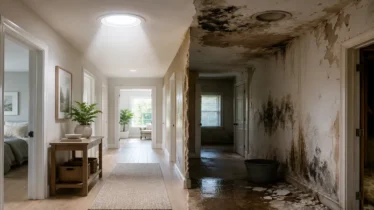
The hallway example: one diffuser or two?
Hallways are one of the clearest examples of the one-versus-two decision.
A short hallway may only need one tubular skylight or Sky tube diffuser. If the diffuser is placed near the darkest central section, it may change how the whole passage feels.
A long hallway may be different.
One diffuser placed at one end may not carry enough daylight through the entire passage. It may create a brighter patch while leaving the other end flat. In that case, two smaller daylight points may provide a more even result.
Consider one daylight point when:
- The hallway is short
- The darkest area is central
- One diffuser can reach the key area
- The hallway already receives some borrowed light at one end
Consider two daylight points when:
- The hallway is long
- It has more than one dark section
- It turns a corner
- It connects several bedrooms or service rooms
- One end remains dark even when the other is bright
The goal is not to over-light the hallway.
The goal is to make the centre of the home feel naturally connected.
The kitchen example: one skylight or separate daylight zones?
Kitchens need daylight where work happens.
A single fixed skylight may be enough if the main issue is one dark island, bench or preparation area. But some kitchens have multiple daylight needs.
For example:
- The island is dark
- The scullery has no daylight
- The pantry needs lights during the day
- The dining edge feels flat
- A covered deck shades the whole kitchen side
In this case, one skylight over the island may improve the main work zone, but it may not solve the pantry or scullery.
A combined approach may be better.
This could mean a fixed skylight for the kitchen and a tubular skylight or Sky tube for the pantry or scullery, depending on roof and ceiling conditions.
Consider one skylight when:
- There is one clear dark work zone
- The room is compact or balanced
- The skylight can reach the main bench or island
- Existing windows support the rest of the room
Consider more than one daylight source when:
- The kitchen has multiple zones
- A pantry or scullery is also dark
- The room is long or open-plan
- One skylight would create uneven light
- Daylight needs to support both working and circulation areas
The best kitchen result comes from lighting the way the kitchen is actually used.
The bathroom example: one skylight may be enough, but not always
Many bathrooms need only one daylight source.
A compact bathroom may be well served by a tubular skylight, Sky tube, fixed skylight or vented skylight depending on whether the main need is daylight, airflow or a stronger visual feature.
Larger bathrooms may need more careful planning.
For example, the vanity may be dark, the shower may feel enclosed, and the room may have a separate toilet or dressing zone nearby. One skylight may improve the centre of the bathroom but not the whole space.
Consider one skylight when:
- The bathroom is compact
- The main issue is general daylight
- The daylight can reach the vanity or central floor area
- Ventilation is handled separately or by a suitable vented unit
Consider more than one daylight source when:
- The bathroom is large
- The layout is divided into zones
- A separate toilet or dressing area is also dark
- The shower and vanity are far apart
- The room is part of a renovation and daylight can be planned early
Bathroom planning should also separate daylight from ventilation.
Two skylights will not solve steam if the ventilation problem is not addressed.
The living room example: balance matters
Living rooms often need daylight balance rather than a single dramatic spot.
A room with windows on one side may be bright near the glass and dull at the back. A covered deck may shade the living area. A deep open-plan room may have a bright dining area and a dark lounge corner.
One fixed skylight can be effective if it brings daylight deeper into the room where side windows do not reach.
But in larger or longer living areas, two skylights may create a better spread.
Consider one skylight when:
- The living room has one clear dark zone
- The room is not too deep or long
- A single skylight can improve the seating or central area
- The goal is a focused daylight feature
Consider two skylights when:
- The room is large or open-plan
- There are two under-lit zones
- One skylight would create uneven brightness
- The room has separate living and dining areas
- Furniture layout means daylight is needed in more than one place
Glare must also be considered.
More skylights do not automatically mean better comfort. Placement, orientation, glazing and blinds may matter.
The bedroom and office example: avoid solving one problem and creating another
Bedrooms and home offices require careful daylight control.
One skylight may be enough if the room has one main daylight need, such as a wardrobe area, desk zone or general dullness.
More daylight sources may be useful in larger rooms, but only if they do not create unwanted glare, sleep disruption or summer heat.
Consider one skylight or tubular skylight when:
- The room is compact
- There is one clear dark area
- The goal is gentle daylight
- Sleep, privacy and glare can be managed
Consider more than one daylight source when:
- The room is large
- It has a separate office, dressing or sitting area
- The daylight needs are spread across the room
- A renovation allows careful planning
For home offices, screen placement is especially important.
Two skylights that create glare are not better than one well-placed skylight that supports work comfortably.
Tubular skylights and Sky tubes: when multiple points make sense
Tubular skylights and Sky tubes are often used in compact or internal spaces.
A single diffuser may be enough for a small room. Multiple diffusers may be useful when the space is longer, divided or connected to several small rooms.
Examples include:
- Long hallways
- Hallway plus laundry
- Bathroom plus separate toilet
- Pantry plus scullery
- Walk-in wardrobe plus dressing area
- Internal service zones
- Dark stair landings
The benefit of multiple tubular daylight points is distribution.
Rather than forcing one large feature into a small or awkward area, separate ceiling diffusers may deliver daylight where it is needed.
However, each diffuser still needs a workable roof collector, tube path and ceiling location.
Multiple points should be planned, not added casually.
Fixed skylights: when two smaller units may be better than one larger unit
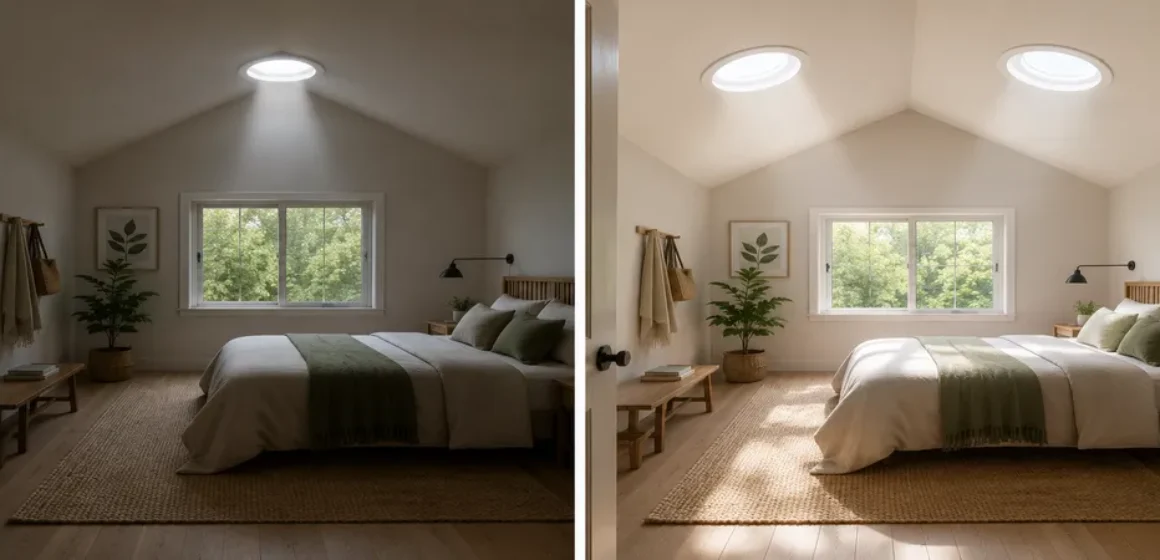
In some rooms, two smaller fixed skylights may create a more balanced result than one large skylight.
This may apply to:
- Long kitchens
- Open-plan living areas
- Large bathrooms
- Raked-ceiling rooms
- Dining and living combinations
- Rooms with two separate daylight targets
Two smaller skylights may:
- Spread daylight more evenly
- Reduce the bright-patch effect
- Support separate room zones
- Look more balanced in some ceiling layouts
- Work better with roof framing in certain cases
But this is not automatic.
Two units may also increase cost, roof penetrations, flashing requirements and internal finishing. The roof and ceiling structure must be assessed properly.
The right number is the one that gives the best room result with sensible roof planning.
When one skylight is the better choice
More is not always better.
One skylight may be the better choice when:
- The room is compact
- The daylight problem is focused
- The roof and ceiling path are straightforward
- A single skylight can reach the key area
- The room does not need balanced lighting across multiple zones
- Budget or scope should stay focused
- Additional skylights would add complexity without enough benefit
- Glare or summer heat needs to be limited
A well-placed single skylight can be a strong, efficient solution.
The goal is not to maximise quantity.
It is to solve the room properly.
When more than one skylight may be worth considering
More than one skylight or daylight point may be worth considering when:
- The room is long or deep
- The layout has more than one dark zone
- A hallway turns a corner
- An open-plan room has separate kitchen, dining and living areas
- A large bathroom has separated zones
- A kitchen has both a dark island and a dark scullery
- A single skylight would create uneven light
- Multiple smaller daylight points would be more balanced
- The renovation stage makes planning easier
- The roof and ceiling layout allow it safely
The phrase “more than one skylight” does not always mean two identical products.
A room may need one fixed skylight and one tubular skylight. A hallway may need two tubular skylight diffusers. A kitchen may need a fixed skylight over the bench and a Sky tube in the pantry.
The best combination depends on the room.
Roof space and framing can change the answer
Even when the room suggests two skylights, the roof may limit what is practical.
Roof and ceiling factors include:
- Rafters or trusses
- Roof pitch
- Roof type
- Flashing requirements
- Roof valleys, hips or ridges
- Solar panels
- Vents or flues
- Wiring
- Plumbing
- Ducting
- Insulation
- Ceiling cavity depth
- Internal finishing requirements
- Safe access
A room may benefit from two daylight points, but one location may be unsuitable because of framing, services or roof features.
In that case, the plan may need adjusting.
This is why the best answer to “how many skylights do I need?” often comes after room and roof assessment, not before.
Cost considerations: more units, more scope
Adding a second skylight or daylight point can improve coverage, but it can also increase scope.
Potential added considerations include:
- Additional product cost
- Additional flashing
- More roof work
- More internal finishing
- More ceiling penetrations
- More installation time
- Access or safety requirements
- Electrical or ceiling layout adjustments
- Increased coordination with other trades
This does not mean a second skylight is a bad idea.
It means the value should be clear.
If two skylights solve the room properly, they may be worth it. If the second unit only adds marginal benefit, one well-placed skylight may be the smarter choice.
The quote should make the difference clear.
The daylight coverage framework
Use this framework before making an enquiry.
Step 1: Identify the room type
Kitchen, bathroom, hallway, living room, bedroom, office, laundry, pantry or another space.
Step 2: Identify the daylight target
Where does the light need to land?
Examples:
- Kitchen bench
- Hallway centre
- Bathroom vanity
- Laundry work area
- Office desk zone
- Living room seating area
- Bedroom wardrobe side
Step 3: Identify the room shape
Is it compact, long, deep, L-shaped, open-plan or divided into zones?
Step 4: Identify whether one source can reach the target
Would a single skylight, tubular skylight or Sky tube improve the area that matters?
Step 5: Identify whether multiple zones need light
If there are two or more important dark areas, multiple daylight points may be worth considering.
Step 6: Check roof and ceiling reality
The best room plan still needs to work with the roof, framing, pitch, flashing and roof space.
This framework keeps the decision practical.
What to send when asking how many skylights you need
Photos are especially useful when deciding between one or more skylights.
Send:
- Wide photos of the room
- Photos from both ends of long spaces
- Ceiling photos
- Photos of each dark area
- Photos showing room zones, such as kitchen and dining
- Photos of windows and what they face
- Ground-level roof photos above or near the room
- Notes about how the room is used
- Notes about where daylight is needed most
- Any renovation or re-roofing plans
For long hallways, photograph the hallway from both ends.
For open-plan rooms, photograph the kitchen, dining and living zones separately.
For bathrooms, show vanity, shower and ceiling layout.
The more clearly the dark zones are shown, the easier it is to recommend the right number and type of daylight points.
Common mistakes to avoid
Mistake 1: Assuming one large skylight is always better
One large unit may create a bright patch while leaving other areas under-lit.
Mistake 2: Adding multiple skylights without a clear reason
More skylights should solve a real coverage problem, not simply add more light.
Mistake 3: Ignoring placement
The number of skylights matters less than where daylight lands.
Mistake 4: Forgetting roof constraints
Roof pitch, framing, flashings, solar panels, ducts and services can all affect feasibility.
Mistake 5: Treating all rooms the same
A hallway, kitchen, bathroom and living room need different daylight strategies.
Mistake 6: Ignoring glare and summer comfort
More daylight is not always better if it creates glare, heat or discomfort.
Illustrative example only
A homeowner has a long central hallway. The hallway has no direct window and needs lights on during the day. One end receives some borrowed light from the living room, but the centre and bedroom end remain dark.
A single tubular skylight diffuser placed near the living-room end may not solve the problem. One diffuser placed closer to the centre may help more. If the hallway is long enough, two diffusers may provide better coverage, depending on roof and ceiling conditions.
In another home, an open-plan kitchen and living area feels dark. The main issue is actually the kitchen bench, not the whole room. In that case, one well-placed fixed skylight over the working area may be enough.
Both homes need daylight.
The number of skylights depends on where the daylight is needed.
The practical takeaway
The answer to “how many skylights do I need?” is not simply one, two or more.
The answer depends on coverage.
One skylight may be perfect for a compact bathroom, small bedroom, kitchen bench or short hallway. Two or more daylight points may be better for a long hallway, deep living room, open-plan space or room with multiple dark zones.
The best plan considers:
- Room use
- Room shape
- Daylight target
- Product type
- Placement
- Roof space
- Roof pitch
- Flashing
- Glare and comfort
- Budget and scope
A skylight plan should not aim for the most units.
It should aim for the best daylight result.
Planning your next step
If you are unsure whether one skylight is enough or whether your room needs more daylight coverage, start by identifying the room’s darkest zones and how the space is used.
Skylights.co.nz can help you consider whether one fixed skylight, multiple skylights, a tubular skylight, a Sky tube or a combination of daylight options may suit your room, roof type and desired outcome.
To start the process, use the Skylights.co.nz enquiry form:
https://inquiry.skylights.co.nz/inquiry
You may also find these useful:
FAQs
How many skylights do I need for one room?
It depends on the room size, shape, layout, daylight problem, roof space and desired result. A compact room may need one skylight or tubular skylight. A long, deep or open-plan room may need more than one daylight point.
Is one large skylight better than two smaller skylights?
Not always. One large skylight may create a bright patch, while two smaller skylights may spread daylight more evenly. The better option depends on room shape, roof conditions, placement and the desired daylight coverage.
How many tubular skylights does a hallway need?
A short hallway may only need one tubular skylight or Sky tube. A long or L-shaped hallway may need more than one daylight point to avoid leaving one section dark.
Do kitchens need one skylight or more?
Some kitchens need one well-placed skylight over the bench or island. Larger kitchens, sculleries or open-plan layouts may need more than one daylight source if there are multiple dark zones.
Can I combine a fixed skylight and a tubular skylight?
Yes, in some homes a combined approach may make sense. For example, a fixed skylight may suit a kitchen while a tubular skylight or Sky tube may suit a nearby pantry, hallway or laundry.
What photos help decide how many skylights are needed?
Send wide room photos, ceiling photos, photos of each dark zone, photos from both ends of long spaces, and roof photos from ground level. Also explain where you want daylight to land and how the room is used.