Can a skylight go anywhere in the ceiling? What homeowners should know
From inside a room, skylight placement can look simple.
The kitchen bench is dark, so the skylight should go above the bench. The hallway feels gloomy, so the diffuser should go in the centre. The bathroom needs daylight, so the skylight should sit above the shower or vanity. The bedroom feels dull, so the obvious place seems to be the ceiling area that looks most open.
But a ceiling is only the visible surface.
Above it may be roof framing, trusses, rafters, wiring, plumbing, ducting, insulation, roof cavities, roof pitch changes, valleys, vents, solar panels or another level of the home. The roof outside also has to manage rainwater, flashing, profile and weather exposure.
So, can a skylight go anywhere in the ceiling?
The honest answer is no, not always. A skylight, tubular skylight or Sky tube needs to work for the room below and the roof above. The best position is where daylight is useful, the roof can be made weathertight, and the ceiling or roof space allows a practical installation.
This guide explains what homeowners should understand before assuming a skylight can go in any chosen ceiling position.
The ceiling is only half the story
A clean ceiling can be misleading.
It may look clear from below, but the space above may be busy. A room may have a perfect-looking skylight location from inside, yet the roof above may not allow that exact position without adjustment.
Above the ceiling, there may be:
- Rafters or trusses
- Ceiling joists
- Electrical wiring
- Plumbing pipes
- Extractor fan ducting
- Rangehood ducting
- Heat transfer or ventilation ducts
- Insulation
- Air-conditioning runs
- Roof valleys or hips
- Solar panel fixings
- Existing roof vents or flues
- A low-pitch roof section
- Limited ceiling cavity space
- Another floor above the room
This does not mean the skylight cannot happen.
It means the preferred position needs to be checked.
The right skylight location is not chosen from the ceiling alone. It is chosen by matching the room’s daylight need with the roof and ceiling conditions.
The two-position problem: inside location and roof location
Every skylight project has two positions to consider.
The first is the interior position: where the daylight should appear inside the room.
The second is the roof position: where the skylight, roof collector or flashing can be installed safely and correctly on the roof.
These two positions need to work together.
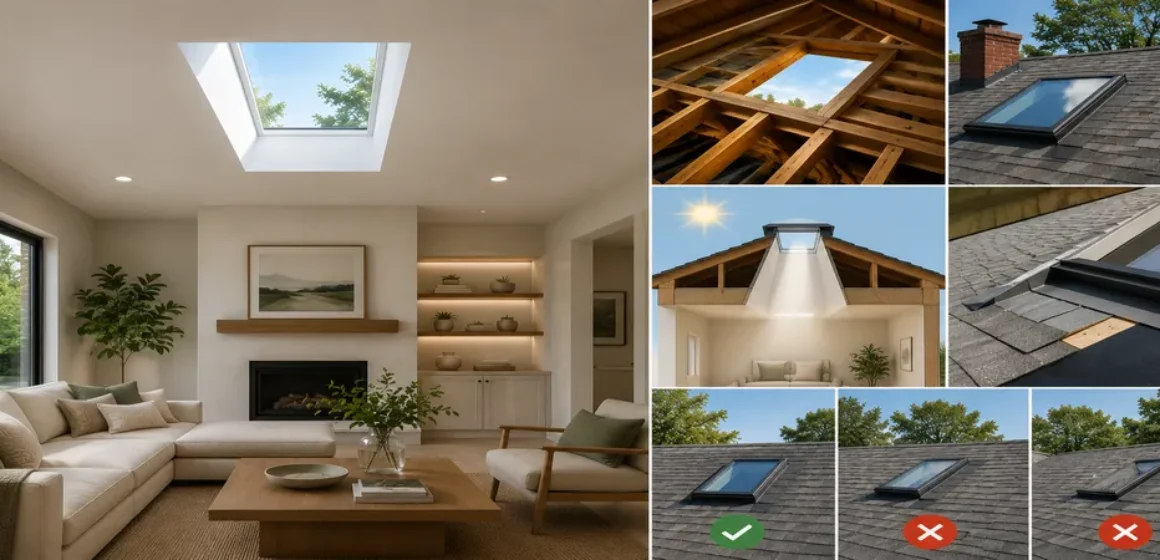
For a fixed skylight, the roof unit and internal opening may need to connect through a light well if there is roof space between the ceiling and roof. For a tubular skylight or Sky tube, the roof collector and ceiling diffuser may not sit directly above each other, but the reflective tube still needs a workable path. For a vented skylight, product placement must also consider operation, airflow, weather and internal use.
A good skylight plan asks:
- Where should daylight land inside the room?
- Is the roof above that area suitable?
- Is the roof pitch appropriate?
- Can flashing be installed correctly?
- Is there framing, wiring or ducting in the way?
- Is a light well or tube path workable?
- Would a slightly different position deliver a better result?
This is why skylight placement is a planning decision, not just a ceiling mark-up.
Why the “perfect” interior spot may need to move
Sometimes the homeowner’s preferred spot is close to ideal but needs adjustment.
That can happen for several reasons.
Roof framing
Rafters, trusses and ceiling framing can affect where openings can be made. Structural members cannot be cut or altered casually.
Ducting and wiring
Bathrooms, kitchens, laundries and hallways may contain extractor ducts, electrical wiring, heat lamps, lighting circuits or ventilation systems above the ceiling.
Roof pitch and flashing
The roof may not be suitable in the exact preferred position. Pitch, roof profile and water flow can influence the safest location.
Roof features
Valleys, ridges, gutters, vents, flues and solar panels may affect placement.
Light quality
The preferred position may create glare, heat, reflection or poor daylight distribution.
Internal finishing
A fixed skylight may need a light well. The light well shape may work better if the placement shifts slightly.
Moving the skylight position is not always a compromise.
Sometimes it is what makes the final result safer, cleaner and more useful.
Fixed skylights: why larger openings need more checking
A fixed skylight usually creates a larger roof and ceiling change than a tubular skylight or Sky tube.
It may suit kitchens, living rooms, bedrooms, home offices, dining areas and larger bathrooms where stronger daylight and a visible skylight feature are wanted.
But because it is larger and more visible, it needs careful assessment.
A fixed skylight may require review of:
- Roof pitch
- Roof type
- Flashing requirements
- Rafters or trusses
- Ceiling cavity depth
- Light well design
- Interior lining
- Plastering and painting
- Glare and heat control
- Blinds or accessories
- Product size
- Room placement
- Roof access
A fixed skylight cannot simply be placed anywhere a homeowner likes without checking these details.
The ideal result needs both daylight value and buildable roof conditions.
Vented skylights: why opening function adds another layer
A vented skylight can open to support airflow in suitable rooms.
This can be useful in bathrooms, kitchens, upper-level rooms and raked-ceiling spaces where daylight and airflow both matter.
However, the opening function adds another layer of planning.
A vented skylight location should consider:
- Whether airflow is genuinely needed
- Whether the unit can be operated conveniently
- Whether manual or electric operation is needed
- Weather exposure
- Roof pitch and flashing
- Internal room use
- Steam, warm air or stuffiness patterns
- Whether extraction is still required
- Security and comfort
A vented skylight should not be placed only because the ceiling looks clear.
It should be placed where it improves daylight and makes practical sense for airflow.
Tubular skylights and Sky tubes: more flexible, but not unlimited
Tubular skylights and Sky tubes can be more flexible than larger fixed skylights in some situations.
Because daylight travels through a reflective tube, the roof collector and ceiling diffuser do not always need to sit in a perfectly straight line. This can make them useful for compact or internal spaces.
They often suit:
- Hallways
- Laundries
- Toilets
- Walk-in wardrobes
- Pantries
- Compact bathrooms
- Internal rooms
- Small offices
However, they still cannot go absolutely anywhere.
A tubular skylight or Sky tube needs:
- A suitable roof collector position
- Correct flashing for the roof type and pitch
- A workable tube path
- Space around framing and services
- A suitable ceiling diffuser location
- Sensible daylight placement in the room
- Safe roof access
The tube path can be affected by trusses, ducts, wiring, plumbing, insulation and roof cavity depth.
The internal diffuser may look simple, but the route from roof to ceiling still matters.
Roof framing: the structural reality
Roof framing is one of the main reasons a skylight cannot always go exactly where first imagined.
Some roofs have rafters. Some use engineered trusses. Some have complex framing because of additions, valleys, hips, extensions or renovations.
Structural framing supports the roof and should not be altered casually.
Homeowners should understand:
- Framing affects skylight size
- Framing can affect placement
- Engineered trusses need proper assessment
- Some positions may be easier or safer than others
- Product choice may change if framing limits the preferred location
- A site visit may be needed to confirm what is possible
A good installer should work with the structure, not force a skylight into it.
This is one of the reasons a quote may need more than photos before final confirmation.
Wiring, ducts and pipes: the hidden services problem
Many ceilings hide services.
A ceiling that looks clear from below may contain:
- Downlight wiring
- Heat lamp wiring
- Extractor fan ducts
- Rangehood ducts
- Ventilation systems
- Heat transfer ducting
- Plumbing pipes
- Air-conditioning lines
- Ceiling speaker wiring
- Smoke alarm wiring
These services can affect where a skylight, diffuser or light well can go.
In some cases, services can be worked around. In other cases, they may need moving, which may involve an electrician, plumber or ventilation specialist. Sometimes it is better to shift the skylight location instead.
Bathrooms and kitchens often have the most crowded ceilings because they include fans, heat lamps, ducts, plumbing and lighting.
A clear ceiling photo helps, but hidden services may still need assessment.
Roof pitch and water flow: the outside location matters
Even if the inside ceiling position is clear, the outside roof position must be suitable.
Roof pitch affects how water moves across the roof. Roof profile affects how flashing integrates with the roof surface. Valleys, gutters, ridges, hips and roof junctions affect water flow.
A skylight should not be placed where water management becomes unnecessarily difficult.
Roof factors that affect placement include:
- Low-pitch roof sections
- Roof valleys
- Gutters
- Ridges
- Hips
- Solar panels
- Existing vents or flues
- Roof penetrations
- Large water catchment areas
- Wind-driven rain exposure
- Roof material and profile
- Roof condition
This is why the roof has to be checked, not assumed.
The best interior daylight location still needs a safe and suitable roof location.
Roof type: metal, tile, asphalt or low-slope roofing
Different roof types require different skylight planning.
A metal roof may need flashing matched to the roof profile. A tile roof may need careful tile handling and compatible flashing. An asphalt roof needs integration with the shingle system. A low-slope or membrane roof may require specialist waterproofing considerations.
Roof type can affect:
- Product suitability
- Flashing method
- Placement
- Installation complexity
- Access
- Cost
- Whether roof repairs are needed first
- Whether a site visit is required
A skylight can often be explored across different roof types, but the installation approach must suit the roof.
This is another reason a skylight cannot simply go anywhere the ceiling allows.
The roof type must support the proposed solution.
Single-storey, two-storey and split-level homes
The room’s position in the home matters.
A single-storey room directly below the roof may offer a more direct path for a skylight or tubular skylight. An upstairs room below the roof may also be suitable, depending on roof and ceiling conditions.
A downstairs room with another level above is different.
If there is another floor above the room, a traditional roof skylight cannot directly bring daylight through the roof into that room without a more complex design approach. In that case, the room may need a different daylight strategy.
Split-level homes can also be complex because the roofline may not match the interior layout in an obvious way.
When enquiring, mention whether the room is:
- Single-storey and directly below the roof
- Upstairs and directly below the roof
- Downstairs with another level above
- Under a flat or low-slope roof
- Part of an extension
- Under a raked ceiling
This helps prevent early misunderstanding.
Room-by-room placement realities
Kitchen
A kitchen skylight should be planned around the work area, but roof framing, rangehood ducting, lighting and roof pitch can affect the final location.
Bathroom
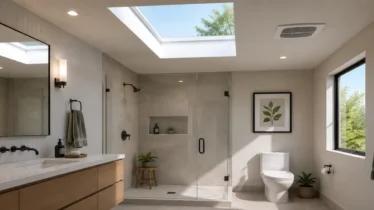
Bathroom placement must consider privacy, steam, fans, heat lamps, mirrors, ducting, plumbing and roof suitability.
Hallway
Hallways often suit tubular skylights or Sky tubes, but long hallways may need more than one daylight point, and the roof-to-ceiling path must be checked.
Bedroom
A bedroom skylight should consider sleep, privacy, blinds, summer comfort and bed position, not only the darkest ceiling area.
Home office
Screen glare matters. A skylight should improve working light without reflecting directly on screens.
Living room
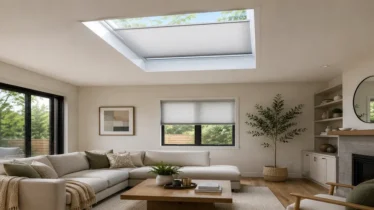
A living room may need stronger daylight, but placement must consider seating, television glare, roof framing and internal finishing.
Laundry or wardrobe
These often suit tubular skylights or Sky tubes, but ceilings may contain ducts, storage constraints or limited roof cavity.
Each room has its own version of the same rule.
The skylight should go where it works for the room and the roof.
When a different product may be better
Sometimes the preferred ceiling location is not suitable for the product first imagined.
That does not always mean the project cannot proceed.
It may mean a different product is better.
For example:
- A fixed skylight may be too difficult in a compact hallway, but a tubular skylight may work well
- A tubular skylight may not deliver enough impact in a large living room, so a fixed skylight may be better
- A fixed skylight may not address bathroom airflow, so a vented skylight or extractor review may be needed
- One skylight may create uneven light, while two smaller daylight points may work better
- A preferred location may shift slightly because of roof framing or water flow
Good skylight planning is not about forcing the first idea.
It is about finding the best workable solution.
The role of a site visit
Photos can help start the skylight conversation, but they do not always confirm everything.
A site visit may be needed if:
- The roof pitch is unclear
- The roof type or condition needs checking
- Framing may affect placement
- Services may be in the way
- The ceiling cavity is complex
- The room is a bathroom, kitchen or laundry
- The product is a larger fixed or vented skylight
- Internal finishing needs assessment
- Roof access is difficult
- There are existing leaks or stains
- The preferred location is close to roof features
A site visit can help confirm whether the preferred location is suitable or whether a better position should be recommended.
It is not only about measuring.
It is about reducing uncertainty before work begins.
What to send before asking if a skylight can go somewhere
If you have a preferred skylight location, send clear information.
Useful photos include:
- Wide photo of the room
- Photo of the ceiling where you want the skylight or diffuser
- Photo of the darkest part of the room
- Photo showing important furniture, benches, mirrors, beds or screens
- Ground-level photo of the roof above or near the room
- Wider exterior photo showing the roofline
- Photos of existing lights, fans, vents or heat lamps
- Photos of any ceiling stains or moisture concerns
- Photos of solar panels, roof vents or obstructions if relevant
Also include:
- Whether the room is upstairs, downstairs or single-storey
- Roof type if known
- Ceiling type if known
- Whether the room is being renovated
- Whether ventilation, glare or privacy are concerns
- Whether you prefer a fixed skylight, vented skylight, tubular skylight or Sky tube, if you already have a preference
The more context provided, the easier it is to assess whether the preferred position is realistic.
Questions to ask before approving placement
Before approving a skylight location, ask:
- Will this placement bring daylight to the area that needs it most?
- Is the roof above this location suitable?
- Does the roof pitch suit the product?
- What flashing system will be used?
- Are there trusses, rafters or services in the way?
- Is a light well or tube path required?
- Is internal finishing included?
- Could this placement create glare?
- Are blinds or controls needed?
- Is ventilation part of the room problem?
- Would a different product or nearby position work better?
- Is a site visit needed to confirm the location?
These questions help protect both the daylight result and the roof installation.
Common mistakes to avoid
Mistake 1: Assuming a clear ceiling means a clear roof space
The ceiling may hide framing, wiring, ducts and plumbing.
Mistake 2: Choosing placement only for symmetry
A centred skylight may not place daylight where it is needed.
Mistake 3: Ignoring the roof position
The roof location must suit pitch, flashing, water flow and weather exposure.
Mistake 4: Forgetting glare and room use
Bedrooms, offices, kitchens and living rooms need comfort considered.
Mistake 5: Treating tubular skylights as unlimited
A tubular skylight or Sky tube can be flexible, but it still needs a workable roof collector, tube path and diffuser location.
Mistake 6: Choosing product type before checking feasibility
The room may suggest one option, but the roof or ceiling may point to another.
Illustrative example only
A homeowner wants a fixed skylight directly above a kitchen island. From inside, the location makes sense because the island is the darkest work area.
After review, the roof above that exact point may be affected by a roof valley and ducting from the rangehood. The skylight may still be possible, but the placement might need to shift slightly, or the product and internal finishing may need to be reconsidered.
In another home, a dark hallway looks like it needs a diffuser in the exact centre. The ceiling position is clear, but the roof collector for a tubular skylight may need to sit slightly away from that point because of framing and roof pitch. If the tube path is workable, the final diffuser position may still deliver the desired result.
Both examples show the same lesson.
The best position is not always the first position imagined.
It is the position that works for the room, roof and installation.
The practical takeaway
A skylight cannot always go anywhere in the ceiling.
It needs a suitable relationship between the room below, the roof above and the path between them.
A good skylight location should answer three questions:
- Does this placement improve the room in the right way?
- Can the roof and flashing support it properly?
- Can the ceiling space, framing and services allow it safely and cleanly?
If all three answers are strong, the placement may be suitable.
If one answer is uncertain, further assessment may be needed.
That is not a setback. It is responsible planning.
Planning your next step
If you have a room in mind but are unsure whether a skylight can go in your preferred ceiling location, start with photos of the room, ceiling and roof.
Skylights.co.nz can help you consider whether a fixed skylight, vented skylight, tubular skylight or Sky tube may suit your room, roof type, placement and desired outcome.
To start the process, use the Skylights.co.nz enquiry form:
https://inquiry.skylights.co.nz/inquiry
You may also find these useful:
FAQs
Can a skylight go anywhere in the ceiling?
Not always. A skylight location depends on the room, roof pitch, roof type, flashing, framing, roof space, services, internal finishing and where daylight is needed. The ceiling alone does not confirm suitability.
Why can’t a skylight always go where I want it?
The preferred ceiling location may have trusses, rafters, wiring, plumbing, ducts or roof features above it. The roof position also needs to suit water flow, flashing and product requirements.
Are tubular skylights more flexible than fixed skylights?
Tubular skylights and Sky tubes can be more flexible in some rooms because daylight travels through a reflective tube, but they still need a suitable roof collector, tube path and ceiling diffuser location.
Can a skylight go in a downstairs room?
Only if there is a practical path to the roof. A downstairs room with another floor above usually cannot receive a standard roof skylight directly without a more complex design approach.
What should I send to check if a skylight location is possible?
Send photos of the room, ceiling, darkest area, roof above or near the room, and any lights, fans, vents, mirrors, beds, benches or screens near the preferred location.
Will a site visit be needed to confirm skylight placement?
A site visit may be needed if roof pitch, framing, roof space, services, access, moisture issues or placement cannot be confirmed from photos. This helps confirm what is practical and suitable.