Clyde in Colour: Using Natural Light to Highlight Materials and Textures
The first light slides over schist walls, catching the rough stone edges before warming the polished timber floors. In Clyde, light moves slowly — it reveals, rather than floods.
Homes here are built from the land itself, and every beam of sunlight tells that story anew.
Natural light doesn’t just illuminate these materials; it gives them dimension and emotion. Skylights, placed with purpose, can draw out every shade, texture, and tone that makes Clyde’s architecture unique.
Stone that breathes
Clyde’s signature material — locally quarried schist — has a character no artificial light can replicate. Its hues shift throughout the day: grey in the morning, golden by afternoon, deep amber near dusk.
Why skylights matter:
Overhead light enhances the stone’s surface, creating subtle shadows that express craftsmanship. The diffused daylight from a flat glass skylight brings a museum-like clarity, revealing texture without glare.
Design reflection: In a renovated Clyde villa, one skylight above a stone feature wall made the surface feel alive — no paint or spotlight could recreate that sense of depth.
Design tip: Use diffused or low-iron glass to achieve even light tones that highlight natural stone rather than washing it out.
Wood that warms
From native rimu beams to reclaimed oak flooring, timber defines Clyde’s interior warmth. Yet its richness often hides in dim light.
How skylights change perception:
Sunlight from above exaggerates grain and contrast — honey tones deepen, knots and imperfections become character, not flaws. In living areas, narrow skylight shafts create directional highlights that shift as the day passes, animating the room naturally.
Technical note: Low-E glazing helps maintain timber tone by filtering UV exposure while preserving true colour.
Analogy: Daylight acts like time — it deepens wood, polishes edges, and reveals authenticity.
Metal, glass, and the modern contrast
Not all Clyde homes are historic. New builds embrace steel, polished concrete, and glass — materials that react differently to natural light.
Modern light design:
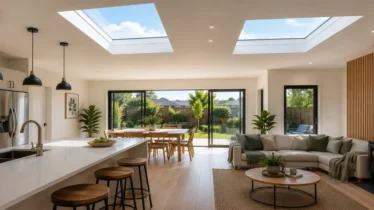
Skylights amplify contrast, turning a steel beam into a line of shadow, or polished concrete into a mirror for the sky. Architects often use clustered skylights to layer brightness — combining vertical and slanted light angles to highlight form and geometry.
Sustainability note: Pairing skylights with passive ventilation systems keeps modern materials cooler in summer while maintaining that bright, crisp aesthetic.
Colour, mood, and the unseen palette
Light changes colour — and colour changes mood. In Clyde, where the atmosphere is dry and the sky clear, light has a blue-white tone that sharpens detail.
Subtle design science:
- Morning light: Cool and reflective — ideal for kitchens or workspaces.
- Midday light: Neutral and balanced — reveals natural tones accurately.
- Evening light: Warm and soft — perfect for living and rest spaces.
Pro insight: Use skylights with adjustable blinds to modulate this natural palette throughout the day. The goal isn’t uniform brightness — it’s harmony between colour, texture, and time.
Design insight: True interior beauty isn’t painted; it’s revealed by the way light touches surface.
A different kind of luxury
Luxury in Clyde isn’t marble or chrome — it’s authenticity. It’s the way sunlight brushes a stone wall, how it deepens timber, or brings calm to a whitewashed ceiling.
Modern skylight design allows that interaction to happen deliberately. Every beam of light becomes part of the architecture — not decoration, but dialogue.
Reflection: Good light doesn’t dominate. It listens to the materials and lets them speak.
Final thoughts
Natural light is the quiet designer of Clyde’s homes. Skylights transform interiors not by changing them, but by letting their textures live. Whether heritage stone or modern steel, it’s the daylight that gives these materials their story.
Discover design-focused skylight options for Clyde homes and see how light can shape your home’s personality.
FAQs
Will skylights alter the colour of my interior finishes?
No — high-quality glazing preserves true tones while enhancing natural contrast.
Can natural light highlight textured materials?
Yes. Diffused skylights create soft shadows that bring depth to stone, timber, and brick.
What skylight type is best for visual design impact?
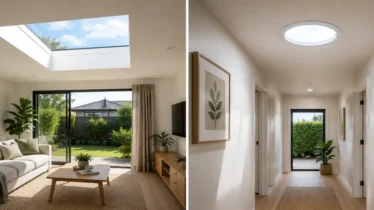
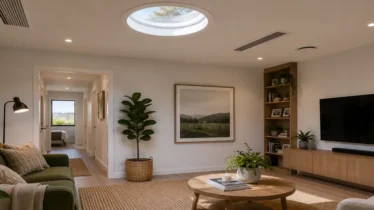
Flat or frameless glass skylights work best for modern interiors; tubular skylights suit smaller, focused highlights.
How can I protect materials from UV exposure?
Use skylights with Low-E coatings or built-in UV filters to prevent fading.
Do skylights make rooms feel warmer or cooler?
With Low-E or solar-control glass, skylights regulate temperature naturally while maintaining light quality.