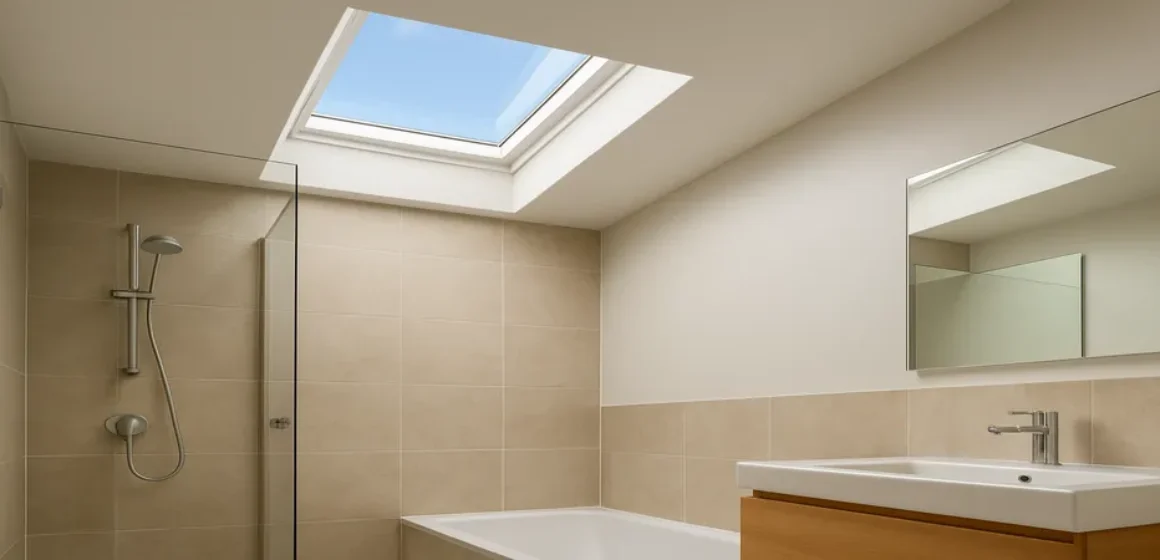
Fresh, bright and private: planning bathroom skylights in NZ homes
You open the bathroom door first thing in the morning and flick the light switch without thinking. There might be a small frosted window, but between the neighbour’s fence, the side path and the need for privacy, it never really feels bright. On winter evenings, steam gathers on the ceiling, and the room can feel stuffy even with the fan running.
Bathrooms are one of the most common places New Zealand homeowners consider a skylight – and also where people have the most questions:
“Will it fog up?”
“Can the neighbours see in?”
“Will it make the room colder?”
Used well, bathroom skylights can:
- bring in generous daylight without compromising privacy
- help moisture clear more effectively
- make compact rooms feel open and calm.
This article walks through how to plan bathroom skylights for NZ homes, from villas in Dunedin to townhouses in Auckland.
Illustrative Example Only: “Our family bathroom in Hamilton had a small, high window that was always half in shadow. After adding a vented skylight with diffused glass, the room felt fresher and the mirror didn’t fog up as quickly. We still use the fan – but everything feels less damp.”
1. Why bathrooms feel so different to light – and why skylights help
Bathrooms behave differently from most other rooms:
- they are used at specific times – early mornings, evenings and before bed
- privacy needs often limit the size and placement of side windows
- showers and baths generate intense, short bursts of moisture.
That means standard windows often struggle to provide:
- enough daylight without blinds being half-closed
- good airflow in cooler months when you hesitate to open them
- a feeling of openness in rooms that are often compact.
Skylights change the equation because they:
- draw light from above, where neighbours and fences are less of an issue
- can be paired with venting to release moist air that rises naturally
- free up wall space for tiles, mirrors and storage.
In simple terms, they allow bathrooms to feel bright and private at the same time.
2. Myths and worries about bathroom skylights – clarified
Before planning, it helps to separate common worries from how modern skylights actually perform.
“The whole room will fog up”
Condensation in bathrooms is mostly driven by:
- how much moisture is produced (showers, baths, drying towels)
- how well the room is ventilated (fans, windows, vented skylights)
- how warm the room and surfaces are.
A skylight on its own will not remove moisture – but paired with extraction or venting, it can:
- help steam move upwards and out
- reduce corners where dampness lingers.
“People will be able to see in”
Quality bathroom skylight design uses:
- roof positions that are hard to overlook
- diffused or frosted glazing where needed
- shaft angles that protect sightlines.
In many cases, a bathroom with a skylight and no wall windows actually offers more privacy and better light than one with a small frosted side window.
“It will make the bathroom colder”
Older, single-glazed domes sometimes created cold patches. Modern bathroom skylights in NZ typically use:
- double glazing and improved seals
- insulated shafts
- careful detailing at the ceiling junction.
The goal is for the skylight area to perform similarly to a modern window, not like a thin sheet of plastic in the roof.
3. Choosing the right type of skylight for a bathroom
Different bathrooms call for different solutions. Three common options are:
Fixed skylights with good extraction
Best suited for:
- small ensuites with reliable extractor fans
- bathrooms where you prefer mechanical ventilation (e.g. apartments)
- rooms where moisture levels are moderate.
Key points:
- rely on fans and habits (running fans before, during and after showers)
- work well when moisture load is predictable and controlled.
Vented skylights or roof windows
Helpful when:
- the bathroom is the only wet area on that part of the roof
- the room feels stuffy or has no opening windows
- you want the option to quickly clear out steam.
Key points:
- can be manual or electrically operated
- are often used alongside extractor fans, not instead of them
- particularly useful in warmer or more humid regions like Auckland, Northland or coastal Bay of Plenty.
Tubular skylights for compact rooms
Ideal for:
- toilets and small powder rooms
- narrow ensuites off bedrooms
- homes where roof access is tricky but shaft runs are short.
Key points:
- bring in a surprising amount of diffuse light through a smaller ceiling opening
- pair well with fans where full vented skylights are not feasible.
A qualified installer can explain which option makes sense for your roof, room size and ventilation set-up.
4. Light quality: soft, shadow-free and flattering
Bathrooms are where we get ready for the day – light quality matters more than we sometimes admit.
Skylights can create:
- soft, even light that reduces harsh shadows on faces
- a more natural sense of day and night rhythm
- a calmer feel compared with a single bright downlight.
Design tips for flattering bathroom light:
- use diffused glazing or internal diffusers to spread light evenly
- combine skylights with wall lighting near mirrors, not just ceiling spots
- avoid placing the only skylight directly above where you stand at the mirror – slightly forward can be kinder.
In cloudier regions like Wellington or Dunedin, even modest skylights can turn previously flat bathrooms into spaces that feel quietly bright throughout the day.
5. Ventilation, moisture and materials – getting the mix right
Because bathrooms bring together heat, moisture and a lot of daily use, details matter.
Pairing skylights with effective ventilation
For most NZ bathrooms, a good combination is:
- a ducted extractor fan that vents outside, not into the roof space
- timed or humidity-sensing controls so the fan runs long enough
- a vented skylight or openable window where practical.
The skylight supports this by:
- allowing rising warm air to be replaced with fresher air
- reducing the need to open privacy-compromising windows.
Choosing bathroom-friendly finishes around the shaft
Materials around the skylight shaft and ceiling junction should:
- handle moisture and regular cleaning
- be properly sealed to avoid mould-friendly gaps
- include insulation behind linings where accessible.
Simple, well-painted plasterboard is common, but details at corners and joints are key to avoiding long-term staining.
6. Planning for different NZ climates and house types
Bathroom skylight design benefits from local nuance.
Auckland, Northland and Bay of Plenty
- focus on ventilation and glare control, as humidity and bright sun can combine
- consider vented products and blinds if the roof plane is very exposed
- ensure fans are sized correctly for moisture load.
Wellington, Taranaki and West Coast
- prioritise robust detailing for wind-driven rain and frequent cloud cover
- skylights can significantly lift light levels on grey days
- good ducting and sealing help manage moisture without draughts.
Canterbury, Otago and Southland
- cold mornings make thermal performance important
- double glazing and insulated shafts help keep bathrooms comfortable
- skylights can bring welcome winter light into south-facing or internal bathrooms.
Villas, townhouses and new builds
- villas and bungalows often benefit from skylights in internalised bathrooms created during past renovations
- townhouses with close neighbours can use skylights to avoid relying on side windows
- new builds can plan skylights and fans together from the start, avoiding later compromises.
7. A step-by-step planning guide for your bathroom skylight
If you are considering a bathroom skylight in your NZ home, this sequence can help:
- Define your pain points: Is the room too dark, too stuffy, hard to keep dry, or all three?
- Note when and how the bathroom is used: Busy family mornings? Evening baths? Occasional guest use?
- Check your current ventilation: Does the fan vent outside? Does it run long enough? Do windows actually get opened?
- Sketch the room and possible skylight positions: Mark the shower, bath, vanity, existing window and ceiling lights.
- Take photos of the interior and roof area: These help installers understand constraints and opportunities.
- Talk to a skylight installer about options: Discuss fixed vs vented, glazing type, shaft length, and how the skylight will integrate with your fan and existing layout.
8. Next steps – a bathroom that feels bright, private and easy to live with
A well-designed bathroom skylight should quietly support everyday life. It should:
- make mornings feel easier and more inviting
- help steam clear without constant window juggling
- give you the privacy you expect, with the daylight you have been missing.
If you are ready to explore options for your bathroom, ensuite or powder room:
- jot down what currently bothers you most
- note your region and roof type if you know it
- gather a couple of photos and rough measurements.
Skylights.co.nz can help you connect with trusted installers around New Zealand who understand both bathroom-specific challenges and the wider picture of your home.
Make an enquiry via Skylights.co.nz
Sharing a short description of your space and concerns is often enough for an installer to recommend practical, bathroom-appropriate skylight options.
FAQs – bathroom skylights in NZ homes
Q1. Will a bathroom skylight make condensation worse?
Not if it is planned with ventilation in mind. Condensation mainly relates to moisture and air movement. A skylight, combined with a well-sized extractor fan and sensible habits, can help steam clear more effectively.
Q2. Can neighbours see through a bathroom skylight?
In most cases, no – especially when skylights are placed on less visible roof planes and use diffused or frosted glazing. Your installer can assess roof angles and nearby properties to design for both light and privacy.
Q3. Are vented skylights better than fans in bathrooms?
They do different jobs. Extractor fans are still essential for reliably removing moist air. Vented skylights add another way to release warm, damp air, particularly in warmer or more humid climates. Many NZ bathrooms use a combination.
Q4. Will a bathroom skylight make the room colder in winter?
Modern, double-glazed skylights with insulated shafts are designed to minimise heat loss. In many cases, the added daylight and sense of openness outweigh any small changes in temperature, especially when the rest of the room is well insulated.
Q5. Are bathroom skylights suitable for small ensuites and toilets?
Yes. Compact skylights or tubular sun tubes can make a significant difference in small rooms, often with minimal ceiling disruption. They are a popular choice for internal toilets that currently rely on artificial light all day.
Q6. Who should I talk to about adding a skylight to my bathroom?
A skylight installer with experience in wet areas is a good first call. If you are renovating, your designer or builder can work with the installer to integrate skylights, ventilation and finishes into one coordinated plan.