How much skylight is ‘too much’ in a roof? A practical rule-of-thumb conversation
It is an easy question to ask and a surprisingly hard one to answer in a single number.
“How big should the skylight be?”
Most homeowners are not chasing a dramatic architectural statement. They just want the room to feel better. Brighter. More open. Less dependent on lights during the day.
But there is a point where “more skylight” does not deliver “better light”. It can create glare, heat build-up, or a room that feels visually unbalanced.
So instead of a single rule, the best approach is a practical conversation: what outcome you want, how the room behaves, and how the light will land in real life.
This guide gives a simple sizing framework, plus the common mistakes that lead to regret.
Start with the real goal (not the product)
Before you think about millimetres, ask what you want the skylight to change.
Choose the closest match:
- I want the room to stop feeling dim (day-to-day usability)
- I want the space to feel more open (visual uplift)
- I want light in a specific problem zone (hallway, stairwell, ensuite)
- I want better comfort (less damp, less stale air, less “heavy” heat)
Your answer influences whether you need a wide skylight, a vented solution, or a smaller but better-placed option.
The comfort-first sizing framework (three decisions)
Think of skylight sizing as three decisions, in this order.
Decision 1: What kind of light does the room need?
Many people assume the best light is direct sun.
In reality:
- Living areas often benefit from even, calm daylight.
- Bathrooms and hallways often need reliable usable light rather than drama.
- Kitchens usually need balanced light that doesn’t create harsh hotspots on benchtops.
If you want calmer light, you often want a skylight strategy that prioritises spread and diffusion, not raw opening size.
Decision 2: How much roof glazing does the room actually tolerate?
Skylights sit in the thermal envelope, so more glazing can change comfort behaviour.
Without going legalistic, this is where H1-related thinking helps homeowners:
- Bigger roof glazing can increase sun exposure in summer if not specified well.
- Better glazing and sensible controls can keep comfort stable.
In plain terms: the right skylight can be generous without being “too much”, but it needs to be specified for the room and roof direction.
Decision 3: Is one skylight the right move, or is it a “two smaller” situation?
Sometimes one large skylight creates a hotspot.
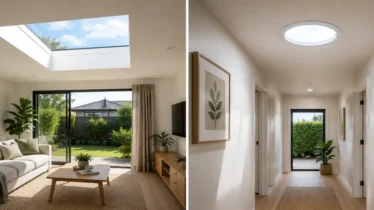
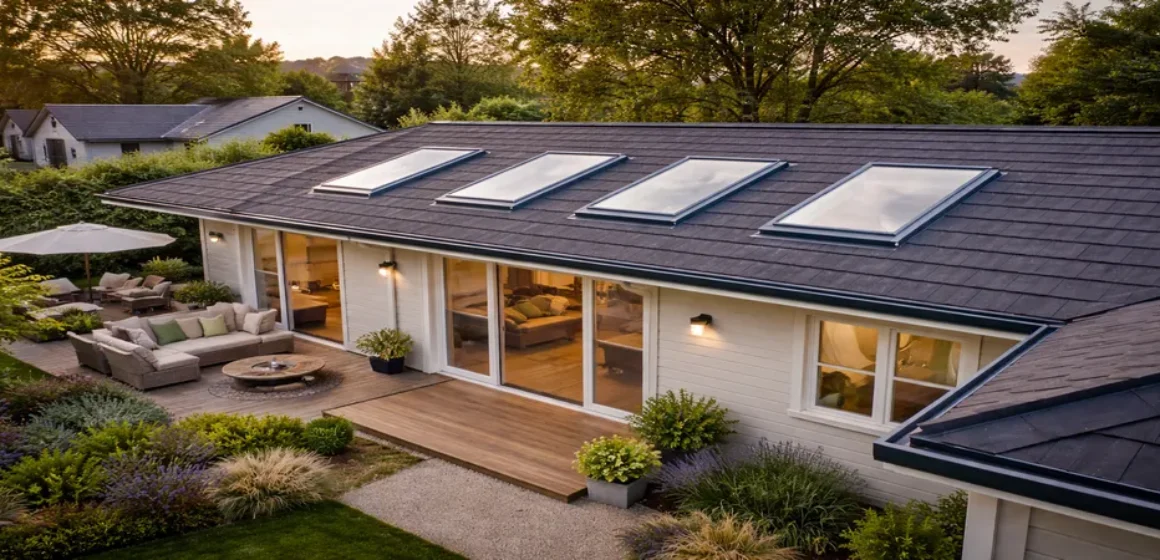
Two smaller skylights (or two tubular units) can:
- spread light more evenly
- reduce contrast and glare
- make the room feel naturally bright instead of “bright in one patch”
This is especially useful in:
- long corridors
- stairwells with turns
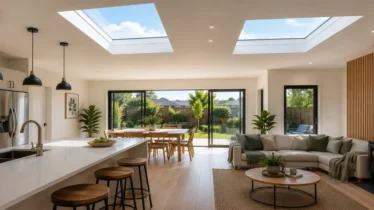
- larger open-plan spaces where you want evenness
Practical rules of thumb (useful, but not absolute)
These are not strict rules. They are starting points that help you avoid extremes.
Rule 1: If you can predict a hotspot, you can predict discomfort
If you can imagine a bright patch landing on the same floor area every afternoon, that is a clue to review sizing, placement, or controls.
Rule 2: A smaller skylight placed well often beats a larger skylight placed “where it fits”
Structural constraints matter, but the best outcome comes from placing the skylight where the room needs light most, not where it is easiest.
Rule 3: Hallways rarely need “big”. They need “consistent”.
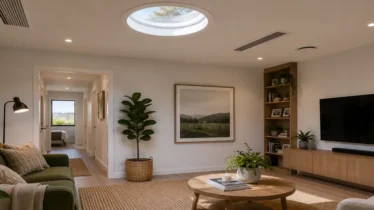
Many NZ hallways are better served by tubular skylights or smaller fixed skylights that create even light.
Rule 4: If the room is already warm in late summer, size is not the only decision
This is where comfort controls and glazing specification earn their place. A skylight should improve a room, not make you manage it.
The common mistakes that lead to ‘too much skylight’
Mistake 1: Choosing the skylight like a feature window
A roof opening behaves differently from a wall window. It often receives stronger sun angles.
If the choice is made for appearance only, comfort can become an afterthought.
Mistake 2: Overestimating how far side light travels
Homeowners often choose a large skylight because the room is dim, but the dimness is actually caused by depth, layout, or a dark central zone.
In many cases, better placement or multiple smaller units solves the problem more effectively.
Mistake 3: Forgetting glare and reflection
Glossy tiles, polished floors, shiny benchtops, and bright white walls can amplify contrast. A skylight that seems “fine on paper” can feel harsh in real afternoon light.
Mistake 4: Ignoring the seasonal swing
A skylight that feels perfect in winter can behave differently in February.
Comfort-first planning means thinking about:
- summer sun intensity
- longer afternoons
- how the room is used at peak sun hours
Mistake 5: Treating controls as optional add-ons
If you might need glare or heat control, plan it early. It is easier to specify properly than to retrofit later.
A quick sizing conversation you can have at home
Answer these three questions:
- Where is the darkest usable zone in the room?
- Which hours do we use this space most?
- Do we want direct sun, or calm daylight?
If you can answer those, you are already ahead of most “guess the size” decisions.
Illustrative example only: a realistic NZ scenario
A homeowner in Auckland wanted a large skylight for an open-plan living area because the space felt dim in the centre.
After looking at how the room was used, the real goal became clear: they wanted the middle of the room to feel brighter without creating harsh afternoon glare.
Rather than pushing size up, the plan focused on:
- placement to target the darkest zone,
- light quality that spread evenly,
- and comfort-led specification so the room stayed pleasant in late summer.
The result felt bright and calm, which is what they wanted in the first place.
A calm next step if you are unsure
If you are worried about going too big, that is usually a healthy instinct. The best skylights feel generous without feeling harsh.
If you share a few photos, your roof type, and the outcome you want for the room, we can recommend a sizing and placement approach that suits your home and NZ conditions.
Start here: https://inquiry.skylights.co.nz/inquiry