Energy-Efficient Skylights for Marlborough’s Warm Vineyard Belt
Marlborough’s vineyard belt is famous for long sunshine hours, warm afternoons, and crisp, cloudless skies. It’s also one of the warmest inland climates in New Zealand — a gift for grapes, but a challenge for homes.
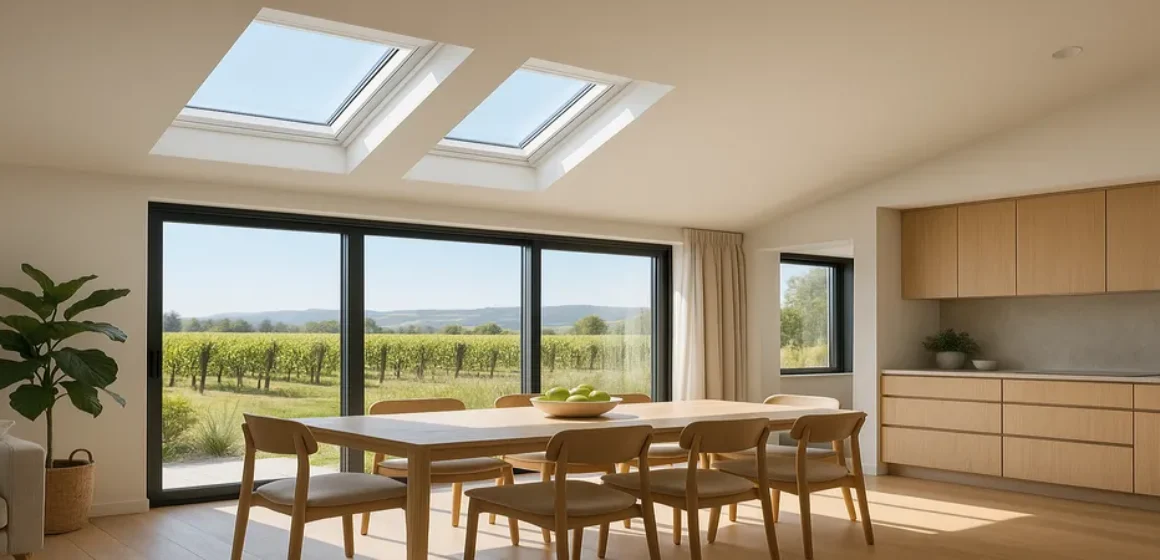
Energy-efficient skylights help homeowners enjoy abundant natural light without the heat load, balancing brightness with comfort.
Performance reflection: “The best skylights don’t just add light — they manage it.”
Understanding the vineyard belt climate
Marlborough’s climate varies more than people realise. Even short distances between towns create different heat and light conditions.
Blenheim: high sunshine, high heat
- One of NZ’s highest sunshine-hour locations.
- Hot inland afternoons, especially December–February.
- Light reflects off pale soils and vineyards, increasing brightness.
Picton: coastal, cooler, and breezier
- Moderated temperatures from the Sounds.
- More cloud movement and sea breezes.
- Softer afternoon light compared to inland townships.
Why this matters: Skylight choice should reflect whether a home sits inland (high heat gain) or coastal (variable brightness, humidity).
Solution 1: Low-E glazing for heat and UV control
Low-emissivity glazing is the most impactful upgrade for Marlborough’s warm belt.
How it helps:
- Blocks a significant portion of solar heat.
- Reduces UV exposure that fades timber flooring.
- Keeps daylight crisp and clean — not tinted or dull.
Best for: Blenheim, Renwick, Springlands, Rapaura.
Solution 2: double glazing for stable indoor temperatures
Double-glazed skylights add insulation and reduce heat transfer.
Benefits:
- Cooler interiors during warm inland afternoons.
- Warmer spaces in winter — perfect for Marlborough’s temperature swings.
- Reduced condensation risk on cold mornings.
Local observation: Inland homes near vineyards often experience high solar gain; double glazing stabilises indoor comfort.
Solution 3: diffused skylights for controlled brightness
Diffusers transform direct sunlight into soft, even illumination.
Advantages:
- Reduces glare from reflective soils and vineyard rows.
- Maintains brightness without heat spikes.
- Protects sensitive rooms like art studios or children’s bedrooms.
Analogy: Like stretching a soft veil across the summer sun.
Solution 4: thermally broken frames
Skylights with thermally broken frames prevent heat transfer through the frame — a subtle but important factor in warm climates.
Why it matters:
- Less heat absorption during peak afternoons.
- Better long-term energy efficiency.
- More stable indoor temperatures all year.
Solution 5: automation and climate sensors
Smart skylights elevate energy efficiency further.
Features that matter:
- Solar-powered operation.
- Heat sensors that open skylights automatically.
- Rain detection for safety.
- Smart blinds that respond to brightness.
Best for: high-spec homes in the Wairau Valley and coastal builds in Picton.
Solution 6: pairing skylights with passive cooling design
Energy efficiency improves dramatically when skylights support passive home design.
Combine with:
- High windows for stack ventilation.
- Ceiling fans to circulate air.
- Deep eaves that shade wall glazing but leave roof light available.
Local insight: Inland homes gain more from vented skylights due to still, warm afternoons; coastal homes gain more from smart blinds.
Final thoughts
Energy-efficient skylights let Marlborough homeowners enjoy the region’s iconic sunshine without the overload. With the right glazing, ventilation, and automation, light becomes a comfort feature — not a heat source.
Explore energy-efficient skylight options and design a space that stays bright, comfortable, and vineyard-belt ready.
FAQs
Are Low-E skylights essential for Blenheim homes?
Yes. They manage heat gain while keeping light clear and comfortable.
Will double glazing make my home too dark?
No — modern double glazing maintains brightness while improving insulation.
Do diffused skylights reduce heat?
Yes. They soften direct sunlight, reducing heat spikes.
Will smart skylight blinds save energy?
Absolutely. They respond to brightness and help regulate indoor temperatures.
Are coastal homes treated differently from inland homes?
Yes. Inland homes need stronger heat control; coastal homes benefit from humidity and glare management.