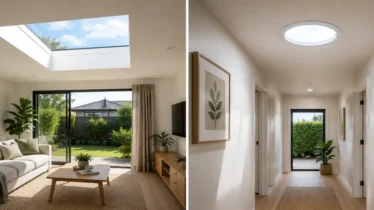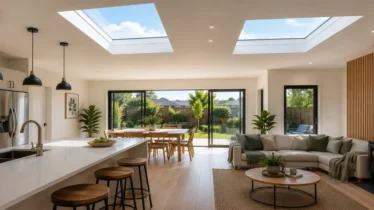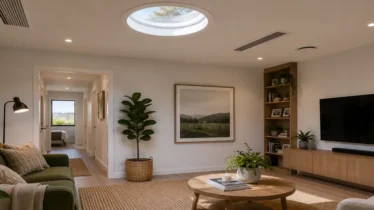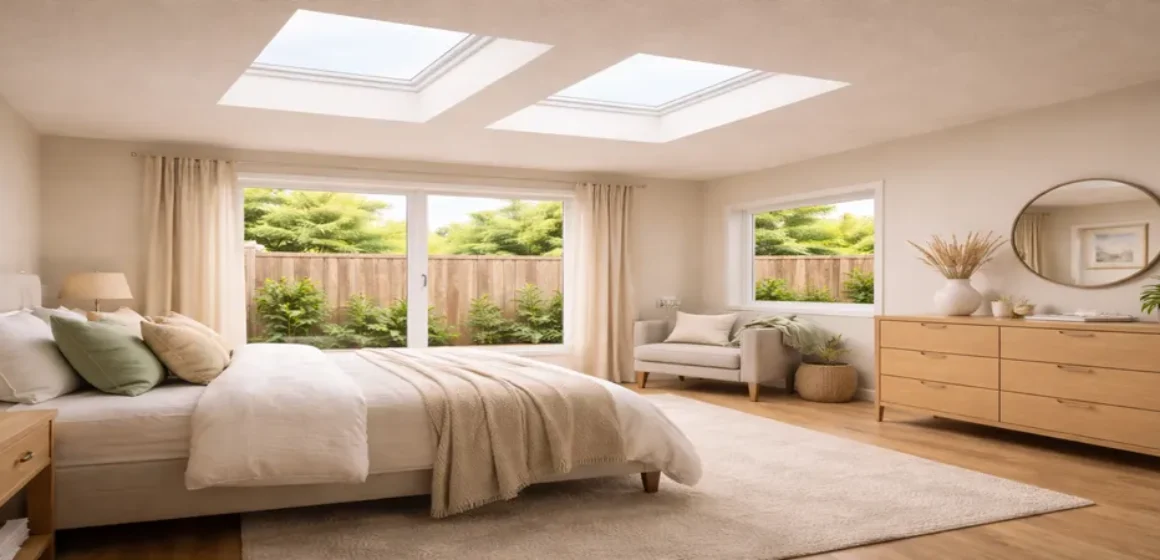
Quiet light above the fence line: skylights, privacy and neighbours in NZ homes
Across New Zealand, more people are living in townhouses, infill developments and compact sections. The benefits are clear – shorter commutes, walkable suburbs, less time spent in the car.
Inside, however, the experience can feel more complicated.
Large windows face directly onto a neighbour’s deck.
Bedroom blinds stay half‑closed most of the day.
You can hear next door’s conversations through an open window more than you would like.
You may find yourself thinking:
“We need more light, but we are already too visible. How do we bring daylight in without feeling on display?”
This article looks at skylights, privacy and neighbours in NZ homes – how to use light from above to improve comfort and reduce the sense of being overlooked, especially in denser neighbourhoods.
1. Why privacy feels more fragile in modern NZ neighbourhoods
Privacy is not only about what others can see, but also about how a space feels.
Closer boundaries, fewer quiet sides
In many newer developments and central suburbs:
- houses sit closer to side boundaries
- outdoor living is often elevated on decks
- two‑storey homes overlook single‑storey roofs.
This means there are fewer positions for windows that do not face someone else’s living space.
Blinds down, lights on
To maintain privacy, many households:
- keep sheers or blinds drawn most of the time
- avoid opening windows that look directly into a neighbour’s home
- rely heavily on artificial light even during the day.
The result can be rooms that feel closed in, especially in winter or on grey days.
Sound carrying between homes
In compact streets and attached townhouses, sound travels easily. Open a side window and you may hear:
- conversations from neighbouring decks
- road noise from a nearby arterial
- bins, deliveries and everyday movement.
Skylights cannot silence a street, but they can offer daylight and fresh air in ways that often involve less direct line‑of‑sight and less open‑window noise.
2. How skylights change privacy compared with side windows
Light from above behaves differently from light through a fence‑line window.
Reduced direct overlooking
A well‑placed skylight allows you to:
- enjoy natural light while facing into the room
- move freely without feeling you are on display
- keep side blinds closed or partially closed when needed.
In many townhouses in Auckland, Wellington and Christchurch, this can make the difference between a room that feels exposed and one that feels comfortably lit.
Diffused daylight without street views
Skylights, especially tubular units and diffused glazing, typically provide:
- broad, soft light across ceilings and walls
- no direct view of neighbours or the street
- a sense of openness without visual clutter.
This helps rooms feel brighter while preserving a level of privacy that side windows sometimes cannot.
Ventilation with less sideways noise
In some configurations, vented skylights can:
- let hot air escape upward
- bring in fresh air through the roof plane
- reduce the need to open side windows that face directly onto a neighbour.
This does not remove all external noise, but it can reduce the feeling of sharing every sound on the street.
3. Spaces where privacy and daylight often clash
Certain rooms highlight the trade‑off between privacy and natural light more than others.
Bathrooms and ensuites
Many NZ bathrooms share boundaries with:
- neighbouring driveways and decks
- narrow side yards
- public walkways in denser developments.
Frosted glass helps, but it can still feel uncomfortable to stand near a window that faces a close boundary.
Skylights can:
- bring in daylight from above without exposing the room
- minimise reliance on wall windows
- work alongside mechanical extraction for moisture control.
Bedrooms facing neighbours
In compact suburbs, bedrooms often look straight across to other houses. This can lead to:
- curtains or blinds closed for large parts of the day
- a choice between daylight and privacy
- rooms feeling flat and enclosed.
A skylight, paired with privacy‑focused window treatments, can allow:
- brighter daytime conditions while side curtains remain partially drawn
- more control over views in and out of the room
- a calmer atmosphere around the bed.
Living spaces on tight sites
Open‑plan living, dining and kitchen areas often:
- open to a small courtyard or deck
- share a boundary wall with a neighbour
- rely on large sliders to the only outdoor aspect.
If you feel “on show” whenever blinds are open, a skylight over the internal half of the room can bring in light away from the boundary, so you can soften side window exposure without losing brightness.
4. Designing for privacy first, then view
When thinking about skylights privacy NZ homeowners benefit from flipping the usual order. Instead of asking “What can we see?”, start with “What do we want to keep private?”
Mapping sightlines
A simple, helpful exercise is to:
- stand in key spots in each room and note where you can see neighbours
- imagine the reverse – where they might see into your home
- mark these sightlines on a simple plan.
Skylights tend to sit outside these sideways lines of sight, especially on simple gable or hip roofs, which is part of their value.
Prioritising privacy‑sensitive activities
Consider where you:
- sleep and get dressed
- bathe or shower
- work, take calls or rest.
These activities usually benefit most from daylight that arrives without creating a direct view in or out. Skylights over central room zones, rather than over edges next to windows, generally support this goal.
Balancing view and comfort
In some spaces, a sky view can be a real advantage. In others, a simple wash of diffuse light is enough.
You can mix approaches:
- a larger skylight or roof window where seeing the sky adds to the room
- tubular or diffused units in rooms where privacy is the priority
- blinds to adjust view and brightness when needed.
5. Noise, neighbours and roof openings
Privacy is not only visual. Sound is part of how private a space feels.
When roof ventilation helps
Vented skylights can assist in spaces where:
- warm air builds up on upper levels
- opening side windows brings in a lot of street noise
- there is a need to clear cooking smells or stale air.
By venting through the roof plane, you may be able to reduce how often windows facing busy or exposed sides need to be fully open.
Managing expectations about noise
It is important to be clear:
- skylights will not soundproof a room
- rain noise on skylight glazing is usually similar to or less than noise on nearby roof cladding
- street and aircraft noise behaviour depends more on overall construction than on a single opening.
However, by letting some ventilation and daylight come from above, you can often choose when to open side windows that face noisier or less private directions.
Using layout to your advantage
In some townhouses, there is a difference of only a few metres between:
- a bedroom window that looks onto a neighbour’s deck
- a roof plane that has no direct opposing windows.
Skylights take advantage of that roof plane, bringing light into the room without creating a new face‑to‑face relationship with the neighbour.
6. Planning path – creating a privacy‑aware skylight brief
A clear brief helps you and your installer keep privacy at the centre of every decision.
Step 1 – Walk the house with curtains and blinds fully open
Notice where you feel most exposed and where you naturally avoid standing.
Step 2 – Repeat the walk with curtains and blinds mostly closed
Identify rooms that become uncomfortably dim once you protect privacy.
Step 3 – Mark privacy‑critical rooms and activities
Highlight bathrooms, bedrooms, home offices and any living areas that feel on display.
Step 4 – Look at your roof planes
From outside, note which parts of the roof are least visible from neighbours. Take photos from the street, driveway and main outdoor spaces.
Step 5 – Prepare a short summary for an installer
Include room photos, roof photos, your region and a note on what you want to change – for example, “more daylight in our ensuite without increasing exposure to the neighbour’s driveway”.
Skylights New Zealand can connect you with installers around the country who understand the realities of dense suburbs, infill housing and close neighbours.
Make an enquiry via Skylights New Zealand
With a few images and a privacy‑focused brief, an installer can help you explore skylight options that bring in light from above while keeping your everyday life largely out of view.
FAQs – skylights, privacy and neighbours in NZ
Q1. Will a skylight stop neighbours looking into my home?
A skylight cannot change what neighbours see through existing side windows, but it can reduce your reliance on those windows for daylight. This can make it easier to keep blinds or sheers drawn without living in a dark room.
Q2. Are skylights better than high windows for privacy?
Both have a role. High windows on side walls can still face neighbouring houses. Skylights draw light from the roof plane, which in many NZ homes is less exposed to direct overlooking.
Q3. Will a vented skylight bring in more street noise?
When open, any external opening can transmit sound. In some cases, venting through the roof may feel less exposed than opening a window directly facing a busy street or neighbour. Your installer can explain what to expect in your specific setting.
Q4. Can I use skylights to remove a window that feels too exposed?
In some projects, yes, but this requires careful design and, in many cases, consent considerations. Often a better first step is to add skylights and adjust how side windows are treated with film, sheers or blinds.
Q5. Do skylights reduce noise from neighbours above or beside us?
Skylights are not noise‑reduction products. They can, however, give you more flexibility in how you ventilate and light rooms, which may reduce the need to open windows that bring in a lot of neighbour noise.
Q6. How do I make sure a skylight itself does not create privacy issues?
Work with your installer to choose locations that are not directly overlooked from taller neighbouring buildings. In most typical NZ suburbs, roof planes can be used without creating new privacy concerns, especially when diffused glazing or tubular skylights are chosen.