Repair vs. Replace: What’s Right for Your Skylight?
Repair vs. Replace: What’s Right for Your Skylight?
Skylights bring warmth, daylight, and fresh air into a room — until they start causing trouble. If you’ve noticed leaks, drafts, or cloudy glazing, you might be asking: Is a repair enough, or is it time for a full replacement?
Here’s how to decide what’s truly best for your home and your budget.
When a Repair Might Be Enough
Repairs can be quick, affordable, and extend the life of a skylight when:
Minor Seal Failures: Small gaps or cracks in the sealant can often be re-caulked or resealed.
Loose Flashing: If the metal flashing around the skylight has shifted but the frame is intact, refitting it usually stops leaks.
Surface Cracks or Scratches: Small chips in the glazing that don’t penetrate deeper layers can sometimes be patched.
Condensation Buildup: Occasionally, improved ventilation in the room can reduce condensation without needing major work.
Illustrative Example Only:
A homeowner in Rotorua spotted a slight leak after heavy rain. An installer found a loose flashing strip — resecuring it and resealing the edge stopped the leak completely.
When It’s Time to Replace
Sometimes repairs are just temporary bandages — especially for older skylights. Full replacement is the smarter, long-term choice if:
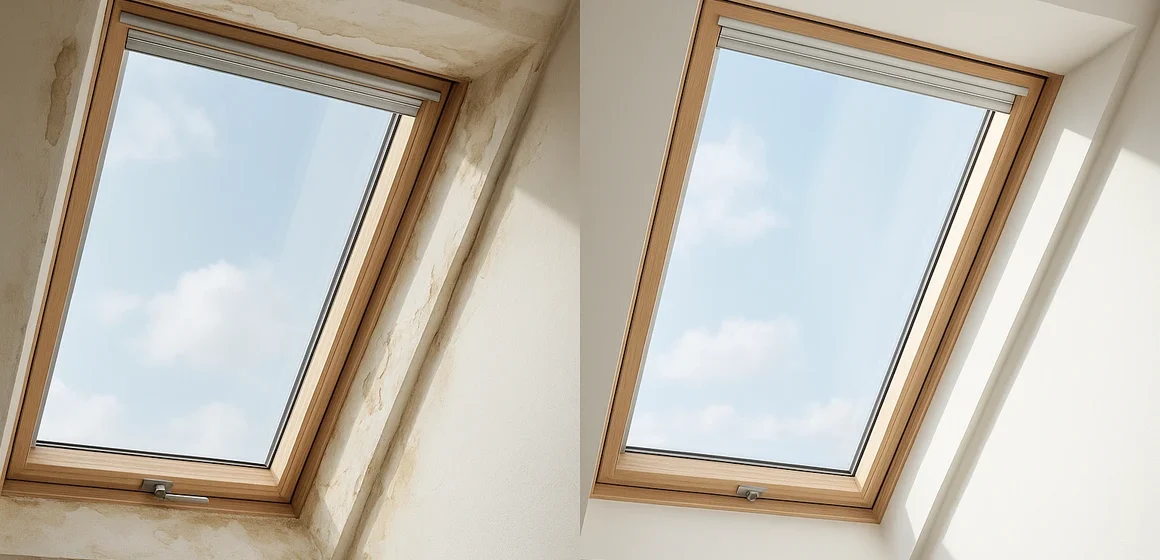
Repeated Leaks: If you’ve repaired the same leak more than once, the frame or glazing may be compromised.
Severe Glazing Damage: Large cracks, fogging between double glazing, or discoloured acrylic usually mean the unit’s insulation performance has dropped.
Outdated Design: Older skylights may be single-glazed or poorly insulated, making your home less energy efficient and costing more to heat or cool.
Visible Frame Decay: Rotting wooden frames or rusted metal frames mean it’s time for a replacement.
Cost Considerations
- Repairs are usually cheaper upfront but can add up if issues keep returning.
- Replacement is a larger initial investment but can deliver better insulation, lower energy bills, and less hassle for years to come.
Think about the age of your skylight:
- If it’s more than 15–20 years old, a replacement often makes more sense financially and for peace of mind.
Safety and Compliance
New skylights are designed to meet today’s stricter building standards for thermal performance and safety glazing. Replacing an outdated model can make your home safer and help keep it compliant with NZ regulations.
Professional Advice is Key
Every skylight and roof is different. The best way to decide is to have a trusted installer assess the skylight’s condition and talk you through costs and benefits.
Final Thoughts
A quality skylight should be a source of light and comfort — not worry. Knowing when to repair or replace ensures you keep enjoying bright, leak-free daylight for years to come.
Not Sure What You Need?
Let our experienced team inspect your skylight and give clear, honest advice on the best next step.