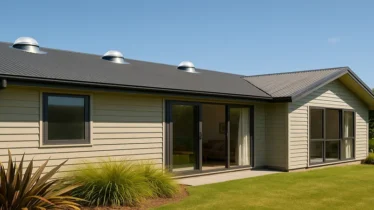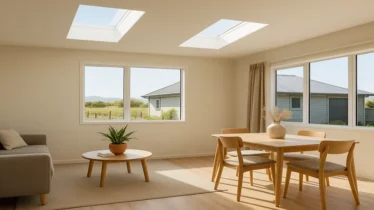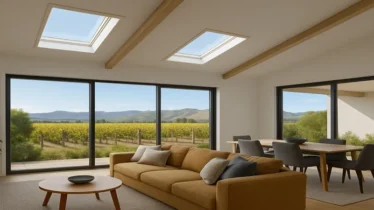
The Marlborough Summer Playbook: Designing Homes That Stay Bright and Cool Naturally
Summer in Marlborough is unmistakable — long horizons of dry warmth, cloudless skies stretched over vineyards, and light that feels both generous and intense. Inside the home, that same brightness can be a blessing or a burden.
The goal isn’t to block the sun — it’s to shape it, guide it, soften it, and use it to create homes that feel comfortable, calm, and naturally cool.
This Summer Playbook brings together Marlborough’s climate, daylighting design principles, and passive cooling strategies to help homeowners make smart choices before temperatures climb.
Seasonal reflection: “The best summer homes don’t fight the heat — they’re designed to breathe with it.”
Part 1: understanding Marlborough’s summer light
Marlborough’s climate patterns influence how homes should be designed and upgraded.
1. Long, intense sunshine hours
- Strong mid-afternoon light, especially inland (Blenheim, Renwick).
- High UV exposure across exposed rooms.
- Glare from pale vineyard soils and dry landscapes.
2. Still, warm inland air
- Slower air movement leads to heat build-up.
- Upper floors often feel hotter for longer.
- Homes with limited cross-ventilation struggle most.
3. Coastal variability in Picton and the Sounds
- Softer morning light and sea breezes.
- Cloud movement that changes interior brightness quickly.
- Higher humidity and moisture loads.
These microclimates shape how skylights, ventilation, and materials perform.
Part 2: using skylights to stay naturally bright and naturally cool
Strategy 1: use diffused light to control brightness
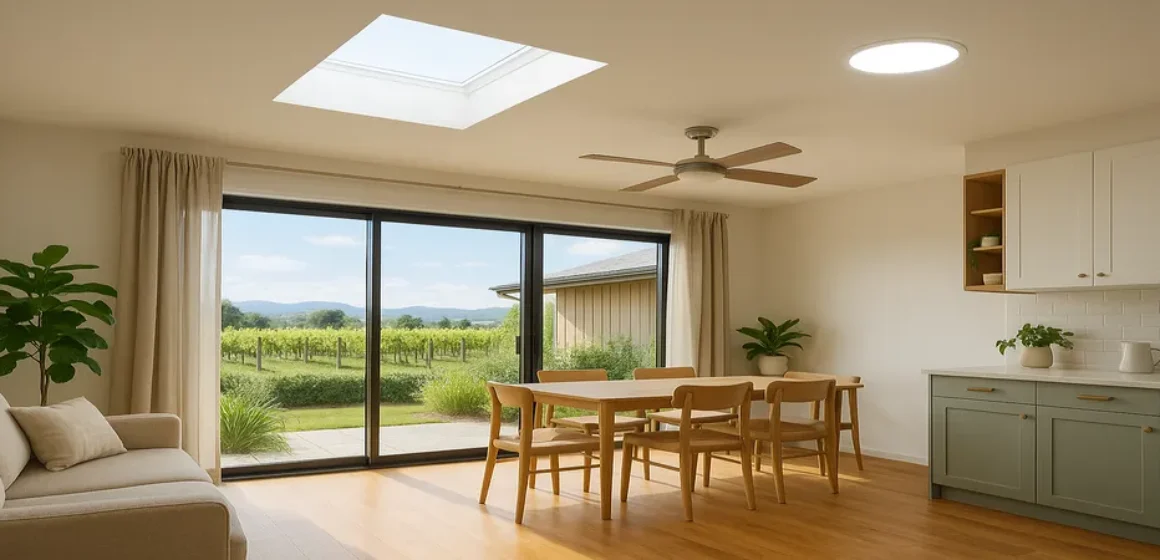
Diffused skylights soften Marlborough’s intense summer sun into a calm, even glow.
Ideal for: kitchens, dining rooms, family lounges.
Benefits:
- Reduces glare on benchtops and screens.
- Maintains brightness without heat spikes.
- Creates a more relaxed summer atmosphere.
Strategy 2: vented skylights for passive cooling
Vented skylights release trapped warm air, letting cooler air enter from lower windows.
How it works:
- Hot air rises and exits through roof openings.
- Fresh air replaces it, renewing the home.
- No fans or air-conditioning needed.
Local note: This is especially effective inland, where still air lingers well into the evening.
Strategy 3: Low-E glazing to reduce heat and UV
Low-emissivity glazing is essential across Marlborough.
It provides:
- heat reduction during peak afternoon hours
- protection for flooring and artwork
- clear, crisp daylight without tinting
Works best in: north and west-facing rooms.
Strategy 4: multiple smaller skylights instead of one large opening
In bright regions, strategic placement matters more than size.
Advantages:
- Softer daylight spread.
- Better heat and glare control.
- Flexible placement above key activity zones.
Analogy: Like placing several small windows instead of one overpowering one.
Part 3: passive cooling techniques that work beautifully with skylights
1. Stack ventilation
Combine skylights (high-level openings) with lower-level windows to move air naturally.
Effect: a continuous upward airflow that keeps homes cooler.
2. Deep eaves + skylights
Eaves shade wall glazing but leave the roof open to daylight.
Result: homes stay bright inside without overheating.
3. Night-purge cooling
Open vented skylights on cooler evenings.
Benefits:
- Releases heat built up during the day.
- Prepares bedrooms and living spaces for the next warm morning.
4. Light-coloured interior finishes
Pale surfaces amplify daylight and reduce the need for large skylights.
Works well in: compact kitchens, hallways, and open-plan zones.
Part 4: material choices that support natural cooling
1. Thermal mass
Ceramic tiles, polished concrete, and stone absorb heat during the day and release it slowly at night.
2. Insulation upgrades
Insulated skylight shafts and ceiling cavities help regulate room temperature.
3. Timber elements
Softens daylight, reduces glare, and retains a calm, natural interior feel.
Part 5: a practical checklist for Marlborough homeowners
- Identify which rooms overheat in summer.
- Check roof orientation (north, east, west).
- Choose diffused or Low-E glazing based on brightness.
- Decide between fixed and vented skylights.
- Pair skylights with passive cooling design.
- Upgrade insulation in the skylight shaft if needed.
- Book installations before roof temperatures peak.
Illustrative Example Only: A Witherlea family installed one diffused skylight and one vented skylight before summer — the combination transformed both brightness and airflow.
Final thoughts
Marlborough’s summers are vibrant, intense, and deeply connected to the landscape. Homes designed with natural light and passive cooling in mind feel calmer, fresher, and more enjoyable — without relying heavily on mechanical systems.
Plan your summer-ready skylight design today and enjoy a home that stays bright and naturally cool.
FAQs
Do skylights make homes hotter in summer?
Not when designed with diffusers, Low-E glazing, or ventilation — these reduce heat and glare.
Is passive cooling effective in Marlborough?
Yes. Stack ventilation and vented skylights work exceptionally well inland and coastal.
Are multiple small skylights better than one large one?
Often yes — they soften light and improve comfort.
Should I install skylights before summer?
Ideally yes. Late spring offers the best installation window.
Do I need Low-E glass in coastal areas?
Usually for west-facing rooms; coastal homes often prioritise ventilation first.