Bright Savings: How Skylights Improve Energy Efficiency in Alexandra’s Dry Summers
Alexandra is one of New Zealand’s sunniest towns — long daylight hours, low humidity, and dry heat define its summers. But that abundance of sunlight also brings an opportunity: to design homes that use natural light strategically instead of relying on electricity.
When skylights are chosen and installed with energy efficiency in mind, they do more than brighten rooms — they reduce power consumption, regulate temperature, and enhance wellbeing throughout the seasons.
1. The Alexandra energy equation
Central Otago homes face a dual challenge: keeping interiors cool in summer while retaining warmth through crisp winter nights. Skylights, when properly specified, can balance both.
Energy realities in Alexandra:
- High solar exposure during daylight hours.
- Sharp evening temperature drops.
- Significant lighting energy use during winter months.
Design advantage: Skylights harness free, renewable light — cutting lighting costs while reducing the strain on artificial cooling or heating systems.
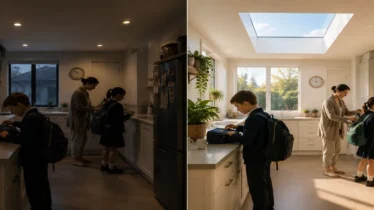
Illustrative example only: A new home on Letts Gully Road reduced its daytime lighting use by 60% after installing two Low-E skylights. The interior remained evenly lit without added glare or heat.
2. How energy-efficient skylights work
A skylight’s performance depends on how it manages three key factors — light, heat, and insulation.
Feature | Function | Energy Benefit |
Low-E coating | Reflects heat while allowing light | Keeps interiors cooler in summer |
Double glazing | Improves insulation | Minimises winter heat loss |
Thermal breaks | Reduces frame conductivity | Prevents condensation and heat bridging |
Diffused lens | Softens daylight | Enhances light distribution, reducing need for artificial lighting |
Pro tip: Look for skylights with a U-value below 2.8 W/m²K and SHGC under 0.4 for optimal performance in Alexandra’s conditions.
3. Cooling with light – not electricity
While Alexandra’s dry climate encourages passive solar design, overheating remains a risk in summer. The right skylight placement can convert direct sun into usable, indirect brightness.
Best practice for local homes:
- Install skylights on east- or south-facing roof slopes.
- Use vented or solar-powered skylights for air exchange during hot afternoons.
- Add integrated blinds or external shades to regulate solar intensity.
Analogy: Think of your skylight as a natural thermostat — balancing brightness and temperature, guided by the sun.
4. Energy cost benefits in real terms
Switching to energy-efficient skylights has measurable impacts over time.
Savings summary:
- Up to 60% reduction in daytime lighting electricity.
- Lower HVAC demand, especially in summer.
- Reduced carbon footprint through passive lighting.
Sustainability bonus: Many modern skylights are manufactured from recyclable aluminium and long-life tempered glass, supporting environmentally responsible construction in Central Otago.
Insight: A single 400 mm tubular skylight produces illumination comparable to a 300 W halogen light — using zero electricity.
5. Smarter daylight, year-round comfort
Energy-efficient skylights aren’t just for summer. In winter, their insulation and solar gain properties contribute to a more stable indoor environment.
Seasonal benefit comparison:
Season | Primary Benefit |
Summer | Heat reflection, natural cooling |
Autumn | Gentle daylight reduces artificial light use |
Winter | Passive solar warmth, lower heating needs |
Spring | Balanced brightness for longer days |
Key takeaways
- Low-E and double glazing cut heat gain and loss.
- Ventilation + shading provide natural temperature control.
- Efficient skylight design lowers lighting and cooling costs.
- Smart placement maximises daylight while minimising energy use.
Final thoughts
Alexandra’s climate gives homeowners a rare advantage — abundant sunlight that, when used wisely, saves money and energy. With efficient skylight design, your home can stay bright, comfortable, and sustainable, no matter the season.
Discover energy-efficient skylights for Alexandra homes and let natural light work for your wallet.
FAQs
How much energy can skylights save in Alexandra?
Homes can cut daytime lighting energy by up to 60% with optimised skylight design.
Will skylights overheat my home in summer?
Not if you choose Low-E, double-glazed, or solar-control skylights with built-in shading.
Do skylights help in winter too?
Yes. They capture gentle solar warmth during daylight hours, reducing heating costs.
Are energy-efficient skylights expensive to install?
They typically cost more upfront but pay for themselves through long-term savings.
Can existing skylights be upgraded for better efficiency?
Yes. Retrofit kits allow you to upgrade older domes with modern Low-E glazing.