Skylight, roof window or tubular skylight? A plain-English guide for NZ homeowners
Most homeowners know they want more natural light before they know what product they need.
The hallway feels dark. The bathroom feels enclosed. The kitchen bench sits in shadow. A spare room has become the least used room in the home. The problem is clear, but the product choice is not.
Should you ask for a skylight? A roof window? A fixed skylight? A vented skylight? A tubular skylight? A Sky tube?
This is where the conversation can quickly become confusing.
The good news is that the decision does not need to start with product names. It should start with the room.
A skylight vs tubular skylight decision is really a question of what the room needs: stronger daylight, practical daylight, airflow, a view of the sky, privacy, subtle improvement, or a more visible architectural feature.
This guide explains the main daylighting options in plain English so New Zealand homeowners can make a more confident enquiry.
Start with the room, not the product
The most common mistake is choosing a product before understanding the room.
A dark hallway does not need the same daylight solution as a kitchen. A bathroom with steam concerns does not need the same thinking as a walk-in wardrobe. A large open-plan living space has different needs from a compact laundry.
Before comparing product types, ask:
- What room are you trying to improve?
- Is the issue poor daylight, poor airflow, privacy, or a combination?
- Is the room used often during the day?
- Does it need artificial lighting during daylight hours?
- Would you like a visible skylight feature, or just practical daylight?
- Is the room compact, internal or part of a larger living area?
- Does the room have roof space above or nearby?
- Is there any moisture, steam or ventilation concern?
The right product should follow the room’s problem.
If the room only needs useful daylight, a tubular skylight may be enough. If the room needs stronger daylight and a visual connection to the sky, a fixed skylight may be better. If the room needs daylight and airflow, a vented skylight may be worth considering.
What is a skylight?
In everyday language, “skylight” is often used as a broad term for any daylight product installed through the roof.
In practical homeowner terms, a skylight usually refers to a roof-mounted daylight unit that brings natural light directly into a room through the roof and ceiling. It may be fixed or opening, depending on the product.
Skylights are often used in:
- Kitchens
- Living rooms
- Bathrooms
- Bedrooms
- Home offices
- Dining areas
- Open-plan spaces
- Larger hallways or entries
A skylight can create a stronger visual effect than a tubular skylight. Depending on the ceiling and roof design, it may also require a light well, internal lining, plastering or finishing.
A skylight is often the better choice when the room needs more than a subtle daylight improvement.
It can make a room feel more open, more connected to natural light and more visually complete.
What is a fixed skylight?
A fixed skylight does not open.
Its main purpose is to bring natural light into the room. It may suit spaces where daylight is the priority and ventilation is not required from the skylight itself.
Fixed skylights may suit:
- Kitchens needing daylight over a bench or island
- Living rooms that feel flat or shadowed
- Bedrooms that lack useful natural light
- Home offices where balanced daylight is needed
- Larger bathrooms where privacy and daylight matter
- Dining areas or internal living zones
A fixed skylight can be a strong option where the homeowner wants a visible daylight feature.
However, it should still be planned carefully. Placement, roof pitch, roof type, glazing, blinds, summer comfort and internal finishing all matter.
A fixed skylight improves daylight. It does not provide airflow.
What is a vented skylight?
A vented skylight can open.
It brings daylight into the room and may support airflow when opened. This can be useful in rooms where warm air, moisture or stuffiness are part of the issue.
Vented skylights may suit:
- Bathrooms
- Kitchens
- Upper-level rooms
- Loft-style spaces
- Raked-ceiling areas
- Rooms that feel stuffy in warmer months
A vented skylight can be helpful where the room needs both light and controlled airflow. But it should not be treated as a complete ventilation solution in every situation.
For example, a bathroom may still need effective extraction. A kitchen may still need a suitable rangehood. A bedroom may still need heating, insulation and ventilation habits considered.
The key question is:
Does this room genuinely need an opening skylight, or does it mainly need daylight?
If airflow is not a real requirement, a fixed skylight or tubular skylight may be more appropriate.
What is a roof window?
A roof window is often used to describe a window installed in the plane of the roof that can usually be opened and may be within reach, depending on the room and roof design.
In many cases, roof windows are associated with attic rooms, loft spaces, raked ceilings or rooms where the window is part of the occupied roof space.
Roof windows may suit:
- Attic conversions
- Loft rooms
- Raked-ceiling bedrooms
- Upper-level spaces
- Rooms where the unit is accessible or visually prominent
- Spaces where ventilation and daylight are both important
The distinction between a skylight and a roof window can vary depending on product terminology and building context. For homeowners, the practical point is more important than the label.
Ask:
- Will the unit be fixed or opening?
- Will it be within reach or controlled remotely?
- Is it suitable for the roof pitch?
- Does it need blinds or accessories?
- What internal finishing is required?
- Does it suit the room’s purpose?
The name matters less than whether the product is right for the home.
What is a tubular skylight?
A tubular skylight is a daylighting system that brings light from the roof into a room through a reflective tube.
It usually has:
- A roof-mounted collector or dome
- A reflective tube through the roof space
- A ceiling diffuser inside the room
The diffuser is the part seen from inside. It spreads daylight into the room, often with a subtle appearance similar to a natural daytime light fitting.
Tubular skylights may suit:
- Hallways
- Laundries
- Separate toilets
- Walk-in wardrobes
- Pantries
- Internal bathrooms
- Compact rooms
- Small offices or utility zones
- Dark transition spaces
A tubular skylight is often best when the room needs practical daylight rather than a large roof-window feature.
It does not provide a view of the sky. It does not usually create the same architectural effect as a fixed skylight. It does not provide ventilation unless paired with a separate system.
Its value is targeted daylight.
For the right room, that is exactly what is needed.
What is a Sky tube?
A Sky tube is a tubular daylighting option used to bring daylight into rooms through the roof and ceiling.
From a homeowner’s point of view, it is often considered where a compact, practical daylight solution is preferred over a larger skylight.
Sky tubes may be relevant for:
- Dark hallways
- Laundries
- Small bathrooms
- Walk-in wardrobes
- Toilets
- Pantries
- Internal rooms
- Smaller spaces where a large skylight would feel unnecessary
The same practical questions apply:
- Is the roof suitable?
- Is there a workable path from roof to ceiling?
- Where should the diffuser be placed?
- Does the room need daylight only, or ventilation too?
- Is a subtle ceiling finish preferred?
A Sky tube can be a strong choice where the homeowner wants daylight in a room that does not need a full skylight feature.
Skylight vs tubular skylight: the simple difference
A simple way to compare them is this:
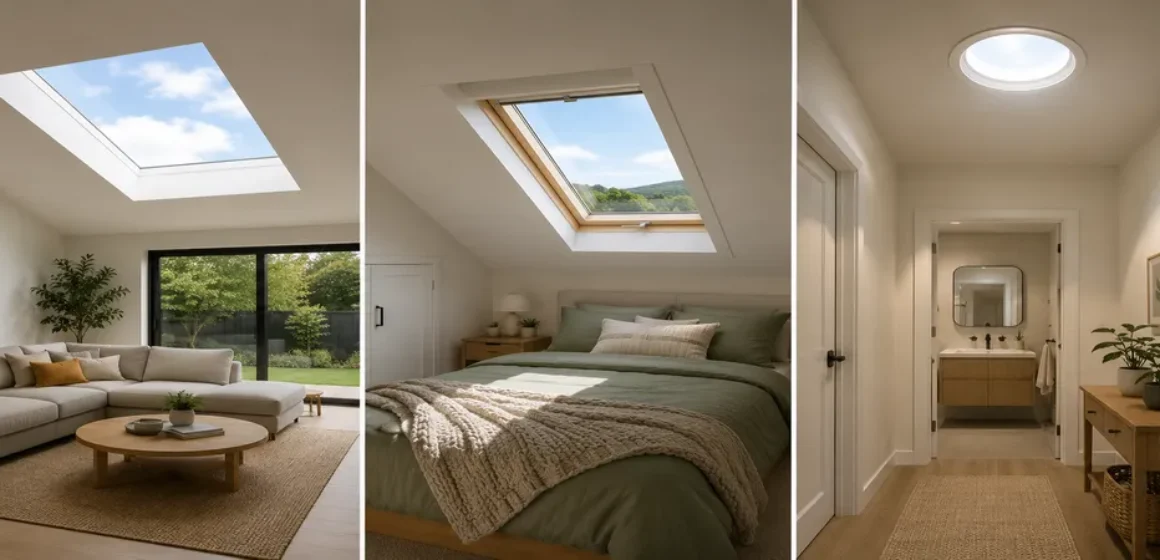
A skylight is usually more visible and can create a stronger daylight feature.
A tubular skylight is usually more subtle and targeted, designed to bring practical daylight into smaller or internal spaces.
A skylight may be better when:
- The room is larger
- You want a visible daylight feature
- You want stronger overhead daylight
- You want a visual connection to the sky
- The room is a kitchen, living room, bedroom or home office
- The ceiling and roof layout can support a larger installation
- The project is part of a renovation or design upgrade
A tubular skylight may be better when:
- The room is compact
- The room is internal or semi-internal
- You want practical daylight, not a sky view
- A large skylight would feel out of proportion
- The room is a hallway, laundry, toilet, wardrobe or pantry
- You prefer a subtle ceiling diffuser
- The goal is to reduce daytime lighting dependence in a small area
Neither option is automatically better.
The better option is the one that matches the room.
Fixed vs vented skylight: another decision layer
If a larger skylight is likely to suit the room, the next question is whether it should be fixed or vented.
Choose fixed when:
- Daylight is the main goal
- Ventilation is already handled
- The room does not need high-level airflow
- Simplicity is preferred
- The room is a living area, bedroom, office or kitchen where opening function is not necessary
Consider vented when:
- The room needs daylight and airflow
- Steam, warm air or stuffiness are part of the issue
- The room is a bathroom, kitchen or upper-level space
- The roof and room conditions suit an opening unit
- The homeowner understands how and when it should be used
A vented skylight can be valuable in the right room, but it is not automatically the premium answer for every situation.
Choosing features without need can add complexity without improving the result.
Room-by-room product guidance
Hallway
Best starting point: tubular skylight or Sky tube.
Most hallways need practical daylight, not a large skylight feature. A tubular skylight can bring daylight into the centre of the home through a ceiling diffuser.
A fixed skylight may suit a wider entry hall, stair landing or feature hallway.
Kitchen
Best starting point: fixed skylight, sometimes tubular skylight or vented skylight.
If the kitchen bench or island is dark, a fixed skylight may bring stronger daylight to the working zone. A tubular skylight may suit a smaller kitchen, pantry or scullery. A vented skylight may be worth considering if airflow is also part of the issue.
Bathroom
Best starting point: tubular skylight, fixed skylight or vented skylight depending on the problem.
If the main issue is poor daylight, a tubular skylight may suit a compact bathroom. A fixed skylight may suit a larger bathroom. A vented skylight may suit rooms where daylight and airflow both matter.
Steam, condensation and extraction should be considered separately.
Laundry
Best starting point: tubular skylight or Sky tube.
Laundries often need practical daylight without a large feature. If indoor drying or dampness is part of the issue, ventilation also needs attention.
Bedroom
Best starting point: fixed skylight or tubular skylight.
A fixed skylight may suit a larger bedroom or bedroom-office. A tubular skylight or Sky tube may suit smaller bedrooms, dressing areas or guest rooms where subtle daylight is enough.
Sleep, privacy, blinds and summer comfort are important.
Living room
Best starting point: fixed skylight.
Living rooms usually need stronger daylight and a more visible result. Placement should consider furniture, glare, summer comfort and the part of the room that feels under-lit.
Walk-in wardrobe or pantry
Best starting point: tubular skylight or Sky tube.
These rooms are usually compact and practical. A ceiling diffuser may be enough to make the space more usable during the day.
The roof and ceiling can change the answer
The room may suggest one product, but the roof and ceiling still need to be assessed.
Important details include:
- Roof type
- Roof pitch
- Roof condition
- Flashing requirements
- Roof cavity depth
- Framing direction
- Trusses or rafters
- Electrical wiring
- Plumbing or ducting
- Existing downlights or vents
- Ceiling type
- Internal finishing requirements
- Safe roof access
A homeowner may prefer a fixed skylight, but the roof or ceiling may make a tubular skylight more practical. Another homeowner may ask for a tubular skylight, but the room may benefit more from a fixed skylight if the space is larger and visually important.
This is why a good recommendation needs both room context and roof context.
What each option can and cannot do
Skylights can:
- Bring stronger natural light into a room
- Create a more visible design feature
- Improve kitchens, living rooms, bedrooms and larger spaces
- Support privacy by bringing daylight from above
- Help rooms feel more open and connected to daylight
Skylights cannot:
- Replace heating or insulation
- Suit every roof pitch or roof type
- Solve condensation by themselves
- Guarantee energy savings
- Avoid the need for blinds in all situations
Vented skylights can:
- Bring daylight and controlled airflow
- Support ventilation in some suitable rooms
- Help bathrooms, kitchens or upper-level rooms where airflow matters
Vented skylights cannot:
- Replace proper extraction in every bathroom or kitchen
- Be left open without weather awareness unless designed and managed appropriately
- Solve all moisture problems by themselves
Tubular skylights and Sky tubes can:
- Bring practical daylight into compact or internal rooms
- Suit hallways, laundries, toilets, wardrobes and pantries
- Provide a subtle ceiling diffuser rather than a large skylight feature
- Reduce reliance on artificial lighting during the day in suitable spaces
Tubular skylights and Sky tubes cannot:
- Provide a view of the sky
- Create the same visual impact as a larger skylight
- Provide ventilation by themselves
- Suit every roof or ceiling path
Clear expectations lead to better decisions.
The plain-English decision framework
Use this simple framework before making an enquiry.
If the room is small, internal and mainly dark
Start by considering a tubular skylight or Sky tube.
Examples: hallway, laundry, toilet, wardrobe, pantry, compact bathroom.
If the room is larger and needs stronger daylight
Start by considering a fixed skylight.
Examples: kitchen, living room, bedroom, dining area, home office.
If the room needs daylight and airflow
Consider a vented skylight, but check whether extraction or other ventilation is also required.
Examples: bathroom, kitchen, upper-level room.
If the room is part of the roof space or has a raked ceiling
A roof window or larger skylight option may be worth assessing.
Examples: attic room, loft room, raked-ceiling bedroom.
If you are unsure
Do not start with the product. Start with photos of the room, ceiling and roof, plus a clear explanation of what feels wrong with the room.
That gives the skylight specialist enough context to guide the product choice.
Common mistakes to avoid
Mistake 1: Asking for the biggest skylight first
The biggest product is not always the best result. A small room may need targeted daylight, not a large roof opening.
Mistake 2: Choosing a tubular skylight when the room needs a visual feature
A tubular skylight is practical and subtle. If the homeowner wants a strong design statement or sky view, a fixed skylight may be more suitable.
Mistake 3: Choosing a vented skylight without a ventilation need
Opening function can be useful, but only when the room genuinely needs it.
Mistake 4: Ignoring roof pitch and roof type
The roof may limit or influence what product is suitable.
Mistake 5: Treating daylight and moisture as the same issue
A brighter bathroom may still need extraction. A skylight does not automatically solve steam or condensation.
Mistake 6: Placing the product where it is centred, not where it is useful
Good placement follows the room’s use.
What to send before asking for advice
A better enquiry leads to a better recommendation.
Send:
- Photos of the room from several angles
- A photo of the ceiling area
- A photo of the darkest part of the room
- Photos of the roof above or near the room if possible
- The room type and approximate size
- When the room feels darkest
- Whether lights are used during the day
- Whether ventilation is also a concern
- Whether privacy, glare or summer heat matter
- Roof type if known
- Ceiling type if known
- Any planned roofing, painting or renovation work
You do not need to know whether the answer is a fixed skylight, vented skylight, roof window, tubular skylight or Sky tube.
The purpose of the enquiry is to work that out properly.
Illustrative example only
A homeowner wants to brighten a dark hallway and asks for a skylight. The hallway is narrow, internal and used constantly during the day. It does not need ventilation or a view of the sky. It simply needs daylight in the centre of the passage.
In that case, a tubular skylight or Sky tube may be more suitable than a larger fixed skylight.
Another homeowner wants to brighten a kitchen island in an open-plan living area. The kitchen is visually important, used for long periods and would benefit from stronger overhead daylight.
In that case, a fixed skylight may be more appropriate.
Both homeowners are asking for more natural light.
The correct product differs because the rooms differ.
The best choice is the one that solves the room
A skylight, roof window, tubular skylight and Sky tube are not interchangeable labels.
They are different ways of solving different daylight problems.
The best choice depends on the room’s size, use, roof access, daylight issue, ventilation needs, privacy concerns and desired appearance.
Start with the question that matters most:
What do you want this room to feel like after the daylight upgrade?
Once that is clear, the product decision becomes much easier.
Planning your next step
If you know a room in your home needs better daylight but are unsure which product is right, start with the room rather than the product name.
Skylights.co.nz can help you consider whether a fixed skylight, vented skylight, roof window, tubular skylight or Sky tube may suit your home, roof type and desired outcome.
To start planning your options, use the Skylights.co.nz enquiry form:
https://inquiry.skylights.co.nz/inquiry
You may also find these useful:
FAQs
What is the difference between a skylight and a tubular skylight?
A skylight is usually a larger roof-mounted daylight unit that can create a stronger visual daylight feature. A tubular skylight brings daylight through a reflective tube to a ceiling diffuser and is often suited to smaller or internal rooms.
Is a tubular skylight better than a skylight?
A tubular skylight is not automatically better. It is often better for hallways, laundries, toilets, wardrobes and compact rooms where practical daylight is needed. A fixed skylight may be better for larger rooms or where a stronger visual result is wanted.
What is the difference between a fixed and vented skylight?
A fixed skylight brings daylight into the room but does not open. A vented skylight brings daylight and can open for airflow. Vented skylights may suit bathrooms, kitchens and upper-level rooms where ventilation is useful.
Is a roof window the same as a skylight?
The terms can overlap, but roof windows are often associated with roof-plane windows in lofts, attic rooms or raked-ceiling spaces. For homeowners, the more important questions are whether the unit opens, suits the roof pitch and meets the room’s needs.
Which daylight option is best for a dark hallway?
A tubular skylight or Sky tube is often a good starting point for a dark hallway because it can bring practical daylight into the centre of the home without needing a large skylight feature.
What should I send when asking which skylight type I need?
Send photos of the room, ceiling and roof area if possible. Also explain when the room feels darkest, whether lights are used during the day, whether ventilation is needed, and what result you want from the upgrade.