Dark mornings before school: how better daylight can change the family routine
Winter mornings can make a family home feel heavier than it should.
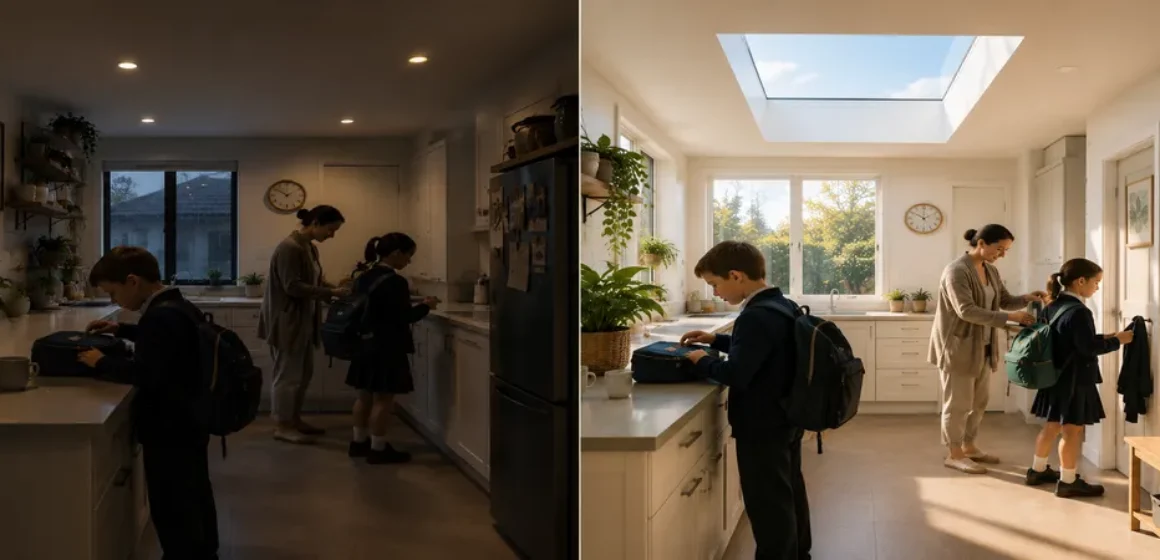
The kitchen lights go on before breakfast. The hallway feels dim while bags, shoes and uniforms are being found. The bathroom is steamy before the day has properly started. Bedroom curtains open, but the rooms still feel flat. Everyone is moving, but the home itself feels like it has not woken up.
For many New Zealand families, the morning routine is not only shaped by time. It is shaped by light.
A home with poor natural light can make already-busy mornings feel more difficult. Not because a skylight solves the school rush by itself, and not because daylight fixes every household pressure. But because the rooms families use most in the morning often need to feel clearer, easier and more connected to the day outside.
That is where natural light family home planning can make a practical difference.
A fixed skylight, vented skylight, tubular skylight or Sky tube may help in the right room, provided the product suits the roof, ceiling, room use and desired outcome.
This guide looks at the family spaces most affected by dark winter mornings and how better daylight can support a smoother daily routine.
Why mornings reveal daylight problems
A home can look fine during the day but still struggle at the exact time a family uses it most.
The morning routine often happens before daylight has fully reached the home, especially in winter. Some rooms are used quickly and repeatedly: kitchen, hallway, bathroom, bedrooms, laundry and entry areas. If these spaces are dark, the whole morning can feel more rushed and less settled.
Common signs include:
- Kitchen lights on before anyone has made breakfast
- Hallway lights needed while children move between rooms
- Bathroom lighting used every morning, even after sunrise
- Bedrooms that feel dull when getting dressed
- Laundry or utility areas that feel dim while uniforms or towels are being sorted
- Entry areas that feel shadowed when the household is leaving
- A general feeling that the home starts the day under artificial light
This is not about creating a perfect morning.
It is about removing small environmental frictions that repeat every weekday.
The family morning daylight test
Before thinking about skylight products, observe one normal winter morning.
Do not assess the home after it has been tidied or when the day is already bright. Look at it during the real routine.
Ask:
- Which rooms need lights on first?
- Where does the morning feel most rushed or shadowed?
- Does the kitchen receive useful daylight at breakfast time?
- Is the hallway clear and easy to move through?
- Does the bathroom feel fresh or closed in?
- Do bedrooms receive enough light for getting dressed?
- Is the laundry or entry area part of the morning routine?
- Which room would make the biggest difference if it felt brighter?
The answer may surprise you.
The best daylight upgrade for a family home may not be the largest living room. It may be the hallway everyone walks through, the kitchen bench where lunchboxes are packed, or the bathroom used by three people before 8am.
The kitchen: where the day usually begins
For many families, the kitchen carries the morning.
Breakfast, lunchboxes, coffee, drink bottles, school notices, snacks, bags and last-minute conversations all pass through the same space. If the kitchen feels dark, the morning can feel more demanding than it needs to.
A kitchen can still be under-lit even when it has windows. The window may light the sink while the preparation bench remains in shadow. A covered deck, deep eave, neighbouring building or south-facing orientation may reduce useful daylight.
Signs the kitchen needs better daylight
- Lights are needed every morning
- The bench or island sits in shadow
- The kitchen feels darker than the living area
- Breakfast preparation feels visually dull
- The room is shaded by outdoor cover or nearby structures
- The kitchen is used heavily but does not feel naturally bright
What may help
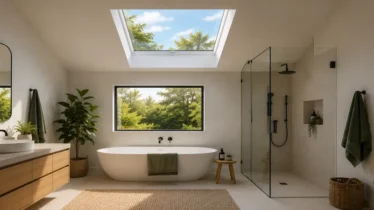
A fixed skylight may suit a family kitchen where stronger daylight is needed over a working area. A tubular skylight or Sky tube may suit a smaller kitchen, pantry, scullery or darker transition space.
If cooking moisture, odours or warm air are also concerns, a vented skylight may be worth discussing in some homes, while remembering that rangehoods and proper ventilation still matter.
The goal is not just a brighter kitchen.
It is a kitchen that feels ready for the day when the family is.
The hallway: the morning traffic lane
Hallways work hard in family homes.
They connect bedrooms, bathrooms, wardrobes, laundries, living spaces and entry points. They carry the movement of the morning: children getting dressed, parents moving between rooms, bags being carried, towels being collected, shoes being found.
If the hallway is dark, the whole routine can feel more cramped and less organised.
Signs the hallway needs attention
- The hallway light is switched on during the morning
- The passage feels narrow or closed in
- Bedrooms feel disconnected from the living area
- The hallway relies on bedroom doors being open for light
- The centre of the home feels darker than the outside conditions suggest
What may help
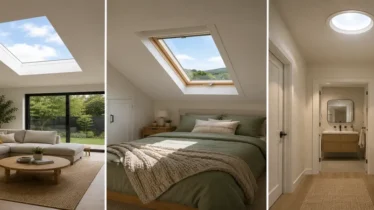
A tubular skylight is often a practical option for family hallways because it brings daylight from the roof to a ceiling diffuser without needing a large skylight feature.
This can be especially useful where the hallway sits in the centre of the home and has no direct windows.
The result may be subtle, but the value is repeated every time someone moves through the space.
The bathroom: steam, privacy and the first rush of the day
Bathrooms can become pressure points in family homes.
They are used early, often and quickly. In winter, they may also become steamy and dim at the same time. A small frosted window may protect privacy but provide little useful light. The room may feel closed in even when it is clean.
Signs the bathroom needs better daylight planning
- The room needs lights on every morning
- The mirror fogs heavily after showers
- The bathroom feels dull even after cleaning
- The window is small, shaded or frosted
- Privacy limits the option of a larger wall window
- Several people use the room in a short time
What may help
A tubular skylight may suit a compact bathroom where daylight is the main concern. A fixed skylight may suit a larger bathroom or renovation. A vented skylight may be worth considering where both daylight and airflow are relevant.
However, daylight and moisture control are different issues.
A skylight can improve the feel of the bathroom, but steam and condensation may still require extraction, ventilation, heating and moisture habits to be addressed.
Bedrooms: getting ready in rooms that still feel asleep
A bedroom can affect the morning routine more than people realise.
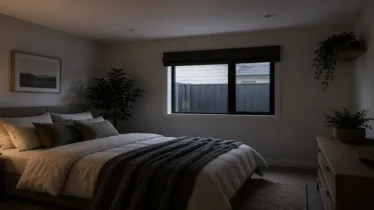
If a child’s room or spare bedroom feels dark even after curtains are open, the morning can feel slower. Getting dressed, finding uniforms, packing bags or helping younger children can all happen under artificial light.
In winter, south-facing bedrooms, rooms near boundary fences and bedrooms with small windows often feel especially dull.
Signs a bedroom may need better daylight
- Lights are used while getting dressed during the day
- The room feels darker than other bedrooms
- The window faces a fence, wall or shaded area
- Privacy means curtains or blinds stay partly closed
- The room doubles as a study or play space
- The room is avoided outside sleeping hours
What may help
A fixed skylight may suit a bedroom where stronger daylight is wanted and blinds can manage sleep and summer comfort. A tubular skylight or Sky tube may suit smaller bedrooms, dressing areas or rooms where subtle daylight is enough.
Bedroom daylight needs careful planning around sleep, privacy, summer heat and glare.
A bedroom should feel brighter when needed, not uncomfortable when rest matters.
The laundry and entry zone: the overlooked part of the routine
The laundry and entry area often sit quietly behind the morning rush.
Uniforms, towels, sports gear, school shoes, jackets, bags and wet-weather items all pass through these spaces. If they are dark, the home can feel less organised, even when the system itself works.
Signs these spaces need daylight
- The laundry light is used every morning
- The entry feels dim when leaving the house
- The room sits beside the garage or back door
- There is little or no window light
- The space feels cluttered partly because it is poorly lit
- Wet-weather gear and washing make the area feel heavier in winter
What may help
A tubular skylight or Sky tube can be a practical daylight option for laundries, entries, mudroom-style spaces and utility zones.
If moisture from washing or drying is present, ventilation should be considered separately.
The goal is not to make the laundry beautiful for its own sake. It is to make the morning routine easier to manage.
The difference between a brighter home and a calmer morning
Better daylight does not make children move faster.
It does not remove school notices, missing socks or packed-lunch decisions.
But it can change the environment in which those things happen.
A home that starts the day with useful natural light can feel more settled. Rooms are easier to read. Movement feels clearer. The centre of the home feels less closed in. The kitchen, hallway and bathroom feel more connected to the day outside.
This is the practical value of daylight in a family home.
It does not promise perfection.
It reduces friction.
Fixed skylight, vented skylight, tubular skylight or Sky tube?
The right product depends on which room is causing the most morning friction.
Fixed skylight
Often suitable for:
- Kitchens
- Larger bathrooms
- Bedrooms
- Family living spaces
- Home offices or study rooms
Best where stronger daylight and a more visible skylight feature are wanted.
Vented skylight
Often considered for:
- Bathrooms
- Kitchens
- Upper-level spaces
- Rooms that need both daylight and airflow
Best where ventilation has a clear purpose and the roof, room and product are suitable.
Tubular skylight
Often suitable for:
- Hallways
- Laundries
- Toilets
- Walk-in wardrobes
- Pantries
- Compact bathrooms
- Entry or utility zones
Best where practical daylight is needed without a large skylight feature.
Sky tube
A Sky tube may suit compact or internal family spaces where the goal is subtle, functional daylight.
The best choice is not the most impressive product. It is the product that solves the room’s actual problem.
Planning daylight around family life
Family homes need practical decisions.
Before choosing a skylight location, think about the routine rather than the room alone.
Ask:
- Where does the morning start?
- Which room causes the most delay or frustration?
- Which space needs lights on first?
- Which rooms do children use before school?
- Is there a dark hallway connecting everything?
- Is the bathroom both dark and steamy?
- Does the kitchen bench receive daylight?
- Are bags, shoes or uniforms handled in a dark entry or laundry?
- Would one targeted daylight upgrade improve several moments in the routine?
A skylight should support how the household moves.
That is what makes the improvement valuable.
What a daylight upgrade can and cannot do for family homes
A skylight, tubular skylight or Sky tube can:
- Bring natural light into rooms used during the morning
- Reduce reliance on artificial lighting during daylight hours in suitable spaces
- Make hallways, kitchens, bathrooms and laundries feel easier to use
- Improve privacy where wall windows are limited
- Help small rooms feel less closed in
- Support targeted improvements without a full renovation
It cannot:
- Replace heating or insulation
- Guarantee a calmer household routine
- Solve bathroom steam or moisture by itself
- Fix poor storage or layout automatically
- Suit every roof or ceiling layout
- Replace task lighting needed early or after dark
- Guarantee a specific energy saving
The value of daylight is practical, not magical.
A better-lit family home still needs good systems, storage, ventilation and warmth. But daylight can make the spaces feel easier to live in.
Local NZ family-home patterns
New Zealand family homes vary widely, but some patterns are common.
Older villas and bungalows often have central hallways and bedrooms that rely on borrowed light. Mid-century homes may have compact bathrooms and laundries. Townhouses and newer subdivisions may have shaded side windows, internal bathrooms, garage entries and narrow service zones. Rural homes may have longer hallways and deeper floor plans. Coastal or wetter regions may make dark bathrooms and laundries feel more noticeable in winter.
In many homes, the problem is not that the whole house is dark.
It is that the morning routine happens through the darkest parts of the home.
That is where daylight planning can make a real difference.
Illustrative example only
A family notices that winter mornings feel rushed and gloomy. The living room receives good light later in the day, but the kitchen bench, hallway and bathroom all need lights on before school. The hallway sits in the centre of the home, and the bathroom has a small frosted window.
The first thought is to add brighter artificial lighting.
That may help at night, but it does not solve the daytime daylight gap.
A daylight assessment may show that the hallway is the strongest first candidate for a tubular skylight because it affects movement between bedrooms, bathroom and kitchen. The bathroom may need a separate discussion around daylight and ventilation. The kitchen may be considered later if the bench remains under-lit.
The family does not need to change the whole house.
They need the morning path through the home to feel lighter.
Questions to ask before booking
Before choosing a family-home skylight location, ask:
- Which room is used most during winter mornings?
- Which room needs the light on first?
- Is the problem daylight, ventilation, warmth, storage or layout?
- Would overhead daylight reach the area that matters?
- Is privacy limiting wall-window daylight?
- Would a fixed skylight, vented skylight, tubular skylight or Sky tube suit the room?
- Is there roof space above or near the room?
- Would the skylight affect sleep, glare or summer comfort?
- Is the room due for renovation, painting or roof work?
- What outcome would make mornings feel easier?
These questions help turn a general desire for more light into a practical plan.
What to send when asking for advice
A family-home skylight enquiry is easier to assess with clear photos and context.
Send:
- Photos of the room from several angles
- A photo of the ceiling area
- A photo of the darkest part of the room
- Photos of the roof above or near the room if possible
- The room’s role in the morning routine
- When the room feels darkest
- Whether lights are used during the day
- Whether privacy, steam, heat or glare are concerns
- Roof type if known
- Ceiling type if known
- Any planned renovation, painting or roofing work
This helps identify the best room and product type before moving to a quote.
The real goal: a home that starts the day better
A family home does not need to be perfect.
It needs to work.
In winter, that means the rooms used before school should feel clear, usable and connected to the day. A kitchen that does not feel gloomy. A hallway that does not feel like a dark tunnel. A bathroom that does not feel closed in. A laundry or entry area that supports the routine instead of slowing it down.
Natural light cannot manage the morning for you.
But it can make the home feel more ready for it.
Planning your next step
If dark winter mornings are making your family routine feel heavier, it may be worth identifying which room would benefit most from better natural light.
Skylights.co.nz can help you consider whether a fixed skylight, vented skylight, tubular skylight or Sky tube may suit your home, roof type and family routine.
To start planning your options, use the Skylights.co.nz enquiry form:
https://inquiry.skylights.co.nz/inquiry
You may also find these useful:
FAQs
Can natural light improve a family morning routine?
Natural light cannot remove the normal pressures of a family morning, but it can make key rooms feel clearer and easier to use. Kitchens, hallways, bathrooms, laundries and bedrooms often benefit when daylight is improved.
Which family rooms benefit most from skylights?
Common high-value rooms include kitchens, hallways, bathrooms, laundries, bedrooms, entries and utility zones. The best room depends on where the household spends time and which spaces need artificial lighting during the day.
Is a tubular skylight good for a family hallway?
A tubular skylight can be a practical option for a family hallway if there is a suitable roof and ceiling path. It can bring daylight into the centre of the home without needing a large skylight feature.
Can a skylight help a dark bathroom before school?
A skylight, tubular skylight or Sky tube may improve daylight in a dark bathroom. If steam, condensation or stale air are also concerns, ventilation and extraction need to be considered separately.
Should I choose a fixed skylight or Sky tube for a family home?
A fixed skylight may suit larger rooms such as kitchens, bedrooms or living spaces. A Sky tube may suit compact spaces such as hallways, laundries, toilets and internal bathrooms. The right choice depends on room size, roof access and desired outcome.
What should I send for a family-home skylight enquiry?
Send photos of the room, ceiling and roof area if possible. Also explain how the room is used during the morning, when it feels darkest, whether lights are needed during the day, and whether privacy, ventilation or glare are concerns.