Smart Homes, Smarter Light: Integrating Skylights with Modern Tech in Nelson Builds
Nelson’s homes are changing. Once designed around fixed windows and manual blinds, modern builds now think in terms of automation, energy efficiency, and adaptive light.
Smart skylights sit at the centre of that shift — combining design and technology to create homes that think for themselves.
Reflection: “The smartest light isn’t the brightest — it’s the one that knows when to shine.”
Where design meets intelligence
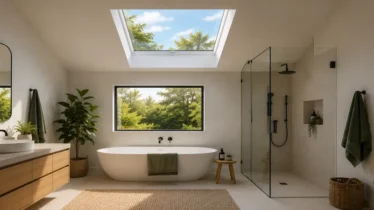
Today’s homeowners and builders in Nelson want homes that balance beauty with performance. Smart skylights bring that vision to life by sensing, adjusting, and responding to the world around them.
How they work:
- Automatic sensors open and close skylights based on temperature, humidity, or rain.
- App and voice control allow homeowners to adjust skylights from anywhere.
- Solar-powered operation makes them energy-independent and eco-friendly.
- Smart blinds filter light automatically during peak summer hours.
Local insight: Nelson’s high sunshine hours make solar automation systems particularly effective, ensuring reliable, self-sustaining performance year-round.
Smarter living through automation
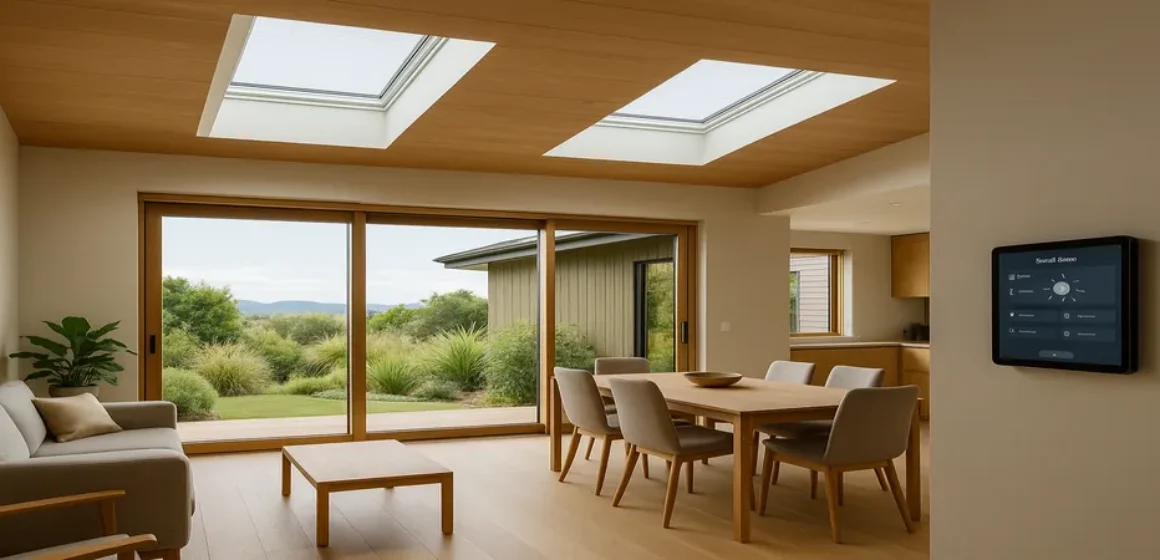
Smart skylights are part of the connected home ecosystem — integrating seamlessly with lighting, ventilation, and energy systems.
Common integrations:
- Smart thermostats: Skylights coordinate ventilation to assist with passive cooling.
- Home energy dashboards: Track light use and solar performance.
- Security systems: Close automatically when you leave home or weather shifts.
Installer note: Many Nelson architects now specify skylight automation alongside heat recovery and smart lighting to meet NZ’s growing energy efficiency standards.
Analogy: Smart skylights act like a home’s pulse — adjusting rhythm to match light, air, and comfort.
Sustainable design for future-ready homes
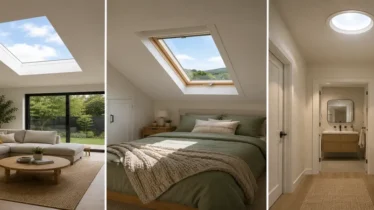
Nelson’s builders are increasingly adopting sustainable, low-energy design principles. Smart skylights contribute to this by maximising daylight use and minimising electricity demand.
Key benefits:
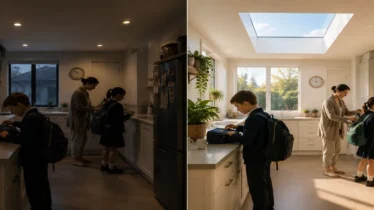
- Reduce artificial lighting by up to 60% during daylight hours.
- Maintain consistent interior temperature with minimal HVAC reliance.
- Solar panels power automation, eliminating grid draw.
Environmental note: When paired with thermally broken frames and Low-E glazing, smart skylights help Nelson homes meet or exceed the H1 energy efficiency clause of the NZ Building Code.
Illustrative Example Only
A new-build home in Stoke integrated four solar-powered vented skylights connected to a central automation hub. The system tracks daylight and humidity levels, adjusting each skylight automatically.
During summer, it releases heat in the afternoon; in winter, it seals tight for insulation.
Outcome: The homeowner reported a 25% drop in energy use and a noticeably more comfortable indoor climate.
Designing for light intelligence
Smart skylights aren’t just functional — they elevate architecture. By merging light, motion, and automation, they create dynamic interiors that evolve with the day.
Design principles for Nelson builds:
- Orient skylights for balanced daylight (north and south-facing combinations).
- Integrate sensors into home control panels for seamless automation.
- Choose solar-operated models to simplify installation.
- Use smart blinds for precise glare and privacy control.
Builder insight: Smart skylight systems now come pre-programmed for integration with Google Home, Alexa, and KNX — no separate controllers needed.
Final thoughts
The future of light in Nelson homes isn’t about adding more — it’s about designing smarter. With automation, solar power, and responsive design, skylights have evolved from passive fixtures to intelligent elements of architecture.
Explore smart skylight options for Nelson homes and bring innovation to every beam of light.
FAQs
What makes a skylight ‘smart’?
Smart skylights use sensors, automation, and solar power to adjust ventilation and light based on environmental conditions.
Are smart skylights difficult to install?
No. Solar-powered models require no wiring and integrate easily with most roofing systems.
Can I control smart skylights with my phone?
Yes. Most modern models connect via Wi-Fi or Bluetooth apps for real-time control.
Do smart skylights work in cloudy conditions?
Yes. They operate on stored solar energy and respond to indoor sensors even during low sunlight.
Are smart skylights energy-efficient?
Extremely. They reduce lighting costs, improve air circulation, and rely on renewable solar power.