Warmth from above: winter skylight planning for South Island homes
On a July afternoon in Christchurch or Queenstown, the sun sits low and the light feels different. It slides across the room rather than pouring in from above. Hallways stay dim, south-facing rooms cool quickly, and by late afternoon many homes rely on heat pumps and lamps to keep things comfortable.
Yet even in the coldest parts of the South Island, there are hours of bright, usable daylight moving across the sky each day. The challenge is not that the light is missing; it is that many homes are not built to capture and hold it.
Thoughtfully planned winter skylights can help change that story. Done well, they:
- draw in low-angled sun that windows may miss
- make darker rooms feel usable for more of the day
- support passive warmth while still managing heat loss and condensation.
This article focuses on winter skylight planning specifically for South Island climates – from the crisp mornings of inland Canterbury to the frosts of Central Otago and the cooler southerlies of Southland.
Illustrative Example Only: “We thought a skylight was a ‘summer thing’, but the real difference showed up in winter. Our south-facing hallway in Dunedin went from gloomy to quietly bright, and the rooms off it felt less cold when we opened their doors.”
Our aim is to give you calm, practical guidance so you can design skylights that work with winter conditions rather than against them.
1. Why winter light feels different in South Island homes
In winter, South Island light behaves in a particular way:
- The sun sits lower in the sky, especially in places like Invercargill and Dunedin.
- Days are shorter, so the window for passive warmth is limited.
- Clear, cold mornings and evenings mean strong temperature swings.
- Hills, nearby houses and trees can throw long shadows over sections.
In practical terms, that means:
- north-facing windows may see less direct sun than expected, especially if something blocks the view of the sky
- side windows alone often cannot reach the back of deeper rooms or internal spaces
- any heat you do capture needs to be held carefully, not lost through poorly performing glazing or uninsulated shafts.
Skylights, placed correctly, can help tap into the higher portion of the sky that is still bright even when neighbouring buildings and trees are casting shadows lower down.
2. Reading your home’s winter behaviour before adding skylights
Before talking product types and glazing, it helps to observe how your home behaves now.
Spend a few winter days paying attention to:
- Which rooms feel coldest and darkest?
Are they south-facing, internal, or simply set back from any external walls? - Where does the low winter sun actually reach?
Notice any patches of light that move across floors or walls, even briefly. - What happens at 3–4 pm?
That is often when the temperature drops sharply and lights start going on. - How do you currently heat the home?
Heat pumps, wood burners and radiators all interact differently with added daylight.
A simple sketch of your floor plan with arrows showing where winter light comes from can be surprisingly useful when you later speak with a skylight installer.
3. Choosing skylight types for cold climates
Different South Island regions have their own winter profile, but they share one core requirement: skylights must bring in light and potential warmth without becoming a weak point for heat loss.
Fixed skylights for steady daylight
Fixed skylights are often suited to:
- hallways and stairwells, where constant light is more important than ventilation
- internal bathrooms where mechanical extraction handles moisture
- spaces where you want to reduce the need for electric lights during the day.
In winter-focused designs, fixed skylights should be paired with high-performance glazing and properly insulated shafts.
Vented skylights where moisture and warmth meet
In cold climates, ventilation still matters. Vented skylights or roof windows are helpful for:
- bathrooms and laundries, where moisture can otherwise linger
- kitchens, especially in airtight newer homes
- lofts and upper rooms where warm, moist air tends to collect.
The key is to choose units that close securely and perform well when shut, as they will often stay closed on the coldest days and nights.
Roof windows for alpine and hillside homes
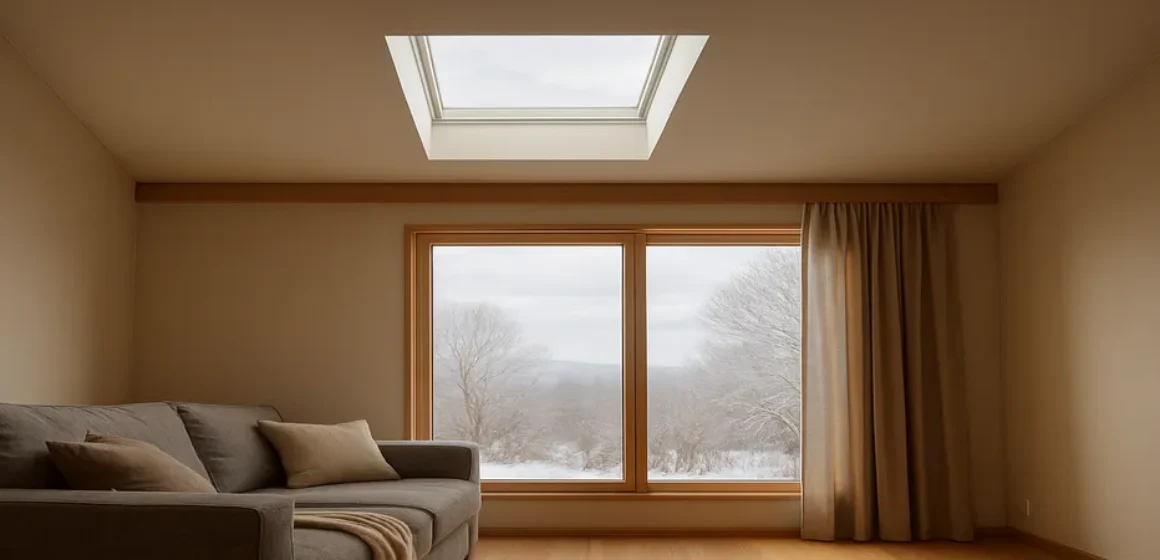
In areas like Queenstown, Wanaka and parts of Nelson/Tasman, roof windows can:
- provide both views and ventilation in upper-level rooms
- bring in low winter sun while allowing summer shading through blinds
- help manage air quality in spaces that are otherwise heavily insulated.
Whatever type you choose, winter planning starts with a simple question: How does this skylight help this room feel warmer, lighter and more usable in July, not just in January?
4. Getting orientation and placement right for winter
Orientation matters all year, but in winter it becomes particularly important.
North-facing skylights
In the South Island, a north-facing roof surface is usually the most valuable for winter skylights. It:
- sees more of the sun’s path across the day
- can deliver passive warmth when the sun does appear
- often gives more consistent daylight through the middle of the day.
With good glazing, north-facing skylights can strike a balance between beneficial winter gains and manageable summer conditions.
East-facing and west-facing options
- East-facing skylights can warm a kitchen or dining area with gentle morning sun, helping the home feel more welcoming at the start of the day.
- West-facing skylights may bring strong late-afternoon sun, which can be helpful in cold climates but may require blinds or diffusers to control glare.
Above internal and south-facing spaces
Some of the biggest winter gains come from lighting rooms that currently rely heavily on artificial light:
- internal bathrooms with no external windows
- central corridors in older villas or bungalows
- south-facing living areas that feel flat and grey in winter.
Here, the aim is less about direct solar gain and more about bright, even daylight that supports comfort and mood without large temperature swings.
5. Managing heat loss: glazing, shafts and insulation
In cold climates, a poorly specified or installed skylight can act like a thin patch in a good winter jacket. Planning for thermal performance is essential.
Glazing choices
Modern skylights for South Island winters should strongly consider:
- double glazing, which keeps the internal glass surface warmer
- Low-E coatings, which improve insulation while still admitting light
- gas fills and thermal breaks where available, to further reduce heat transfer.
You do not need to remember the technical specifications. Instead, ask your installer how the proposed skylight compares to your existing windows in terms of insulation and comfort.
Insulated shafts
If the skylight sits above a shaft:
- ensure the shaft walls are properly insulated, not left as bare framing
- check that linings are well-fitted, without gaps where cold air can gather
- consider lighter interior colours to reflect winter light deeper into the room.
A well-insulated, well-finished shaft reduces heat loss and helps any sunlight that enters feel more effective.
Controlling unwanted drafts
Good detailing around the skylight frame and at the ceiling junction helps prevent:
- cold air leaks
- dust streaks from air movement
- small gaps that can become condensation points.
A helpful analogy is to think of the skylight as part of your home’s “thermal shell”. If the rest of your home has been upgraded, it makes sense for the skylight area to keep pace.
6. Winter-friendly ventilation and condensation control
Even in winter, your home needs fresh air. The trick is to ventilate smartly so you do not lose hard-earned warmth unnecessarily.
Using vented skylights strategically
In South Island homes, vented skylights can be used:
- on milder winter days to release stale or moist air at the top of the room
- briefly after showers or cooking to clear steam, even if it is cold outside
- in tandem with mechanical extraction for short, sharp air changes.
Short, controlled ventilation periods can reduce condensation without cooling the entire home.
Managing condensation around winter skylights
Because the air is colder, winter condensation can be more noticeable. To reduce it:
- run extractor fans during and after showers and cooking
- avoid drying clothes indoors near skylight shafts
- ensure any bathroom skylight is paired with reliable extraction.
If you consistently see dampness or staining around a skylight in winter, it may be worth reading a dedicated condensation article and speaking with an installer about both ventilation and insulation improvements.
7. Regional snapshots: Canterbury, Central Otago, Southland and Nelson/Tasman
While every home is unique, some regional patterns can guide winter skylight planning.
Canterbury (Christchurch and surrounding towns)
- Clear winter days with frosty mornings and cool evenings.
- Many single-storey homes on flat sections with good roof access.
- Winter skylights can be effective over south-facing living areas and internal corridors that never quite feel bright.
Central Otago and Queenstown Lakes
- Cold winters with strong sun when it appears, and snow in some areas.
- Mix of holiday homes and permanent residences, often with pitched roofs and feature ceilings.
- Roof windows and larger skylights may support both views and passive warmth, but high-performance glazing is especially important.
Southland (including Invercargill)
- Short winter days and cooler temperatures.
- Many homes benefit from extra daylight in kitchens, dining areas and living rooms used in the late afternoon.
- Design often focuses on reducing reliance on artificial lighting during the day while keeping heat inside.
Nelson and Tasman
- Generally sunnier than many regions, but still cooler in winter mornings and evenings.
- Winter skylights can enhance already bright homes by reaching deeper into floor plans, particularly in modern builds with long layouts.
- Balancing winter gains and summer comfort is key here.
These regional nuances are worth discussing with any installer you engage. Local experience matters.
8. Planning a winter-focused skylight upgrade
If you are considering adding or upgrading skylights with winter in mind, a simple planning sequence can help:
- Map your winter pain points: Note which rooms feel dim, cold or unwelcoming in winter.
- Observe light and heat patterns: Spend a few days noting where the sun actually falls and how quickly rooms cool.
- Clarify your priorities: Is your main aim passive warmth, brighter spaces, better mood, or all three?
- Talk to a local skylight installer: Share your observations, climate, roof type and any existing heating upgrades.
- Focus on performance, not just appearance: Ask about glazing, insulation and how the skylight will perform in the coldest weeks of the year.
When you are ready for a conversation, Skylights.co.nz can help you connect with experienced installers who understand South Island conditions and can recommend options that genuinely suit your home.
Make an enquiry via Skylights.co.nz
FAQs – winter skylights for South Island homes
Q1. Do skylights make South Island homes colder in winter?
Not if they are well specified and installed. Older, single-glazed skylights can be weak points, but modern units with good glazing and insulated shafts can add useful daylight and potential warmth without significantly increasing heat loss.
Q2. Are north-facing skylights always best for winter?
North-facing skylights often provide the most winter benefit because they see more of the sun’s path, but the best orientation depends on your floor plan, roof shape and how you use each room. East and west-facing skylights can also be helpful when carefully planned.
Q3. What kind of glazing should I choose for a cold climate?
Double glazing with appropriate Low-E coatings is usually a strong starting point for South Island winters. Your installer can explain specific options and how they compare with your existing windows in terms of comfort and performance.
Q4. Will adding skylights increase my risk of condensation in winter?
Skylights can reveal existing moisture issues, but they are not always the cause. In colder climates, good ventilation, moisture control and insulation around skylight shafts are important. Vented skylights and effective extraction can help manage condensation.
Q5. Can skylights help reduce my heating costs?
They can contribute indirectly by providing bright, usable daylight and, in some cases, passive warmth from winter sun. However, they should be seen as part of a broader approach that includes insulation, glazing upgrades and sensible heating choices.
Q6. Who should I talk to about winter-focused skylight design?
A qualified skylight installer with experience in South Island climates is a good starting point. They can review your roof type, local conditions and home layout, then suggest options tailored to your situation.