Brighter workdays: designing skylit home offices and study nooks in NZ
The laptop is set up, the chair is adjusted, and the noise-cancelling headphones are on – but something still feels off in your home office. By mid-morning the room feels flat, the light is harsh on one side and dull on the other, and by 3pm you are reaching for another coffee just to stay alert.
Many New Zealand home offices and study nooks were never designed as places to spend eight focused hours a day. They are repurposed bedrooms, converted corners of open-plan living areas or narrow rooms at the side of the house. Windows may be small, south-facing or shaded by neighbouring homes and trees.
Skylights, used well, can transform these spaces. They:
- bring in consistent, overhead daylight that reduces eye strain
- make small rooms feel open rather than boxed in
- help separate “work mode” from the rest of the house without adding walls.
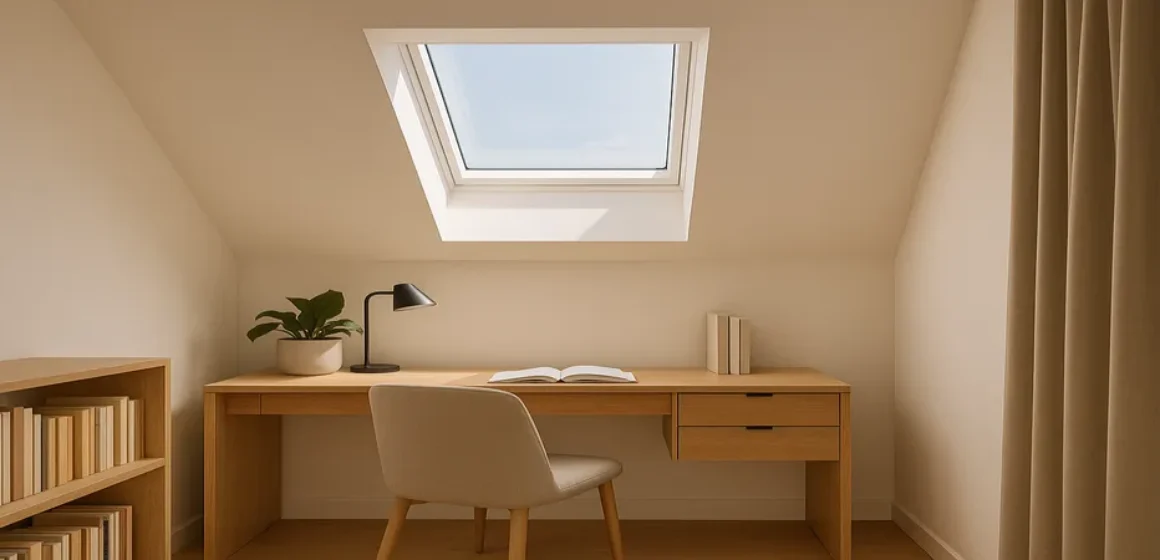
Illustrative Example Only: “When my job went fully remote, working in our south-facing spare room became draining. After adding a compact skylight above the desk, the room felt calmer and more awake. I started needing the overhead lights far less, even on grey Wellington days.”
This article explores how to design skylit home offices and study spaces for NZ conditions – so you can enjoy bright, focused workdays without battling glare, heat or distractions.
1. Why daylight matters more when you work from home
In an office building, lighting has usually been considered from the start. At home, the “office” often inherits whatever light the spare room happened to have.
Daylight affects more than just how a room looks. It influences:
- alertness and focus – our bodies respond to changes in natural light
- eye comfort – balanced ambient light reduces strain from screens
- mood and motivation – bright, even light can make long days feel more manageable.
In parts of New Zealand where cloud cover is common – Wellington, Southland, West Coast – even a small increase in overhead daylight can make internal workspaces feel noticeably less heavy.
Skylights give you an extra tool: instead of relying only on side windows, you can draw light from above, where the sky is often brighter than what you see out the window frame.
2. Typical home office layouts – and their light problems
Before planning a skylight, it helps to recognise the patterns that cause discomfort.
The side-lit spare bedroom
Common traits:
- one window on a short wall
- desk placed either right in front of or side-on to the window
- light strongest on one side of your face and screen.
Issues:
- glare on monitors during certain times of day
- strong contrast between bright window and darker room
- heavy reliance on artificial light on cloudy days.
The open-plan corner desk
Common traits:
- desk tucked into a corner of living, dining or kitchen area
- large sliding doors nearby, but not necessarily serving the desk zone.
Issues:
- visual distractions from the rest of the room
- distinct “hot spots” of light and shadow
- difficulty creating a sense of focused, separate workspace.
The internal study nook
Common traits:
- built into a hallway, under stairs or between rooms
- little or no direct natural light
- full dependence on artificial lighting.
Issues:
- flat, low-energy feel
- no sense of time-of-day change
- harder to stay engaged during long sessions.
Skylights cannot fix every challenge, but they can significantly change the light and feel of each of these setups when used thoughtfully.
3. Using skylights to create a “work-ready” light pattern
The goal in a home office is not maximum brightness at all costs. It is balanced, diffuse light that keeps you alert without washing out screens.
Overhead, slightly forward of your desk
A common strategy is to place a skylight:
- slightly in front of the desk, not directly above your head
- centred on the main work zone rather than the room as a whole.
This helps to:
- light your work surface evenly
- keep your face and background gently lit for video calls
- avoid harsh highlights directly on your screen.
Matching skylight size to room size
In small home offices or study nooks, bigger is not always better. A compact skylight or tubular sun tube can:
- provide enough daylight to work comfortably
- avoid overpowering the space
- reduce risk of overheating in smaller volumes.
Balancing with existing windows
Where side windows already exist, skylights can:
- soften contrast between bright window and darker corners
- extend light deeper into the room so you can position the desk where it works ergonomically, not just where the light is.
The result is a light pattern that feels calm and even, rather than patchy or dramatic.
4. Managing glare, screens and video calls
Screens change how we think about light. Too much direct sun can be just as problematic as too little.
Glare on screens
To reduce glare:
- avoid placing skylights where the sun’s path will reflect directly on your monitor
- consider diffused glazing or an internal diffuser for tubular skylights
- use blinds on side windows to fine-tune light levels during peak sun.
An installer familiar with your region can help assess how the sun moves over your specific roof during the working day.
Video call visibility
Good daylight improves how you appear on camera. Overhead and slightly forward skylight placement can:
- avoid strong backlighting that turns you into a silhouette
- reduce reliance on ring lights or harsh desk lamps
- make your background look more natural and professional.
Controlling light for focus
In sunnier regions like Hawke’s Bay or Bay of Plenty, you may want:
- integrated blinds to trim light levels on very bright days
- a mix of skylight and soft artificial lighting for flexibility.
The aim is to create a workspace that feels steady and predictable, not one where you are constantly adjusting blinds and moving your desk.
5. Ventilation and comfort during long workdays
Comfort is a big part of productivity. A skylight in a home office can support this when paired with sensible ventilation.
Vented skylights and roof windows
These are helpful when:
- your office is in a roof space or upper floor that can get stuffy
- you work in a warm, humid region where air can feel heavy by afternoon
- you want to clear warm air quickly at the end of the day.
Opening a vented skylight briefly can act like pulling a plug on warm, stale air that has risen during the day.
Managing heat in different regions
- In Auckland and Northland, plan for summer ventilation and shading first, then winter comfort.
- In Canterbury, Otago and Southland, focus on glazing and insulation that keep you comfortable on cold mornings.
- In Wellington and coastal areas, ensure the product is detailed well to handle wind and rain without rattles or draughts.
A home office should feel like a place you can work comfortably year-round, not just on mild days.
6. Small spaces: study nooks, kids’ desks and shared zones
Not every workspace is a dedicated room. Skylights can also help in compact or shared learning areas.
Hallway and alcove study nooks
A carefully placed skylight can:
- make a small study nook feel intentional rather than improvised
- give enough daylight for reading and writing without extra lamps
- avoid blocking sightlines in open-plan homes.
Kids’ homework zones
Good daylight is especially helpful for reading, drawing and screen work. Skylights:
- reduce reliance on harsh overhead lighting at nightfall
- help signal the shift from “play” to “focus” in multi-use rooms
- can be paired with blinds to manage early-morning light in bedrooms.
Shared multipurpose rooms
In spaces that act as guest room + office + hobby space, overhead light helps:
- stop the room feeling like a dark spare bedroom when used for work
- keep work areas feeling fresh, even when the bed or sofa takes up visual space.
The common thread is using daylight to make small or mixed-use spaces feel more capable and less makeshift.
7. Planning your skylit home office – a simple checklist
If you are considering skylights for a home office or study nook, this checklist can help shape your thinking before you speak to an installer.
- Clarify what is not working now: Is it the flat light, the need for lamps at midday, glare on your screen, stuffiness in the afternoon?
- Note when you work most: Do you mainly use the space in the morning, standard office hours, evenings, or a mix? This matters for sun angles.
- Map existing light and possible skylight positions: On a simple sketch, mark windows, doors, existing lights and where a skylight could sit relative to your desk.
- Think about ventilation needs: Does the room get stuffy? Is it upstairs? Might a vented skylight help clear warm air?
- Gather photos and dimensions: Photos of the room and roof, plus rough measurements, make conversations with installers much more productive.
8. Next steps – building a workspace that supports how you work
Your home office or study space is more than a desk and a chair. The way light enters and moves through it will quietly shape every workday.
If you are ready to explore skylights for a home office or study nook in your NZ home:
- start by noticing how the light feels at different times of day
- sketch where a skylight could sit relative to your desk and existing windows
- think about both comfort (heat, airflow) and focus (screen visibility, background light).
Skylights.co.nz can help you connect with experienced installers who understand how to balance daylight, comfort and practicality in real New Zealand homes – whether you are upgrading a spare bedroom or creating a dedicated workspace.
Make an enquiry via Skylights.co.nz
Sharing a short description of your workspace, your region and your main concerns is often enough for an installer to suggest sensible, tailored options.
FAQs – skylights for home offices and study nooks in NZ
Q1. Will a skylight create too much glare on my computer screen?
Not if it is positioned and specified carefully. Placing the skylight slightly in front of the desk, using diffused glazing where appropriate, and balancing it with blinds on side windows can reduce glare while keeping the space bright.
Q2. Are skylights suitable for very small home offices or study nooks?
Yes. Compact skylights or tubular sun tubes can add useful daylight without overwhelming the space. An installer can recommend sizes that suit your room and roof type.
Q3. Will a skylight make my home office too hot in summer?
In warmer regions, it is important to consider glazing choice, orientation and shading. Vented skylights, blinds and careful sizing can all help manage heat while still providing good daylight.
Q4. Can I add a skylight to a converted roof space or attic office?
Often yes, but these spaces need particular care around structure, insulation and weathertightness. A skylight installer and your builder can work together to ensure that any additions are safe, compliant and comfortable.
Q5. Do I need building consent to add a skylight to my home office?
Consent requirements depend on the scope of work, roof changes and local rules. In many cases skylights form part of a wider consented alteration. Your designer, builder or installer can advise how skylights are being covered in your project.
Q6. Who should I talk to first about adding a skylight to my workspace?
If you are already working with a designer, let them know skylights are a priority for your home office. In parallel, speaking to a skylight installer early can provide practical guidance on what is feasible for your roof and layout.