Winter power bills and daylight: where natural light can reduce daytime lighting dependence
Winter power bills have a way of making every switch feel more noticeable.
The heater is on more often. The dryer may run when the weather will not cooperate. The bathroom fan stays on after showers. The kitchen, hallway and living areas need lights earlier in the day. By the time the household settles into its winter rhythm, electricity use can feel harder to control.
It is natural for homeowners to ask whether better daylight can help.
The honest answer is: sometimes, in the right rooms, better natural light can reduce the need for artificial lighting during daytime hours. But it should not be sold as a guaranteed power bill solution. A skylight or sky tube will not replace heating, insulation, efficient appliances or sensible energy habits.
What it can do is more specific and often more practical.
It can make certain rooms usable during the day without relying so heavily on lights. It can brighten the parts of the home where the light switch has become automatic. It can reduce the sense that winter has turned the house into a series of dim, closed-in spaces.
This guide looks at where daylight reduce lighting cost thinking is useful, where it can be overstated, and how New Zealand homeowners can assess whether a skylight or sky tube may make sense.
Start with the right expectation
A skylight is a daylighting improvement, not an electricity plan.
That distinction matters.
A well-placed skylight or sky tube may help reduce the use of artificial lighting during the day in rooms that are genuinely under-lit. It may also make a room feel more pleasant, open and usable. But the effect on a household power bill depends on many factors, including:
- How often the room is used during daylight hours
- How many lights are normally switched on
- Whether the lights are efficient LED fittings or older lamps
- The season and local weather
- The size and placement of the skylight or sky tube
- The room layout and ceiling design
- Household habits
- Whether heating, hot water or appliances are the main power users
For many homes, the financial saving from lighting alone may not be the primary reason to install a skylight.
The stronger reason may be this:
The room becomes easier to live in without needing artificial light every time you enter it.
That is a real quality-of-life improvement, even when the power bill benefit is modest.
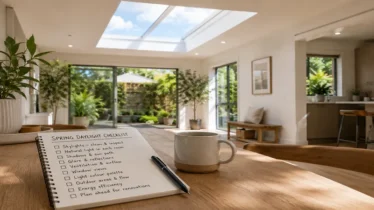
The light switch habit test
Before thinking about products, pay attention to when your household reaches for the light switch.
For one week in winter, notice which lights go on during the day, especially between 7.00am and 5.00pm.
Create a simple list:
- Kitchen lights before breakfast
- Hallway lights during the day
- Bathroom lights every time the room is used
- Laundry lights for short tasks
- Home office lights from mid-morning
- Living room lights on cloudy afternoons
- Stairwell or landing lights for safety
Then ask:
- Is the light needed for safety, task work or habit?
- Is the room genuinely dark, or only slightly dull?
- Would natural light from above reach the part of the room that needs it?
- Is this a room we use often enough for daylight to matter?
- Is the problem worse in winter, or all year?
This test quickly separates the rooms where daylight may have a practical impact from the rooms where artificial lighting is only a minor concern.
Where daylight can make the biggest everyday difference
Internal hallways
Hallways are often one of the strongest candidates for a sky tube.
They are used many times a day, but they often have no direct windows. In winter, they can need lights on even when the rest of the home has some natural light.
A tubular skylight can bring daylight into the centre of the home through a ceiling diffuser. In many homes, this can reduce the need to switch the hallway light on during daytime hours.
The benefit is not only energy-related. A brighter hallway can make the home feel more connected and less closed in.
Kitchens
Kitchens are active rooms. They are used early, often and for practical tasks.
If the kitchen bench, island or preparation area needs artificial lighting during the morning, overhead daylight may help. A fixed skylight or sky tube can bring light to the working area rather than relying only on side windows.
This can be especially useful where the kitchen is shaded by deep eaves, a covered deck, a nearby fence or neighbouring building.
Bathrooms and ensuites
Bathrooms are used in short bursts, but often at the darkest parts of the day.
A skylight or sky tube may reduce the need for artificial lighting during daytime use, particularly in bathrooms with small frosted windows or no direct daylight.
If steam and moisture are also concerns, ventilation should be considered separately. A vented skylight may be suitable in some bathrooms, while a sky tube plus proper extraction may suit others.
Laundries and utility rooms
Laundries often need the light switched on for small tasks: loading the washing machine, sorting clothes, checking stains, finding cleaning products.
A sky tube can be a practical daylight option where the room is compact, internal or attached to a darker service area.
The change may be small in a design sense, but significant in daily use.
Home offices
A winter home office can become tiring if it relies heavily on artificial lighting through the day.
Natural light needs to be planned carefully in workspaces. The goal is useful brightness without glare on screens or uncomfortable heat at certain times of year.
A skylight may be worth considering where the room is frequently used and side windows do not provide balanced daylight.
Where daylight may not meaningfully affect power bills
Not every room is a strong candidate if the goal is reducing daytime lighting dependence.
A skylight may have limited energy impact where:
- The room is rarely used during daylight hours
- Existing lighting is already efficient and used briefly
- The room already receives enough daylight
- The main power use comes from heating, hot water or appliances
- The skylight would not reach the task area that needs light
- The room is mostly used at night
This does not mean a skylight has no value. A skylight may still improve comfort, design, resale appeal or the feeling of the room.
But if the discussion is specifically about reducing lighting use, the room must be used during the day and currently require artificial light often enough for daylight to matter.
This is where honest advice is important.
The difference between lighting dependence and winter comfort
Many homeowners blend two ideas together: “This room is dark” and “This room feels cold.”
They are related in how a room feels, but they are not the same technical problem.
Better daylight can make a room feel more open, pleasant and usable. It may reduce the need for artificial lights during the day. But it is not a replacement for heating or insulation.
If a room is genuinely cold, the solution may involve insulation, heating, draught control, window performance or other building factors.
If a room is dark and underused, daylight may be the missing ingredient.
If it is both cold and dark, the best approach may involve more than one improvement.
A skylight conversation should be clear about this distinction. Trust is built when homeowners understand what a product can do, and what it cannot do.
A practical daylight value score
Use this simple scoring method to assess whether better daylight may be worthwhile from a daytime lighting perspective.
Score each room from 0 to 3 for the following categories.
1. Daytime use
0 = Rarely used during the day
1 = Used briefly
2 = Used several times daily
3 = Used for long periods during the day
2. Current lighting dependence
0 = Rarely needs lights during the day
1 = Needs lights on cloudy days
2 = Often needs lights in winter
3 = Almost always needs lights during daytime use
3. Daylight access
0 = Already has good daylight
1 = Some daylight, but uneven
2 = Limited daylight
3 = Little or no useful daylight
4. Suitability for overhead light
0 = Overhead daylight unlikely to help
1 = May help slightly
2 = Likely to help a key area
3 = Strong candidate for skylight or sky tube assessment
Add the score.
- 0 to 4: Low daylight priority
- 5 to 7: Worth reviewing, but may not be urgent
- 8 to 10: Strong candidate for improvement
- 11 to 12: High-priority daylight opportunity
This is not a technical assessment. It is a homeowner filter. It helps you decide which room deserves attention first.
Why sky tubes often make sense for lighting dependence
When the goal is to reduce daytime lighting dependence in a small or internal room, a sky tube can be a very practical option.
A sky tube brings daylight from the roof through a reflective tube and spreads it into the room through a ceiling diffuser. It is often suited to rooms where a large skylight is not necessary.
Common examples include:
- Hallways
- Toilets
- Laundries
- Walk-in wardrobes
- Small bathrooms
- Pantries
- Internal transition spaces
These are often the rooms where the light switch gets used out of habit. You enter, switch on the light, complete a small task and leave. Over a winter, that pattern can become constant.
A sky tube does not make every room feel like a living area. That is not its purpose. Its value is in bringing practical daylight to spaces that would otherwise stay artificially lit during the day.
Where fixed skylights may provide broader value
A fixed skylight may be more suitable where the room is larger, more visible or more central to daily life.
Examples include:
- Kitchens
- Dining areas
- Living rooms
- Bedrooms
- Home offices
- Open-plan spaces
In these rooms, the value is not only reducing lighting dependence. It may also be the feeling of the space.
A fixed skylight can help a room feel more open, more architecturally complete and more connected to the day outside. In winter, that can be particularly noticeable in rooms that otherwise feel flat or shadowed.
The placement must still be considered carefully. A skylight should bring light where the room needs it, not simply where it is easiest to install.
Vented skylights and the energy conversation
A vented skylight may support both daylight and airflow in suitable rooms.
This can be useful in bathrooms, kitchens and some upper-level spaces. However, it should not be sold as a simple power bill solution.
Ventilation, heating and moisture control interact in complex ways. Opening a skylight may help release warm, moist air in certain conditions, but it can also affect indoor temperature if used at the wrong time. Good use habits matter.
A vented skylight should be chosen because the room needs daylight and controlled airflow, not because it is expected to deliver a simple energy-saving outcome.
That distinction protects the homeowner and the recommendation.
Local NZ patterns that affect daylight use
Daylight needs vary across New Zealand homes.
In Auckland, Northland and Bay of Plenty, cloud, humidity and shaded boundaries can make internal rooms feel dim even when the home is not old. In Wellington and coastal areas, weather and wind can keep homes closed up, increasing reliance on internal lighting. In Canterbury, Otago and Southland, colder mornings and low winter sun can make kitchens, hallways and bathrooms feel especially dark. In rural homes, large floor plans and long corridors can create central areas far from exterior windows.
Building style also matters.
Older villas and bungalows may have deep rooms, verandas and altered layouts. Mid-century homes may have compact service areas. Newer homes may have open-plan living but still suffer from dark transition zones, pantries, ensuites or internal hallways.
A good skylight plan should respond to these real conditions, not just use a generic “more light” message.
Illustrative example only
A household notices their hallway light is on almost every winter day. The hallway connects bedrooms, a bathroom and the laundry, so it is used constantly. The home’s living area has acceptable daylight, but the central circulation space receives almost none.
The family first considers upgrading the light fitting, but the issue is not the fitting. It is the absence of natural light.
In this situation, a sky tube may be worth assessing. If the roof and ceiling conditions are suitable, daylight from above could reduce the need for daytime artificial lighting in one of the most frequently used parts of the home.
The power bill effect may be modest, but the daily experience can change noticeably.
The hallway no longer feels like a dark middle zone. It starts to feel like part of the home again.
What to check before making an enquiry
Before asking for skylight advice, gather a few practical details.
Room information
- Which room or area is the concern?
- When does it need lights on?
- Is the issue worse in winter or all year?
- Is the room used briefly or for long periods?
- Does the room need daylight, ventilation or both?
Roof and ceiling information
- What type of roof do you have, if known?
- Is there roof space above the room?
- Is the ceiling flat, sloped or raked?
- Are there ducts, beams, lights or services in the ceiling area?
- Can you provide photos of the room and roof?
Desired outcome
- Do you want subtle practical daylight?
- Do you want a stronger visual skylight feature?
- Are you trying to reduce daytime lighting use?
- Are you also improving the room for comfort or design?
The clearer the goal, the better the recommendation.
The best rooms to prioritise first
If your goal is to reduce dependence on artificial lighting during the day, prioritise rooms that meet three conditions.
They are used often during daylight hours.
They currently need lights on during the day.
They have a realistic path for daylight from above.
In many NZ homes, that means starting with:
- The central hallway
- The kitchen work zone
- The main bathroom
- The laundry
- The home office
- A dark open-plan transition area
A bedroom used mostly at night may be less urgent from a lighting-cost perspective, even if a skylight could still improve the space in other ways.
This is how homeowners can make a more strategic decision rather than choosing the room that simply looks darkest in a photo.
A balanced way to think about value
The value of a skylight or sky tube is rarely one-dimensional.
It may include:
- Reduced need for daytime artificial lighting in certain rooms
- A more pleasant morning routine
- Better use of underused spaces
- A stronger sense of openness
- Improved comfort in dark internal areas
- A more complete renovation outcome
- Better alignment between the room and how the household lives
Power bills may be part of the motivation, especially in winter. But the deeper value is often the feeling that the home works better without constant artificial lighting.
That is a more honest and more durable reason to consider daylighting.
Planning your next step
If winter has made you more aware of which lights are on during the day, it may be worth checking whether better daylight could help.
Skylights.co.nz can help you explore whether a fixed skylight, vented skylight or tubular skylight may suit your room, roof type and desired outcome.
To start planning your options, use the Skylights.co.nz enquiry form:
https://inquiry.skylights.co.nz/inquiry
You may also find these useful:
FAQs
Can a skylight reduce lighting costs?
A skylight or sky tube can reduce the need for artificial lighting during daytime hours in some rooms. The actual effect on power costs depends on room use, lighting type, weather, placement, household habits and how often lights are currently used.
Which rooms benefit most from daylight if I want to use fewer lights?
Rooms used often during the day usually benefit most. Common examples include hallways, kitchens, bathrooms, laundries, home offices and internal transition spaces that currently need artificial lighting during daylight hours.
Is a sky tube good for reducing daytime lighting use?
A sky tube can be a practical option for smaller or internal spaces such as hallways, laundries, toilets and walk-in wardrobes. It can bring daylight into areas that would otherwise rely on artificial lighting during the day.
Will a skylight lower my winter power bill?
A skylight may reduce daytime lighting use in suitable rooms, but it should not be seen as a guaranteed way to lower a winter power bill. Heating, hot water, appliances and household habits often have a larger impact on total electricity use.
Is a fixed skylight or sky tube better for energy-conscious daylighting?
It depends on the room. A sky tube may suit smaller or internal spaces where the goal is practical daylight. A fixed skylight may suit larger rooms such as kitchens, living areas and home offices where stronger natural light and room feel matter.
What should I check before asking about daylight and lighting costs?
Track which rooms need lights on during the day, when they are used, and whether the dark area sits below or near roof space. Photos of the room, ceiling and roof area can help with early advice.