From winter gloom to winter glow: skylights for NZ’s darker months
Across New Zealand, the shift into winter is easy to feel at home long before you check the calendar.
Afternoons close in earlier. Skies sit at a softer grey for days at a time. In many houses, lights go on by mid‑afternoon, especially in:
- south‑facing living rooms in Wellington or Christchurch
- villas in Dunedin with long central halls
- Auckland and Hamilton homes where neighbours and planting block low winter sun.
You may notice that:
- the centre of your living area feels gloomy even when blinds are open
- the hallway light is on most of the day
- an internal bathroom or study feels like a small cave.
At some point, the thought appears:
“Maybe we need to think about skylights – not just for summer, but for winter too.”
This article is a practical guide to winter skylights NZ homeowners can plan with confidence. It focuses on how skylights behave in darker months, where they genuinely help, and how to avoid treating them as a quick fix for deeper comfort issues.
1. How New Zealand winter light really behaves
To plan winter skylights well, it helps to understand the light you are working with.
Lower sun, shorter days
In winter, the sun:
- sits lower in the sky
- tracks a shorter path across your home
- may be hidden by hills, trees or neighbouring houses for long parts of the day.
This is why side windows that feel generous in summer can deliver very little useful light in winter, particularly on south‑facing or shaded elevations.
Regional differences you feel indoors
NZ’s winter is not the same everywhere:
- In Wellington and coastal Canterbury, wind and fast‑moving cloud can create a pattern of bright moments and sudden grey.
- In Dunedin, Invercargill and Southland, lower temperatures and shorter days mean evenings feel long, especially in older homes.
- In Auckland, Northland and Bay of Plenty, winter days can still be bright, but low sun and shading from neighbouring buildings mean internal rooms stay dim.
Skylights work directly with the available winter daylight above your roof, so planning them with local conditions in mind is important.
2. Where winter gloom shows up most at home
Winter does not treat every part of the house equally. You are likely to notice a few repeat patterns.
Central living zones
Open‑plan living, kitchen and dining areas often have:
- large sliding doors at one end
- perhaps a window or two at the other
- a central zone that sits well away from glass.
In winter, that central zone can feel heavy and flat, even at midday. Lamps become essential just to make the room feel usable.
Internal bathrooms, toilets and laundries
Rooms without external walls rely entirely on artificial lighting year‑round. In winter, the contrast between bright lights and dark corners can feel harsh, especially during early mornings.
Hallways, stairs and internal studies
Circulation spaces and small internal work nooks are often where winter gloom is most visible:
- long halls in villas and bungalows
- stairwells in townhouses
- central desk areas with no direct window.
These areas may not be the heart of the home, but they influence how you experience winter every time you move through the house.
3. What skylights can – and cannot – do for winter
Skylights are powerful tools, but they are not magic.
Where skylights shine in winter
In darker months, well‑placed skylights can:
- bring soft, even light into the centre of rooms
- reduce the need for artificial lighting during daytime
- improve mood and usability in spaces that were previously avoided.
Because skylights draw light from above, they are less affected by fences, neighbouring houses and deep verandahs than some side windows.
What they do not replace
Skylights do not take the place of:
- adequate ceiling and wall insulation
- reliable heating
- effective moisture and ventilation strategies.
A room that is cold and damp will not become warm and dry simply by adding a skylight. Instead, think of winter skylights as part of a package of improvements aimed at making the home feel better to live in.
4. Planning winter skylights for NZ homes – choosing locations first
For winter, location and room choice matter more than the exact product model.
Focus on daytime winter life
Start with where you actually spend time on winter days:
- main living, kitchen and dining zones
- work‑from‑home spaces
- bathrooms and ensuites used in the morning and evening.
Ask yourself:
- Which areas feel flat or gloomy even with blinds open?
- Where are lights on by late afternoon, even on bright days?
- Which rooms would you use more if they felt brighter in winter?
Aim for the internal halves of rooms
Often, the most effective winter skylight locations are:
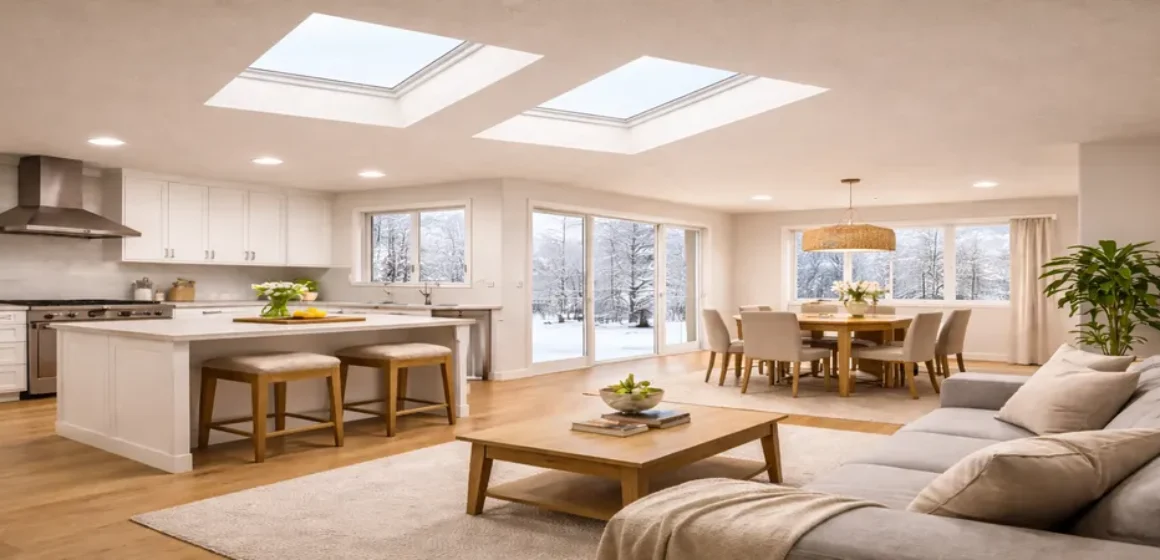
- over dining tables or internal seating zones
- above central islands (set back from strong glare points)
- in the middle stretch of a hallway.
Bringing light into these internal areas helps balance whatever daylight is already arriving from side windows and doors.
Start small, plan clearly
Most homes see a noticeable winter improvement with one to three well‑considered skylights or tubular units. A clear, focused plan will serve you better than scattering openings without a strategy.
5. Winter performance basics – glass, shafts and condensation
A few performance choices make a big difference to how winter skylights feel.
Glazing and heat
Modern skylights often use double glazing. In simple terms, this means:
- two panes of glass with a gap between, reducing direct heat flow
- warmer internal glass surfaces than single glazing
- better alignment with insulated ceilings.
Low‑E coatings can further help manage heat loss or gain by reflecting some long‑wave heat back into the room. Your installer can suggest options that fit your climate and roof design.
Shafts and insulation
The shaft – the lined space between the skylight and your ceiling – matters for winter.
Good winter practice includes:
- insulating around the shaft in line with surrounding ceiling insulation
- ensuring the shaft is properly lined and sealed
- paying attention to junctions where warm indoor air meets the colder roof space.
This helps reduce cold drafts and maintains a more even room temperature.
Condensation and moisture
In winter, warm indoor air meeting cold surfaces can create condensation. With skylights, this risk can be managed by:
- appropriate glazing and shaft insulation
- adequate room ventilation, including extraction in bathrooms and kitchens
- using vented skylights where airflow is part of the design.
The goal is a winter skylight that feels clear and dry, not misted or dripping.
6. Winter skylights alongside heating and ventilation
Skylights support comfort best when they sit within a broader winter strategy.
Working with existing heating
Think about how your current heating works:
- heat pumps and radiators often sit on walls
- wood burners may be central in older homes
- some rooms rely on portable heaters.
Skylights can help by:
- making heated spaces more pleasant to use during the day
- encouraging you to spend time in naturally brighter areas
- reducing the need to run lights in areas that are already heated.
They are not a replacement for heating, but they can support how you use heated rooms.
Supporting ventilation and moisture control
In some spaces, especially bathrooms and upper‑level areas, vented skylights can:
- help warm, moist air escape
- work alongside extraction fans and window vents
- support whole‑home moisture strategies.
In other rooms, fixed skylights paired with good extraction may be sufficient. Your installer can help match approach to room type and climate.
7. Everyday winter life with better light
It is often easier to understand the value of winter skylights by imagining small, specific changes.
Illustrative Example Only: A family in Christchurch found that their open‑plan living room felt gloomy from May to August, even with large sliders. Adding two skylights over the internal half of the room meant they could read, work and relax in a much more evenly lit space on winter afternoons.
Illustrative Example Only: In a Hamilton home, a tubular skylight added to a long hallway reduced the need to turn lights on and off every time someone moved between rooms during winter.
Illustrative Example Only: A compact Wellington townhouse with an internal bathroom became noticeably easier to use on dark winter mornings once a small skylight and proper extraction were added.
In each case, the goal was not to flood the house with harsh light, but to:
- soften contrast
- make dark areas feel usable
- support routines that carry people through winter more comfortably.
8. Planning path – getting ready before next winter
If you are considering skylights with winter in mind, this planning path can help you prepare for a conversation with an installer.
Step 1 – Walk your home on a typical winter‑like day
Even in other seasons, choose a dull day and notice which rooms feel like they will struggle in winter.
Step 2 – Mark light, mixed and dark zones on a simple plan
Highlight the centre of rooms, not just window edges.
Step 3 – Shortlist one or two winter priority spaces
Usually the main living area and either an internal bathroom or hallway.
Step 4 – Note your roof type and access
Is it metal, tile or membrane? How easy is it to reach for inspection and future maintenance?
Step 5 – Gather photos and a short summary
Include room photos, roof shots and a brief note on your region and typical winter conditions.
Skylights New Zealand can help connect you with installers across New Zealand who understand how winter and light interact in different regions.
Make an enquiry via Skylights.co.nz
Share a simple floor plan, a few photos and your region, and an installer can help you shape a winter-ready daylight plan that supports how you actually live in the space, not just how it looks on a sunny day.
FAQs – winter skylights in NZ homes
Q1. Are skylights worth it if my main issue is winter gloom?
They can be, especially when focused on central parts of living spaces, internal bathrooms and long hallways. Many NZ homes see a noticeable improvement in winter usability with a small number of well‑placed skylights.
Q2. Will skylights make my home colder in winter?
Modern, double‑glazed skylights with insulated shafts are designed to limit heat loss. When correctly specified and installed, they can complement existing insulation and heating rather than undermining it.
Q3. Can skylights help warm a room in winter?
In some cases, particularly with sun‑exposed roof planes, skylights can contribute to perceived warmth by increasing sunlight penetration. However, they should be planned as part of a wider heating and insulation strategy, not as the sole source of warmth.
Q4. Do skylights increase condensation in winter?
Poorly detailed skylights can contribute to condensation, but appropriate glazing, insulation and ventilation strategies significantly reduce this risk. Vented skylights and effective extraction are especially important in bathrooms and kitchens.
Q5. How many skylights do I need for winter improvement?
There is no fixed number. Many homes benefit from one to three carefully placed skylights or tubular units. The key is prioritising high‑impact locations rather than adding skylights everywhere.
Q6. When is the best time of year to install skylights for winter?
Installation can occur year‑round, but many homeowners plan skylight projects in warmer months so they are ready before the next winter. Discuss timing with your installer, especially if scaffolding, re‑roofing or other work is involved.