Sleep, study and play in balance: skylights for kids’ rooms in NZ homes
In many New Zealand homes, one room does a lot of work.
By night, it needs to be dark and calm enough for a child to settle.
By afternoon, it becomes a play space piled with toys and books.
By evening, it may double as a quiet corner for homework.
In winter, that same room can feel flat and gloomy by mid‑afternoon. In summer, early light through thin curtains can wake children before anyone is ready to start the day.
Somewhere between those realities, skylights start to feel interesting:
“If we add more natural light from above, will it help – or make mornings even earlier?”
This article explores skylights for kids’ rooms in NZ homes, with a focus on how to support sleep, study and play in balance, rather than chasing brightness at any cost.
1. How kids use light in their rooms across the day
Children experience their rooms differently from adults.
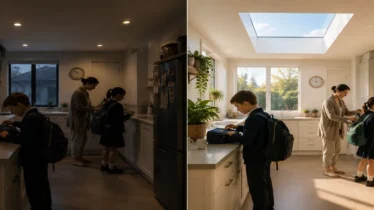
Morning – wake‑up and getting ready
On school days, mornings are often compressed:
- getting dressed
- finding school bags and uniforms
- brushing hair and teeth.
Soft, even daylight can make these routines easier than relying on a single ceiling light that creates harsh shadows.
Daytime – play, rest and quiet time
For younger children, bedrooms and playrooms host:
- floor play with toys and puzzles
- reading corners
- occasional daytime rests.
Natural light helps with mood and connection to the day, but too much glare can make the room feel unsettled.
After school – homework and wind‑down
For older children, the room often contains:
- a desk or small study nook
- shelves for books and devices
- a bed or chair used for reading.
Here, consistent, indirect light that avoids screen glare can make homework less of a strain.
2. Sleep first: managing morning light and bedtime routines
When thinking about skylights for kids’ rooms, sleep comes first.
Early‑morning light in summer
In parts of New Zealand, summer mornings are bright well before many families want to be awake. A skylight without good control can:
- wake younger children too early
- make it harder for older kids to sleep in on weekends
- shorten overnight rest.
To support sleep:
- pair skylights with effective blinds or shutters
- choose products that allow near‑blackout when required
- think about how older children can control blinds themselves.
Evening wind‑down
At night, most families want bedrooms to feel predictable and calm.
Skylights can work well when:
- blinds are closed at bedtime to create a consistent level of darkness
- any outside light (street lighting, neighbouring homes) is managed
- routines are built around closing blinds as part of getting ready for sleep.
Naps and younger children
For toddlers and younger children who still nap during the day, consider:
- whether the room needs full darkness or just softer light
- how blinds can be partially lowered to create a calm environment
- whether a separate playroom might suit a bright, open skylight better.
The key is that skylights add options, rather than dictating a single lighting level.
3. Daytime play and study: where skylights can help most
Once sleep is protected, it becomes easier to look at where skylights can enhance daytime use.
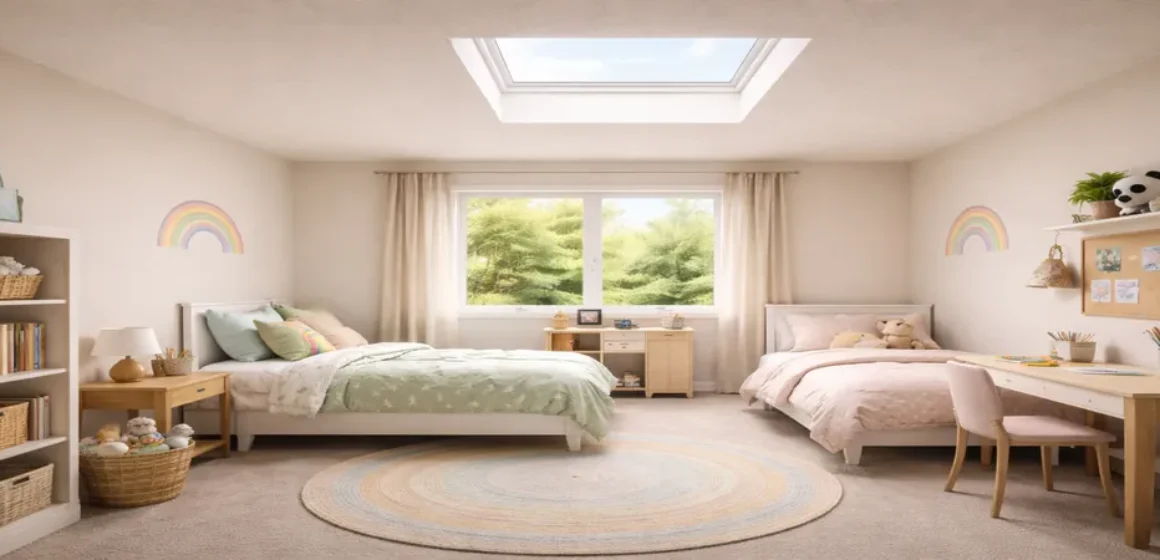
Play zones and reading corners
Many kids’ rooms have:
- a favourite floor play area
- a beanbag or chair for reading
- shelves of toys or books in a corner.
Skylights can:
- bring soft, overhead light to these zones
- reduce reliance on lamps and ceiling lights during the day
- make colours, drawings and crafts easier to see.
Placing a skylight so light falls onto a reading corner or play rug, rather than directly onto the pillow, can make a noticeable difference.
Study desks and screen time
For older children, a desk area benefits from:
- indirect light that avoids screen reflections
- enough brightness to read and write comfortably
- a consistent level of light through the afternoon.
Skylights positioned slightly behind or to the side of a desk, combined with task lighting for evenings, can support homework without creating glare.
Shared and multi‑use rooms
In some homes, siblings share a room or a playroom doubles as a guest space.
Here, skylights should be planned with:
- flexible blinds to adapt light to different uses
- careful thought about where light should fall during the day vs at night
- the most regularly used zones as the priority.
4. Different ages, different needs
A kids’ room is not static. It changes as children grow. Planning skylights with this in mind can make them more future‑proof.
Under‑fives – naps, safety and soft light
For younger children, priorities often include:
- safe, robust fittings and finishes
- soft, diffuse daylight for play
- flexible control for naps.
Tubular skylights can sometimes suit small rooms where a gentle lift in brightness is enough, especially when paired with good curtains on existing windows.
Primary school years – reading, play and early homework
At this stage, rooms may need:
- brighter play areas for crafts and building
- a small desk or table for homework
- storage for school bags and sports gear.
A conventional skylight or roof window, placed with care, can make the room feel more grown‑up while still leaving scope for sleep‑friendly blind use.
Teens – privacy, study and flexible routines
Teenagers may use their rooms for:
- longer study sessions
- time with friends
- later weekend mornings.
For this age group, skylights can support:
- good daytime light for study and hobbies
- privacy from neighbours in denser areas
- self‑managed control via remote or app‑operated blinds.
Planning with the likely five‑ to ten‑year horizon in mind helps ensure skylights feel relevant through different stages.
5. Comfort, safety and practical details parents care about
Parents often have specific, practical questions about skylights in kids’ spaces.
Temperature and seasonal comfort
In NZ’s varied climate, it is natural to ask whether a skylight will:
- make a room too hot in summer
- let too much heat escape in winter.
Thoughtful specification can help balance these concerns:
- choose double‑glazed units suited to your region
- insulate shafts properly
- consider blinds that offer thermal support as well as light control.
Glare, toys and screen visibility
Children often play on the floor with glossy pieces, books and tablets. To minimise glare:
- avoid placing skylights directly above screens
- think about how light will fall on the main play and study surfaces
- combine skylights with flexible blinds or diffusing options where appropriate.
Safety and maintenance
From a day‑to‑day perspective, parents usually want:
- secure, well‑sealed skylights
- finishes that are easy to clean and maintain
- controls (if vented or blind‑equipped) that are out of reach of very young children but still practical for adults.
Your installer can explain how specific systems are operated and maintained, including how often they typically need attention.
6. Planning path – involving kids without losing the brief
Bringing children into the conversation can be helpful, as long as the brief stays practical.
Step 1 – Observe how the room is used now
Notice where your child naturally plays, reads and does homework. Which corners do they avoid because they feel dark?
Step 2 – Talk about what they like
Ask simple questions: “Would you like more daylight on your reading chair?” or “Does your room feel too dark in winter afternoons?” Their answers can guide priorities.
Step 3 – Mark potential skylight zones
On a simple plan, sketch where light would help most – over a play rug, near a desk, or in the middle of the room away from the pillow.
Step 4 – Think about blinds from the start
Decide how much darkness is needed for sleep and naps, and how you will manage early morning light.
Step 5 – Gather photos and a short summary
Include images of the room, the roof above and a note on your region, your child’s age and how the room is used across the day.
Skylights New Zealand can connect you with installers around New Zealand who are used to working in real family homes, where bedrooms need to serve sleep, homework and play all at once.
Make an enquiry via Skylights.co.nz
If you send through a few photos, your region and a brief note about your child’s age and how the room is used, an installer can help you plan skylight options that fit your family’s routines rather than disrupting them.
FAQs – skylights for kids’ rooms in NZ
Q1. Will a skylight make my child wake earlier in summer?
It can if there is no effective light control. Pairing skylights with good blinds or shutters, and building their use into bedtime routines, allows you to enjoy daylight during the day and maintain darkness at sleep times.
Q2. Are skylights safe in children’s bedrooms?
Modern skylights are designed and tested for use in homes, including bedrooms. When installed correctly with appropriate glazing and flashings, they are a normal part of the building envelope. Your installer can explain product safety features in more detail.
Q3. Should I choose a tubular skylight or a larger unit for a kids’ room?
It depends on the room size and purpose. Tubular skylights can gently lift light in smaller rooms or playrooms, while larger skylights or roof windows suit bigger bedrooms or spaces where a sky view is desired.
Q4. How do I prevent screen glare on homework desks?
Position skylights so the main shaft of light falls beside or slightly behind the desk area, rather than directly above screens. Combining skylights with blinds and task lighting also helps create balanced conditions.
Q5. Can skylights help with damp or stuffy kids’ rooms?
Vented skylights, used alongside adequate heating and extraction, can support airflow and moisture control. They should be part of a wider strategy that also addresses insulation, heating and ventilation.
Q6. Is it better to add skylights to kids’ rooms now or wait until a renovation?
If a major renovation or re‑roof is already planned, it can be efficient to integrate skylights then. If not, a focused retrofit in one or two key rooms can still bring real benefits to how your child’s space feels and functions.