3 mm vs 4.5 mm acrylic circular skylight domes in NZ: what really matters?
Many New Zealand homeowners reach a familiar point in their circular skylight journey.
They have:
- decided on a circular dome rather than a tube
- picked a general size range
- talked through where it will sit in the room.
Then the installer or supplier asks a short question that can feel surprisingly technical:
“Do you want 3 mm or 4.5 mm acrylic for the dome?”
On paper, it sounds like a small change. In reality, thickness touches on:
- how robust the skylight feels
- what wind and exposure conditions it is suited to
- how practical larger diameters become
- how the cost line moves.
This guide looks at 3mm vs 4.5mm acrylic skylight NZ decisions specifically for circular domes. It is designed to help you understand:
- what thickness actually means in day-to-day terms
- when 3 mm is typically adequate in New Zealand homes
- when 4.5 mm is worth discussing in more detail
- how climate, roof exposure and dome size shape the choice.
It is written for homeowners in plain English. You will not find structural calculations here – just the context you need to have more confident conversations with your project team.
1. What thickness does (and does not) change
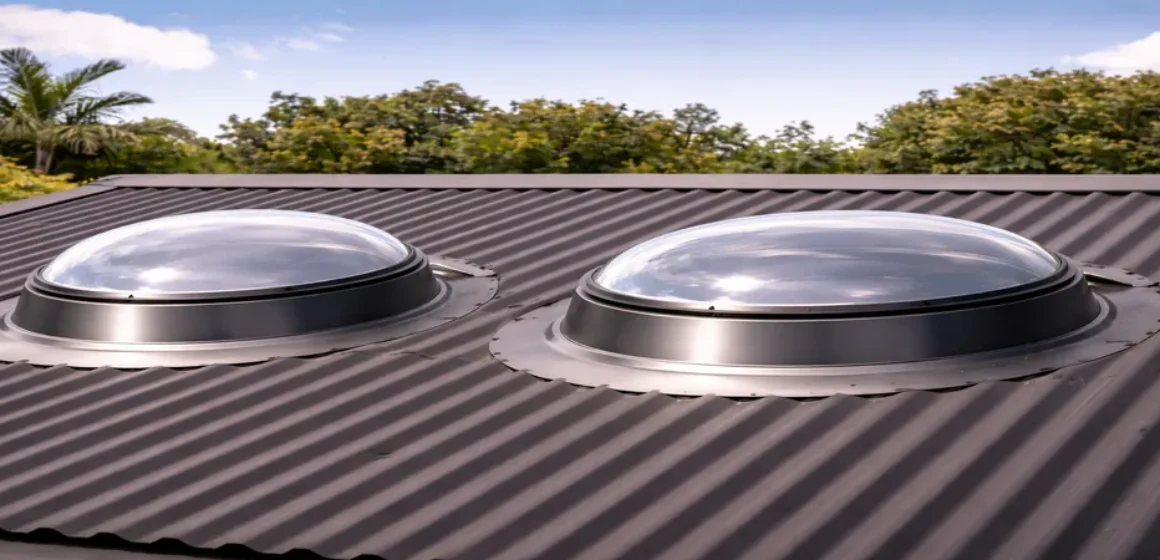
Acrylic thickness is one part of a wider system. A circular skylight dome is not just a sheet of plastic; it is:
- the dome itself
- the base and flashing
- the fixings
- the shaft or throat down to the ceiling.
Changing from 3 mm to 4.5 mm does not turn a poorly detailed roof penetration into a good one. What it does is shift the balance of:
- stiffness
- strength
- how the dome behaves under wind loads and handling
- how practical it is at different diameters.
Thicker acrylic:
- can feel more solid and substantial
- may better support larger spans when part of a designed system
- will usually add some cost.
Thinner acrylic:
- can be entirely appropriate for smaller diameters and typical suburban conditions
- may help keep costs in check for modest projects.
2. Where 3 mm acrylic domes commonly make sense in NZ homes
In many New Zealand projects, 3 mm acrylic is the standard starting point for circular domes.
Typical characteristics include:
- modest diameters suited to small and medium rooms
- suburban or sheltered locations where exposure is not extreme
- integration into established detailing approaches.
Everyday use cases for 3 mm domes
You will often see 3 mm domes used for:
- smaller circular skylights over internal bathrooms in single-storey homes
- modest domes serving hallways and corridors
- circular skylights in standard suburban living spaces where diameters are not pushing into feature territory.
In these settings, the dome is part of a balanced system where:
- the roof form is familiar to local installers
- wind zones are typical for the area
- the skylight is sized sensibly for the space.
Illustrative Example Only: A family in Palmerston North added two circular skylights to a single-storey brick home – a small dome above an internal bathroom and a slightly larger one over the entry. With modest diameters and a sheltered site, 3 mm acrylic domes specified by their installer were well suited to the project.
3. When 4.5 mm acrylic domes are worth a serious look
There are situations where stepping up to 4.5 mm acrylic is more than just a nice-to-have.
Larger diameters and feature domes
As diameter increases, the dome:
- spans a wider opening
- becomes a more dominant element on the roof
- may experience higher forces in wind.
For large circular skylights – especially those heading towards feature-dome scale – installers may recommend 4.5 mm acrylic as part of a wider package that includes:
- robust bases and fixings
- appropriate flashing details
- careful consideration of roof structure.
Exposed coastal and hill sites
Homes in:
- coastal areas with strong onshore winds
- hill suburbs responsible for taking the full force of weather
may justify a thicker dome, particularly where diameters are at the upper end of residential ranges.
In these locations, installers typically look at a combination of:
- local wind zones
- roof height and pitch
- surrounding trees and buildings
- how sheltered or exposed the skylight position is.
When the skylight is central to the design
If a circular skylight is intended as a centrepiece in a main living area – for example, a 2 m dome above a dining table – homeowners sometimes prefer the reassurance of a thicker acrylic specification, provided it fits within the overall design and budget.
4. How thickness interacts with cost, not just strength
From a homeowner’s perspective, it is natural to ask, “Is 4.5 mm always better?”
The answer is more nuanced:
- some projects genuinely benefit from 4.5 mm
- others would simply be paying more without meaningful improvement.
Relative cost, not exact numbers
In broad terms:
- 4.5 mm acrylic domes cost more than 3 mm equivalents
- the difference is influenced by diameter, supplier and overall package
- the jump is usually far less dramatic than the difference between acrylic and glass.
The key is value:
- If you are on a typical suburban street with modest domes, 3 mm may be entirely appropriate.
- If you are building a feature dome on an exposed site, 4.5 mm may be a sensible investment.
Illustrative Example Only: A homeowner exploring a large circular skylight in a coastal Bay of Plenty home received options for both 3 mm and 4.5 mm acrylic domes. After discussing exposure and the dome’s role as a main living-area feature, they chose the 4.5 mm option, accepting a modest cost increase relative to the overall build.
5. Comfort, noise and day-to-day experience
Thickness does not only relate to strength. Homeowners often ask whether a thicker dome will feel quieter or more comfortable.
Sound and weather noise
Perceived sound differences between 3 mm and 4.5 mm acrylic domes can depend on:
- roof build-up and insulation
- room acoustics
- rain intensity and wind.
In some cases, a thicker dome may feel marginally more solid under heavy rain or wind. However, the overall sound experience is also strongly influenced by roof structure, ceiling type and other materials.
Temperature and light
Thermal behaviour and light quality are shaped more by:
- dome material family (acrylic vs polycarbonate vs glass)
- glazing characteristics
- shaft design and insulation
- room orientation and climate.
Switching from 3 mm to 4.5 mm acrylic alone is not a complete thermal strategy. It is one of several levers in a broader comfort conversation.
6. Regional examples – how thickness choices vary across NZ
While every project is individual, thickness conversations often follow regional patterns.
Coastal and harbour-edge suburbs
In parts of Auckland, Wellington, Tauranga, Nelson and coastal Canterbury, homes near the water may:
- face frequent strong winds
- be more exposed to driving rain.
Here, installers may lean towards:
- 4.5 mm acrylic for larger domes
- careful assessment of each skylight’s position on the roof
- a combination of thickness, base design and fixing strategy.
Inland towns and sheltered suburbs
In more sheltered parts of Waikato, Manawatū, inland Otago and many suburban developments, thickness decisions may be driven more by diameter than by severe exposure.
In these locations, 3 mm may be perfectly appropriate for:
- modest domes in standard rooms
- skylights placed away from roof edges and corners
- homes with typical single- or two-storey forms.
Alpine and high-wind areas
In Queenstown, Wanaka, Central Otago and high points around the country, conditions can be more demanding.
Here, installers will usually consider:
- local wind and snow loading requirements where relevant
- building height and orientation
- the skylight’s role – small utility dome vs major feature.
Thickness will be one part of a tailored specification rather than a standalone choice.
7. Questions to ask your installer about 3 mm vs 4.5 mm
You do not need to decide thickness alone. Instead, use a short set of questions to guide the conversation.
- What diameter are we talking about?
Ask how thickness recommendations change as diameter increases. - How exposed is this part of the roof?
Discuss wind zones, roof height, proximity to ridges or corners, and nearby trees or buildings. - How does thickness fit into the overall system?
Invite your installer to explain how dome thickness interacts with base design, fixings and flashing. - What are the local climate considerations?
Check whether coastal salt, alpine conditions or high winds are influencing the recommendation. - How much difference in cost are we really talking about?
Understanding the relative step between 3 mm and 4.5 mm within your specific project helps you weigh value, not just specifications.
Skylights New Zealand encourages homeowners to ask these questions early, so 3mm vs 4.5mm acrylic skylight decisions become part of a clear, informed brief rather than a rushed tick-box at the end.
Make an enquiry via Skylights New Zealand
If you share your location, roof type, approximate dome size and whether the skylight is a feature or utility element, a skylight professional can help you understand which thickness is most appropriate for your situation.
FAQs – 3 mm vs 4.5 mm acrylic circular skylight domes in NZ
Q1. Is 4.5 mm acrylic always better than 3 mm for circular skylights?
Not always. 4.5 mm may be well suited to larger domes and more exposed sites. For smaller domes in typical suburban locations, 3 mm can be entirely appropriate when part of a well-designed system.
Q2. Does a 4.5 mm dome make my skylight stronger in every situation?
Thickness is one factor in strength, alongside dome shape, base design, fixings and overall detailing. A thicker dome does not replace the need for correct installation and flashing.
Q3. Will a 4.5 mm acrylic dome be noticeably quieter in rain than a 3 mm dome?
Any difference in sound is often modest and influenced by roof build-up and room acoustics. Roof type, insulation and ceiling construction also play major roles in how rain noise is experienced.
Q4. Does moving from 3 mm to 4.5 mm acrylic change thermal performance a lot?
Thickness alone is not the main driver of thermal performance. Material family, glazing characteristics, shaft insulation and room design all contribute more to overall comfort.
Q5. How much more does 4.5 mm acrylic usually cost than 3 mm?
It varies by size and supplier. Typically, 4.5 mm domes cost more per unit, but the increase is often modest relative to the total skylight and installation cost, especially compared with stepping up to glass.
Q6. How do I know which thickness is right for my home?
Share your home’s location, roof type, planned dome size and whether the skylight is a feature or utility element with a skylight professional. They can explain which thickness aligns best with local conditions and your design goals.