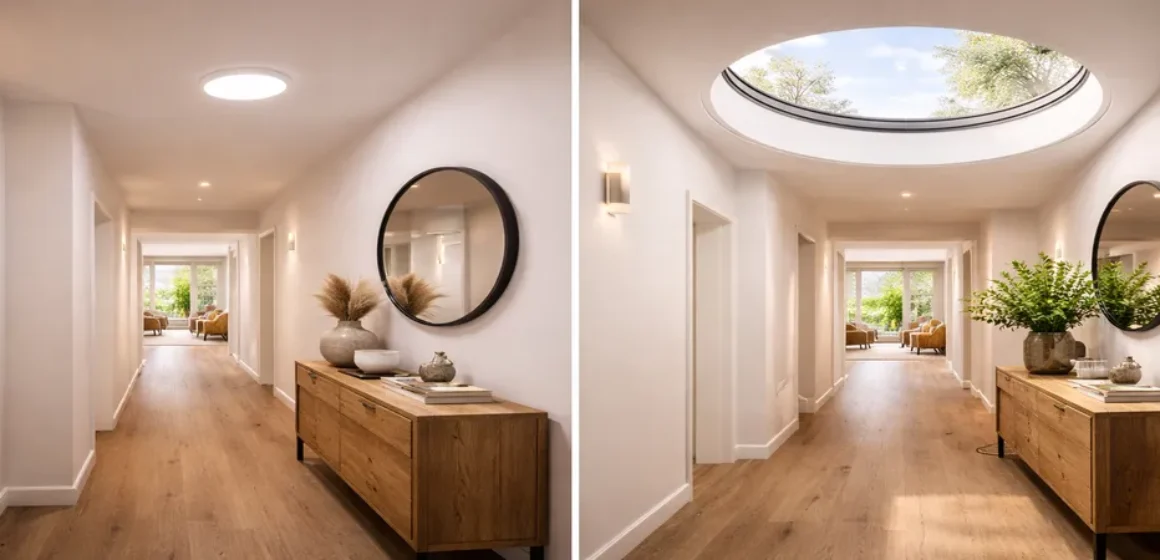
From tubular to statement: upgrading a small skylight to a circular feature dome in NZ
1. The moment a tube stops feeling like enough
A lot of New Zealand skylight stories start with a simple tubular unit:
- a dark hallway brought to life
- a small internal bathroom finally usable without a light switch
- a kitchen corner that feels less like a cave.
Years later, the home has evolved:
- walls have moved
- a renovation has opened up spaces
- the family spends more time in one particular room.
Illustrative Example Only: A couple in coastal Taranaki had a tubular skylight over their original kitchen bench. After extending and opening the kitchen into the living area, the tube still worked – but the new room begged for a stronger, more deliberate source of daylight.
This is where many homeowners begin asking about an upgrade tubular to circular skylight NZ journey – not to fix a failure, but to match the light to the home’s new life.
This guide walks you through that journey, step by step, so you can understand:
- when a tube is still the right answer
- when a circular dome feature is worth considering
- what changes with throat size, ceiling treatment and roof detailing
- how to work with installers and designers to get the upgrade right.
2. Tubular skylights vs circular domes – two different tools
Before planning an upgrade, it helps to see tubes and circular domes as different tools, not simply small and big versions of the same idea.
Tubular skylights – targeted problem solvers
Tubular skylights are usually:
- compact in diameter
- designed to capture light from the roof and deliver it down a reflective tube
- ideal for tight roof spaces, internal rooms and focused light needs.
They excel at:
- lighting short hallways
- improving smaller bathrooms or laundries
- dealing with complex roof structures where larger openings are difficult.
Circular domes – broader, more expressive light
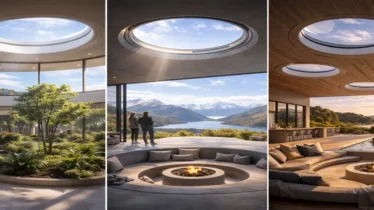
Circular domes – especially larger ones – are more about:
- shaping the mood of an entire zone
- becoming visible architectural features
- interacting strongly with the ceiling and the room below.
They are typically used:
- over living areas and dining spaces
- in entries and stair voids
- as part of extension or new-build design moves.
Thinking of tubes as precise tools and domes as expressive instruments helps clarify what you are really asking for in an upgrade.
3. Signals that your tube may be ready for an upgrade
Not every tubular skylight needs to become a circular dome. Look for specific signals that your current setup is under-serving the space.
1. The room’s role has changed
- A small kitchen has become part of a larger open-plan living area.
- A once-quiet hallway now connects a busy home office or play space.
- A bathroom has been renovated into a spa-like retreat.
The original tube may still work locally, but the room’s new role calls for more generous light.
2. You feel “pulled” towards more light
You may notice:
- you still turn on electric lights during the day in large parts of the room
- friends instinctively gather in a small patch of sunlight
- you find yourself imagining a bigger, softer pool of light instead of a focused spot.
3. The tube looks visually lost
In some renovated ceilings:
- the small diffuser can look out of proportion
- downlights, pendants and air-conditioning grilles compete visually
- the skylight no longer reads as a clear part of the design.
These signals do not mean you must upgrade, but they are good prompts to explore what a circular dome could do differently.
4. Rethinking the room: from bright spot to deliberate zone
The most successful upgrades start by reframing the room, not just enlarging the skylight.
Step 1 – Name the new purpose of the space
Ask simple questions:
- Is this now the main family living area?
- Is it a social kitchen where people linger, not just cook?
- Has it become a reading or working zone during the day?
Write down the answer in one clear sentence. For example:
“This is our main gathering space where we sit, talk and read in the afternoons.”
Step 2 – Identify the true focal area
Look at where people naturally:
- sit or gather
- enter and exit
- stand to prepare food or work.
The upgraded circular skylight should support that area – not, for example, a random corner housing a tall cupboard.
Step 3 – Consider whether the tube still has a role
Sometimes the best outcome is:
- a new circular feature dome over the main zone, and
- the existing tube retained to brighten an adjacent hallway or secondary area.
In other cases, the tube may be removed entirely, with the new dome taking over.
5. Throat size and ceiling treatment – the heart of the upgrade
Upgrading from a tube to a circular dome is not only about diameter. The throat and ceiling design change the feel of the space.
From narrow shaft to wider throat
A tubular skylight typically has:
- a narrow tube
- a compact diffuser at ceiling level.
A circular dome with a larger throat can:
- open up the connection between the roof and the room
- deliver a broader, softer pool of light
- become a visible part of the ceiling architecture.
Decisions include:
- throat diameter relative to dome size
- whether the shaft is straight or gently flared
- how the opening aligns with furniture and circulation.
Ceiling finishes in the upgraded space
In an upgrade context, ceiling choices may be revisited:
- lighter paints to spread light more evenly
- subtle curves or chamfers around the opening
- alignment with downlights and pendants to avoid visual clutter.
Illustrative Example Only: In a Napier renovation, a small tubular skylight above the old kitchen bench was replaced with a larger circular dome as the kitchen opened into the dining area. The designer used a gently flared throat and a soft, matte ceiling finish to create a wide, calm pool of light across the new dining table.
6. Roof, structure and services – what changes above the ceiling
A key part of any upgrade tubular to circular skylight NZ project is understanding that more is happening above the ceiling than below.
Roof structure and openings
Moving from a small tube to a larger circular dome typically means:
- cutting a larger opening in the roof
- adjusting framing members around the new throat
- reconsidering how loads are distributed.
Your designer or installer will look at:
- rafter or truss layout
- existing penetrations (vents, flues, other skylights)
- the best position that works for both the room and the roof.
Flashings and base type
The larger opening may:
- require more substantial flashings
- lead to a decision between a circular dome on a square base or a circular base
- change how the skylight interacts with longrun, tile or membrane roofing.
These are not reasons to avoid upgrading – they are simply reminders that the roof must be part of the conversation from the outset.
Existing services and ceiling infrastructure
Old tubes may sit near:
- exhaust fans
- downlights
- air-conditioning or heating outlets.
When planning an upgrade, it helps to map these so that the new dome and shaft:
- avoid clashes
- maintain safe clearances
- keep the overall ceiling layout balanced.
7. Climate, comfort and energy – making the upgrade work year-round
A larger circular dome will change the light and thermal behaviour of the room.
Coastal homes
In coastal regions such as Bay of Plenty, Coromandel, Kapiti and Nelson:
- light can be bright and reflective
- wind and salt exposure affect materials.
Upgrades often focus on:
- controlling glare through dome choice and shaft design
- ensuring flashings and bases are suited to exposure
- planning for safe maintenance access.
Inland and alpine homes
In inland and alpine regions like Queenstown, Wanaka and parts of Canterbury:
- winter light is valuable but arrives at lower angles
- thermal performance is front of mind.
Upgrades here tend to emphasise:
- good shaft insulation
- careful placement of the dome to capture winter sun without summer over-heating
- integration with the home’s overall heating and ventilation strategy.
Everyday comfort checks
Regardless of region, ask how the upgraded dome will affect:
- reading, working and TV use
- heat build-up in summer
- the feeling of the room in early morning and late evening.
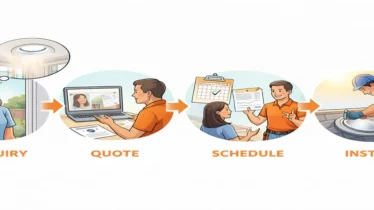
8. Working with designers and installers – the upgrade journey
One of the strengths of an upgrade is that you already know the room and how it behaves. The challenge is translating that knowledge into a clear brief.
Step 1 – Capture the current state
- Take photos of the room during different times of day.
- Photograph the existing tube diffuser and ceiling layout.
- Note where light feels good and where it feels lacking.
Step 2 – Gather roof information
- Take or request photos of the roof above the room.
- Identify roof type (longrun, tile, membrane) and any nearby features.
- Note your region and any particular exposure (coastal, hillside, alpine).
Step 3 – Write a short upgrade brief
Include:
- what you like about the current tube
- what is not working anymore
- how you would like the room to feel after the upgrade.
For example:
“We like the way the tube makes the old kitchen corner usable, but the new open-plan living area still feels dull. We’d like a circular feature skylight over the main seating area that creates a soft, generous pool of light without overheating the room.”
Step 4 – Discuss options with a skylight professional
A Skylights New Zealand installer or designer can then help you:
- decide whether to keep or remove the existing tube
- choose a suitable dome size and throat design
- understand roof and flashing implications
- plan installation timing around other renovation work.
Make an enquiry via Skylights New Zealand
Attach a few room and roof photos and your brief. This gives your skylight professional a strong starting point to talk through upgrade paths.
FAQs – upgrading from tubular to circular skylights in NZ
Q1. Do I need to remove my existing tubular skylight to add a circular dome?
Not always. In some homes, the best solution is to keep the tube for a secondary area and add a circular feature skylight over the main zone. In other cases, the tube is removed as part of the upgrade.
Q2. Will upgrading to a circular dome require structural changes?
Often, yes. Larger openings usually need framing adjustments and more detailed flashing work. Your designer or installer can explain what is required for your specific roof.
Q3. Is upgrading from a tube to a circular dome only for major renovations?
It fits naturally into renovations and extensions, but some stand-alone upgrades are possible where access and structure allow. An initial assessment will clarify feasibility.
Q4. Will a circular feature skylight make my room too bright or hot?
Not if it is planned thoughtfully. Dome material, throat design, placement and your region’s climate all play a role. Comfort should be discussed from the very beginning.
Q5. Is it more cost-effective to add another tube instead of upgrading to a dome?
Sometimes. If your goal is purely functional light, adding or repositioning tubes may be enough. If you want a stronger design statement and a different quality of light, a circular dome may justify the extra investment.
Q6. How do I start the upgrade conversation?
Take photos of the room and roof, write a short description of how you use the space and what feels lacking, then share these with a skylight professional through an enquiry. They can outline realistic options.