Light for craft, hobbies and home studios: skylights where colour and detail matter in NZ
Anyone who paints, sews, makes jewellery, restores furniture or photographs their products at home knows this feeling:
The colour of a fabric looks perfect in the morning, but different after lunch. A painted canvas shifts tone each time a cloud passes. Fine details become harder to see as the day wears on and a once-inspiring room starts to feel flat.
For many New Zealand makers, hobbyists and home-based professionals, light is not just a backdrop – it is part of the work itself.
This article focuses on skylights for art, craft and home studios in NZ, where colour and detail matter. We will look at how skylights can support:
- consistent, even light for colour-critical and detailed work
- practical decisions around north vs south orientation, diffused vs clear light
- zoning within garages, spare rooms and outbuildings so creative spaces work alongside storage or other uses.
We will group examples into three use-case clusters:
- art and photography
- sewing, crafts and textiles
- workshops, making and home studios.
The goal is not to prescribe a single “correct” light, but to give you language and ideas to discuss with designers and installers so your studio works across real New Zealand seasons.
1. What makes creative spaces different from ordinary rooms
Creative work often asks more from daylight than everyday living.
Colour, texture and small details
Painters, illustrators, quilters, jewellers and furniture restorers all rely on:
- accurate perception of colour
- visibility of fine lines, stitches or grain
- the ability to judge surfaces without harsh reflections.
Inconsistent or heavily directional light can make it difficult to:
- match tones over a full piece
- check edges and joins
- photograph work in a way that reflects reality.
Long sessions and concentration
Craft and studio work often involves:
- extended time at the same table or easel
- periods of close focus
- moving between different tools or zones within a small space.
Light that is comfortable at the start of a session should still feel workable an hour or two later. This is where even distribution and control matter as much as brightness.
2. Orientation, skylights and colour-consistent light
In the southern hemisphere, orientation and sky conditions shape how skylight behaves.
North, south and the path of the sun
Without going deep into technical detail, it is helpful to note:
- north-facing roofs can receive strong, direct sun for parts of the day
- south-facing roofs typically see softer, more indirect light
- east and west can bring pronounced morning or late-afternoon sun, which may be welcome or challenging depending on your schedule.
For many art and craft spaces, the goal is steady, diffused light rather than dramatic sun patches.
Skylights can contribute to this by:
- using diffused glazing in brighter orientations
- moderating light with blinds at certain times of day
- placing units so they light walls and ceilings, not just a single table.
Diffused vs clear light
Clear glass or acrylic can provide crisp, direct light and views of the sky. Diffused options soften and scatter light.
For colour-critical or detailed work, diffused light often:
- reduces harsh shadows and reflections
- helps colours appear more even across a canvas or work surface
- keeps brightness changes more gradual as clouds move.
This does not mean clear glazing has no place. Some studios use a mix, such as:
- diffused skylights above work zones
- clearer units above circulation, display or rest areas.
3. Use-case cluster one – art and photography spaces
This cluster includes painting, drawing, illustration, printmaking and product photography corners.
Goals
- consistent, neutral-feeling light over easels, tables or photography backdrops
- minimal colour cast from surfaces and finishes
- the option to darken or change light for photography when needed.
Skylight strategies
For art-focused spaces, skylights can be used to:
- wash light down a neutral wall and across the work, rather than directly overhead
- avoid mixing strong light from multiple directions that may confuse shadows
- create a bright but softly lit zone for photographing finished pieces.
Illustrative Example Only: In a Nelson home, a part of the garage was converted into a small painting studio. Two skylights with diffused glazing were placed over a neutral wall and work table, while shelving and storage stayed towards the darker side. The artist reports that colours now look more consistent from morning to afternoon compared with the original single window.
Practical notes
When planning skylights for art and photography:
- consider neutral, low-sheen finishes on walls and ceilings near the work area
- think about where you will stand or sit relative to the light source
- allow for blinds or curtains over both skylights and wall windows when setting up photography backgrounds.
4. Use-case cluster two – sewing, crafts and textiles
Sewing, quilting, embroidery, knitting, paper crafts and model-making all place specific demands on light.
Goals
- clear visibility of stitches, seams and edges
- the ability to differentiate between similar colours and tones
- comfortable, low-glare light for extended seated work.
Skylight strategies
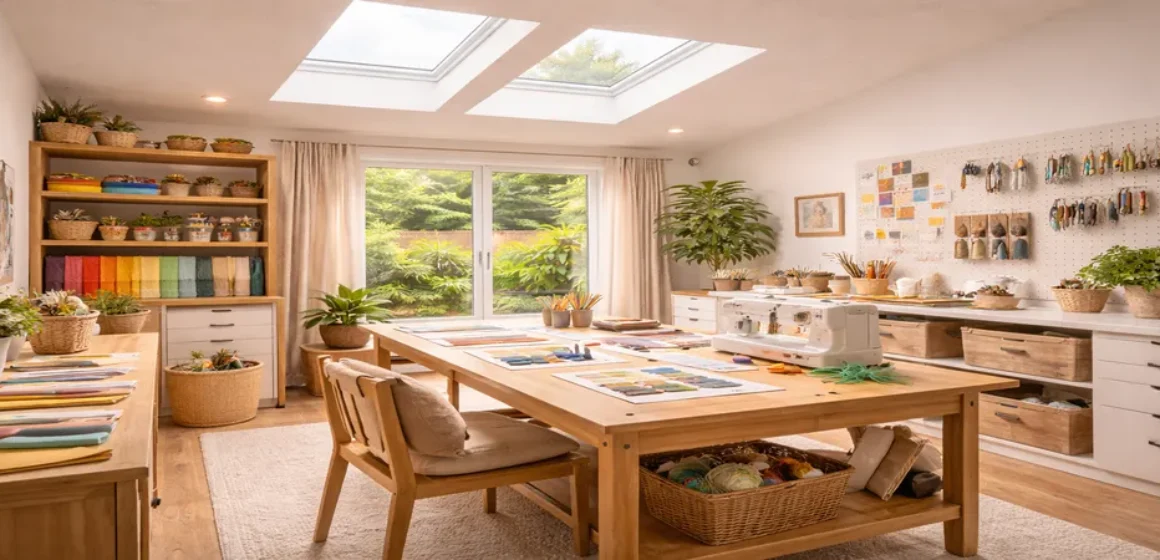
In sewing and craft rooms, skylights can:
- brighten central work tables where cutting, pinning and layout happen
- reduce reliance on multiple overhead fittings during the day
- help keep storage zones visible without strong shadows.
Because people often lean forward over work, it is usually helpful to:
- place skylights slightly in front of or to the side of main work surfaces, rather than directly overhead
- pair daylight with task lighting that can be adjusted at night
- think about how fabric colours might appear under combined daylight and artificial light.
Illustrative Example Only: A home sewer in Hamilton turned a spare bedroom into a dedicated sewing room. A skylight was added above the centre of the cutting table with diffused glazing, while the existing window provides view and ventilation. She now relies far less on ceiling lights during the day and finds it easier to tell navy thread from black at a glance.
5. Use-case cluster three – workshops, making and home studios
This cluster covers small woodworking spaces, jewellery benches, instrument repair, home hair studios and other hands-on work.
Goals
- safe visibility around tools and equipment
- clear light over benches without harsh glare on shiny surfaces
- separation of work and storage zones within compact rooms.
Skylight strategies
In workshops and making spaces, skylights can:
- lift baseline light across the room so shadows from task lights are less extreme
- highlight specific benches or chairs used for detailed work
- help identify dust and surface quality without needing very bright artificial light.
For home hair or beauty studios, additional considerations include:
- how clients feel in the chair – avoiding overhead glare in mirrors
- colour-consistent light for hair colouring or makeup
- privacy from surrounding homes or streets.
Illustrative Example Only: In a suburban Wellington home, part of an outbuilding was converted into a small hair studio. A skylight with diffused glazing was placed above the central area to provide even light, while wall lights around the mirror fine-tune tone. Frosted film on the lower window maintains privacy without compromising daylight.
6. Zoning creative space in garages, spare rooms and outbuildings
Many New Zealand studios share space with storage, vehicles or guest rooms.
Skylights can help establish clear zones without building new walls.
Separating work from storage
A simple pattern is to:
- place skylights over the active work zone – tables, benches, chairs
- keep storage to the naturally darker parts of the room
- use shelving or low partitions to suggest boundaries while keeping air and light flowing.
Considering heat, ventilation and noise
Garages and outbuildings can be more exposed to temperature changes and sound.
When planning skylights, it is important to think about:
- insulating roofs and any skylight shafts
- using vented units where fumes, dust or heat build up
- how rain noise might affect concentration, and whether glazing options can help.
Professional advice is valuable here, particularly around structure, roof type and consent.
7. Planning steps – briefing skylights for an art or craft studio
Whether your creative space is a corner of a spare room or a dedicated studio, a short brief will help your project team.
Step 1 – Describe your creative work
Note whether you paint, sew, photograph, make jewellery, do hair, or something else. Mention how often you work and what time of day.
Step 2 – Identify key work zones
Mark where easels, tables, benches, chairs and storage are (or will be) located.
Step 3 – Explain your light preferences
Do you prefer soft, even light, or do you sometimes welcome stronger sun? Are you sensitive to glare or reflections?
Step 4 – Note any colour-critical tasks
Highlight tasks where accurate colour perception is important, such as painting, hair colouring or textile selection.
Step 5 – Share photos and roof information
Provide photos of the current room and, where safe, the roof above. Note roof type (metal, tile, membrane) and whether any re-roofing is planned.
Skylights New Zealand works with installers and partners who understand the specific needs of skylights for art studios and creative spaces in NZ homes.
Make an enquiry via Skylights New Zealand
If you outline what you create, where you work and when you most need good light, a professional can help you explore skylight options that support your craft while respecting comfort, privacy and roof conditions.
FAQs – skylights for art, craft and home studios in NZ
Q1. Are skylights suitable for art studios in NZ homes?
They can be very effective when planned carefully. Diffused skylights are often preferred over work areas to provide even light without harsh shadows or distracting reflections.
Q2. Will skylights change how colours look in my artwork or textiles?
Any light source influences colour perception. Well-designed skylight layouts aim for consistent, neutral-feeling daylight. Discuss your colour-critical tasks with your designer or installer so glazing and finishes can be chosen with that in mind.
Q3. Is clear or diffused glazing better for a home studio?
Many studios favour diffused glazing above work zones and may use clearer glass in circulation or display areas. The right mix depends on orientation, roof type, and how you use the space.
Q4. Can I add skylights to a garage or outbuilding used as a studio?
Often yes, subject to structure, roof build-up and any consent requirements. An installer can advise what is practical and how skylights should be detailed for your roof type and use.
Q5. How do I avoid glare on canvases, fabrics or mirrors?
Place skylights to light walls, ceilings or areas in front of the work rather than behind you or directly overhead. Consider diffused glazing and blinds to manage strong sun at particular times of day.
Q6. Do I still need artificial lighting if I have skylights in my studio?
Yes. Skylights reduce reliance on artificial light during the day, but good task lighting is still important for evening work and overcast days. The aim is a flexible combination that works across seasons.