The heat spike myth: when skylights add warmth, and when they do not (Auckland edition)
Ask almost any Auckland homeowner about skylights and you will hear a version of this concern:
“If we put a skylight in, will the room get hotter?”
It is a fair question, especially in late February when Auckland can swing between sticky humidity and sharp sun breaks. The worry usually comes from a mental image of sunlight pouring in like a magnifying glass.
But the reality is more nuanced, and much more practical.
Skylights can add warmth in some situations. In others, they make a room feel calmer and more stable, not hotter. The difference is not magic. It comes down to a few controllable factors: where the skylight sits, what the roof orientation is doing, and how the glazing manages heat.
This article is designed to give you a clear, Auckland-specific answer without jargon.
Start here: heat comes in three ways
If you want to understand the “heat spike” fear, it helps to know what you are actually feeling.
In Auckland rooms, perceived heat usually comes from a mix of:
- Direct solar gain
Sunlight hits surfaces, warms them, and the room slowly stores heat. - Heat transfer through materials
Warmth moves through the roof and ceiling structure (this is influenced by insulation, roof colour, and build-up). - Humidity and still air
A room can feel warmer simply because your body cannot cool efficiently. Auckland humidity amplifies this effect.
A skylight mainly interacts with the first and second. Humidity is often an existing condition that skylights can indirectly improve if they enable better ventilation planning (especially with vented options), but ventilation is its own system.
The Auckland heat spike myth, clarified in one sentence
A skylight does not automatically make a room hotter. Poor placement and poor specification can.
That distinction matters because it means the outcome is designable.
When skylights are more likely to add warmth
These are the scenarios where the concern is most valid.
1) The skylight sits where intense sun hits it for long periods
If your roof orientation and daily sun path deliver strong afternoon sun to the skylight area, you can see increased heat gain, particularly if the room already runs warm.
Auckland note: the late-day sun can be sharp when skies clear, and west or north-west exposure can create those “it was fine, then suddenly it wasn’t” afternoons.
2) The skylight is sized without regard to room behaviour
Bigger is not always better. If a space is already bright and the goal is comfort, the skylight should support the room, not dominate it.
3) The glazing choice is not suited to the goal
If heat control matters, glazing specification matters. You do not need to memorise numbers, but the concept is simple:
- Some glazing lets more solar heat through.
- Some glazing reduces it while still delivering useful daylight.
If you want to explore skylight types and general performance differences, start here: https://www.skylights.co.nz/types-of-skylights/
4) The room has limited airflow and stores heat easily
Rooms that trap heat already (high ceilings with still air, dark flooring, heavy fabrics, poor cross-breeze) can feel like the skylight “caused” heat, when the room was actually predisposed to storing it.
When skylights often do not add noticeable warmth
This is where many Auckland homeowners are pleasantly surprised.
1) Overcast or mixed-cloud conditions (very common in Auckland)
Diffuse daylight brightens a room without strong direct solar heat. This is one reason Auckland is well suited to skylights for comfort and usability.
2) Skylights planned for light distribution rather than “sun capture”
If the goal is to bring steady light into the middle of the home, skylights are often positioned to improve balance, not deliver a direct sunbeam.
The result can feel calmer, especially in rooms where people previously relied on harsh side sun for brightness.
3) Smaller internal spaces with poor window access
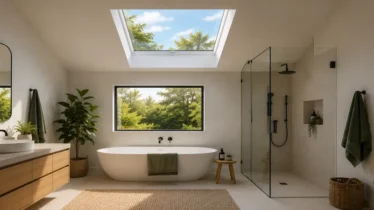
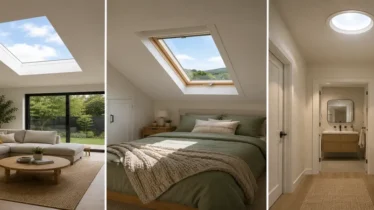
Bathrooms, hallways, stairwells, pantries and laundries often benefit from skylights because the alternative is artificial lighting and a room that feels closed off. These spaces rarely become “hot” from a skylight when planned correctly.
4) Rooms where blinds or curtains are currently used to fight glare
This is a big one in Auckland.
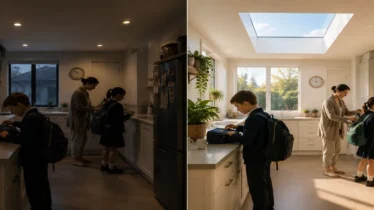
Some rooms get warm because you close everything up to block glare, which traps warm air and reduces ventilation. A skylight can support daylight so you are less dependent on wide-open windows or fully closed curtains, which can improve comfort behaviour overall.
The simplest way to predict the outcome in your home
Here is a homeowner-friendly framework you can use without tools.
Ask these three questions:
1) Does the room already overheat without a skylight?
If yes, solve for comfort intentionally. That means placement and glazing matter more.
2) Is the room bright at the edges but dull in the middle?
If yes, a skylight is likely to improve usability without necessarily increasing heat because you are solving distribution, not chasing sun.
3) Do you close curtains to control glare?
If yes, the “heat spike” you feel may be linked to trapped air and reduced ventilation, not simply sun intensity.
This is why a good assessment focuses on room behaviour first, not product first.
Plain-English glazing terms (only the useful ones)
You do not need to become technical, but these are the terms that genuinely affect comfort:
- Low-E: A coating that helps manage heat movement through glass. Think of it as a filter that aims to keep comfort steadier.
- SHGC: How much solar heat comes through the glazing. Lower usually means less heat gain.
- Double glazing: Improves insulation and can help keep indoor temperature more stable.
Homeowner takeaway: if comfort is the goal, ask your installer what glazing approach best suits your room, orientation, and Auckland summer behaviour.
Illustrative Example Only: the lounge that people assumed would “cook”
A homeowner hesitated to add a skylight to a central living space because the room already felt warm on some afternoons. Their assumption was that adding overhead glazing would automatically make it worse.
The real problem turned out to be glare management: they were closing curtains to block the low sun, which made the room dim and reduced airflow. The room felt heavy and warm, even when the temperature was not extreme.
The comfort breakthrough was not “more sun”. It was a more balanced daylight plan so the room stayed usable without shutting itself off.
A line they shared later:
“It’s not hotter. It’s just easier to live in.”
What to ask during planning (so you avoid surprises)
If you are considering skylights in Auckland and want comfort stability, ask these directly:
- Which roof orientation is this skylight area exposed to in late afternoon?
- Will the skylight deliver direct sun patches onto seating or floors?
- What glazing choice is recommended for heat control in this room?
- How will light spread through the space, not just how bright it will be?
- If the room runs warm, should we consider ventilation strategy as well?
If you would like guidance tailored to your roof type and room behaviour, start here:
https://inquiry.skylights.co.nz/inquiry
For Auckland service coverage:
https://www.skylights.co.nz/skylights-auckland/
FAQs (unique to this topic)
Do skylights make a room hotter in Auckland summer?
Not automatically. Heat outcomes depend on roof orientation, skylight placement, size, glazing specification, and the room’s existing heat and airflow behaviour.
Why do some people feel an immediate “heat spike” under a skylight?
That usually happens when direct sun hits the skylight and lands on surfaces below, warming them quickly. It can also be a perception issue if glare creates discomfort that feels like heat.
Can the right glazing reduce unwanted heat gain?
Yes. Glazing choices, including Low-E and different solar heat gain levels, can help manage how much heat enters while still providing useful daylight.
Are tubular skylights less likely to cause heat gain?
In many cases, yes, particularly for smaller spaces, because they are designed to deliver light efficiently into targeted areas rather than create large sun patches. The best choice still depends on the room.
What is the safest approach if my room already gets too warm?
Plan with comfort as the priority. Focus on placement that avoids direct sun patches, choose suitable glazing, and consider how airflow and shading are currently managed in the room.