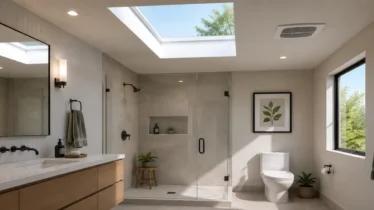
Re-roofing in Auckland? Here’s the smartest moment to add a skylight (and why it saves money)
There’s a very specific moment in a re-roof where the house is briefly “open” in the best possible way.
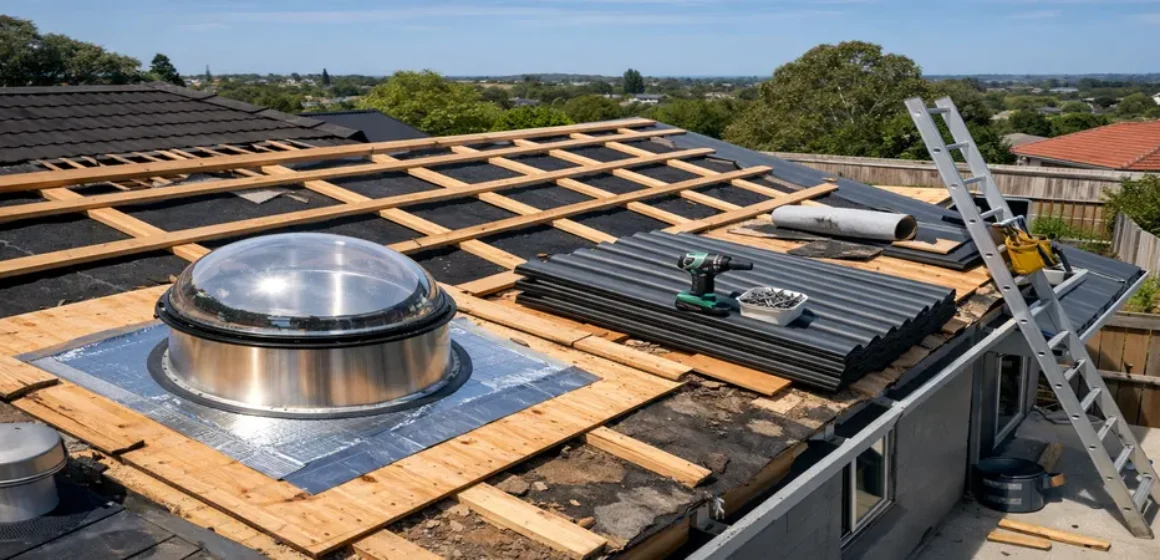
The old roofing is off, the underlay and flashings are being rebuilt, scaffolding is already up, and your roofer is thinking in water paths and junctions.
If you want to add a skylight, that is the moment.
Not because skylights cannot be installed later. They can. But adding a skylight during a reroof is usually the cleanest, least wasteful way to do it, especially in Auckland where wind-driven rain can punish rushed detailing.
This guide explains what you actually save, what to decide early, and how to sequence it so you get a skylight that looks intentional and performs properly.
Why “during reroof” is the smart window
A skylight is not just a hole in the roof. It’s a roof integration detail.
During a reroof, three expensive ingredients are already in place:
- Access (scaffolding, safe roof work conditions)
- Integration time (the roofer is already rebuilding flashings and water paths)
- Finish protection (you can avoid cutting into new ceilings or disturbing interior finishes)
That combination is why the timing matters.
Where the savings come from (real-world, not fluffy)
1) You avoid paying twice for access
If scaffolding is already up for the reroof, you are not paying again later for a separate job setup.
2) You avoid “undo and redo”
Adding a skylight after the reroof often means cutting into a finished roof system and rebuilding details around it. That is not inherently bad, but it introduces rework that adds cost.
3) Flashings are simpler when the roof is already being rebuilt
Flashings are the weatherproof junction pieces that direct water away from the skylight and back onto the roof safely.
When the roof is being replaced, the flashing integration is part of the natural workflow, rather than a retrofit.
4) You reduce the chance of mismatched roof finishes
During a reroof, the area around the skylight is built as one system. After a reroof, patchwork and colour matching can become a factor, especially with long-run metal roofing.
Auckland context: why detail matters more here
Auckland is not just “rainy”. It’s often windy with rain, which changes how water hits the roof.
That makes skylight integration less forgiving if:
- flashings are rushed
- Water paths are interrupted by debris zones (valleys and low points)
- roof penetrations are placed without thinking about prevailing exposure
A reroof is your best chance to get this right with minimal compromise.
For skylight type options in plain English:
https://www.skylights.co.nz/types-of-skylights/
For Auckland service context:
https://www.skylights.co.nz/skylights-auckland/
The reroof-to-skylight sequence (5 checkpoints)
Checkpoint 1: Before you sign the reroof contract
Decide whether a skylight is even on the table.
If yes, lock in:
- which rooms need daylight most (hallway, bathroom, kitchen, central living)
- whether ventilation is part of the goal (opening vs fixed)
- any screen or glare constraints (TV zones, WFH desks)
Checkpoint 2: Before materials are ordered
Confirm:
- skylight type and rough sizing
- preferred placement intent (ceiling lift vs targeted light)
- roof type and pitch compatibility
This is when the “we’ll decide later” approach starts creating limits.
Checkpoint 3: Site measure and roof space check
Your installer or roofer needs to confirm what the roof structure allows:
- trusses and rafters
- duct runs (rangehood, bathroom extraction)
- wiring and services
- safe shaft formation if you have a flat ceiling under a pitched roof
Checkpoint 4: Day the roof is opened
This is the best time to finalise the exact position because you can see:
- water paths and valleys clearly
- where fixings and laps will sit
- how to keep the integration clean and weathertight
Checkpoint 5: Before the roof is closed out
Confirm:
- flashing detail is complete and correct
- no debris zones are created around the skylight
- opening skylights seal properly (if applicable)
Common mistakes Auckland homeowners make during reroof skylight decisions
Mistake 1: Picking the skylight after the roofer has already locked in the roof layout
You end up placing the skylight where it fits, not where it works best.
Mistake 2: Ignoring the “interior plan”
A skylight can be installed perfectly and still disappoint if:
- It creates a hot patch on the floor
- It reflects into the TV
- It lands in the wrong part of the room
Mistake 3: Treating flashing like a small detail
Flashings are the entire game in wind-driven rain. If you care about long-term performance, prioritise this.
Illustrative Example Only: the reroof that avoided a second build later
A homeowner in Greater Auckland was already re-roofing due to age and minor leaks. They wanted better daylight in a central hallway and a bathroom that stayed dim.
By planning the skylights during the reroof:
- Scaffolding was already in place
- The roof integration was built once, not retrofitted
- Interior disruption was kept minimal
Their reflection afterwards was practical:
“We did it while the roof was already open. It just made sense.”
A short checklist to hand to your roofer or installer
- Room(s) targeted:
- Skylight type: fixed / opening / tubular
- Placement priority: centre lift / task zone / ventilation
- Roof type: long-run metal / tile / other
- Any constraints: TV glare, WFH desk, bedrooms, coastal exposure
- Who is responsible for flashing integration:
- Who is responsible for interior shaft lining and finishing:
If you want us to sanity-check the plan for your Auckland reroof, start here:
https://inquiry.skylights.co.nz/inquiry
FAQs (unique to this topic)
Is it cheaper to add a skylight during a reroof?
Often, yes. Access is already set up, roof integration is being rebuilt anyway, and you can avoid retrofit rework.
Do I need to decide the skylight before the reroof starts?
Ideally, yes. Early decisions protect placement quality and keep costs predictable, especially once roof layout and materials are locked in.
Can any roof take a skylight during reroofing?
Most can, but what’s possible depends on roof pitch, framing, and services in the roof space. A quick roof space check prevents surprises.
Will adding a skylight slow down the reroof?
Not if planned early. Late changes are what cause delays because they interrupt workflow and require redesign on the spot.
What is the biggest risk if it’s installed poorly?
Water management. Flashing and junction detailing must suit your roof type and Auckland exposure to remain weathertight over time.