Auckland villa and bungalow upgrades: how to add skylights without losing the character of the home
Auckland villas and bungalows have a particular kind of charm that modern houses often try to copy.
The rhythm of the rooms. The ceiling height. The way light moves through a hallway and settles softly in a lounge.
But many of these homes also share the same frustration: the middle of the house can feel dim, even on a bright day. Bathrooms and hallways are often the worst. You switch lights on out of habit, not because it is night, but because the home was designed for a different era.
If you are considering a skylight upgrade, the real goal is not to modernise the house.
It is to make the home feel more liveable while keeping what makes it special.
This guide shows how to add a skylight for villa Auckland homes in a way that respects character, avoids awkward visual changes, and delivers real, everyday daylight.
Start with the character you are protecting
Before you choose a skylight type or size, name what you do not want to lose.
Most villa and bungalow owners care about:
- ceiling proportion and clean lines
- original trims, cornices, and ceiling detailing
- balanced light, not harsh patches
- a home that still feels like a villa, not a renovation experiment
A good skylight plan should feel like the house always had it.
Why skylights suit villas better than people think
Many villas and bungalows have layouts that are beautiful but daylight-challenged:
- long central hallways
- bedrooms flanking the corridor
- internal bathrooms added later
- kitchens pushed toward the back
Windows do a great job at the edges of the home. The centre is where light drops away.
Overhead daylight is often the simplest way to lift that centre without altering the home’s façade, adding new windows, or changing the street-facing character.
The villa roof reality check
Auckland villas and bungalows often have roof and ceiling characteristics that influence what is possible.
Common realities include:
- pitched roofs over flat ceilings, meaning a shaft is required
- roof framing that may be older or less standardised
- existing services in the roof space (wiring, ducting, heat pump lines)
- roof types that have been replaced over time (long-run metal is common)
A skylight plan becomes easier and cleaner when you confirm what the roof space allows early.
Where skylights work best in villas and bungalows
If you want the biggest improvement without changing the home’s feel, focus on areas that traditionally struggled with daylight.
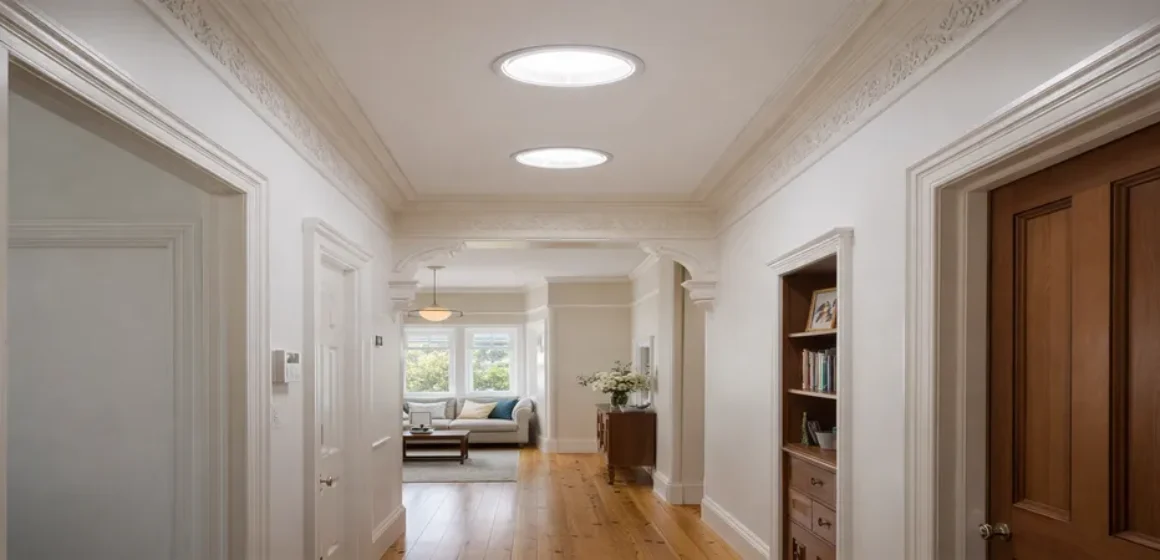
Hallways and entries
This is often the best first move.
A brighter hallway makes the whole home feel more open. It lifts the experience of every room without touching the rooms themselves.
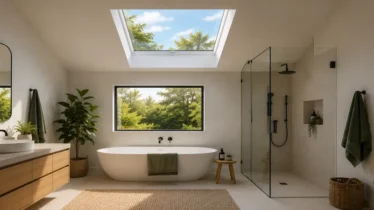
Bathrooms and ensuites
Many villa bathrooms are internal or have limited window options. Overhead daylight can make the space feel cleaner and less boxed in.
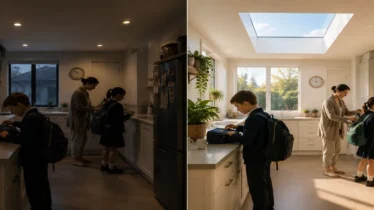
Back-of-house kitchens
If the kitchen sits deeper in the home, a skylight can reduce the dull centre-zone problem and keep the space usable on overcast days.
The placement rule that preserves character
In villas, skylight success is more about placement than size.
A character-safe placement plan usually:
- supports the centre of the space rather than spotlighting the floor
- avoids landing direct sun on feature walls or artwork zones
- respects symmetry where it matters, but does not force it
- keeps the ceiling finish looking intentional, not patched
The aim is even, natural lift.
Not a bright circle that pulls attention away from the home’s original features.
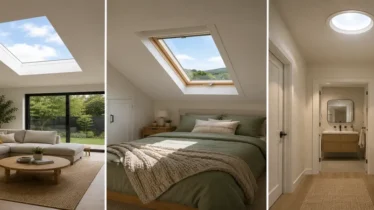
Choosing the right skylight type for a villa
You do not need the most complex option. You need the option that suits the room and keeps the finish clean.
Tubular skylights
Often excellent for villa hallways and bathrooms because they:
- deliver strong usable daylight into small and narrow areas
- keep the ceiling opening modest
- can feel discreet in heritage interiors
Fixed skylights
Best when you want a broader ceiling lift, especially in kitchens or living areas where a single small light point would feel insufficient.
Opening skylights
Useful when ventilation is part of the upgrade, but only if you genuinely need airflow and can operate it easily. In many villas, fixed daylight plus proper extraction solves the real problem without added complexity.
If you want a simple overview of skylight types before you decide:
The shaft matters more in villas than in modern homes
In many villa upgrades, the shaft is what you see, not the roof window.
A well-designed shaft:
- keeps lines clean and proportionate
- avoids awkward angles that look modern in the wrong way
- spreads light gently rather than creating a harsh beam
If your villa has high ceilings, shaft depth can become a benefit. It can soften and distribute light in a way that feels calm and period-appropriate.
What to watch for so the ceiling does not look “renovated”
These are the small details that protect the feel of the room.
- Match ceiling lining and texture cleanly around the opening
- Keep trims neat and minimal unless a trim detail suits the space
- Avoid placing the skylight where it visually clashes with existing ceiling features
- Plan around any original cornices or decorative edges
If you are renovating multiple rooms, align skylight decisions with your plastering and painting sequence to avoid rework.
Illustrative Example Only: the villa hallway that finally felt alive
A homeowner in Greater Auckland loved their villa’s character but felt the hallway dragged the whole house down. Even in summer, it read as a shadowy corridor.
The upgrade focused on overhead daylight in the hallway rather than changing windows or opening walls.
The result was not a flashy renovation effect.
It simply felt like the home was awake during the day.
A line they used afterwards:
“Nothing looks different, but everything feels different.”
A practical checklist before you commit
If you are planning a skylight for villa Auckland upgrades, take these into the conversation.
- Which rooms feel dim even on bright days?
- Do you want even lift, or targeted task light?
- Are there ceiling features we need to respect?
- What is the roof type and what is in the roof space?
- Will the shaft be deep, and how will it be finished?
- Are you trying to solve daylight only, or moisture and ventilation too?
If you want a recommendation based on your home, roof type, and the rooms you are upgrading, start here:
For Auckland coverage and planning context:
FAQs (unique to this topic)
Will a skylight ruin the character of my villa?
Not if it is planned with restraint. The right skylight type, placement, and clean ceiling finish can feel like a natural upgrade that respects the home.
Where do skylights work best in Auckland villas?
Hallways and internal bathrooms often deliver the biggest improvement because they are traditionally the darkest zones in villa floorplans.
Do villas need tubular skylights or flat skylights?
It depends on the room. Tubular skylights are often ideal for hallways and bathrooms. Fixed skylights can suit kitchens or larger spaces where you want a broader ceiling lift.
Can I add skylights without major interior disruption?
Often, yes, especially if the upgrade is planned alongside painting or ceiling work. Early planning reduces rework and helps keep finishes clean.
What is the biggest mistake in villa skylight upgrades?
Choosing a skylight position that creates a harsh sun patch or looks visually out of place on the ceiling. In villas, subtle, well-placed daylight usually wins.