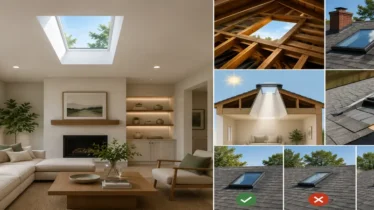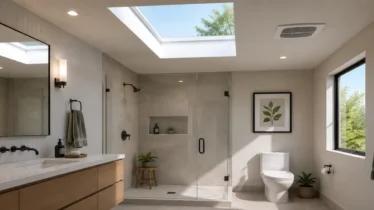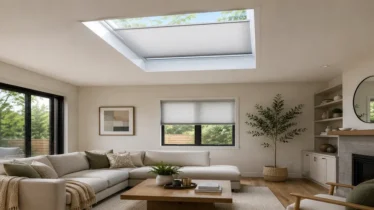
The bathroom steam problem: why ventilation choices matter in older NZ homes
In many older New Zealand homes, the bathroom is the room that gives winter away first.
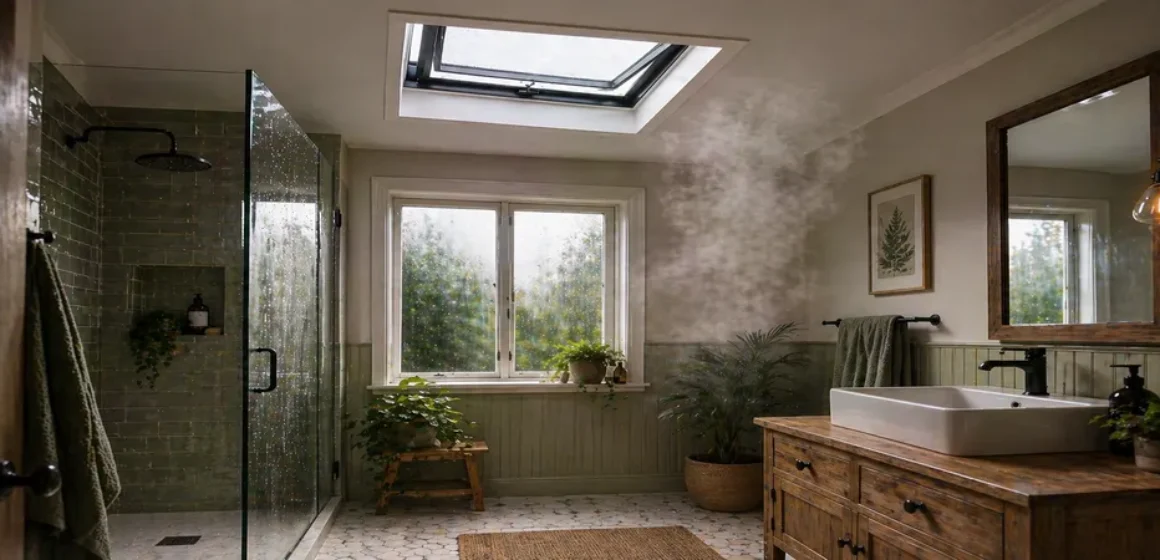
The mirror fogs before the shower is finished. Moisture sits on the window frame. The ceiling feels a little too flat and shadowed. Towels take longer to dry. Even after the room has been cleaned, it can still feel closed in.
This is the bathroom steam problem.
It is common in villas, bungalows, mid-century homes, 1970s houses, older townhouses and renovated properties where the bathroom was never designed for the way modern households use it. Longer showers, tighter homes, smaller windows, privacy glass and cooler mornings all change how the room behaves.
For many homeowners, bathroom skylight ventilation becomes part of the conversation because the room needs more than brightness. It may need daylight, airflow, extraction and better moisture habits working together.
A skylight is not a magic fix for steam. A vented skylight is not a replacement for every ventilation measure. But in the right bathroom, the right daylight and airflow solution can make the room feel fresher, more usable and better suited to daily life.
This guide explains what older NZ bathrooms often struggle with, where skylights fit, and how to think clearly before choosing a product.
Start with the real problem, not the product
When a bathroom feels dark and steamy, it is tempting to jump straight to a product question.
Should we install a skylight?
Should it open?
Would a sky tube be enough?
Do we need a bigger extractor fan?
Those are useful questions, but they should come after one more important question:
What is the bathroom actually struggling to do?
A bathroom has to manage several things at once:
- Moisture from showers and baths
- Odours and stale air
- Privacy
- Daylight
- Temperature changes
- Wet surfaces
- Safe movement
- Cleaning and maintenance
- Comfort during morning and evening routines
Older bathrooms often struggle because they were not designed around all of these demands. A small window may provide privacy but poor airflow. An extractor may be present but underperforming. A ceiling may be low and shadowed. A room may have been renovated cosmetically without solving the light and ventilation pattern.
The right solution depends on which part of the problem matters most.
Why older NZ bathrooms often feel worse in winter
Winter changes how bathrooms behave.
People keep windows closed more often. Warm shower steam meets colder glass, tiles and framing. The room may have less natural light in the morning. Towels, mats and surfaces can stay damp longer. In homes with limited heating or older insulation, the bathroom may cool quickly after use.
This is not unique to one region.
Auckland bathrooms may deal with humidity and shaded boundary walls. Wellington homes may face wind exposure and compact older layouts. Dunedin, Christchurch and inland areas may have colder morning surfaces. Coastal homes from Northland to Kapiti may need careful thinking around weather exposure and moisture. Rural homes may have larger roof areas but older bathroom configurations.
The details vary, but the homeowner experience is often similar:
“The bathroom works, but it never feels properly fresh in winter.”
That is a different issue from simply wanting the room to look nicer. It is about how the bathroom performs every day.
The three-part bathroom test
Before deciding on a skylight or ventilation upgrade, test the bathroom across three areas.
1. The steam test
After a normal shower, notice what happens.
- Does the mirror fog heavily?
- Does steam remain visible for long after the shower ends?
- Do the windows drip with condensation?
- Does moisture sit on the ceiling or walls?
- Does the extractor clear the room effectively?
- Does the room still feel damp 30 minutes later?
If steam lingers, ventilation and extraction need attention.
2. The daylight test
Stand in the bathroom during the morning without turning the lights on.
- Can you use the room comfortably?
- Does the daylight reach the vanity, shower or bath area?
- Is the window too small, too shaded or too frosted to provide useful light?
- Does the room feel gloomy even when it is clean?
If the room feels dull all day, daylight may be part of the issue.
3. The comfort test
Think about how the room feels, not just how it looks.
- Does it feel fresh after use?
- Does it feel cold or enclosed?
- Is it a room people move through quickly?
- Does it make the morning routine feel heavier than it should?
If the bathroom feels unpleasant despite being functional, it may need a more complete approach.
What ventilation actually needs to do
Ventilation is not just about opening a window after a shower.
In a bathroom, ventilation needs to help remove warm, moist air before it settles on cooler surfaces. That is why extraction, airflow paths and room design all matter.
A useful bathroom ventilation plan considers:
- Where moisture is created
- How quickly moist air is removed
- Whether replacement air can enter the room
- Whether airflow reaches the wettest parts of the bathroom
- How the room behaves in cold or wet weather
- Whether the household will actually use the ventilation system consistently
This last point is often overlooked.
A bathroom window may technically provide ventilation, but if it is rarely opened in winter because the room becomes too cold, it is not solving the daily problem. An extractor may exist, but if it is too weak, too noisy, poorly positioned or not used long enough, steam may still remain.
A vented skylight may help in some homes by allowing warm, moist air to escape from a higher point in the room. But it still needs to be part of a sensible room strategy.
Where a vented skylight can help
A vented skylight may be worth considering when the bathroom needs both daylight and airflow.
It can be especially relevant where:
- The bathroom has limited window area
- The window is frosted, shaded or poorly positioned
- Steam gathers near the ceiling
- The room feels enclosed after showers
- The ceiling and roof layout allow a suitable installation
- Privacy is important but daylight is still needed
- The homeowner wants high-level airflow as part of the solution
Because warm air rises, a vented skylight can allow air to move out from above. In some bathrooms, that high-level opening can support the room’s ventilation strategy and improve the feeling of freshness.
However, several details matter.
The skylight must suit the roof pitch and roof type. Flashing must be appropriate. The opening method needs to suit the ceiling height and homeowner use. Weather exposure must be considered. In some cases, a rain sensor, electric operation or manual control may influence suitability.
A vented skylight is a serious building component, not a decorative add-on.
When a sky tube may be the better bathroom choice
Not every bathroom needs an opening skylight.
A tubular skylight, or sky tube, may be better when the main issue is poor daylight and the bathroom already has suitable extraction or another ventilation approach.
A sky tube may suit:
- Small bathrooms
- Internal bathrooms
- Separate toilets
- Ensuites
- Bathrooms where privacy is a priority
- Rooms where a larger skylight would feel too visually dominant
- Layouts where daylight is needed but roof-window ventilation is not the main requirement
Inside the room, a sky tube usually appears as a ceiling diffuser. It spreads natural light into the bathroom without creating a large window-like feature.
For older homes, this can be useful where the homeowner wants the room to feel brighter without changing its character too heavily.
A sky tube can improve the feel of the bathroom. It does not remove steam. If moisture is the main problem, extraction and ventilation still need to be addressed.
When an extractor matters most
Sometimes the most important bathroom upgrade is not a skylight at all.
If a bathroom has heavy steam, lingering dampness or condensation after every shower, a suitable extractor fan may be essential. A skylight can add daylight and a vented skylight may help airflow, but moisture still needs to be removed effectively.
Extraction may be especially important where:
- The bathroom is used by several people each morning
- Showers are long or frequent
- There is no practical opening window
- The room has poor air movement
- The ceiling is low
- Moisture appears on walls or ceilings
- The home is kept closed up during winter
This is not a reason to avoid skylights. It is a reason to be precise.
The best outcome may be a combination: suitable extraction for moisture, plus a daylight solution that makes the room feel more open, usable and pleasant.
The privacy advantage of overhead daylight
Bathrooms need privacy, and this is where skylights can be especially useful.
A wall window often creates a trade-off. Make it larger, and privacy becomes harder. Keep it small or frosted, and daylight may be weak.
Overhead daylight can reduce that compromise.
A fixed skylight, vented skylight or sky tube can bring natural light into the room without relying on a larger side-facing window. This can be valuable in townhouses, suburban homes with close neighbours, bathrooms near boundary fences, and ensuites where privacy matters.
The result can feel very different from artificial lighting.
A naturally lit bathroom often feels cleaner, calmer and more complete, even when the layout remains unchanged.
Older homes need careful roof and ceiling thinking
Older NZ homes often come with quirks.
Ceiling cavities may be limited or inconsistent. Roof framing may not align neatly with the preferred skylight location. Previous renovations may have changed the bathroom layout. There may be old insulation, ducting, wiring, plumbing, low roof pitch or roof materials that need careful treatment.
This does not mean a skylight cannot be installed. It means the assessment matters.
A bathroom skylight plan should consider:
- Roof type and condition
- Roof pitch
- Ceiling height
- Ceiling cavity space
- Rafters, trusses or framing
- Existing extractor ducts
- Plumbing and electrical services
- Shower position
- Interior finish
- Privacy and sightlines
- Maintenance access
The most attractive product on paper may not be the best product for the home.
Good skylight planning respects the building before it improves the room.
Common mistakes homeowners should avoid
Mistake 1: Assuming daylight will fix moisture
Daylight can improve how the bathroom feels, but it does not remove moisture from the air. If steam is the main issue, ventilation and extraction need proper attention.
Mistake 2: Choosing a skylight before understanding the roof
The roof determines what is practical. Roof type, pitch, framing and access all influence product choice and installation method.
Mistake 3: Ignoring winter habits
If windows stay closed through winter, the bathroom’s ventilation strategy needs to work in real life, not only in theory.
Mistake 4: Placing light where it looks good on a plan, not where it helps the room
The best location may be above the vanity, shower approach, central floor area or darkest zone. Placement should follow use.
Mistake 5: Forgetting summer comfort
A skylight should improve the bathroom year-round. Product choice, glazing, placement and opening type should consider both winter freshness and warmer months.
A practical decision framework
Use this simple framework before making an enquiry.
If the bathroom is mainly dark
Consider a sky tube or fixed skylight, depending on room size, roof access and desired visual effect.
If the bathroom is dark and steamy
Consider whether a vented skylight may suit, but also review extraction and moisture control.
If the bathroom is bright but steamy
The priority may be ventilation or extraction rather than more daylight.
If the bathroom is internal
A sky tube may be a practical daylight option, while extraction remains important for steam.
If the bathroom is part of a renovation
Plan the skylight early, before ceiling lining, roofing, plumbing and electrical work are finalised.
If the roof is due for work
Coordinate the skylight with roofing where possible. This can often make planning cleaner and reduce disruption.
Illustrative example only
An older home has a compact bathroom with a small frosted window facing a narrow side path. The room receives very little useful daylight, and steam lingers after morning showers. The extractor fan exists, but it is noisy and rarely used long enough.
In this situation, the right answer is unlikely to be one single product chosen quickly.
A good discussion would look at whether the extractor needs improvement, whether the roof and ceiling allow a vented skylight, and whether a sky tube would provide enough daylight if ventilation is handled separately.
The homeowner’s real goal is not “install something in the roof”.
The goal is a bathroom that feels brighter, fresher and easier to use every morning.
That goal should drive the recommendation.
What to send when asking for bathroom skylight advice
A clear enquiry helps avoid guesswork.
Useful information includes:
- Photos of the bathroom from several angles
- A photo of the ceiling area
- Photos of the outside roof above the bathroom if possible
- Whether the room has an extractor fan
- Whether the room has an opening window
- When steam or condensation is worst
- Roof type if known
- Ceiling type if known
- Whether this is part of a renovation
- Whether you want daylight, ventilation or both
You do not need to know the final solution. The purpose of the enquiry is to understand what is suitable.
The best bathroom outcome is practical, not dramatic
A good bathroom daylight and ventilation upgrade does not need to feel showy.
Sometimes the best result is simple.
The room no longer feels gloomy when you walk in. The morning routine feels easier. The vanity is naturally lit. The space feels less closed in. Airflow has been considered properly. The bathroom feels more like part of the home and less like a problem room.
That is the real value.
Not drama. Not hype. Just a room that works better.
Planning your next step
If your bathroom feels dark, steamy or closed in through winter, it may be time to look at the room as a whole.
Skylights.co.nz can help you explore whether a fixed skylight, vented skylight or tubular skylight may suit your bathroom, roof type and ventilation needs.
To start planning your options, use the Skylights.co.nz enquiry form:
https://inquiry.skylights.co.nz/inquiry
You may also find these useful:
FAQs
Is a vented skylight good for bathroom ventilation?
A vented skylight can support bathroom ventilation in suitable homes by allowing warm, moist air to escape from a high point. It should still be considered alongside extraction, heating, insulation and general moisture control.
Can a bathroom skylight stop steam?
A bathroom skylight should not be treated as a steam cure. A vented skylight may help with airflow, but heavy steam usually requires proper extraction and moisture management as well.
Is a sky tube suitable for an internal bathroom?
A sky tube can be a good daylight option for some internal bathrooms, ensuites and separate toilets. It can brighten the room through a ceiling diffuser, but it does not provide ventilation unless paired with separate airflow or extraction systems.
What is better for an older bathroom, a skylight or extractor fan?
They do different jobs. A skylight improves natural light, and a vented skylight may support airflow. An extractor fan removes moist air from the room. Many older bathrooms may need both daylight and effective extraction considered together.
Can skylights be installed in older NZ homes?
Yes, skylights can often be installed in older homes, but the roof type, pitch, framing, ceiling cavity and existing services need to be assessed. Older homes may require more careful planning than newer builds.
What should I check before asking for a bathroom skylight quote?
Check whether the bathroom is mainly dark, mainly steamy, or both. Take photos of the room, ceiling and roof area if possible, and note whether the room has an extractor fan, opening window and any known roof or ceiling limitations.