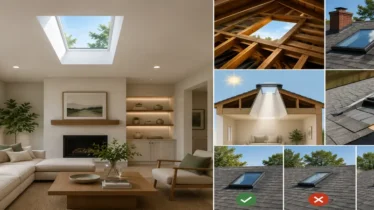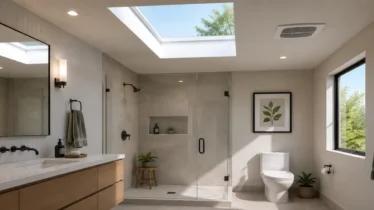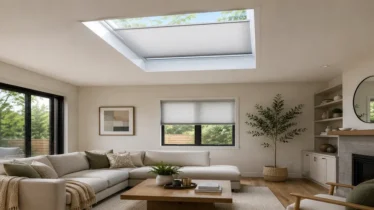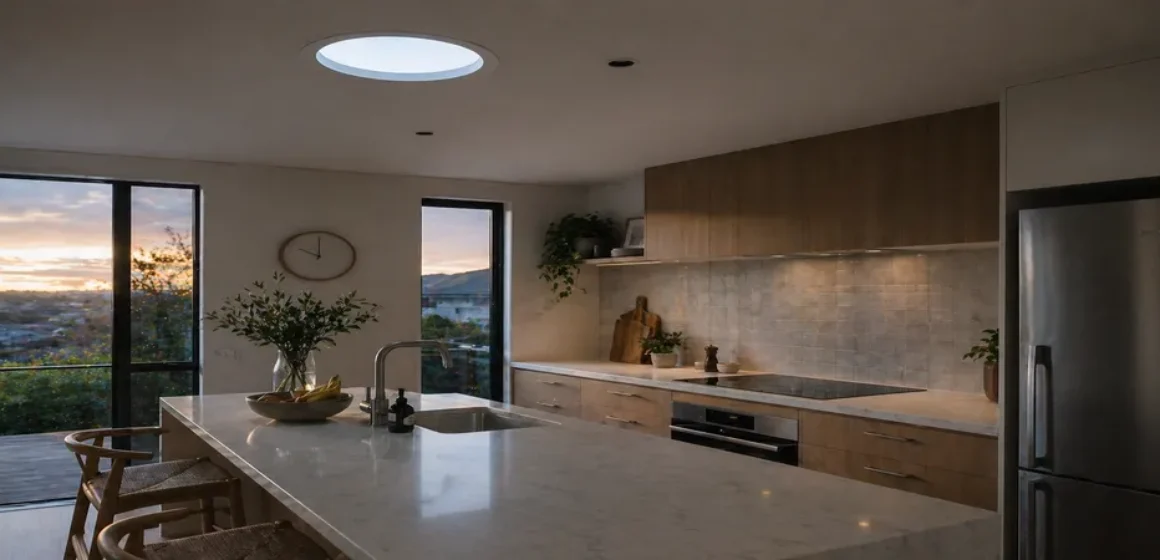
The 7.30am winter kitchen test: can you make breakfast without switching every light on?
A kitchen can tell you a lot about a home at 7.30am in winter.
The jug is boiling. Lunchboxes are open. Someone is looking for a clean mug. The day has started, but the room still feels half asleep. If every ceiling light has to go on before breakfast can happen, the kitchen may not be working as well as it should.
Many New Zealand homes have kitchens that perform well in summer but feel dull through winter. The issue is not always size or age. Sometimes the kitchen has windows, but the daylight does not reach the parts of the room where people actually stand, prepare food, gather and move.
That is where winter kitchen natural light becomes more than a design detail. It can change the feel of the busiest room in the home at the busiest time of the day.
This guide uses the 7.30am kitchen test to help homeowners understand whether a skylight, sky tube or other daylighting option may be worth considering before the darker part of the year settles in.
The 7.30am test
Before you think about skylight sizes, brands or roof details, stand in your kitchen on a winter morning before turning every light on.
Ask yourself:
- Can you safely prepare breakfast without artificial lighting?
- Does the bench receive useful daylight, or is the light sitting near the windows only?
- Does the kitchen feel active and awake, or flat and shadowed?
- Do people naturally gather there, or move through quickly?
- Does the room feel darker on cloudy mornings than the rest of the home?
- Are lights on even when it is technically daytime?
This is not a scientific test. It is a homeowner test. It reflects how the room is actually lived in.
A kitchen can look acceptable in a real estate photo and still feel under-lit at the exact time your household uses it most.
That difference matters.
Why kitchens often feel darker in winter
Kitchens are heavily used, but they are not always planned around daylight.
In New Zealand homes, winter kitchen darkness is often caused by a mix of design and site factors.
The window is in the wrong place
A kitchen window may bring light to the sink, but not to the island, pantry wall or main preparation bench.
This is common in older homes where the kitchen layout has changed over time. The window stayed in place, but the way the room is used has moved.
Deep eaves or covered outdoor areas block light
Many homes have verandas, pergolas, covered decks or wide eaves outside the kitchen. These features can be useful for shade and outdoor living, but they may limit how much daylight reaches the kitchen in winter.
Neighbouring homes or fences cast shade
In tighter urban and suburban areas, side windows can be affected by boundary fences, nearby walls, garages or neighbouring homes.
This is especially common where homes have been extended or sections are more compact.
South-facing kitchens receive limited direct sun
A south-facing kitchen can still be a pleasant space, but it may receive less direct sunlight, particularly through winter. It may need daylight from above to feel more balanced.
Artificial lighting hides the real issue
When lights are used out of habit, homeowners may not notice how little daylight the kitchen actually receives.
The 7.30am test makes the issue harder to ignore.
The four kitchen zones to check
A good kitchen daylight plan starts with where people actually use the room.
1. The preparation zone
This is the bench, island or work surface where food is prepared.
If this area sits away from the window, a skylight or sky tube may bring daylight to the part of the kitchen that needs it most. Side windows often light the edge of the room. Overhead daylight can reach the working zone more directly.
2. The sink and clean-up zone
Many kitchens already have a window near the sink. But if that window faces a shaded side path, fence or covered outdoor area, the light may be weaker than expected.
A skylight may not need to sit directly above the sink. Sometimes the better result comes from placing daylight where the room feels most shadowed.
3. The gathering zone
In open-plan homes, the kitchen is often where people stand, talk, make coffee and move between the living and dining spaces.
If this area feels dark, the whole open-plan room can feel less inviting. A skylight can help create a stronger centre of gravity, especially when placed to support the way the room is used.
4. The transition zone
This is the space between the kitchen and hallway, dining room, laundry or garage entry.
These areas are often overlooked, but they influence how the home feels in daily use. A dark kitchen entrance can make the room feel less welcoming, even when the main kitchen has some daylight.
A sky tube may sometimes be a practical solution for this type of transition area.
Skylight options for winter kitchens
Not every kitchen needs the same daylight solution.
Fixed skylights
A fixed skylight can work well in kitchens where the goal is stronger natural light and a more open feel.
It may suit:
- Kitchen islands
- Main preparation benches
- Open-plan kitchen and dining spaces
- Dark areas beneath deep eaves
- Kitchens with limited side light
- Modern renovations where daylight is part of the design outcome
A fixed skylight does not open for ventilation, so it should be considered separately from extraction, rangehood performance and general airflow.
Vented skylights
A vented skylight may suit kitchens where both daylight and airflow are part of the brief.
Warm air, cooking smells and moisture can gather near the ceiling. In some homes, a vented skylight can support high-level airflow when used appropriately. However, it should not be treated as a replacement for a suitable rangehood or proper kitchen ventilation.
The decision depends on roof layout, ceiling height, control method, weather exposure and how the kitchen is used.
Tubular skylights or sky tubes
A tubular skylight can be useful when the kitchen needs targeted daylight rather than a large architectural skylight.
It may suit:
- Smaller kitchens
- Butler’s pantries
- Walk-through kitchen zones
- Internal kitchen corners
- Transition spaces beside the kitchen
- Laundries or sculleries connected to the kitchen
A sky tube can be especially useful where the homeowner wants a practical daylight improvement without making the ceiling a major feature.
The difference between a bright kitchen and a better kitchen
More light is not always the answer. Better light is the answer.
A kitchen with harsh glare in the wrong place may be uncomfortable. A skylight placed without considering the work areas may brighten the ceiling but leave the benchtop still feeling dull. Too much summer exposure without blinds or careful placement may create a different problem.
A better kitchen daylight plan considers:
- Where the household stands most often
- Which areas are dark during winter mornings
- Whether the room needs light, ventilation or both
- How the kitchen connects to nearby rooms
- Roof pitch and roof orientation
- Summer comfort and shading
- Privacy from neighbouring upper levels
- Internal ceiling design and finishing
The goal is not to flood the kitchen with light at all costs. The goal is to make the room feel easier, clearer and more natural to use.
That is a more valuable outcome.
Energy-conscious, without overclaiming
Many homeowners ask whether a skylight can help reduce lighting use.
In the right kitchen, yes, better daylight can reduce the need to switch on artificial lights during daytime hours. If your kitchen currently needs lights on through much of the morning or afternoon, a suitable skylight or sky tube may help.
But it is important to be honest.
A skylight is not an energy system. It does not guarantee a specific power bill reduction. Actual savings depend on household habits, the room, the lighting setup, the weather, the season and how much artificial lighting is currently used.
The strongest benefit is often more immediate than a number on a bill: the kitchen feels like daytime again.
For many households, that is the change they notice first.
Local NZ kitchen realities
Kitchen daylight challenges vary across New Zealand.
In Auckland and Northland, humidity, dense housing and shaded side boundaries can make kitchens feel enclosed in winter. In Wellington and coastal areas, weather exposure and roof access need careful thought. In Canterbury and Otago, colder mornings and low winter sun can make internal kitchens feel especially flat. In Bay of Plenty and Waikato homes, covered outdoor living areas can shade the kitchen more than owners expected.
Older villas and bungalows may have kitchens added or altered over time. Mid-century homes may have smaller windows and deeper rooms. Newer homes may have open-plan layouts but still carry dark zones between kitchen, dining and hallway areas.
This is why kitchen skylight planning should not be generic. A good result depends on the home, the roof and the household routine.
A morning routine lens
The best way to assess your kitchen is to look at the real routine, not the ideal version of the room.
Think about a normal winter weekday.
Someone turns on the light before making coffee. Someone opens the fridge and blocks the only window light. Someone stands at the bench packing lunches. A child sits at the island. The rangehood runs. The weather outside is grey. The room is busy, but the natural light is weak.
This is the moment a kitchen skylight may make sense.
Not because the kitchen is broken.
Because the room is working hard, and the daylight is not keeping up.
Illustrative example only
A family in a suburban home has a kitchen window above the sink, but the main preparation bench sits on the opposite side of the room. In summer, the space feels acceptable because the home receives more ambient light throughout the day. In winter, the kitchen lights are on from breakfast until late morning.
The homeowner first considers repainting the walls, but the issue is not colour. The working area receives very little natural light.
In this type of situation, a fixed skylight or carefully positioned sky tube may be worth exploring. The best choice would depend on the roof above, ceiling cavity, desired finish and whether the kitchen also needs ventilation support.
The point is simple: the room does not need a full renovation to deserve better daylight.
Questions to ask before choosing a kitchen skylight
Before requesting a quote, consider these questions:
- Where do you most need daylight: bench, island, sink, pantry, dining edge or walkway?
- Is the issue worse in the morning, afternoon or all day?
- Does the kitchen already have a window?
- Is the room shaded by eaves, a deck, fence or neighbouring building?
- Do you need airflow as well as daylight?
- Is there a rangehood or existing ventilation system?
- What is above the kitchen: roof space, another level or a low-pitch roof?
- Do you want a visible skylight feature or a more subtle daylight source?
- Would blinds or shading be needed for summer comfort?
- Are you planning any other renovation, roofing or ceiling work?
These answers help narrow the options before the technical assessment begins.
When a kitchen may not be the first room to fix
Sometimes the kitchen feels dark because the nearby spaces are dark.
A gloomy hallway, internal laundry, scullery or dining transition can affect how the kitchen feels. In these cases, a targeted sky tube in an adjoining area may improve the flow of the home more effectively than placing a larger skylight in the kitchen itself.
This is why a room-by-room view matters.
A good daylight plan looks at how light moves through the home, not just one ceiling in isolation.
What better winter kitchen light can change
A well-planned daylight improvement can make the kitchen feel:
- Easier to use in the morning
- Less dependent on artificial lighting during the day
- More connected to the rest of the home
- Cleaner and fresher in appearance
- More inviting for family routines
- Better suited to open-plan living
- More complete without a full renovation
The most important change may be the quietest one.
You walk in, make coffee, and the room already feels ready for the day.
Planning your next step
If your kitchen needs lights on through winter mornings, it may be worth exploring whether better daylight can improve the way the room functions.
Skylights.co.nz can help you consider whether a fixed skylight, vented skylight or tubular skylight may suit your kitchen, roof type and desired outcome.
To start planning your options, use the Skylights.co.nz enquiry form:
https://inquiry.skylights.co.nz/inquiry
You may also find these useful:
FAQs
Is a skylight a good idea for a dark kitchen?
A skylight can be a good option for a dark kitchen when the room has limited useful daylight, shaded windows or work areas that sit away from side light. Suitability depends on the roof, ceiling layout, room design and desired outcome.
What type of skylight is best for a kitchen?
A fixed skylight may suit kitchens where the main goal is stronger natural light. A vented skylight may suit kitchens where airflow is also important. A tubular skylight can work well for smaller kitchens, sculleries, pantries or darker transition spaces.
Can a kitchen skylight reduce the need for lights during the day?
In the right position, a skylight or sky tube can reduce the need for artificial lighting during daytime hours. The result depends on the room, skylight placement, season, weather and current lighting habits.
Should a kitchen skylight go above the island or bench?
It depends on where daylight is most useful. In some kitchens, the island is the best location. In others, the preparation bench, walkway or darker side of the room may benefit more. Placement should follow how the room is used.
Do kitchen skylights cause too much heat in summer?
A poorly planned skylight can create unwanted glare or heat. Product choice, placement, glazing, blinds, roof orientation and shading all matter. A good skylight plan should consider both winter daylight and summer comfort.
Can a sky tube work in a kitchen?
Yes, a sky tube can work well in some kitchens, especially smaller kitchens, darker corners, sculleries or areas where a subtle daylight source is preferred. It may not create the same visual effect as a larger skylight, but it can be highly practical.