Mid-winter daylight audit: 8 places natural light gets blocked inside NZ homes
By mid-winter, most homes have already shown their weak spots.
The hallway needs the light on at lunchtime. The kitchen feels dull on grey mornings. The bathroom never quite feels fresh. A spare room becomes the place where washing, boxes or unused furniture quietly gather because nobody really wants to spend time there.
These are not always major renovation problems. Often, they are daylight problems hiding inside everyday routines.
A home daylight audit helps you step back and look at how natural light is actually moving through your house, not how you assume it should move. It is a simple way to identify which rooms are underperforming, why they feel darker in winter, and where a skylight or sky tube may be worth considering.
This guide walks through eight common places natural light gets blocked inside New Zealand homes, with practical prompts you can use before requesting advice.
Why a daylight audit matters in winter
Winter gives a more honest reading of a home than summer.
During warmer months, open doors, longer evenings, brighter skies and stronger sun can hide a poor daylight layout. By July, the pattern is harder to ignore. The sun is lower. Cloudy days feel longer. Windows stay closed. Curtains may stay drawn for warmth. Rooms that rely on borrowed light feel darker, earlier.
A daylight audit is not about chasing brightness for its own sake. It is about understanding how light supports daily life.
The right question is not:
“Is this room bright enough in theory?”
The better question is:
Does this room work well when we actually use it?
That is where the audit begins.
How to do the audit properly
Choose a typical winter day. It does not need to be perfectly sunny. In fact, a cloudy day can reveal more.
Walk through the home at three times:
- Morning: between 7.00am and 9.00am
- Middle of the day: between 11.00am and 1.00pm
- Afternoon: between 3.00pm and 5.00pm
For each room, note:
- Whether lights are needed during the day
- Where the natural light comes from
- Where shadows gather
- Whether windows are blocked or shaded
- Whether the room feels usable, flat, cold or closed in
- Whether the issue changes through the day
Avoid judging the room only when every light is already on. Artificial lighting can hide the daylight problem.
If possible, take photos at the same time each day. A phone photo can make the contrast between rooms more obvious.
1. The hallway that relies on borrowed light
Hallways are one of the most common daylight failures in New Zealand homes.
They often sit in the centre of the floor plan, away from exterior walls. They rely on light drifting in from bedrooms, living areas or glass doors. In summer, that borrowed light may be enough. In winter, closed doors, drawn curtains and weaker daylight can leave the hallway feeling dim for most of the day.
What to check
- Does the hallway need lights on during daytime hours?
- Does it rely on bedroom or lounge doors being open?
- Is it darker than the rooms connected to it?
- Does it make the home feel narrower or less welcoming?
- Is it used heavily in the morning or evening routine?
What may help
A tubular skylight, also called a sky tube, is often worth considering for internal hallways. It can bring daylight from the roof into a specific ceiling area without needing a large skylight feature.
The aim is not to create drama. It is to make the centre of the home feel alive again.
2. The kitchen bench that sits outside the window light
A kitchen can have windows and still be poorly lit.
This often happens when the main daylight reaches the sink or dining edge but not the preparation bench, island or pantry side. The result is a kitchen that looks fine from one angle but still needs artificial lighting where people actually work.
This is especially common in homes where the kitchen layout has changed over time. The window stayed where it was, but the daily use of the room moved.
What to check
- Where do you stand most often when preparing food?
- Is that area naturally lit in the morning?
- Does the sink get daylight while the bench stays shadowed?
- Are there deep eaves, covered decks or fences outside the kitchen window?
- Do lights go on before breakfast, even on dry days?
What may help
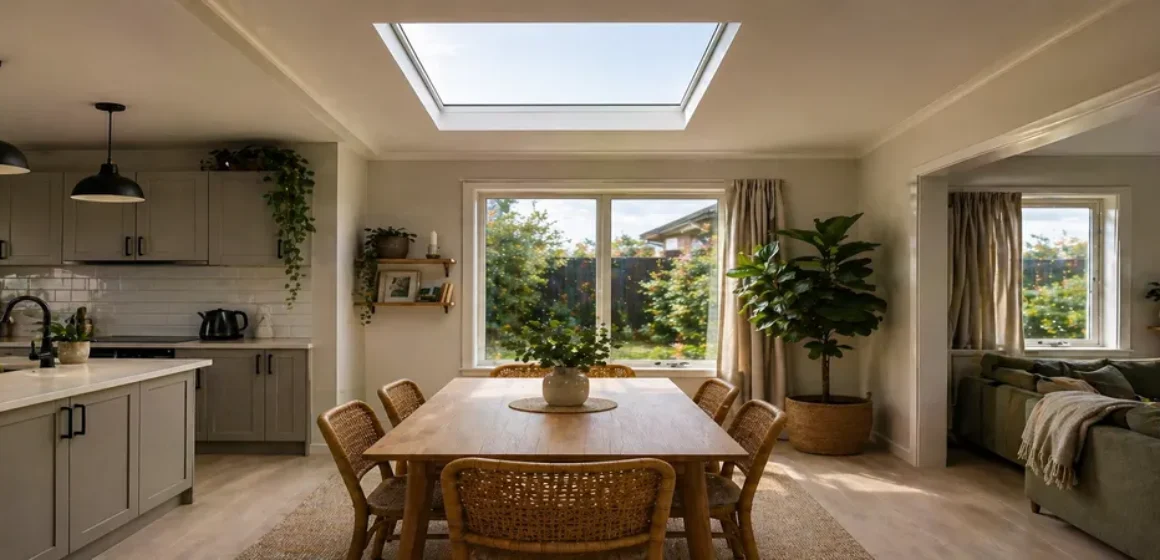
A fixed skylight may suit kitchens where the working area needs stronger overhead daylight. A sky tube may suit smaller kitchens, sculleries or darker corners where a subtle daylight source is enough.
Placement matters more than size. Better light in the right area is usually more valuable than more light in the wrong one.
3. The bathroom hidden behind privacy glass
Bathroom windows often protect privacy at the cost of useful daylight.
Frosted glass, small window openings, shaded side paths and boundary fences can all limit how much natural light reaches the room. In winter, the bathroom may feel dim and steamy at the same time.
This matters because bathrooms are used heavily during the darker parts of the day: early morning and evening.
What to check
- Does the bathroom feel dull before the light is switched on?
- Is the window frosted, shaded or very small?
- Does daylight reach the vanity or shower area?
- Does steam linger after use?
- Is ventilation also a concern?
What may help
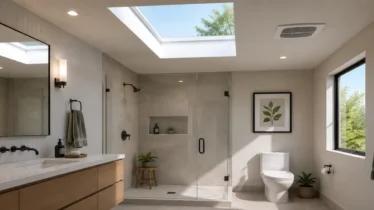
A sky tube may suit small or internal bathrooms where the main need is natural light. A vented skylight may be worth considering where airflow and daylight are both part of the brief.
Moisture still needs proper attention. Daylight can improve how the bathroom feels, but extraction and ventilation remain important where steam is a problem.
4. The living room corner that never gets used
Some living rooms have one area everyone avoids.
It may be the corner behind the sofa, the reading chair that looks good but feels gloomy, or the section of an open-plan room that never quite feels connected to the rest of the space.
This is often a daylight distribution issue. The room may have good natural light near the windows but poor light deeper inside.
What to check
- Is one part of the room consistently darker than the rest?
- Does furniture placement follow the light rather than the best layout?
- Is a seating area rarely used during winter?
- Does the room feel larger in summer and smaller in winter?
- Are curtains, eaves or neighbouring structures limiting daylight?
What may help
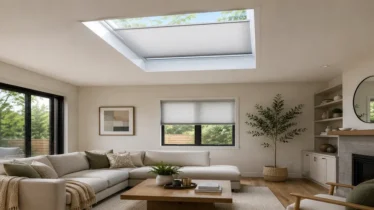
A fixed skylight can sometimes help bring light deeper into a living area, especially in open-plan homes where side windows do not reach the centre of the room. In some cases, a smaller targeted daylight solution may be enough.
The goal is to make the whole room usable, not just the area beside the windows.
5. The laundry that feels like a back-of-house problem
Laundries are often treated as purely practical spaces, but they still affect how the home feels.
A dark laundry can make everyday tasks feel heavier, particularly in winter when washing, drying and dampness are already part of the household rhythm. Many laundries sit beside garages, bathrooms, back entries or internal walls, which can limit natural light.
What to check
- Does the laundry need lights on every time it is used?
- Is it connected to a bathroom or hallway that also feels dark?
- Does it have an exterior window, or only borrowed light?
- Is indoor drying adding moisture to the space?
- Does the room feel less clean than it actually is?
What may help
A sky tube can be a strong option for laundries where the room needs practical daylight without a major visual feature. Ventilation should be reviewed separately if clothes drying or moisture is part of the issue.
A brighter laundry may not be glamorous, but it can improve a task people do several times a week.
6. The spare room that has become a storage room
Many spare rooms become storage rooms because they do not feel pleasant enough to use.
The room may be intended as an office, guest room, study, hobby space or future nursery, but if it feels cold, dull or closed in, it slowly becomes the place where things get put away.
This is common in homes where the spare room faces the shaded side of the property or receives limited winter sun.
What to check
- Does the room have a clear purpose, or has it drifted into storage?
- Does it need lights on during the day?
- Would you comfortably work or read there in winter?
- Is the window shaded by trees, fences or neighbouring walls?
- Does the room feel separate from the rest of the home?
What may help
A fixed skylight may suit a room that needs a stronger sense of daylight and space. A smaller skylight or sky tube may suit a compact room where subtle improvement is the goal.
The real value is not only brighter walls. It is recovering usable space inside the home.
7. The stairwell or landing that loses light between floors
Two-storey homes, split-level homes and homes with internal stairs often have stairwells or landings that feel darker than expected.
These areas may not be rooms in the traditional sense, but they influence the feel of the whole home. A dark landing can make upper bedrooms feel disconnected. A dim stairwell can make the home feel narrower and more enclosed.
What to check
- Does the stairwell rely on light from nearby rooms?
- Is the upper landing darker than the bedrooms around it?
- Are lights needed for safety during the day?
- Does the stairwell feel closed in during winter?
- Is there roof space above or near the landing?
What may help
Depending on the roof and ceiling layout, a skylight or sky tube may help bring daylight into the upper circulation area. This can be particularly useful where the stairwell sits near the roofline.
A brighter stairwell can change the way levels of the home connect.
8. The room shaded by the home itself
Sometimes the biggest light blocker is not a tree, fence or neighbouring house. It is the home’s own design.
Deep eaves, verandas, covered decks, extensions, garages and roof overhangs can shade windows for much of the day. These features may be useful for weather protection, outdoor living or summer shading, but they can also reduce winter daylight.
This is common across many NZ homes, from older bungalows with verandas to modern homes with covered alfresco areas.
What to check
- Is the room shaded by a deck roof, veranda or pergola?
- Did the room become darker after an extension or outdoor cover was added?
- Does daylight stop at the window rather than entering the room?
- Is the room worse in winter when the sun angle is lower?
- Would daylight from above reach areas that side light cannot?
What may help
A fixed skylight or sky tube may help where side windows are permanently limited by the home’s own structure. The right option depends on roof access, ceiling type, room size and desired appearance.
This is one of the clearest examples of why overhead daylight can be so effective. It can bypass the obstacles that block side light.
A simple scoring system for your home
After walking through the eight areas, give each space a score from 1 to 5.
1: Good daylight, no concern
2: Slightly dull, but usable
3: Noticeably dark at certain times
4: Often needs artificial lighting during the day
5: Consistently dark, underused or unpleasant
Any room scoring 4 or 5 deserves closer attention.
Then add one more note beside the score:
- Light issue
- Ventilation issue
- Both light and ventilation
- Possible layout issue
- Possible roof or access question
This helps separate the type of problem before you ask for advice.
What the audit may reveal
Most homeowners expect to find one dark room. The audit often reveals a pattern.
You may find that the home’s centre is under-lit. Or that side-facing rooms are struggling because of neighbouring structures. Or that moisture-prone rooms are also the darkest. Or that a covered deck solved an outdoor problem but created an indoor daylight problem.
That pattern is useful.
It helps you avoid choosing a skylight as a one-off product and start thinking about daylight as part of how the home functions.
Sometimes the best solution is one well-placed sky tube. Sometimes it is a fixed skylight in the room where the family spends the most time. Sometimes it is better to plan two smaller daylight improvements rather than one larger feature.
The right answer depends on what the audit shows.
Local conditions matter
A daylight audit should also consider where in New Zealand the home is located.
In Auckland, Northland and Bay of Plenty, humidity, shaded boundaries and covered outdoor areas can influence how rooms feel through winter. In Wellington and coastal areas, wind exposure, roof access and weather windows may shape installation planning. In Canterbury and Otago, colder mornings and lower winter sun can make internal rooms feel especially flat. In rural homes, long rooflines and deeper floor plans may create dark central areas even when the home has plenty of exterior wall space.
The same room can need different thinking depending on the region.
That is why a good skylight recommendation should never feel generic. It should respond to the home, the roof and the local conditions.
Illustrative example only
A homeowner starts with one complaint: the hallway is dark.
After doing a mid-winter daylight audit, they realise the hallway, laundry and bathroom all sit in the same internal zone. The bedrooms and living room are acceptable, but the centre of the home feels closed in. The problem is not one room. It is the way daylight fails to reach the middle of the floor plan.
In this case, a targeted sky tube in the hallway may improve more than the hallway itself. It may make the connected rooms feel less cut off and reduce the need for daytime lighting in the central area.
The audit changes the question from “Can we brighten this hallway?” to “How can we make the centre of the home feel better?”
That is a stronger starting point.
When to ask for skylight advice
It may be worth requesting advice if your audit shows:
- One or more rooms need lights on during the day
- Internal spaces feel disconnected from the rest of the home
- Bathrooms, laundries or kitchens feel both dark and damp
- Covered outdoor areas are blocking window light
- A spare room is underused because it feels dull
- The home’s centre feels gloomy through winter
- You are planning renovation, roof or ceiling work
- You are unsure whether a skylight, vented skylight or sky tube would suit
You do not need to know the product before enquiring. A clear description of the problem room is often enough to begin.
Planning your next step
A mid-winter daylight audit can show you where your home is quietly underperforming.
If one or two rooms stand out, Skylights.co.nz can help you explore whether a fixed skylight, vented skylight or tubular skylight may suit your room, roof type and desired outcome.
To start planning your options, use the Skylights.co.nz enquiry form:
https://inquiry.skylights.co.nz/inquiry
You may also find these useful:
FAQs
What is a home daylight audit?
A home daylight audit is a simple review of how natural light moves through your home during the day. It helps identify rooms that rely on artificial lighting, feel underused, or receive poor daylight because of layout, shading or window placement.
When is the best time to do a daylight audit?
Mid-winter is a useful time because shorter days, lower sun angles and closed-up rooms reveal daylight problems more clearly. A cloudy winter day can be especially helpful for seeing which rooms feel dark without strong sunlight.
Which rooms usually need skylights or sky tubes most?
Common rooms include hallways, bathrooms, laundries, kitchens, stairwells, internal rooms and spare rooms. The best option depends on whether the room needs stronger daylight, subtle daylight, ventilation, or a combination.
Can a sky tube brighten an internal hallway?
Yes, a sky tube can be a practical option for many internal hallways, provided the roof and ceiling conditions are suitable. It brings daylight from the roof through a reflective tube to a ceiling diffuser.
Does a dark room always need a skylight?
No. Some dark rooms may benefit from different window treatments, improved lighting design, layout changes or ventilation improvements. A skylight or sky tube is worth considering when poor natural light is a key part of the problem and the roof conditions are suitable.
What should I send with a skylight enquiry after doing a daylight audit?
Send photos of the room, ceiling and roof area if possible. Also describe when the room feels darkest, whether ventilation is a concern, the roof type if known, and what outcome you want from the upgrade.