Replacing an Old Skylight in Hamilton: When to Repair, Replace or Upgrade
An old skylight can be easy to ignore until it starts causing concern.
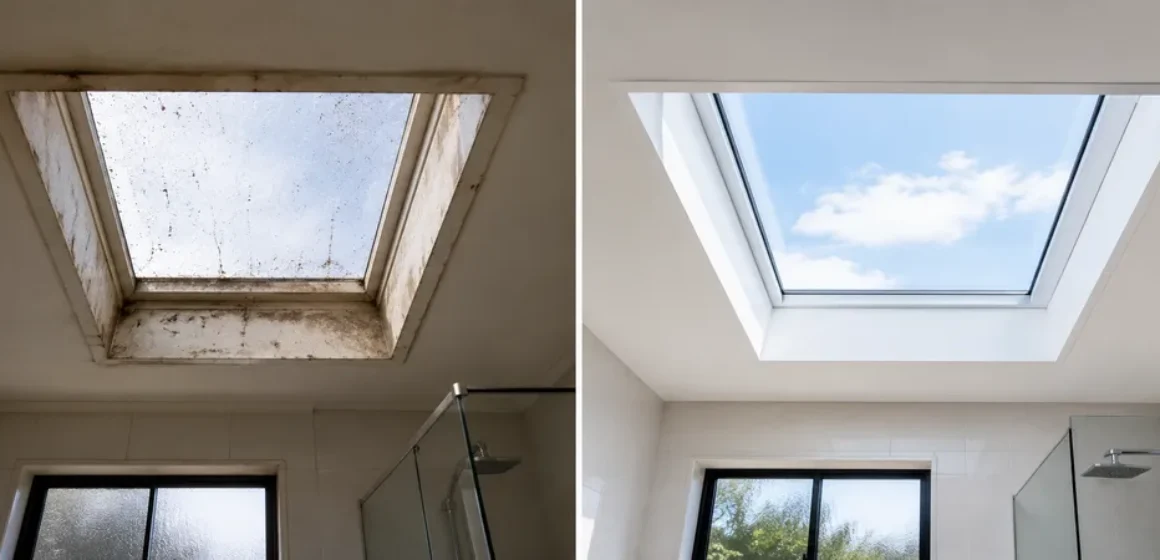
At first, it may only look a little tired. The dome may be yellowed. The frame may look dated. The room may not feel as bright as it once did. There may be staining around the ceiling, a small drip during heavy rain, condensation inside the skylight, a cracked panel, a loose flashing edge, or a vented unit that no longer opens properly.
For Hamilton homeowners, the question often becomes:
Can this old skylight be repaired, or is it time to replace it?
The answer depends on the skylight’s age, condition, roof type, flashing, leak history, internal damage, product style, size, and whether the homeowner wants a like-for-like replacement or a better daylight solution.
A skylight replacement in Hamilton is not just about removing one product and putting another in its place. The roof around the skylight needs to be assessed. The internal ceiling may need attention. The flashing may need review. The existing opening may not suit the preferred new product. If the old skylight has leaked, the surrounding materials may need closer inspection.
This guide explains when an old skylight may be repaired, when replacement makes more sense, and when it may be worth upgrading to a fixed skylight, vented skylight, tubular skylight or Sky tube.
Why old skylights need careful assessment
A skylight sits in one of the most demanding parts of the home: the roof.
It is exposed to rain, wind, sun, temperature changes, roof movement, debris, moss, lichen, UV exposure and general weathering. Over time, materials can age. Flashings can deteriorate. Sealants may fail. Plastic domes may become brittle or yellowed. Older skylight designs may no longer perform as well as the homeowner expects.
An old skylight may need assessment if there are signs of:
- Leaking
- Ceiling stains
- Cracked glazing or dome material
- Yellowing or cloudiness
- Condensation between layers
- Rust or corrosion around metal components
- Worn seals
- Damaged flashing
- Loose fixings
- Poor internal finish
- Draughts
- Water marks after rain
- A vented unit that no longer opens or closes properly
- Reduced daylight compared with earlier years
Not every issue means immediate full replacement. But old skylights should not be assessed only from inside the room.
The roof side matters just as much as the ceiling side.
Repair, replace or upgrade: the basic difference
There are three broad paths with an old skylight.
Repair
Repair may be considered where the skylight is generally in good condition and the issue is isolated, minor and practical to fix.
Replace
Replacement may be the better option where the skylight is aged, damaged, leaking, non-performing, brittle, difficult to source parts for, or no longer worth patching.
Upgrade
Upgrade may make sense when the homeowner wants more than a like-for-like replacement. This may include better daylight, a different product type, a vented option, improved light control, a new location, or replacing an old dome-style unit with a more suitable modern option.
The right path depends on what the existing skylight is doing, what has failed, and what the homeowner wants the room to become.
A repair may solve a small issue. A replacement may solve an ageing product issue. An upgrade may solve a room-performance issue.
Those are different decisions.
When repair may be enough
Repair may be worth considering if the skylight is relatively sound and the problem is limited.
Possible repair situations may include:
- Minor seal issues
- Small flashing adjustments
- A fixable internal finishing issue
- A loose component
- A blocked drainage path around the roof area
- A minor issue with an opening mechanism
- A small roof-side issue not caused by the skylight itself
However, repair should be approached carefully.
If a skylight has leaked repeatedly, is visibly aged, has brittle glazing, has poor flashings, or sits in a roof area that no longer performs well, repeated patching may not be good value.
A repair should not simply hide the problem.
It should address the actual cause.
If the cause is uncertain, replacement or a more thorough assessment may be the safer discussion.
When replacement may be the better answer
Replacement may be worth considering when the skylight is no longer performing reliably or the product itself is ageing.
Common replacement triggers include:
- Repeated leaking
- Cracked dome or glazing
- Yellowed or cloudy dome material
- Brittle plastic
- Damaged frame
- Old or failing flashings
- Ceiling staining around the skylight
- Poor daylight performance
- Draughts
- Difficult-to-source parts
- Poor previous installation
- A skylight that has reached the end of its practical life
- A product that no longer suits the room
A replacement can be like-for-like if the existing size, roof opening and product type still make sense. But that is not always the best decision.
If the old skylight was poorly placed, too small, too large, wrong for the roof, or unsuitable for the room, simply replacing it with the same thing may repeat the problem.
A good replacement quote should ask whether the homeowner wants to replace the product only, or improve the outcome.
When upgrading makes sense
An upgrade may be worth considering when the existing skylight does not solve the room’s current needs.
For example:
- A bathroom may need daylight and better airflow
- A bedroom may need light control or blinds
- A kitchen may need daylight in a different position
- A living room may need better glare management
- A hallway may suit a tubular skylight or Sky tube rather than an old dome
- A laundry may need daylight, with ventilation considered separately
- A room renovation may change the best skylight position
- The homeowner may want a cleaner internal finish
- The old skylight may look dated compared with the rest of the home
An upgrade may involve changing product type, size, operation method, internal finish or placement. It may also involve removing an old skylight and installing a more appropriate product for the room.
Upgrading should be based on a clear room outcome.
The question is not only, “What will fit in the old opening?”
The better question is, “What does this room need now?”
Like-for-like replacement: when it works
A like-for-like replacement may make sense when the existing skylight location, size and product type still suit the room and roof.
This may be suitable if:
- The current skylight location works well
- The room receives the right amount of daylight
- The roof opening is suitable
- The ceiling finish can be reused or refreshed
- The roof area is in reasonable condition
- The homeowner does not want a different product type
- The old unit has simply aged or failed
Like-for-like replacement can sometimes be more straightforward than changing the skylight type or size.
However, it still needs proper assessment.
Older skylights may not match modern sizing or product systems exactly. Flashing compatibility, roof opening condition, internal finishing and roof type still need review.
“Like-for-like” should not mean “without checking”.
It means replacing the existing function as closely and sensibly as possible.
Replacing an old dome skylight
Older dome skylights are common in many homes.
Over time, dome materials may become yellowed, cloudy, cracked or brittle. This can reduce daylight quality and affect how the room feels. In some cases, the issue may be only the dome. In others, the frame, flashing or roof integration may also need attention.
Replacement questions may include:
- Is the dome cracked or brittle?
- Is the skylight leaking?
- Is the frame in good condition?
- Are the flashings still performing?
- Is the roof around the skylight sound?
- Is the internal ceiling stained or damaged?
- Does the existing size still suit the room?
- Is the homeowner wanting a dome replacement or a different skylight style?
- Would a tubular skylight or Sky tube be more suitable for a compact room?
A dome replacement should not be quoted by size alone if there are signs of leaking or roof issues.
The surrounding roof and flashing condition matter.
Replacing a leaking skylight
A leaking skylight needs careful diagnosis.
Water around a skylight may come from the skylight itself, the flashing, roof materials nearby, poor previous installation, roof pitch, cracked glazing, blocked paths, roof damage, or water travelling from another area.
Signs may include:
- Stains around the ceiling opening
- Dripping during heavy rain
- Damp plasterboard
- Bubbling paint
- Swelling timber or lining
- Mould marks near the skylight
- Water marks below the roof opening
- Intermittent leaks during wind-driven rain
Replacement may be necessary if the skylight or flashing system has failed. But it is important to understand the cause before assuming the product alone is responsible.
A responsible quote should consider both the skylight and the roof around it.
If internal damage is visible, plastering, painting or lining repairs may need to be discussed separately.
Ceiling stains do not always tell the whole story
A ceiling stain near a skylight is important, but it does not always reveal the full cause.
It may be from:
- A skylight leak
- Condensation
- An old leak that has already been fixed
- Roof water travelling from higher up
- Flashing failure
- Poor roof drainage
- Internal moisture
- A previous installation issue
- Damage from a storm or roof movement
Photos of stains are helpful, but they should be matched with roof-side assessment.
When asking for a replacement quote, send photos of both the internal staining and the roof area around the skylight if safe to do so.
If the ceiling has been wet for some time, internal lining may need repair even after the skylight is replaced.
The quote should clarify what is included and what is excluded.
Replacing a skylight during roof work
If the roof is being repaired, repainted or replaced, it can be a good time to review old skylights.
Roof work may provide better access and an opportunity to avoid double-handling later. If a skylight is already old, damaged or nearing replacement, it may make sense to discuss it before the roof work is complete.
This is especially relevant if:
- The roof is being replaced
- Roofing contractors will already be on site
- The old skylight has aged flashings
- The skylight has leaked before
- The homeowner wants to upgrade the room
- The skylight sits in an area being repaired
- Internal finishing or painting is also planned
Timing matters.
Replacing a skylight after new roofing work has just been completed may be less efficient than planning the skylight and roof work together.
Homeowners should raise skylight replacement early if roofing work is already planned.
Replacing a skylight during renovation
Renovation is another good time to assess an old skylight.
If a bathroom, kitchen, hallway, living room, bedroom or laundry is being upgraded, the existing skylight should be reviewed as part of the room plan.
Ask:
- Does the skylight still suit the new layout?
- Does it bring light to the right area?
- Is the size still appropriate?
- Does the internal finish match the renovation standard?
- Would a vented option be useful?
- Would blinds or light control be needed?
- Would a tubular skylight or Sky tube suit the redesigned space better?
- Is the old skylight worth keeping?
- Should the ceiling opening be altered?
A renovation can change how the room is used.
A skylight that worked for the old layout may not work for the new one.
Planning replacement early helps avoid patching around a product that no longer suits the room.
Fixed, vented or tubular replacement options
An old skylight does not always need to be replaced with the same type.
Fixed skylight
A fixed skylight may suit rooms where daylight is the main goal and airflow is not needed from the skylight. This may include living rooms, kitchens, bedrooms, hallways, home offices and some bathrooms.
Vented skylight
A vented skylight may be worth considering where daylight and airflow are both important. This may suit some bathrooms, kitchens, upper-level rooms or stuffier spaces. Ventilation still needs to be assessed properly.
Tubular skylight or Sky tube
A tubular skylight or Sky tube may suit compact spaces where practical daylight is needed without a large visible skylight. This may include hallways, separate toilets, walk-in wardrobes, pantries, laundries and small internal rooms.
The best replacement depends on the room’s current need.
If the existing skylight never provided the right daylight, replacing it with the same type may not be the best move.
Should an old skylight be moved?
Sometimes the old skylight is not in the best position.
This can happen when:
- The room layout has changed
- The original skylight was placed for roof convenience rather than room use
- The skylight lights the wrong part of the room
- A kitchen renovation moved the island or bench
- A bathroom layout changed
- A living room now has a television glare issue
- A bedroom needs better light control
- A hallway needs daylight in the middle, not near one end
Moving a skylight may be more involved than replacing it in the same opening. It may require closing the old opening, creating a new roof and ceiling opening, adjusting internal lining, repairing roofing and managing finishing work.
That can affect cost.
However, if the old placement does not solve the room problem, moving or rethinking the daylight approach may be worth discussing.
The old hole in the roof should not dictate the future result without question.
Internal finishing after replacement
Skylight replacement can involve internal finishing.
Depending on the situation, there may be:
- Ceiling lining repair
- Plastering
- Painting
- Trimming
- Shaft adjustments
- Frame finishing
- Repainting around water stains
- Repairing old damage
- Matching new finishes to old ceiling surfaces
Some quotes may include internal finishing. Others may exclude plastering, painting or decoration. This should be clearly stated.
If there has been a leak, internal damage may need separate repair after the skylight is made weathertight.
Homeowners should ask:
- Is internal finishing included?
- Is painting included?
- Are old ceiling stains being repaired?
- Is any plasterboard replacement included?
- Are there exclusions around water-damaged materials?
- Will another trade be needed?
Clarity helps avoid surprise after the skylight is installed.
Flashing and roof integration
For skylight replacement, flashing is one of the most important areas to assess.
An old skylight may have old flashings, damaged flashings, incompatible flashings, or a previous installation detail that does not suit the current roof condition.
Flashing review may include:
- Roof type
- Roof profile
- Roof pitch
- Water flow direction
- Nearby valleys or ridges
- Existing roof penetrations
- Roof age and condition
- Whether the old flashing can be reused or should be replaced
- Whether the new product requires a different flashing system
It is usually better to treat flashing as part of the replacement discussion, not as an afterthought.
A replacement skylight should be properly integrated with the roof.
That is what protects the value of the work.
Roof type matters in Hamilton homes
Hamilton homes include a wide range of roof types and ages.
A skylight replacement may involve:
- Long-run metal roofing
- Corrugated metal roofing
- Concrete tiles
- Terracotta tiles
- Older roof profiles
- Low-pitch sections
- Roofs with previous repairs
- Roofs with solar panels or other penetrations
- Roofs with access limitations
Roof type can affect product choice, flashing requirements, labour time, access and cost.
A skylight that is straightforward to replace on one roof may be more involved on another.
This is why roof photos are useful when requesting a quote.
A close-up of the old skylight is helpful, but a wider roof photo is often even more useful.
What affects skylight replacement cost?
The cost of replacing a skylight can be affected by:
- Product type
- Product size
- Like-for-like replacement or upgrade
- Roof type
- Roof pitch
- Flashing requirements
- Access and safety requirements
- Internal finishing
- Whether there is water damage
- Whether the old opening can be reused
- Whether the skylight needs to be moved
- Whether the product is fixed, vented or tubular
- Whether blinds or controls are included
- Whether electrical work is needed
- Whether scaffolding or edge protection is required
- Whether other trades are involved
A replacement quote should be based on the actual conditions, not only the old skylight size.
If the skylight has leaked, the quote may need to be staged or include assumptions until the area is inspected more closely.
Should you repair a leaking skylight or replace it?
This depends on the cause, age and condition.
Repair may be worth considering if:
- The skylight is relatively new
- The issue is minor and clearly identified
- The product and flashing are otherwise sound
- The roof around it is in good condition
- Parts or fixes are practical
Replacement may be better if:
- The skylight is old
- It has leaked repeatedly
- The dome or glazing is cracked
- The flashings are failing
- The frame is deteriorating
- The product is brittle or yellowed
- The old installation was poor
- Repairs would only delay the same issue returning
- The room needs a better daylight solution anyway
The risk with repeated repairs is that the homeowner may keep spending money without solving the real problem.
A clear assessment should help decide whether repair is sensible or whether replacement is better value.
Old skylight, poor daylight: replacement as an opportunity
Sometimes the old skylight is not leaking.
It just does not do enough.
This can happen when:
- The skylight is too small
- The dome is yellowed
- The room layout has changed
- The skylight is poorly placed
- The internal shaft is deep or narrow
- The room needs daylight in a different area
- The existing product does not suit the current use
- The homeowner wants a cleaner look
In this case, replacement becomes an opportunity to improve the room.
A hallway may benefit from a better-positioned tubular skylight or Sky tube.
A bathroom may benefit from a better daylight and ventilation discussion.
A kitchen may need daylight over the island.
A living room may need a more balanced fixed skylight.
A bedroom may need light control considered.
The replacement should not be judged only by the old product.
It should be judged by the room’s current needs.
Safety and access during replacement
Skylight replacement often requires roof access.
Access can affect planning and cost.
Factors may include:
- Roof height
- Roof pitch
- Roof surface condition
- Driveway access
- Boundary clearance
- Landscaping
- Weather exposure
- Whether the home is single-storey or two-storey
- Whether scaffolding or edge protection is required
- Whether the skylight sits above a stairwell or high internal space
Safe access is part of a proper installation.
A replacement should not be rushed because the skylight looks small.
If the roof is steep, high, slippery or difficult to reach, the quote may need to include access equipment.
That is part of doing the work properly.
What photos help with a replacement quote?
Good photos can make the replacement discussion much clearer.
Send:
- A photo of the skylight from inside the room
- A wider photo of the room
- A photo of the ceiling around the skylight
- Photos of any stains, cracks, bubbling paint or damage
- A photo showing the skylight from outside, if safe
- A wider roof photo showing the skylight location
- Close-up roof photos, if safe and practical
- Photos showing roof type and profile
- Photos of any nearby valleys, gutters, vents or solar panels
- Approximate skylight size
- Location in Hamilton
- Whether the skylight leaks, looks aged, or simply needs upgrading
- Whether the home is single-storey or two-storey
Do not climb onto the roof just to take photos.
Safe photos from the ground, driveway, upstairs window or nearby vantage point are better than unsafe roof access.
What details should you include?
Alongside photos, include:
- How old the skylight is, if known
- Whether it has leaked before
- When it leaks, if applicable
- Whether it leaks only in heavy rain or wind-driven rain
- Whether there is ceiling staining
- Whether the skylight opens or is fixed
- Whether the dome or glazing is cracked
- Whether you want a repair, replacement or upgrade
- Whether the roof has been replaced or repaired before
- Whether renovation work is planned
- Whether painting or ceiling repair is expected
- Whether blinds, ventilation or light control are needed
- Whether access is difficult
These details help Skylights NZ understand whether the enquiry is likely to be repair-related, replacement-related or upgrade-related.
They also help identify whether more assessment may be needed before a final quote.
Common mistakes with old skylights
Assuming a leak means only the skylight is faulty
The issue may involve flashing, roof materials, water flow or surrounding roof conditions.
Replacing like-for-like without asking if the old skylight worked well
If the old product was poorly placed or the wrong type, replacing it exactly may not improve the room.
Ignoring internal damage
Ceiling stains, damp lining and paint damage may need separate repair.
Forgetting roof type
Flashings and product suitability depend heavily on the roof.
Waiting until the next storm
A known leak should be assessed before more internal damage occurs.
Choosing repair when replacement is better value
Repeated patching can become false economy if the skylight is old or failing.
Choosing upgrade without considering the existing opening
Changing size, type or location may affect cost and finishing.
Not sending enough photos
A close-up of the skylight alone is rarely enough for a useful recommendation.
Avoiding these mistakes helps homeowners make a better replacement decision.
When replacement may not be the first step
Replacement may not always be the immediate answer.
Further assessment may be needed if:
- The source of the leak is unclear
- The roof around the skylight may be the real issue
- The ceiling damage may be old
- The skylight is still in good condition
- The roof is about to be replaced
- The room is about to be renovated
- The homeowner wants to change skylight location
- The existing opening does not suit the preferred product
- Access conditions need review first
In some cases, repair may be enough. In other cases, roof work may need to happen first. In others, replacement should be planned as part of a larger renovation.
A good recommendation should avoid guessing.
The aim is to solve the right problem in the right order.
Illustrative example only
A Hamilton homeowner has an old dome skylight in a hallway. The dome has yellowed, and there is a light ceiling stain nearby. The homeowner asks for a replacement price.
After reviewing photos, the room appears to need practical daylight rather than a large skylight feature. The skylight may be replaceable, but the roof photos also show older flashing and a roof profile that needs careful assessment.
A like-for-like dome replacement may be possible, but a tubular skylight or Sky tube might also be worth discussing if the hallway’s main need is softer practical daylight. If the staining is from an active leak, the roof and flashing around the old skylight need proper review. If the stain is old, internal painting may still need to be addressed separately.
The right quote depends on whether the goal is repair, replacement or a better daylight result.
The best replacement outcome
The best replacement is not just a new skylight in an old opening.
It is a solution that makes sense for the roof and the room.
A good outcome may mean:
- The old leak risk is addressed properly
- The new product suits the roof type
- Flashing is handled correctly
- The room receives better daylight
- Internal damage or finishing is clearly discussed
- The homeowner understands inclusions and exclusions
- The product suits the room’s current use
- Repair, replacement or upgrade has been chosen for the right reason
- Future maintenance and access have been considered
A skylight replacement should restore confidence.
If the old skylight has been a concern for years, the new solution should feel clear, practical and properly thought through.
Planning your next step
If you have an old skylight in Hamilton that is leaking, cracked, yellowed, dated or no longer giving the room the daylight it needs, it may be time to consider whether repair, replacement or upgrade is the right next step.
Skylights NZ can help review whether a like-for-like replacement, fixed skylight, vented skylight, tubular skylight or Sky tube may suit your room, roof type and desired outcome.
To start planning your options, use the Skylights NZ enquiry form:
https://inquiry.skylights.co.nz/inquiry
You may also find these useful:
- Skylight installation services: https://www.skylights.co.nz/
- Request a skylight quote: https://inquiry.skylights.co.nz/inquiry
- Skylight options for NZ homes: https://www.skylights.co.nz/skylights/
- Skylight Installation Cost in Waikato: What Affects the Final Quote?: https://www.skylights.co.nz/blog/skylight-installation-cost-waikato-quote-factors/
- Getting a Skylight Quote in Waikato: What Photos and Details Help Us Recommend the Right Option: https://www.skylights.co.nz/blog/skylight-quote-waikato-photos-details/
- Fixed or Vented Skylight for a Waikato Home: How to Choose Room by Room: https://www.skylights.co.nz/blog/fixed-vs-vented-skylight-waikato-room-guide/
- Tubular Skylights for Waikato Hallways, Toilets and Walk-in Wardrobes: https://www.skylights.co.nz/blog/tubular-skylight-waikato-hallways-toilets-wardrobes/
FAQs
When should I replace an old skylight in Hamilton?
An old skylight may need replacement if it is leaking repeatedly, cracked, yellowed, brittle, poorly performing, difficult to repair, or no longer suits the room. Replacement should consider the skylight condition, roof type, flashings, internal damage and desired daylight outcome.
Can a leaking skylight be repaired instead of replaced?
Sometimes. Repair may be suitable if the skylight is otherwise sound and the issue is minor and clearly identified. Replacement may be better if the skylight is old, leaking repeatedly, cracked, brittle, poorly flashed or no longer worth patching.
Can I replace an old skylight with a different type?
Yes, depending on the roof, ceiling and room conditions. An old skylight may sometimes be replaced with a fixed skylight, vented skylight, tubular skylight or Sky tube. Changing size, type or location may affect cost, flashing and internal finishing.
What photos should I send for a skylight replacement quote?
Send photos of the skylight from inside, the ceiling around it, any stains or damage, the skylight from outside if safe, and wider roof photos showing the roof type and surrounding area. Include the approximate size and whether it leaks or is being upgraded.
Does skylight replacement include ceiling repairs and painting?
Not always. Ceiling repairs, plastering and painting may be included or excluded depending on the quote. If there is water staining or internal damage, ask clearly what finishing work is included and what may require a separate trade.
Is it better to replace a skylight during roof work?
It can be a good time to replace or upgrade an old skylight if roofing work is already planned. This may help coordinate flashings, access and roof integration. It is best to discuss the skylight before the roof work is completed.