Fixed or Vented Skylight for a Waikato Home: How to Choose Room by Room
Many homeowners start with the wrong skylight question.
They ask, “Should we get a fixed skylight or a vented skylight?”
It sounds like a product question, but it is really a room question.
A kitchen, bathroom, hallway, laundry, bedroom and living room do not need daylight in the same way. Some rooms mainly need brightness. Some rooms need privacy. Some rooms need airflow. Some rooms feel dark but not stuffy. Some rooms feel stuffy but already have enough daylight. Some rooms need a subtle daylight improvement, while others may suit a larger opening to the sky.
For Waikato homeowners comparing a fixed vs vented skylight Waikato option, the best answer starts with the room’s actual problem.
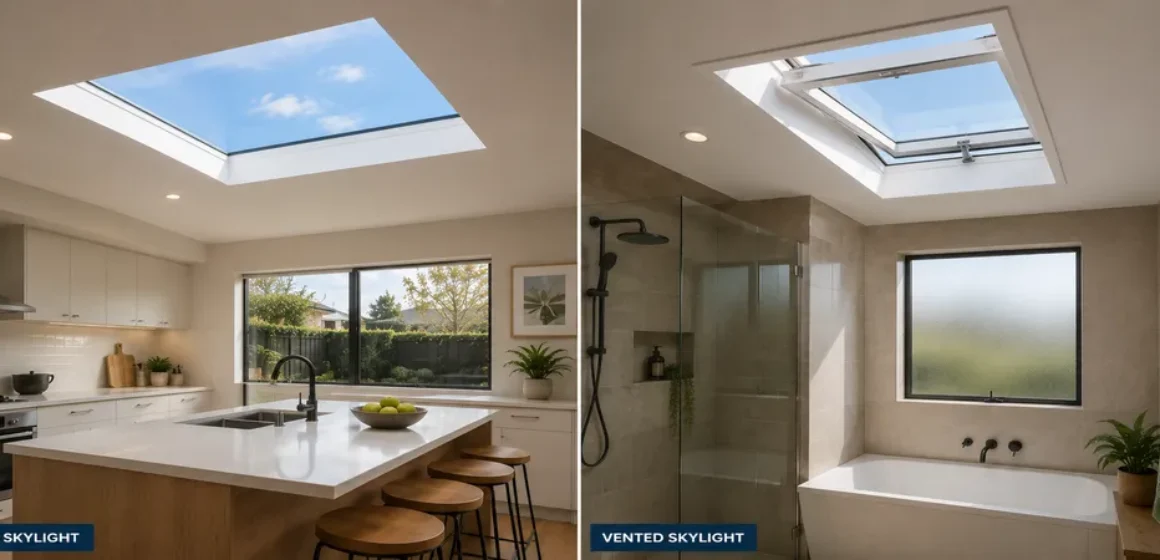
A fixed skylight can bring natural light into a space without opening. A vented skylight can bring daylight and may support airflow in suitable situations. A tubular skylight or Sky tube may be more suitable for compact or internal spaces where a large skylight is not needed.
The right choice depends on room use, roof type, roof pitch, ceiling layout, ventilation needs, moisture levels, privacy, glare, access and how the home performs in winter and summer.
This guide explains how to think through fixed and vented skylights room by room, so the product follows the need instead of the other way around.
Start with the room, not the skylight
A skylight should solve a specific problem.
That problem may be:
- A kitchen bench that feels dull during the day
- A hallway that relies on electric lights
- A bathroom that feels private but closed in
- A laundry that feels dark and heavy in winter
- A home office that feels flat after lunch
- A bedroom that needs daylight but also light control
- A living room with a deep, shaded floor plan
These rooms may all lead a homeowner to ask about skylights, but they do not automatically need the same product.
A fixed skylight may be enough when the main issue is daylight.
A vented skylight may be worth considering when daylight and airflow are both important.
A tubular skylight or Sky tube may be better when the room is compact, internal or mainly needs practical brightness rather than a visible sky opening.
The first step is to describe the room clearly.
Only then should the product be discussed.
What is a fixed skylight?
A fixed skylight is a skylight that brings natural light through the roof but does not open.
It may suit rooms where daylight is the primary goal and ventilation is already handled in another way.
A fixed skylight may be considered for:
- Kitchens
- Living rooms
- Dining areas
- Hallways
- Home offices
- Bedrooms
- Family rooms
- Renovated spaces
- Rooms where a stronger sense of openness is wanted
Fixed skylights can be a good option where the homeowner wants overhead daylight, a visual connection to the sky, or a brighter room without needing the skylight to provide airflow.
They are not automatically simple, though.
A fixed skylight still needs proper planning around roof type, pitch, flashing, placement, ceiling structure, glazing, glare, internal finishing and how the room is used.
A fixed skylight improves daylight. It does not ventilate the room.
That distinction is important.
What is a vented skylight?
A vented skylight is a skylight that can open.
It can bring natural light into a room and may support airflow when opened in suitable conditions. Depending on the product, operation may be manual, electric, solar powered or controlled through other mechanisms.
A vented skylight may be considered for:
- Bathrooms
- Kitchens
- Upper-level bedrooms
- Loft-style rooms
- Stuffier living spaces
- Rooms where warm air gathers near the ceiling
- Areas where airflow is part of the concern
A vented skylight can be useful when daylight and ventilation are both part of the room’s problem.
However, it should not be treated as a complete ventilation system by itself.
A bathroom may still need extraction.
A kitchen may still need a suitable rangehood.
A damp or condensation-prone room may need broader ventilation, heating or moisture control.
A bedroom may need light control as well as airflow.
A high or hard-to-reach skylight may need a practical opening method.
A vented skylight can be valuable, but only when the room justifies it.
The key difference: daylight only or daylight plus airflow
The simplest way to compare fixed and vented skylights is this:
A fixed skylight is for daylight.
A vented skylight is for daylight with the option of airflow.
That sounds simple, but the real decision is more nuanced.
A room may feel dark without needing extra airflow. In that case, a fixed skylight may be enough.
A room may feel stuffy but already have decent daylight. In that case, the skylight may not be the first answer. Ventilation or extraction may need attention.
A room may feel both dark and stuffy. In that case, a vented skylight may be worth discussing, provided the roof, ceiling and operation method make sense.
A room may be small and dark but not need a full skylight. In that case, a tubular skylight or Sky tube may be better.
The right question is not, “Which skylight is better?”
The right question is, “What does this room need that it does not currently have?”
Fixed vs vented skylight for Waikato bathrooms
Bathrooms are one of the most common rooms where homeowners compare fixed and vented skylights.
A fixed skylight may suit a bathroom where the main issue is poor natural light. This may apply when the bathroom has a small frosted window, a shaded side boundary, privacy limitations or a dull shower or vanity area.
A vented skylight may be worth considering where the bathroom needs both daylight and airflow. This can be relevant where the room feels stuffy, has limited window opening, or warm moist air gathers near the ceiling.
However, bathroom ventilation needs careful language.
A vented skylight may support airflow in suitable conditions, but it does not automatically replace an extractor fan. Bathrooms produce moisture through showers, baths and wet surfaces. If condensation, mould or heavy steam is already a problem, extraction, heating, insulation and broader ventilation may also need review.
A tubular skylight or Sky tube may suit a small bathroom, ensuite or separate toilet where daylight is the main goal and a large visible skylight is not needed.
For bathrooms, the decision usually comes down to this:
- Mainly dark: fixed skylight, tubular skylight or Sky tube may be suitable
- Dark and stuffy: vented skylight may be worth discussing
- Moisture problem: ventilation and extraction need separate assessment
- Small room: tubular skylight or Sky tube may be enough
- Privacy issue: overhead daylight may be helpful, but placement and glazing still matter
A bathroom skylight should be chosen carefully because the room’s daylight, privacy and moisture needs overlap.
Fixed vs vented skylight for Waikato kitchens
Kitchens are working spaces, so the skylight choice should follow the way the kitchen is used.
A fixed skylight may suit a kitchen where the main problem is poor daylight over the island, benchtop, dining transition or deeper part of the room. It can provide stronger overhead daylight and make the kitchen feel more usable during the day.
A vented skylight may be considered if the kitchen also feels stuffy or warm air gathers near the ceiling.
However, a vented skylight should not be treated as a replacement for proper cooking extraction. A kitchen still needs suitable rangehood performance where cooking moisture, steam, heat, odours or airborne particles are a concern.
For some compact kitchens, sculleries or pantries, a tubular skylight or Sky tube may be enough. These areas may need practical daylight rather than a larger skylight feature.
For kitchens, the decision may look like this:
- Island or bench needs daylight: fixed skylight may suit
- Kitchen feels stuffy as well: vented skylight may be worth discussing
- Cooking extraction is poor: rangehood or ventilation review may be needed
- Pantry or scullery is dark: tubular skylight or Sky tube may suit
- Glossy surfaces or stone benchtops: glare should be considered
- Renovation is planned: skylight placement should be discussed early
A kitchen skylight should make the room easier to use, not just brighter.
Fixed vs vented skylight for hallways
Hallways usually do not need ventilation from a skylight.
They usually need practical daylight.
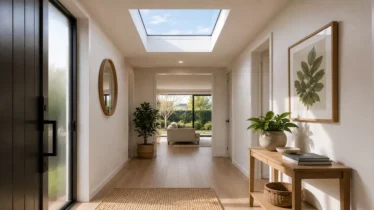
For many Waikato and Hamilton hallways, a tubular skylight or Sky tube may be the most suitable option. A hallway often needs soft overhead brightness through the central section rather than a large opening to the sky.
A fixed skylight may suit some hallways, especially wider entrance areas, stairwells or passages where a stronger daylight feature is wanted.
A vented skylight is less commonly the first choice for a standard hallway unless the hallway is part of a larger circulation space where airflow is genuinely relevant.
For hallways, the decision is usually:
- Narrow or internal hallway: tubular skylight or Sky tube may suit
- Wider entry or feature hallway: fixed skylight may suit
- Long hallway: more than one daylight point may be worth assessing
- Hallway with no airflow problem: vented skylight may not be necessary
- Dark middle section: placement matters more than product size
The hallway’s job is to connect the home. The skylight should make that connection feel clearer and more natural.
Fixed vs vented skylight for laundries
Laundries need careful thinking because they can feel both dark and damp.
A fixed skylight may suit a larger laundry, mudroom or utility space where daylight is the main goal and ventilation is already handled separately.
A vented skylight may be worth considering where the room feels stuffy and airflow is part of the problem. However, laundries can have moisture from wet washing, dryers, sinks and indoor drying practices. A vented skylight should not be treated as the only answer to dampness or slow drying.
A tubular skylight or Sky tube may suit small laundries, laundry cupboards, internal utility spaces and garage-side laundries where the main need is practical daytime brightness.
For laundries, the decision may be:
- Small dark laundry: tubular skylight or Sky tube may suit
- Larger laundry or mudroom: fixed skylight may suit
- Dark and stuffy laundry: vented skylight may be worth discussing
- Dryer or moisture issue: ventilation and dryer ducting need separate review
- Laundry renovation planned: skylight and ceiling planning should happen early
A laundry skylight should improve daily usability without pretending to solve every moisture issue.
Fixed vs vented skylight for living rooms
Living rooms are more complex because they are larger and used in many different ways.
A fixed skylight may suit a living room where the space feels dull, especially if it has a deep floor plan, shaded windows, south-facing orientation or a dark central area.
A vented skylight may be considered if the living room also becomes stuffy, particularly in rooms with higher ceilings, raked ceilings or upper-level warmth.
However, living rooms need careful planning around comfort.
Consider:
- Glare on screens
- Furniture placement
- Roof orientation
- Summer heat
- Winter daylight
- Blind options
- Ceiling height
- Open-plan connection with kitchen and dining areas
- Whether the skylight should be a feature or a subtle improvement
A fixed skylight may provide enough benefit if the main goal is daylight. A vented skylight may be worth the extra consideration if airflow is genuinely needed and convenient operation is possible.
For some darker corners or adjacent passage areas, a tubular skylight or Sky tube may support the wider living zone without needing a large opening.
The best living room result is balanced daylight, not harsh brightness.
Fixed vs vented skylight for bedrooms
Bedrooms need a different level of caution.
A skylight in a bedroom may improve natural light and make the room feel more open, but light control, privacy, sleep comfort and heat should be considered carefully.
A fixed skylight may suit a bedroom where the main issue is daylight and the homeowner wants the room to feel less dark during the day.
A vented skylight may be worth considering where the room also feels stuffy, especially in upper-level bedrooms or rooms with limited window opening.
However, bedroom skylights often need careful thought around:
- Blinds
- Morning light
- Summer comfort
- Privacy
- Glare
- Furniture layout
- Bed position
- Operation method
- Noise and weather exposure
- Whether the skylight can be reached or controlled easily
A tubular skylight or Sky tube may suit some small bedrooms, walk-in wardrobes or adjacent dressing areas where subtle daylight is enough.
For bedrooms, the decision should be conservative and comfort-led.
A skylight should improve the room without disrupting sleep or creating unwanted brightness.
Fixed vs vented skylight for home offices
Home offices need daylight that supports work.
A fixed skylight may suit a home office where the room feels dull, lacks useful natural light and is used regularly. It can help the office feel less flat during winter and reduce reliance on artificial lighting during the day in suitable rooms.
A vented skylight may be worth considering if the office also feels stuffy after several hours, especially in upper-level or loft-style spaces.
However, home office skylights need careful placement because of screen glare.
Important considerations include:
- Desk position
- Screen direction
- Video calls
- Glare on monitors
- Existing window light
- Summer comfort
- Blinds
- Whether the desk can move
- Whether airflow is actually needed
A tubular skylight or Sky tube may suit a compact office, office nook or spare-room office where soft general daylight is enough.
For home offices, the skylight should support concentration and comfort. More light is not always better.
Fixed vs vented skylight for separate toilets and walk-in wardrobes
Separate toilets and walk-in wardrobes often need daylight, not ventilation from a skylight.
A tubular skylight or Sky tube is often worth considering for these spaces because they are compact, internal and used for short periods. The goal is usually simple daytime brightness.
A fixed skylight may be more than the room needs, unless the space is unusually large or part of a wider bathroom or dressing area.
A vented skylight is usually not the first consideration unless there is a specific airflow reason and the roof and ceiling layout make sense.
For these compact spaces, the question is usually:
- Does the room need practical daylight?
- Is a subtle diffuser enough?
- Is roof access suitable?
- Would a full skylight feel excessive?
- Is ventilation already handled separately where required?
In many cases, a tubular skylight or Sky tube may provide the most practical result.
Waikato winter: why the choice becomes clearer
Winter helps reveal whether a room needs daylight, airflow or both.
In June, July and August, homeowners often notice that rooms feel darker, flatter and more dependent on artificial lighting. Bathrooms and laundries may feel heavier. Kitchens may need lights on during the day. Hallways may feel dull. Home offices may feel tired by mid-afternoon.
This is a useful time to assess the room honestly.
Turn off the lights during the day and ask:
- Is the room dark, stuffy, or both?
- Is the issue worse in winter?
- Does the room need privacy as well as light?
- Does moisture or steam build up?
- Is the room used for long periods?
- Is glare likely to be a problem?
- Does the roof above support the preferred product?
- Is a full skylight needed, or would a tubular skylight be enough?
The answer will often point towards fixed, vented or tubular options.
Winter does not automatically mean a skylight is needed. It simply makes the room’s weakness easier to see.
Roof type and product suitability
The roof has a major influence on skylight choice.
Waikato homes may have metal roofing, tile roofing, low-pitch sections, older roof profiles, newer roofing systems or more complex roof shapes. The right skylight option depends partly on these conditions.
Important roof and ceiling considerations include:
- Roof type
- Roof pitch
- Roof profile
- Flashing requirements
- Roof condition
- Water flow direction
- Valleys, ridges and gutters
- Existing roof penetrations
- Solar panels
- Access for installation
- Ceiling cavity depth
- Rafters or trusses
- Wiring
- Plumbing
- Ducting
- Insulation
- Internal finishing requirements
A vented skylight may need additional consideration around operation, weather exposure and control method. A fixed skylight still needs proper flashing and placement. A tubular skylight or Sky tube needs a suitable roof-to-ceiling path.
The best product from inside the room still needs to work with the roof above.
Cost and complexity: why vented skylights need a stronger reason
A vented skylight can offer daylight and airflow, but it is usually more complex than a fixed skylight.
Depending on the product and installation, it may involve:
- Opening mechanisms
- Manual, electric or solar powered operation
- Controls
- Possible rain sensors
- More product cost
- More decision-making around placement
- More maintenance considerations
- More thought around reach and usability
This does not mean a vented skylight is a poor choice.
It means the room should justify it.
If the room only needs daylight, a fixed skylight, tubular skylight or Sky tube may be more appropriate. If airflow is genuinely part of the problem, a vented skylight may be worth the extra consideration.
The extra function should solve a real need, not simply sound better on paper.
Operation matters with vented skylights
A vented skylight is only useful if it can be used conveniently.
Before choosing one, consider:
- Can the skylight be reached?
- Would manual operation be practical?
- Would powered operation be better?
- Is the room used often enough to justify it?
- Is the skylight likely to be opened regularly?
- Would a rain sensor be useful?
- Is the user comfortable managing it?
- Is the room vulnerable to weather exposure?
- Would the skylight be left closed most of the time?
A vented skylight that is awkward to use may not deliver the intended benefit.
This is especially important in bathrooms, kitchens, bedrooms and high-ceiling rooms.
The best vented skylight choice considers human behaviour, not just product features.
Glare, heat and light control
Both fixed and vented skylights can bring strong daylight into a room.
That daylight needs to be comfortable.
Consider glare and light control in:
- Kitchens with reflective benchtops
- Home offices with screens
- Bedrooms where sleep comfort matters
- Living rooms with televisions
- North-facing or exposed roof areas
- Rooms used heavily in summer
- Spaces with polished floors or glossy surfaces
Blinds, glazing choice, placement and sizing may all be part of the discussion.
A vented skylight does not automatically solve glare or heat concerns. It adds airflow, but daylight still needs to be controlled properly.
A fixed skylight can be comfortable and effective when the placement and product selection are right.
The goal is usable daylight, not excessive brightness.
Illustrative example only
A Waikato homeowner is considering skylights for three rooms: a bathroom, a hallway and a kitchen.
The bathroom feels dark and stuffy after showers. A vented skylight may be worth discussing, but the extractor fan and moisture management still need to be reviewed.
The hallway is dark during the day but does not need airflow. A tubular skylight or Sky tube may be more suitable than a vented skylight because the goal is practical daylight.
The kitchen has a dull island but good rangehood extraction. A fixed skylight may be enough if the main issue is daylight, not airflow.
All three rooms involve skylights.
None of them should be treated the same.
The best product depends on what each room is asking for.
A simple room-by-room decision guide
Use this as a starting point, not a final answer.
Bathroom
Consider fixed, vented, tubular skylight or Sky tube depending on daylight, privacy and airflow needs.
Kitchen
Consider fixed skylight for daylight over work zones. Consider vented only if airflow is a real issue. Consider tubular skylight or Sky tube for pantries or compact zones.
Hallway
Usually fixed skylight, tubular skylight or Sky tube. Vented skylight is rarely the first need.
Laundry
Consider tubular skylight or Sky tube for compact spaces. Consider fixed or vented options for larger utility rooms, with moisture handled separately.
Living room
Fixed skylight may suit daylight needs. Vented skylight may suit rooms where airflow is also useful.
Bedroom
Proceed carefully. Consider daylight, blinds, privacy, sleep comfort and airflow.
Home office
Consider glare and screen position first. Fixed, vented or tubular options may suit depending on the room.
Separate toilet or walk-in wardrobe
Tubular skylight or Sky tube may often be enough.
This guide helps narrow the thinking, but roof and ceiling conditions still need assessment.
Common mistakes when choosing fixed or vented skylights
Choosing vented because it sounds better
Extra function is only useful if the room needs it and the skylight will be used.
Choosing fixed without considering airflow
Some rooms need daylight and ventilation, especially bathrooms or stuffier upper rooms.
Ignoring tubular skylights
A full skylight may not be necessary for hallways, toilets, laundries, wardrobes or compact spaces.
Confusing ventilation with moisture control
A vented skylight may support airflow, but bathrooms, kitchens and laundries may still need extraction or broader ventilation planning.
Choosing by price alone
The cheapest option may not solve the problem. The most expensive option may be unnecessary.
Forgetting roof suitability
The room may want one solution, but the roof may require another approach.
Ignoring light control
Bedrooms, offices, kitchens and living rooms need glare and comfort considered.
Waiting too late in a renovation
Skylight planning should happen before ceiling, lighting, extraction and cabinetry decisions are fixed.
A good skylight choice is made by understanding the room, the roof and the homeowner’s daily use.
What to send when asking for fixed vs vented skylight advice
Good information helps avoid vague recommendations.
For a Waikato skylight enquiry, send:
- Photos of the room from several angles
- A photo of the ceiling
- A photo of the darkest area
- Roof photos above or near the room, if possible
- The room’s approximate size
- The roof type, if known
- Whether the room feels dark, stuffy or both
- Whether moisture, condensation or cooking steam is a concern
- Whether privacy matters
- Whether glare is already an issue
- Whether the room is used for long periods
- Whether the skylight would need to be opened regularly
- Whether manual operation would be practical
- Whether renovation work is planned
- Whether you are considering fixed, vented, tubular skylight or Sky tube options
The more clearly the room problem is described, the better the recommendation can be.
When neither fixed nor vented may be the best answer
Sometimes the best answer is not a fixed or vented skylight.
A tubular skylight or Sky tube may be better when:
- The room is compact
- A subtle diffuser is enough
- The space is a hallway, toilet, wardrobe, pantry or laundry cupboard
- A large skylight would feel visually heavy
- The main goal is practical daytime brightness
Other improvements may be more important when:
- Artificial lighting is poor
- The room has unresolved moisture problems
- Ventilation or extraction is inadequate
- The roof above is unsuitable
- The room layout is about to change
- Glare would be difficult to manage
- The homeowner expects a skylight to solve heating or dampness
A good recommendation should be honest enough to say when a skylight is not the first answer.
That builds trust and leads to better outcomes.
The best skylight choice is room-specific
There is no universal winner between fixed and vented skylights.
A fixed skylight may be the right answer for a kitchen.
A vented skylight may be worth considering in a bathroom.
A tubular skylight may be better for a hallway.
A Sky tube may suit a compact laundry or separate toilet.
A bedroom may need careful light control before any product is chosen.
A home office may depend on screen position more than skylight size.
The best choice comes from understanding:
- The room
- The roof
- The daylight problem
- The airflow need
- The moisture risk
- The privacy concern
- The daily use
- The desired result
A skylight is not just a product. It is part of how a room performs.
Planning your next step
If you are comparing fixed and vented skylights for a Waikato home, start by identifying whether the room needs daylight only, or daylight plus airflow.
A fixed skylight may suit rooms where natural light is the main goal. A vented skylight may suit some rooms where airflow also matters. A tubular skylight or Sky tube may be better for compact or internal spaces where practical brightness is enough.
Skylights NZ can help you review which option may suit your room, roof type, ceiling layout and desired outcome.
To start planning your options, use the Skylights NZ enquiry form:
https://inquiry.skylights.co.nz/inquiry
You may also find these useful:
- Skylight installation services
- Request a skylight quote
- Skylight options for NZ homes
- Why Waikato Homes Feel Darker in Winter, and When a Skylight Can Help
- Bathroom Skylights in Waikato: Daylight, Privacy and Ventilation Explained
- Kitchen Skylights in Hamilton Homes: Where Daylight Should Actually Land
- Waikato Laundry Skylights: When a Small Utility Room Needs Better Daylight
FAQs
Is a fixed or vented skylight better for Waikato homes?
Neither is automatically better. A fixed skylight may suit rooms where daylight is the main goal. A vented skylight may suit rooms where airflow is also needed. The best option depends on the room, roof type, ceiling layout, moisture concerns and how the space is used.
When should I choose a fixed skylight?
A fixed skylight may be suitable when the room needs more natural daylight but does not need airflow from the skylight. It may suit kitchens, living rooms, hallways, home offices, bedrooms and other rooms where ventilation is already managed separately.
When should I choose a vented skylight?
A vented skylight may be worth considering when a room needs both daylight and airflow. It may suit some bathrooms, kitchens, upper-level rooms or stuffier spaces. Bathrooms, kitchens and laundries may still need extraction or other ventilation measures.
Is a vented skylight worth the extra cost?
A vented skylight may be worth the extra cost if airflow is a real need and the skylight will be used conveniently. If the room only needs daylight, a fixed skylight, tubular skylight or Sky tube may be more appropriate.
Can a tubular skylight be better than a fixed or vented skylight?
Yes, in some rooms. A tubular skylight or Sky tube may be better for hallways, separate toilets, walk-in wardrobes, pantries, compact laundries or small internal rooms where practical daylight is needed without a large visible skylight.
What should I send for fixed vs vented skylight advice?
Send photos of the room, ceiling and roof area if possible. Include the room size, roof type, whether the room feels dark or stuffy, whether moisture or glare is a concern, and whether you are considering fixed, vented, tubular skylight or Sky tube options.