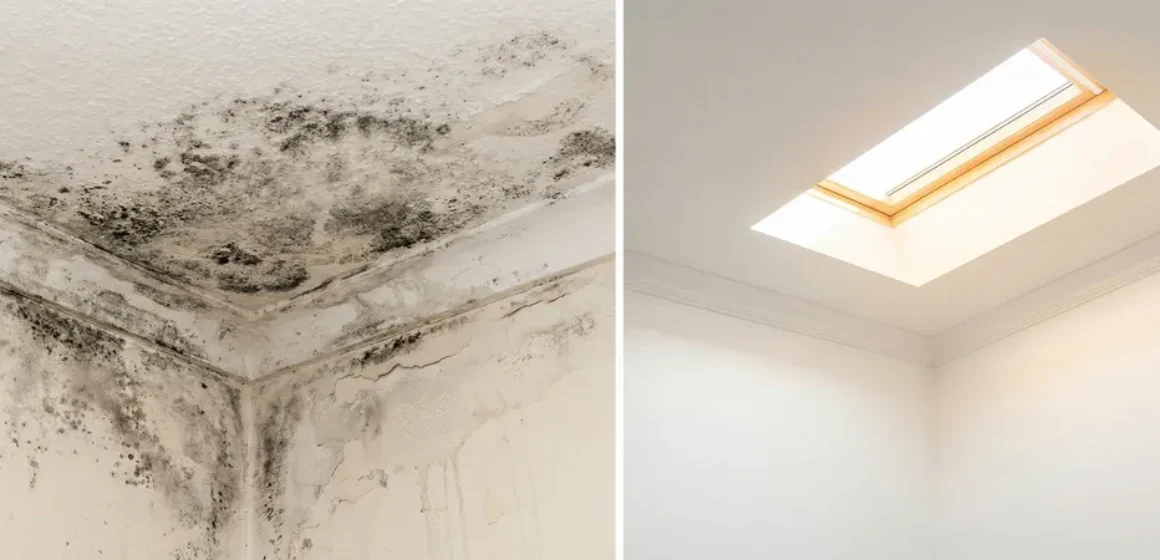
Ceiling mould shadows: why some Auckland ceilings show marks and how skylight planning can help prevent damp-prone zones
You notice it when the light hits the ceiling at the wrong angle.
A faint grey “shadow” in a corner. A slightly darker band above the shower. A line near the ceiling edge that looks like dust, until you wipe it and nothing changes.
In Auckland, these ceiling marks are common because the climate encourages a quiet mix of humidity and condensation, especially in winter and shoulder seasons. But late summer is often when people first spot the early signs because rooms are used more, windows are opened and closed differently, and the house does not always dry out evenly.
This guide explains what those marks usually are, why they appear in specific ceiling zones, and how skylight planning can support a drier, brighter ceiling without pretending daylight alone solves moisture.
Start here: the ceiling “map” that tells you what’s happening
Before you treat anything, identify the pattern. It usually points to the cause.
Pattern A: Corners and ceiling edges
Often linked to cooler surfaces and limited airflow. These areas dry last.
Pattern B: Above showers and baths
Typically linked to moisture events and extraction performance.
Pattern C: Along a straight line or rectangle
Often linked to insulation gaps, framing lines, or a cold spot where condensation forms.
Pattern D: Near skylight shafts or ceiling penetrations
Can be linked to air leakage, poor shaft insulation, or moisture moving into cooler zones.
The ceiling is basically a “weather map” of how moisture and temperature behave in your home.
What ceiling mould shadows actually are (plain English)
Most of the time, those grey marks are one of these:
- surface mould: mould growth on paint due to repeated dampness
- condensation staining: dust and airborne particles sticking to damp paint over time
- thermal patterning: marks tracing colder framing or insulation gaps where condensation happens first
The important point is this: it is rarely random. It forms where the ceiling stays cooler, stays damp longer, or never gets enough airflow to dry.
Why Auckland homes see this more often
Auckland’s conditions often combine:
- higher humidity compared with drier regions
- frequent “grey bright” days where homes stay closed up
- coastal influence and damp air in many suburbs
- housing stock that ranges from older villas to newer builds with different insulation and ventilation behaviours
Even a well kept home can develop damp prone ceiling zones if the room regularly produces moisture and the surfaces do not warm or dry effectively.
The four real causes (and how to spot each one)
Cause 1: Moisture events without enough extraction
Bathrooms, laundries, and kitchens create moisture quickly.
Signs:
- marks near showers or above towels
- mirrors and windows regularly fogging
- musty smell that lingers after use
Practical fix:
- check extraction fans are properly sized and actually venting outside
- run fans for long enough after showers
- keep doors closed during showers if the fan is in the bathroom
A skylight can improve daylight and drying feel, but it does not replace extraction.
Cause 2: Cold surface zones and thermal bridging
Some ceiling areas are simply colder than others, especially at edges, corners, and around framing.
Signs:
- lines or rectangles that match framing patterns
- marks in the same places each year
- corners that feel cooler
Practical fix:
- check insulation coverage and continuity
- reduce air leaks into the ceiling cavity
- ensure ceiling and shaft details are finished correctly
Cause 3: Poor airflow in “dead” ceiling zones
Still air lets dampness hang around.
Signs:
- corners or ceiling edges marking first
- rooms that feel heavy even when “clean”
- marks in hallways or bedrooms with little natural airflow
Practical fix:
- introduce better air paths (inlets and outlets)
- avoid blocking airflow with heavy curtains always closed
- consider targeted ventilation solutions where the room consistently traps moisture
Cause 4: Daylight distribution and drying behaviour
This one is subtle, but real.
Dim rooms often stay cooler and feel damp longer. They also get cleaned less precisely because marks are harder to see until they spread.
Signs:
- marks in internal bathrooms, hallways, stairwells
- ceiling areas that never receive meaningful daylight
- lights used during the day because the room feels flat
Practical fix:
- improve usable daylight, especially overhead daylight for internal zones
- aim for even light that lifts ceiling surfaces rather than spotlighting one patch
This is where skylight planning can genuinely support the solution.
Where skylights can help (and where they can’t)
Skylights can help by:
- lifting ceiling brightness, making rooms feel less closed in and easier to keep fresh
- supporting drying in damp prone rooms by improving usable daylight and encouraging better daily habits
- bringing daylight to internal zones (bathrooms, hallways, stairwells) that rarely dry well because they are always dim
Skylights cannot help if:
- the room has poor extraction and moisture is still trapped
- the skylight shaft is poorly insulated or air sealed (this can create cold zones)
- the core problem is a building envelope issue (leaks or persistent water entry)
If you are comparing skylight types in a simple way (fixed, opening, tubular):
https://www.skylights.co.nz/types-of-skylights/
For Auckland service and planning context:
https://www.skylights.co.nz/skylights-auckland/
The “damp zone prevention” plan (a practical sequence)
This is the order that tends to produce reliable results.
1) Confirm it’s not a leak
If marks worsen after rain or appear around a roof penetration, treat it as a weathertightness issue first.
2) Improve extraction and moisture control
Bathrooms and kitchens need reliable extraction. Without this, any daylight upgrade is only partial.
3) Remove the pattern, then change the conditions
Cleaning and repainting alone often fails because the ceiling goes back to the same damp cycle. You want the ceiling to dry faster, more often.
4) Add overhead daylight where the home stays dim
Internal bathrooms and hallways are high impact targets in Auckland homes because they often hold moisture and stay dull.
If you want a tailored recommendation for your home layout and roof type, start here:
https://inquiry.skylights.co.nz/inquiry
Illustrative Example Only: the bathroom ceiling that kept “coming back”
A homeowner cleaned and repainted a bathroom ceiling twice. Each time, faint marks returned in the same corners above the shower line.
The issue was not the paint. The ceiling corners stayed cooler and damp longer than the rest of the room, and the bathroom remained dim for most of the day. Once the moisture management and daylighting plan improved the room’s drying behaviour, the ceiling stopped returning to the same pattern.
Their takeaway:
“It wasn’t dirt. It was the room not drying.”
What to ask during a site assessment (to avoid making it worse)
If ceiling mould is part of your story, ask these:
- What is driving the damp zone here, moisture events, cold surfaces, airflow, or all three?
- If we add a skylight, how will the shaft be insulated and sealed to avoid cold spots?
- Would a fixed or opening skylight suit the room’s moisture behaviour?
- How will the skylight be placed to lift the ceiling evenly rather than create a harsh patch?
- What exclusions apply if interior painting or finishing is needed?
A good answer should be specific to your room and roof type, not generic.
FAQs (unique to this topic)
Why do mould shadows appear on ceilings in Auckland homes?
Usually due to repeated dampness from humidity and condensation, especially in corners and cooler zones where ceilings dry slowly. Bathrooms and internal rooms are common hotspots.
Are ceiling marks always mould?
Not always. Some marks are mould, others are condensation staining where dust sticks to damp paint, or thermal patterning that follows colder framing lines.
Can a skylight prevent ceiling mould?
A skylight can help by improving usable daylight and supporting faster drying in dim, damp prone spaces, but it is not a substitute for extraction, ventilation, and correct insulation.
Can skylight shafts cause cold spots and marks?
They can if the shaft is not properly insulated or air sealed. Good detailing matters so the shaft does not become a cooler zone where condensation forms.
What should I fix first: repainting or moisture control?
Moisture control first. If the ceiling continues to get damp, marks often return even after cleaning and repainting.