Diffused daylight vs direct sun: which feels better in NZ summers?
On a clear summer day, sunlight in New Zealand can be stunning.
It can also be surprisingly hard to live with indoors.
The same sun that makes a room feel alive at 10am can make it feel sharp, hot, or visually tiring by mid-afternoon.
That is why one of the most important skylight decisions in 2026 is not just “do we want more light?”
It is:
Do we want direct sun, or do we want diffused daylight?
They are not the same experience.
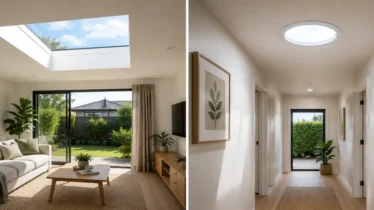
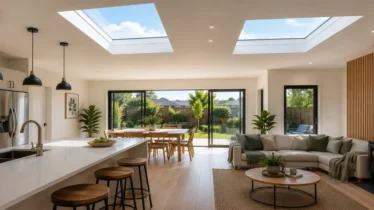
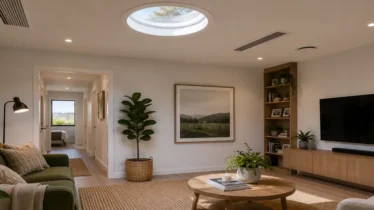
And for many NZ homes — especially open-plan living spaces, modern interiors with reflective finishes, and rooms used heavily in the afternoon — diffused daylight is often the more comfortable outcome.
This guide explains the difference in plain English, how each one feels, and how to choose the right approach for your room.
First, a clear definition
Direct sun
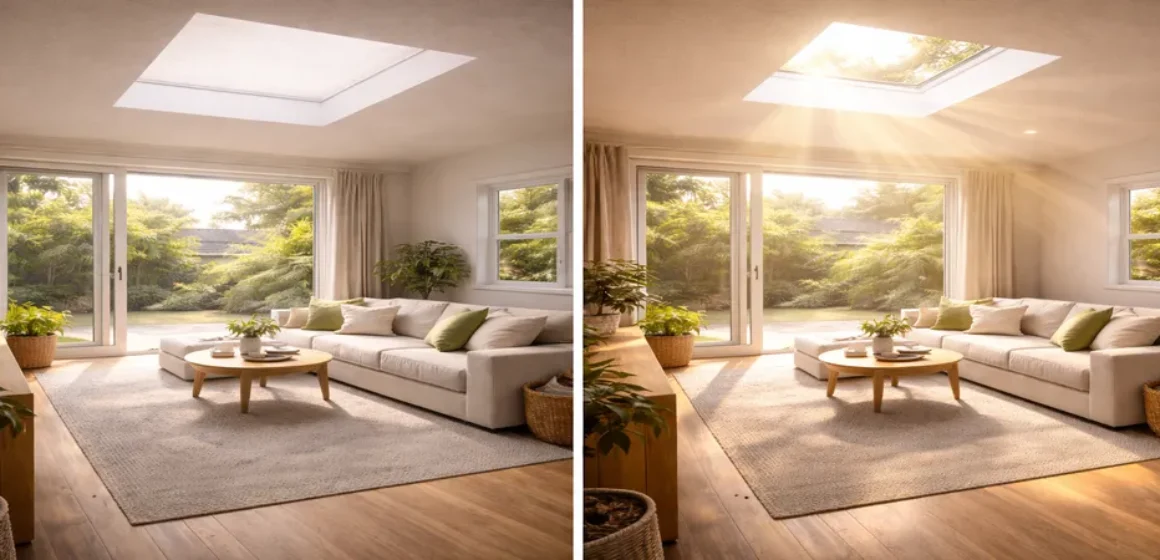
Direct sun is sunlight that enters the room as a strong beam or bright patch.
It creates:
- high contrast
- sharp shadows
- bright hotspots
It can feel cosy in winter.
In summer, it can become uncomfortable depending on where it lands.
Diffused daylight
Diffused daylight is light that has been softened and spread.
It creates:
- more even brightness across the room
- softer shadows
- less contrast and visual strain
It is the kind of light people often describe as “calm”.
Not dim. Not flat. Calm.
The lived difference: how it feels in a NZ summer living room
A useful way to compare is to think about your body, not your eyes.
Direct sun feels like a feature
You notice it.
It can make the room feel warm and cheerful.
But if it hits the wrong zone, you end up managing it:
- shifting seating
- closing curtains
- turning the fan on earlier
Diffused daylight feels like a baseline upgrade
You stop noticing the source.
The room just feels brighter and easier to live in.
You do not need to chase the shade.
In many homes, that is the better summer outcome.
Why direct sun often becomes a problem in summer
Direct sun tends to become uncomfortable when:
1) It lands where you sit or work
A bright patch on a sofa, dining table, or reading chair becomes tiring.
2) It hits reflective surfaces
Polished floors, tiles, benchtops, and TV screens can bounce light into your eyes.
3) It creates contrast between zones
A room can be “bright” but still feel uncomfortable because the brightness is uneven.
This is where glare begins.
If you have a glare guide, link it here: [ADD LINK]
Why diffused daylight suits NZ summers so well
Diffusion helps because it reduces the sharp behaviours without removing the daylight benefit.
In practice, it can:
- reduce glare
- reduce the sense of “hotspots”
- make open-plan areas feel more evenly lit
- improve comfort on bright summer afternoons
If you have a 3pm test / overheating guide, link it here: [ADD LINK]
The big myth: “diffused means dim”
It does not.
Diffused daylight can still be bright.
It simply spreads light more evenly.
A helpful analogy:
Direct sun is a spotlight. Diffused daylight is a soft box.
Photographers use soft boxes for a reason: you can see everything, but nothing feels harsh.
How you get diffusion (without technical overload)
There are a few common ways to achieve diffused light in skylights.
1) Diffusing lenses or diffusers
Often used in tubular skylights and some skylight systems to spread light across a wider area.
2) Glazing options designed to soften light
Some glazing choices reduce harshness and help prevent sharp beams.
3) Blind and control systems
Not “because you did it wrong”, but because you want a room that stays usable at peak sun times.
The key is not the method. It is the outcome: calm, usable light.
Where direct sun can still be a great choice
Direct sun is not bad.
It is just specific.
It often works well when:
- you want winter warmth and cheer in a cold room
- the sun patch lands in a low-use zone (like a corner or circulation path)
- the room is not used heavily during peak summer hours
- you have controls to manage peak days
Some homes genuinely want that “sunbeam moment”.
The point is to choose it deliberately.
Room-by-room guidance (NZ patterns)
Living rooms
In summer-heavy use zones, diffused daylight is often the better default.
Kitchens
Glare on benchtops can be frustrating. Diffusion often helps keep the work zone comfortable.
Bathrooms
Diffused light can feel private and soft, while still bright enough to make the room feel clean and open.
Hallways
Even light is usually the goal. Tubular skylights often achieve this naturally.
Illustrative example only: when the room stopped needing curtains
A homeowner in Wellington wanted more light in their living space, but they hated the idea of harsh sun patches.
Their room already had reflective surfaces and was used heavily in the late afternoon.
Instead of aiming for direct sun impact, the plan focused on diffused daylight.
The result was a room that stayed bright without the constant curtain adjustments — especially on windy, bright summer days when the outdoor light is intense.
A quick decision checklist
If you are unsure, these prompts make it clear.
- Do you enjoy sun patches indoors, or do you find them distracting?
- Is the room used heavily in the afternoon?
- Are there reflective surfaces that will bounce light?
- Would you prefer “feature light” or “baseline calm light”?
- Are you willing to add controls for peak summer days?
If you answer honestly, the right choice becomes obvious.
A calm next step
NZ summers reward light that feels good to live with.
If you want brighter days without harsh afternoons, diffused daylight is often the comfort-led approach.
If you share photos of the room, the times you use it most, and whether you’ve noticed glare or hotspots, we can recommend a skylight approach that suits your summer behaviour and keeps the space calm.
Start here: https://inquiry.skylights.co.nz/inquiry