Blinds aren’t a failure: the comfort-control mindset for roof glazing
There is a quiet moment many NZ homeowners have after installing a skylight.
They love the daylight.
And then, on a bright summer afternoon, they find themselves thinking:
“Do we need blinds?”
Sometimes it feels like admitting something went wrong.
As if blinds mean the skylight was a mistake.
In reality, it is often the opposite.
Blinds are not a failure. They are comfort control.
They are how you keep the benefits of roof glazing — more daylight, more openness, less reliance on artificial lighting — without turning the room into something you have to manage.
In 2026, comfort control is part of good skylight planning.
Not an afterthought.
Why this mindset matters in New Zealand
NZ homes sit in a wide range of microclimates.
- Some places get sharp, bright summer days.
- Some get long sunlight hours.
- Some get glare amplified by wind-cleared skies.
Even within the same city, two homes behave differently based on:
- roof direction
- ceiling height
- window size
- airflow
- and interior surfaces
So the goal is not “no blinds ever”.
The goal is:
a room that stays usable, comfortable, and calm across seasons.
The two kinds of homeowners (and why both are right)
Type 1: “I want sunbeams and warmth.”
You like the feeling of sun entering the room.
You might still want blinds for peak days, but you use them lightly.
Type 2: “I want daylight, not heat patches.”
You want the room to feel brighter, but you do not want sharp sun.
For you, blinds (or diffusion) are often part of getting the right light quality.
Neither approach is wrong.
The mistake is pretending controls are only for people who made a bad choice.
What blinds actually solve (in plain English)
Skylight blinds typically solve one or more of these:
1) Glare
When light feels sharp, or the TV becomes hard to watch.
2) Overheating at predictable times
The room feels fine most of the day, but not at peak sun hours.
3) Privacy and softness
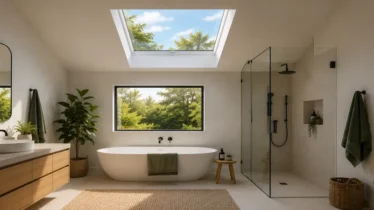
In bathrooms and bedrooms, you may want daylight that feels private and gentle.
4) Bedroom sleep comfort
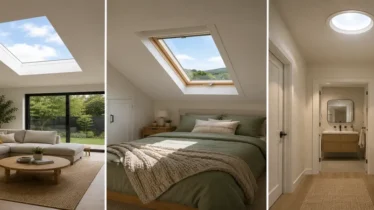
Some rooms need darkness sometimes. Especially early mornings in summer.
The key is to see blinds as a tool that lets one skylight deliver multiple outcomes.
When blinds are a smart choice (even if everything else is ‘right’)
Scenario 1: West or late-afternoon sun patterns
If the space is used heavily in the afternoon, controls help keep it usable.
Scenario 2: Open-plan rooms with reflective finishes
Modern materials look beautiful, but they can amplify glare.
Blinds give you the ability to soften peak conditions.
Scenario 3: Roof glazing over TVs or screens
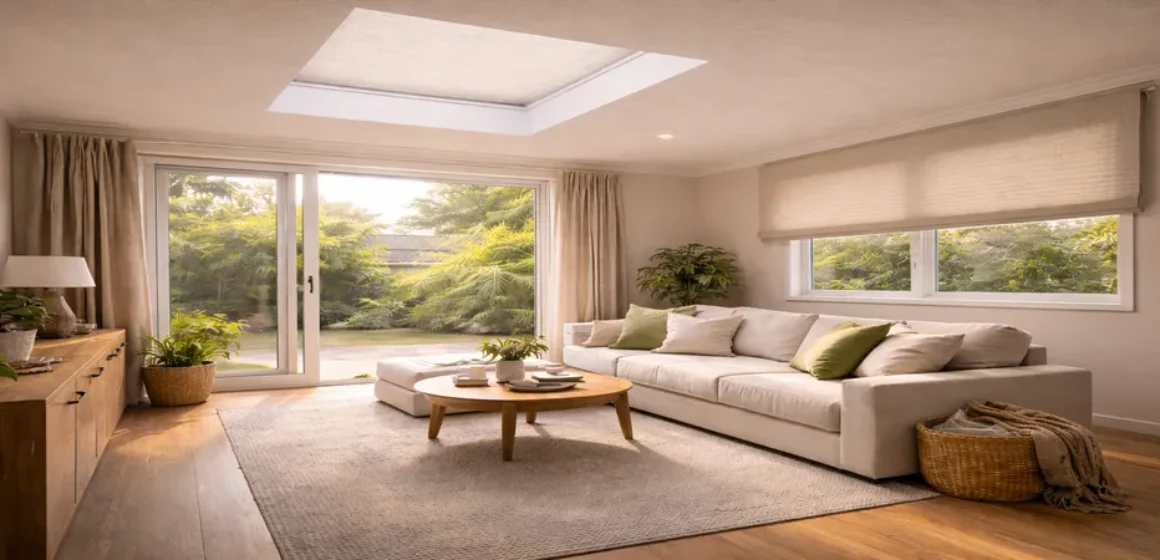
Even mild glare can become frustrating when the room is entertainment-led.
Scenario 4: Homes where summer comfort is already borderline
If the room already runs warm, it is sensible to plan for control.
The biggest mistake: treating blinds as an “add later” upgrade
Retrofitting blinds is possible, but planning early usually gives you a better result.
Because when you plan early, you can align:
- placement
- glazing choice
- diffusion
- and control
That combination is what makes the room feel effortless.
The comfort-control approach: a simple decision framework
Instead of asking “do we need blinds?”, ask these questions.
1) What does the room do at 3pm in summer?
If it already runs warm or glaring, controls are likely helpful.
2) Do we want direct sun, or calm daylight?
If the goal is calm, blinds and diffusion are often part of the plan.
3) Is there a predictable glare patch?
If the glare is consistent, control is the clean fix.
4) Are there times we want the room darker?
Bedrooms and media rooms often do.
This framework avoids guesswork.
Blinds aren’t the only control lever
Sometimes a homeowner says “we don’t want blinds”.
That can be fine.
But it helps to know the other levers that can reduce harshness:
- diffusion choices
- glazing choices
- placement decisions that avoid high-intensity sun zones
Blinds are not your only option.
They are simply the most flexible one.
Illustrative example only: the room that stopped needing constant adjustment
A homeowner in Tauranga added roof glazing to brighten a living area.
The room looked great, but on clear summer afternoons it became sharp and warm, especially where sunlight landed on the floor near seating.
They worried blinds meant they had chosen the wrong skylight.
But once controls were added, the room became what they wanted from the start:
- bright most of the day
- comfortable at peak hours
- and calm enough to sit in without thinking about the light
The skylight was not the problem.
The lack of control was.
A practical checklist for planning skylight blinds
If you are considering roof glazing, this helps you plan like a comfort-led homeowner.
- Identify peak discomfort times (often 2–5pm in summer)
- Note where glare lands (TV, seating, floor hotspots)
- Decide whether you want sunbeams or calm daylight
- Consider whether the room needs occasional darkness
- Treat controls as part of the skylight strategy, not a backup plan
A calm next step
The best skylight outcome is not just “more light”.
It is more light that stays comfortable.
If you share photos of the room, tell us when it feels harsh or warm, and what you use the space for (TV, reading, family time), we can recommend a comfort-first skylight and control approach that fits NZ summer behaviour.
Start here: https://inquiry.skylights.co.nz/inquiry