Explore Moisture-Safe Skylight Options for Wet Zones
Wet zones like bathrooms, ensuites, laundries, and kitchens present a unique challenge for daylighting:
You want to bring in natural light—but moisture, steam, and temperature swings make material choice and placement critical.
In this guide, we break down:
- Why standard skylights aren’t always safe for wet zones
- Which glazing and frame types hold up best
- The difference between fixed, vented, and sun tube options
- What NZ building codes say about skylights in wet areas
Let’s dive in.
The Problem: Skylights in Damp Environments
Bathrooms, laundries, and kitchens experience:
- High humidity and condensation
- Fluctuating temperatures
- Water contact and airborne moisture
- Mold and mildew risks if airflow is limited
Standard skylights—especially older single-glazed models or poor-quality acrylic domes—can:
- Fog up or drip
- Leak over time due to seal deterioration
- Encourage mould around the frame or ceiling cavity
- Cause damage to paint, framing, and insulation
The Solution: Moisture-Safe Skylight Design
Here’s what makes a skylight moisture-safe in a New Zealand wet zone:
1. Proper Glazing: Laminated or Toughened Safety Glass
- Meets NZ Building Code Clause F2 for glass above wet areas
- Won’t shatter on impact
- Helps resist condensation buildup
- Available in Low-E, tinted, or frosted finishes
2. Vented Skylights
- Allow warm, humid air to escape through the roof
- Available in manual or solar-powered venting
- Ideal for bathrooms with no windows
- Reduce steam buildup and help prevent mould
3. Non-Corrosive, Powder-Coated Frames
- Aluminium frames must be moisture-resistant and sealed
- Powder coating prevents corrosion and discolouration in humid zones
- Flashings must be watertight and match your roof material
4. Sealed Light Wells & Proper Installation
- Skylight wells should be fully lined and insulated
- Condensation drips can be reduced with a vapour barrier layer
- Use a certified installer to ensure a code-compliant finish
Comparison: Best Skylight Types for Each Wet Zone
|
Room Type |
Best Skylight Type |
Why It Works |
|
Bathroom |
Vented + Laminated Glass |
Moisture escapes, safe glass above bath/shower |
|
Ensuite |
Fixed + Diffused Low-E |
Gentle light, privacy, thermal performance |
|
Laundry |
Sun Tube with Passive Vent Option |
Small footprint, bright light, optional air relief |
|
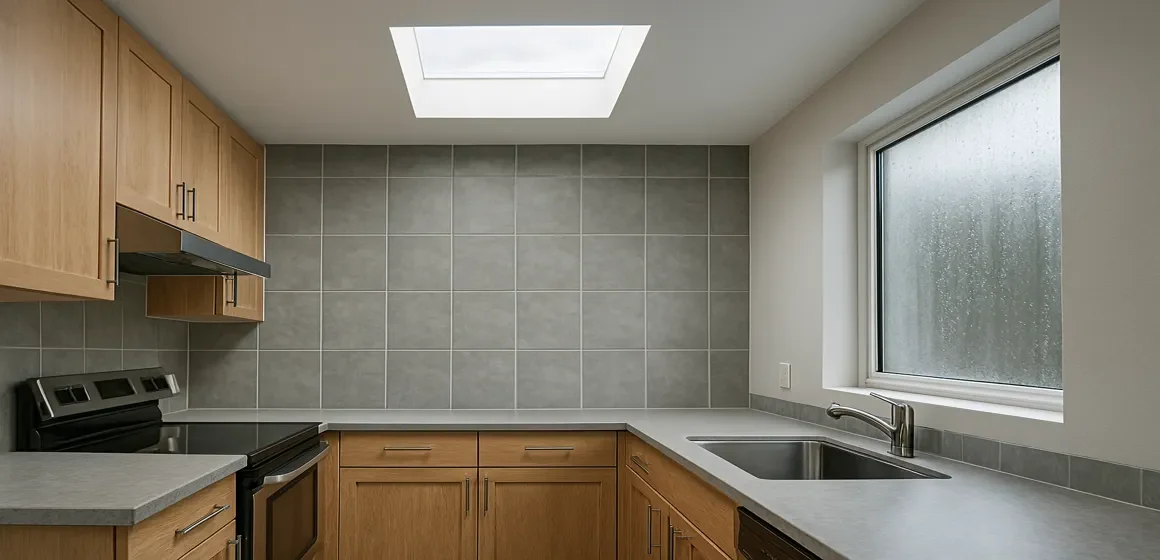
Kitchen |
Fixed Skylight + Thermal Break Frame |
Minimises heat, steam-safe, durable frame finish |
What Do the Building Codes Say? (NZ Compliance)
According to NZ Building Code Clause F2.3.1:
Glazing used in wet areas (above baths, showers, or in moisture-prone zones) must be safe in case of breakage and resistant to water damage.
This means using laminated glass or toughened safety glass is a must in wet zones.
Avoid older acrylic or polycarbonate panels unless they are rated for interior wet zones.
Expert Tips for Wet-Zone Skylight Success
- Avoid placing skylights directly above a shower head if possible—steam may rise quickly and condense on the glass. Instead, offset it slightly.
- Use frosted or diffused glass in bathrooms to maintain privacy while softening glare.
- Consider tubular skylights in tight spaces like laundries or powder rooms—less surface area, fewer leaks, still lots of light.
- Ask for a vented model if there are no operable windows in the space.
- Check for warranties—some manufacturers offer moisture-specific products with extended guarantees.
Also read: Privacy-Friendly Skylight Placement
Final Thoughts: Light Up Your Wet Zones the Right Way
Adding a skylight to a bathroom or laundry is one of the simplest ways to:
- Prevent mould
- Brighten small spaces
- Create a calming, spa-like atmosphere
Just make sure you choose a moisture-safe skylight system, install it correctly, and meet building code requirements.
Thinking about daylighting your bathroom or kitchen?
Let us connect you with a licensed NZ installer who understands ventilation, glazing, and moisture-safe materials.