Rooms you actually live in: planning skylights for living rooms and lounges in NZ
In the real estate photos, the living room looked sun-soaked. Light pouring across the floor, sofa bathed in glow, everything open and inviting. A few months in, everyday life tells a different story. On cloudy afternoons the room feels a little flat. On bright days you are closing curtains to see the TV. By winter, the corner with your favourite chair is in permanent shadow.
The living room or lounge is where many New Zealand households spend the most unstructured time – reading, watching sport, playing with kids, talking with family. It is also where light needs are surprisingly mixed:
- bright enough for reading and daytime use
- soft enough for media and evening relaxation
- comfortable in both summer and winter.
Side windows and big sliders do a lot of the work, but they tend to favour one side of the room. The centre and rear zones can feel disconnected, especially in deeper plans or south-facing lounges.
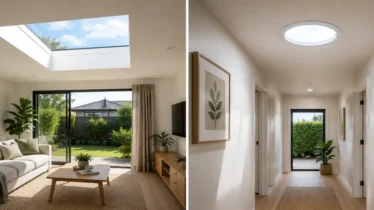
Skylights can help rebalance this, if they are treated as part of the room design – not just a bright patch dropped in the ceiling.
Illustrative Example Only: “Our lounge in Wellington had a big north-facing slider, but the sofa and reading chair sat in a band of half-light. We added two modest skylights towards the middle of the room. The space now feels evenly bright on grey days without us losing control of glare on the TV.”
This article looks at living room skylights in NZ homes – how to plan them so they support the way you actually use the space.
1. How living rooms behave during a normal week
Unlike a kitchen, which has more defined peaks, living rooms are used in short bursts and long stretches throughout the day.
Typical patterns include:
- quiet early mornings with coffee or news
- mid-afternoon down-time for kids or working-from-home breaks
- evenings with TV, games or reading
- weekends where the room sees visitors, hobbies and general family life.
This means the light needs to work for:
- daytime clarity – seeing faces, books, toys clearly
- screen comfort – avoiding reflections and squinting
- evening atmosphere – not feeling like you are under office lighting.
Skylights can support all three when you think about where the light lands and how it changes across the day.
2. Common lounge light issues skylights can help with
Before deciding on products, it helps to name what is not working now.
The bright edge, dark middle problem
With large doors on one side, you may find that:
- the floor near the glass is bright
- the middle of the room feels dull
- the far wall where the TV or bookcase sits is noticeably darker.
Skylights placed towards the centre of the room can soften this contrast, making the whole space feel more cohesive.
South-facing or shaded lounges
In parts of Wellington, Dunedin, Christchurch or bushy suburbs around Auckland, living rooms can be:
- oriented towards views rather than sun
- shaded by trees, hills or neighbouring homes.
Even with good windows, the light can feel grey and thin. Skylights that draw more of the available sky light down into the room can take the edge off that gloom.
Media rooms that are either too bright or too dark
Some lounges double as media rooms. Without control, skylights here can:
- over-brighten the space when you want a cinema feel
- create awkward reflections on screens.
But with blinds, diffusers and careful placement, skylights can still contribute to daytime usability without compromising film nights.
3. Placing skylights so the room feels balanced, not patchy
Living rooms are often larger than other spaces you have read about so far – bathrooms, home offices, study nooks. Placement matters more than size alone.
Think in zones, not one big box
Most lounges naturally divide into areas:
- a primary seating zone (sofa, chairs, coffee table)
- a TV or media wall
- sometimes a reading corner, play area or desk.
Instead of one large skylight in the middle, consider:
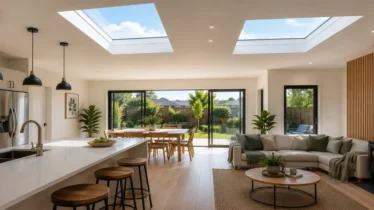
- a pair of modest skylights over the seating zone
- a single skylight above a reading or play corner
- keeping the TV wall slightly to the side of the strongest daylight.
This creates a natural visual rhythm: your eye reads the room as bright and open, but no one has a sharp beam of light in their eyes.
Working with existing windows and doors
Skylights should support, not fight, your side glazing. A few guiding ideas:
- if your main doors are on one side, place skylights a little deeper into the room to pull light further in
- avoid stacking all light sources in the same line – that often creates glare and dark corners
- think about how the sun moves across your ceiling during the hours you actually use the room.
A quick way to test ideas is to sketch the room and mark where sun and shadows fall over a typical day, then overlay potential skylight positions.
4. Managing glare, screens and comfort
Glare control sits at the heart of good living room skylight design.
TV and device screens
To keep screens comfortable:
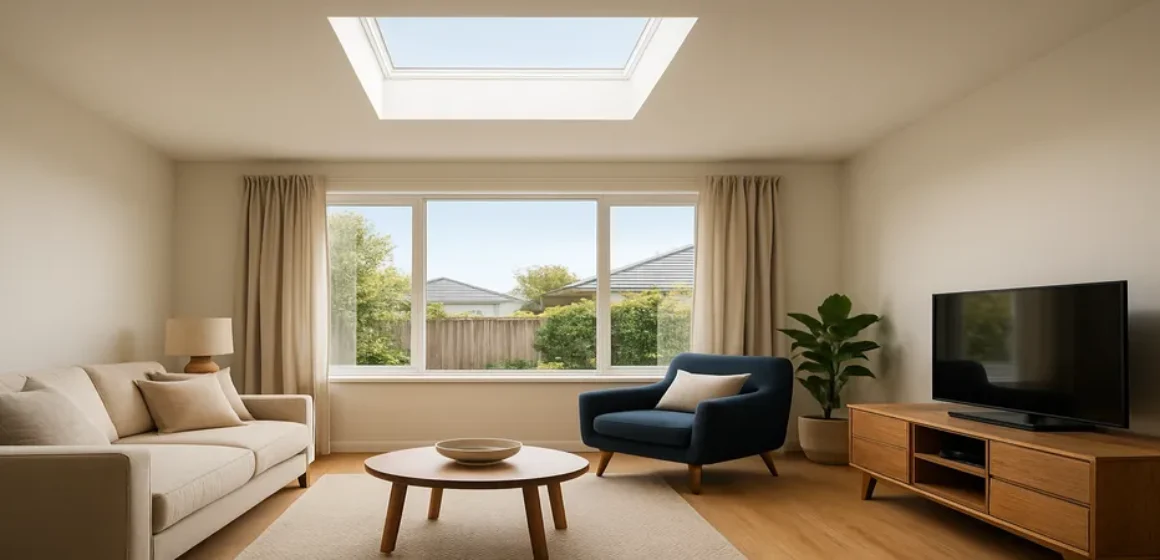
- avoid placing skylights directly above or in front of the TV
- check if mid-afternoon sun would fall in the viewer’s eye line
- consider diffused glazing or internal diffusers to soften direct beams.
If you live in sunnier regions like Bay of Plenty, Hawke’s Bay or Nelson, blinds or shades can help fine-tune light levels on very bright days.
Reading corners and hobby zones
For reading or craft areas, skylights slightly forward of the chair or table often work best. They light the task surface and your hands without creating strong shadows across your lap or book.
Temperature and seasonal comfort
Living rooms are usually where heating and cooling are most noticeable on the power bill. To keep skylights working with you rather than against you:
- choose suitable glazing – double glazing and, in many cases, Low-E coatings
- insulate shafts properly, not just the roof itself
- in warmer northern regions, consider how blinds and venting will manage summer heat build-up.
5. Daylight, mood and social spaces
One reason people gravitate to certain living rooms has nothing to do with furniture – it is about how the light feels.
Soft, overhead daylight can:
- make faces easier to read in conversation
- reduce the sharp contrast between window and interior on bright days
- keep the room feeling alive even in late afternoon when you might otherwise reach for artificial lights.
In cooler regions, that extra daylight can turn a lounge from a room you tolerate in winter to one you genuinely enjoy using.
Skylights are not there to create a showroom effect. The goal is a gentle, lived-in brightness that matches how long you actually spend in the room.
6. Different house types, different lounge challenges
Living room skylight planning varies across NZ house styles.
Older villas and bungalows
- Lounges may sit towards the front or side of the house with limited external wall on one side.
- Verandahs and deep eaves can block higher-angle sun.
- A small cluster of skylights placed away from the street-facing roof planes can brighten the room without disturbing character.
1970s–1990s homes
- Sunken lounges or step-down living spaces are common.
- Low-slung roofs can make rooms feel a little heavier.
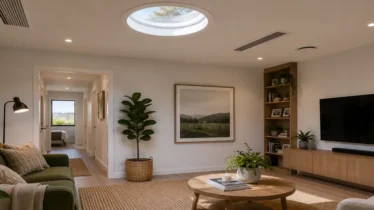
- Compact skylights or tubular units can lift daylight without needing structural overhauls.
Newer open-plan homes
- Living zones may blend with kitchen and dining, sharing light.
- Skylights can help define the lounge zone as a distinct, comfortable area.
- In homes with higher ceilings, skylights can prevent the upper part of the room from feeling dark while the lower half is lit.
Whatever the style, the key question remains: what kind of light does this room need to support how you live in it?
7. Planning path: from “we should brighten this room” to a clear brief
If you are considering skylights for your living room or lounge, this simple planning path can help you arrive at a useful brief before speaking to an installer.
Step 1 – Name the specific frustrations: Is it afternoon gloom, winter flatness, TV glare, or a general sense that the room feels dull?
Step 2 – Notice when you use the room most: Weekend mornings? Weeknights? School holidays? Try to match skylight design to those real patterns.
Step 3 – Observe the light for a few days: Sit in your usual spots at different times. Where do you squint? Where do you feel yourself leaning towards the window?
Step 4 – Sketch the room and mark zones: On a simple plan, draw seating, TV, doors, windows and potential skylight locations. Highlight the zones you want to favour.
Step 5 – Take photos from your normal seating positions: Capture what you see facing the TV, the main window and into the rest of the house. These angles help an installer understand how light will actually feel.
8. Next steps – a lounge that works all week, not just in the real estate photos
A living room that looks bright for twenty minutes at midday but feels flat for the rest of the day is not serving you. Skylights can help close that gap between how the room appears in photos and how it actually feels at 5pm on a winter Tuesday.
If you are ready to explore options:
- walk through your lounge at a couple of different times tomorrow and note where you wish the light behaved differently
- think about how you use the space – reading, screens, kids’ play, hosting – and which zones need the most support
- gather a handful of photos of the room and the roof area above it.
Skylights.co.nz can connect you with installers around New Zealand who understand how to balance daylight, comfort and media use in real living rooms – from compact townhouses to larger family homes.
Make an enquiry via Skylights.co.nz
If you can share a few images, your region and a short note about how you currently use the room, an installer can usually come back with a couple of realistic daylighting options to discuss.
FAQs – living room skylights in NZ homes
Q1. Will skylights make it harder to watch TV in my lounge?
Not if they are positioned and specified carefully. Avoiding direct skylight placement above the TV, using diffused glazing where appropriate and including blinds in sunnier regions can keep screens comfortable while still brightening the room.
Q2. Are skylights suitable for south-facing or shaded living rooms?
Yes. In fact, these rooms can benefit greatly from overhead daylight, as skylights can draw in more sky light than side windows alone. Product choice and shaft design help make the most of softer, indirect light.
Q3. Will adding skylights make my lounge too hot in summer?
In warmer climates, glazing choice, orientation, shaft depth and shading all play a role. Your installer can tailor recommendations so you gain useful daylight without creating a heat trap.
Q4. Can I retrofit skylights into an existing lounge without a major renovation?
Often yes, particularly in single-storey homes or where there is clear roof access. An installer will assess structure, roof type and any services before confirming what is feasible.
Q5. Do skylights make a noticeable difference on cloudy days?
In many NZ regions with frequent cloud cover, skylights are particularly valuable on overcast days, when they can make the room feel more open and less heavy even without direct sun.
Q6. Who should I speak to about living room skylight options for my home?
If you are renovating, talk to your designer or architect and flag skylights as a priority for the lounge. You can also speak directly to a skylight installer; they can advise on practical options for your roof and work alongside your design team.