Skylight placement vs performance: why direction matters more than size
If you have ever stood in a bright room that still feels uncomfortable, you have already learned the lesson this article is about.
Brightness is not the same as good light.
In New Zealand homes, the difference often comes down to a decision most people make too late:
where the skylight sits, and what direction the roof faces.
It is tempting to think the best skylight decision is “how big”.
In practice, placement and direction usually shape comfort more than size.
They decide whether your skylight:
- spreads calm daylight through the room, or
- creates a predictable glare patch, or
- turns afternoons into a room-management exercise.
This is a comfort-led guide to skylight placement in NZ: how sun angles behave across seasons, how to avoid common mistakes, and how to choose placement that feels good to live with.
The simplest way to think about it
A skylight is not a lamp. It is a window to the sky.
So the question is not “how much light do I want?”
It is:
what kind of daylight will this room receive from this part of the roof, at the times we actually use it?
That is why direction beats size.
The NZ reality: our seasons change the sun’s behaviour
New Zealand’s daylight is not consistent across the year.
- Winter sun sits lower and feels softer.
- Summer sun is higher and stronger, and afternoons can be intense.
That seasonal swing is why a skylight that feels perfect in July can behave differently in February.
It is also why a comfort-first placement decision is a 2026 advantage.
A placement-first framework (four questions)
Instead of starting with size, start with these four questions.
1) Where is the room actually dark?
Not “where the ceiling looks empty”.
Where is the space dim during the day?
In many NZ homes it is:
- the centre of an open-plan room
- the middle of a hallway
- a stair landing
- a bathroom with no external wall
Placement should target the problem zone.
2) When do you use the room most?
- Morning kitchens are different from afternoon living rooms.
- A hallway used all day wants consistent light.
- A bedroom might prioritise calmness over brightness.
Your usage hours should influence placement.
3) Do you want direct sun or calm daylight?
This is the most under-asked question.
Direct sun can feel wonderful in the right place.
But many living spaces feel best with calm daylight that does not create glare.
4) What surfaces will the light land on?
Glossy tiles, polished floors, and bright benchtops can amplify contrast.
A skylight that is “fine in theory” can feel harsh in reality if it hits reflective surfaces during peak hours.
Why size is often the wrong starting point
When homeowners start with size, they often overshoot.
The problem is not intent. It is physics.
A larger skylight placed where it receives strong afternoon sun can:
- create a hotspot that pulls your eyes to one bright patch
- increase glare and discomfort
- raise the chance the room feels warmer in peak periods
A smaller skylight placed in a more suitable zone can outperform it, because it delivers the right kind of light.
The “two smaller beats one big” principle
In many rooms, even daylight feels better than a single bright source.
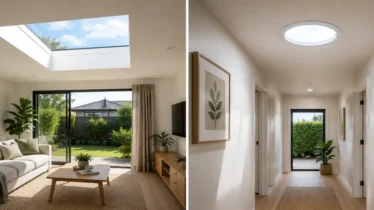
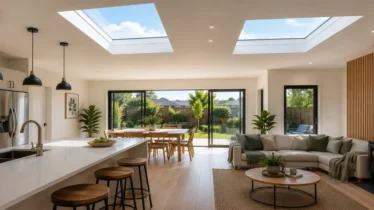
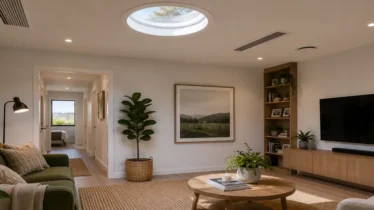
Two smaller skylights (or two tubular units) can:
- spread light across a wider area
- reduce contrast and glare
- create a more natural feeling brightness
This is especially useful for:
- long open-plan spaces
- corridors and stairwells
- rooms where you want calm light rather than a feature effect
Common placement mistakes (the ones that cause regret)
Mistake 1: “Put it where the roof space allows”
Roof framing matters, but comfort should lead the decision.
If placement is driven purely by convenience, you often end up with light in the wrong part of the room.
Mistake 2: Ignoring the 3pm behaviour
If you want one quick reality check, this is it.
Ask: what will this skylight do at 3pm in summer?
If the answer is “it will blast a bright patch onto the floor” and that patch is where you sit, you can predict discomfort.
Mistake 3: Treating glare control as an afterthought
If a room is likely to receive direct sun in peak hours, plan for comfort control early.
If you have a glare-control or blinds page, link it here: [ADD LINK]
Mistake 4: Expecting one skylight to fix a deep floorplan
A single skylight can help, but deep homes often need a strategy: one central solution plus targeted daylight to key zones.
Room-by-room placement guidance (NZ lived patterns)
Hallways
Goal is consistency.
- place skylights where the corridor is darkest, usually the middle
- avoid chasing size; focus on even light
Living rooms
Goal is calm comfort.
- placement should avoid predictable direct-sun hotspots in afternoon use zones
- consider whether even daylight matters more than “sky view”
Kitchens
Goal is usable light without glare.
- be careful of direct sun on benchtops
- diffusion and positioning can protect comfort
Bathrooms
Goal is bright, private, comfortable light.
- diffusion often improves the feel
- if stale air is part of the issue, ventilation strategy matters
Light reference: a simple way to picture direction
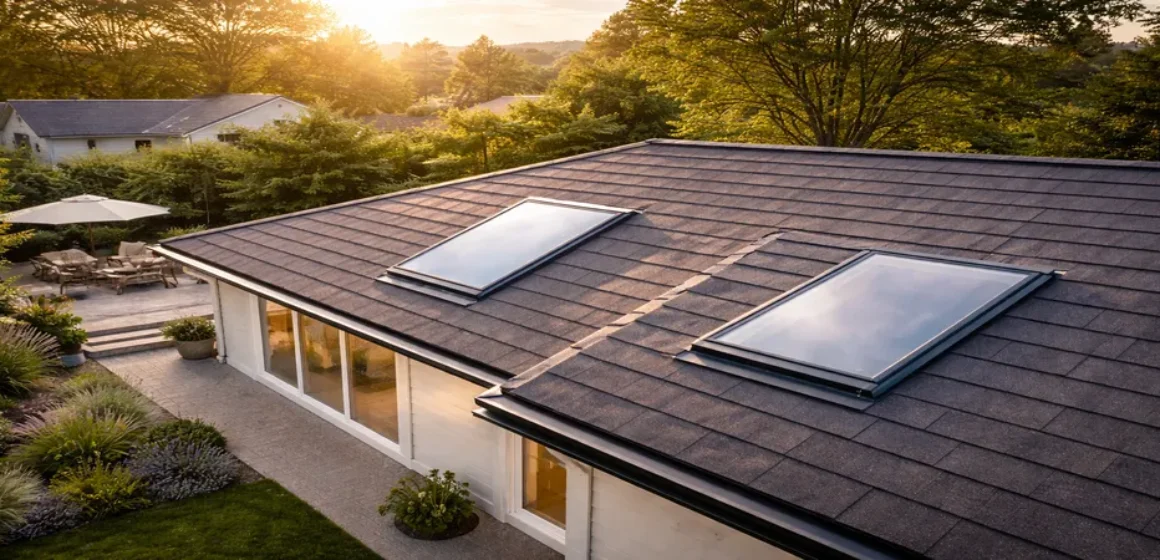
If your skylight is like a window to the sky, direction affects what it “sees”.
- Some roof zones receive longer, softer light.
- Others receive intense afternoon sun.
You do not need to map your roof like an engineer. You simply need to recognise that the roof has different daylight behaviours.
That is why placement is a comfort decision, not just a design decision.
Illustrative example only: a placement win in practice
A homeowner in Dunedin wanted a large skylight for their living room because the space felt dim.
But their room already had strong late-day sun through one side window. Adding a big skylight in the wrong roof zone would have made afternoons harsher.
The comfort-first approach focused on:
- placing roof glazing to brighten the darker centre of the room
- avoiding a predictable afternoon hotspot
- planning for light control so the room stayed usable across seasons
The outcome was not just “brighter”. It was calmer.
A quick placement checklist (printable)
Before you lock in a skylight location:
- Where is the darkest zone in the room?
- When do we use this space most?
- Do we want direct sun or calm daylight?
- What will it do at 3pm in summer?
- Will light land on reflective surfaces?
- Would two smaller skylights spread light better than one big unit?
- Do we need glare control?
A calm next step
Skylight decisions are at their best when they are comfort-led.
If you share a few photos of the room, tell us which direction the roof faces (if known), and describe when the room feels dim or uncomfortable, we can recommend placement and skylight options that suit NZ seasons.
Start here: https://inquiry.skylights.co.nz/inquiry