Consent vs no-consent upgrades: when H1 thinking still helps you
When people hear “H1” and “Building Code” in the same sentence as “skylight”, they often assume the project is about paperwork.
But most homeowner skylight decisions are not made in an office.
They are made on a damp morning when the bathroom is still fogged.
Or on a bright summer afternoon when the living room is too harsh to sit in.
Or after a heavy rain when an old skylight starts to show its age.
That is why this article is not a legal guide.
It is a comfort guide.
Because whether your job requires consent or not, H1-style thinking still helps you avoid the most common skylight regrets.
A quick clarification: this is not consent advice
Building consent requirements depend on the details of the work, the property, and your local council processes.
If you need certainty, you should check with your installer, designer, or council.
What this article does instead is show you how to think clearly about comfort and performance — the same outcomes H1 is trying to protect — even when consent is not the driver.
The real difference: consent is a process, comfort is the outcome
A skylight upgrade can sit in one of three common buckets:
- Like-for-like replacement
Old skylight out, new skylight in, similar opening. - Upgrade within an existing opening
Same opening, better performance, different skylight type. - New opening or altered opening
You are changing the roof and ceiling opening location or size.
The more you change the roof structure and opening, the more likely consent and documentation conversations become.
But comfort outcomes matter in all three.
What “H1 thinking” means for homeowners
In plain English, H1 thinking is simply:
Will this skylight improve daylight without making the room harder to keep comfortable?
That comes down to four practical questions.
- What does the room do in winter?
- What does it do at 3pm in summer?
- Where does warm air go?
- Is the glazing choice matched to how you live in the space?
If you answer those, you will make better skylight decisions regardless of consent pathway.
When H1-style thinking matters most (even for no-consent jobs)
Situation 1: Replacing an old skylight that “worked”, but wasn’t comfortable
Many older skylights delivered light, but not comfort.
Homeowners often didn’t notice until they experienced a newer home, or until their lifestyle changed.
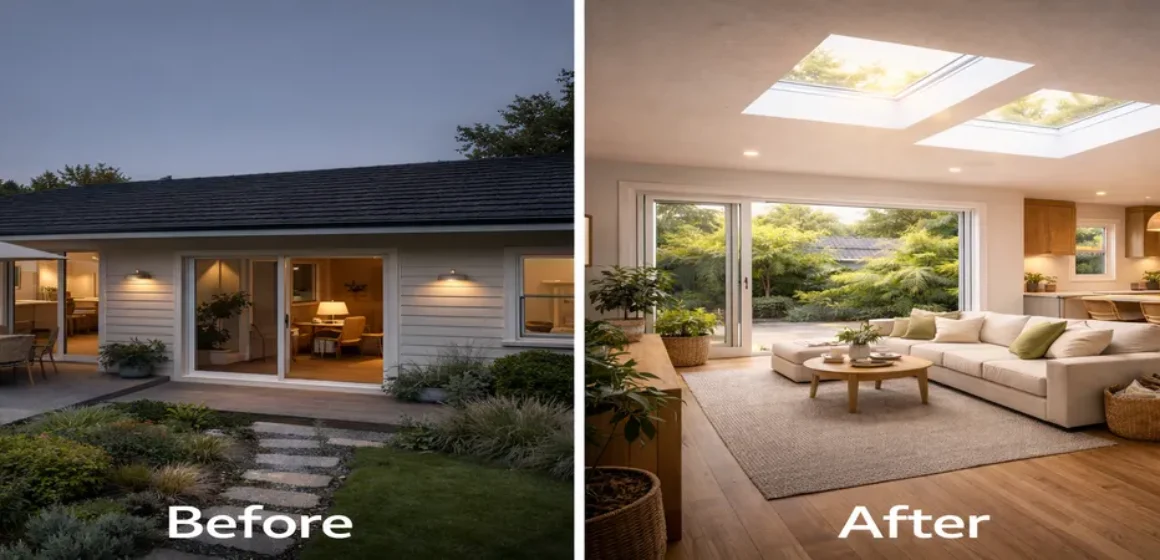
If you are replacing an older skylight, it is worth upgrading to a solution that improves:
- daylight quality
- winter comfort stability
- summer usability
That is not compliance talk. That is getting a better result from the same opening.
Situation 2: Turning a dark hallway into a “daytime space”
Hallways are where people switch lights on at midday and accept it as normal.
A tubular skylight often changes that behaviour quietly.
It is one of the cleanest examples of H1 thinking helping homeowners: you reduce the need for daytime lighting without creating a summer heat issue.
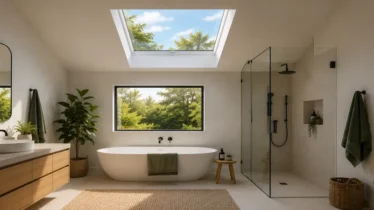
Situation 3: Bathrooms where moisture is the real problem
If your bathroom stays damp, the issue is not only light.
It is stale air.
In those rooms, H1-style thinking shows up as:
- better daylight, yes
- but also ventilation pathways, so the room clears warm, humid air
A vented skylight is not always required, but it can be the difference between a bathroom that looks better and a bathroom that behaves better.
Situation 4: Living rooms that already run warm in summer
If your living area is already warm on still February afternoons, skylight planning needs to be comfort-led.
The “no-consent” nature of the job does not change the physics.
Placement, light quality, and controls are what protect the room’s usability.
The three most common regrets (and how to avoid them)
Regret 1: “It’s bright, but I don’t enjoy the room anymore.”
This is almost always a placement or light-quality issue.
A skylight can create a hotspot that dominates the room.
H1-style thinking avoids this by asking early: do you want direct sun, or calm daylight?
Regret 2: “It didn’t really change the room.”
This happens when a skylight is placed where it was easiest, not where the room needed light.
Even a good product cannot fix poor targeting.
Regret 3: “We had to add blinds later.”
Sometimes blinds are the right answer.
The regret comes from not planning for them from the start when glare or peak sun behaviour was predictable.
What to prioritise in each upgrade type
Like-for-like replacement
Prioritise:
- better glazing performance
- better sealing and weathertightness
- comfort outcomes across seasons
Upgrade within an existing opening
Prioritise:
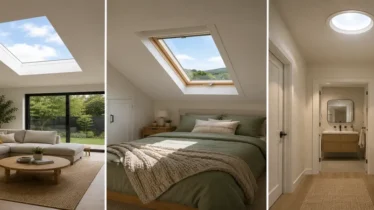
- whether the room needs a different skylight type (fixed vs vented vs tubular)
- light quality (evenness vs direct sun)
New opening / altered opening
Prioritise:
- placement driven by room outcome
- summer behaviour (3pm test)
- ventilation pathway planning
In these projects, decisions made early are what prevent expensive changes later.
Illustrative example only: where H1 thinking saved a “simple” job
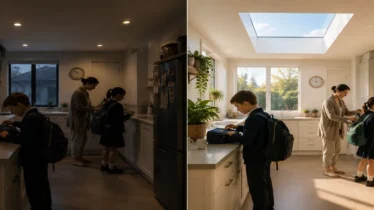
A homeowner in Nelson planned a straightforward replacement of a small, ageing skylight.
Their main complaint was that the kitchen still felt dim in winter.
But the kitchen also got strong afternoon sun through one side window in summer.
H1-style thinking shifted the conversation from “swap it out” to “improve the room”.
The plan focused on:
- delivering more useful daylight to the work zone
- avoiding added harshness in summer
- and making sure comfort controls were considered early
The replacement stayed simple, but the outcome was noticeably better.
A quick homeowner checklist before you start
Use this before you book anything.
- What is the real room problem: light, damp, or comfort?
- When does the room feel worst: winter evenings or summer afternoons?
- Does the room already run warm in summer?
- Do we want direct sun or calm daylight?
- Where does warm air go in this room?
- Would a different skylight type suit the problem better?
- Are blinds or glare control predictable and worth planning early?
A calm next step
Whether your skylight project is consent-driven or not, the best result is the same: bright, comfortable, and easy to live with.
If you share a few photos of the room, roof type, and describe what the space does in winter and in summer, we can recommend a comfort-first upgrade approach that suits NZ conditions.
Start here: https://inquiry.skylights.co.nz/inquiry