Skylight sizing in plain English: how to avoid the “too small to matter” mistake
There’s a specific kind of disappointment that shows up after some skylight installs.
The install looks tidy. The ceiling finish is clean. But the room still needs lights on at 3pm.
The homeowner’s line is usually the same:
“It’s nice… but it didn’t really change the room.”
In most cases, that is not a skylight problem.
It is a sizing and intent problem.
This skylight size guide explains how to choose a size that makes a meaningful difference in Auckland homes, without overshooting into glare, harsh patches, or unwanted heat.
Start with the mistake to avoid
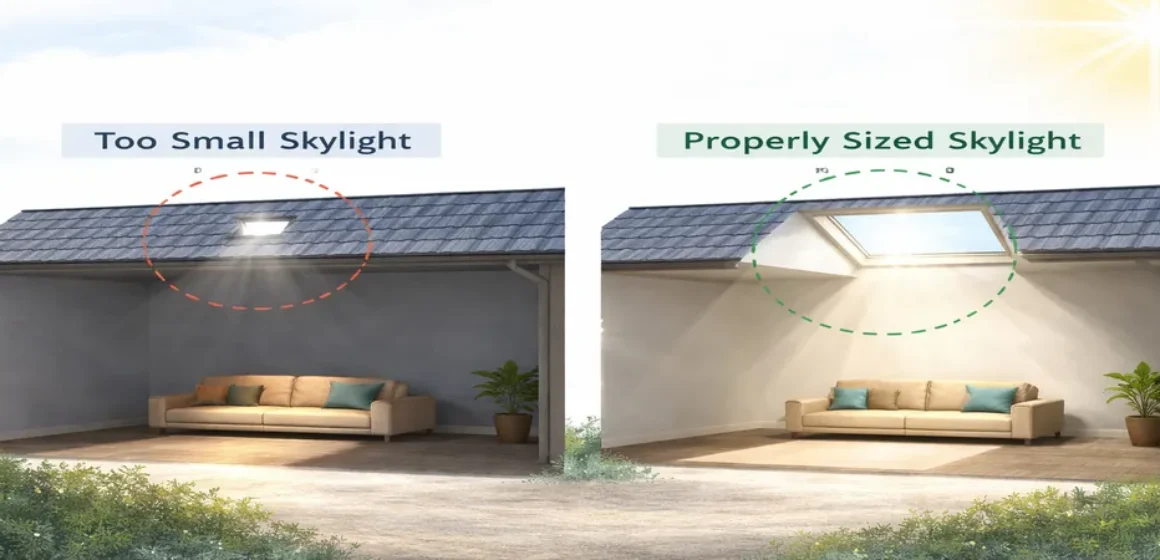
A skylight can be installed perfectly and still underperform if it is sized for “a skylight”, not sized for the room.
Two common sizing errors:
- too small: it becomes a bright spot, not a room upgrade
- too big: it creates glare, hot patches, or an uncomfortable contrasty room
The goal is not maximum daylight.
The goal is useful daylight.
Step 1: Decide what “success” looks like in your room
Sizing only makes sense when the goal is clear.
Pick one primary outcome:
- hallway no longer needs lights during the day
- bathroom feels clean and usable without harsh lighting
- kitchen work zone is bright enough on overcast days
- open-plan centre feels lifted, not just bright at the edges
A practical reflection:
If you cannot describe the outcome, you cannot size for it.
Step 2: Use the room’s “light drop-off” as your sizing clue
In many Auckland homes, the biggest issue is not the window area. It is how quickly light fades away from the windows.
Do this simple test on an overcast day:
- stand near the window: the room looks fine
- step two metres back: the room starts to flatten
- step into the centre: you reach for a light switch
If this is your room, the skylight needs to be sized to lift the centre zone, not just add sparkle.
Step 3: Choose your skylight type first, then size within that category
Different skylight types behave differently. The same “size” does not create the same experience.
If you want a skylight type overview first:
Now the plain-English sizing logic.
Sizing logic by skylight type
A) Tubular skylights (small openings, high impact)
Tubular skylights often feel powerful because they concentrate light efficiently.
They are best when:
- the room is narrow or internal
- you need a focused lift (hallways, bathrooms, pantries)
- roof space constraints limit larger openings
The sizing mistake with tubes
Choosing a tube that is too small for the length of hallway or expecting one tube to lift a large open-plan space.
Tubes are brilliant when the space is right. They are underwhelming when asked to do a fixed skylight’s job.
Practical rule:
- if the space is long, you may need more than one light point
- if the space is wide and central, consider a fixed skylight instead
B) Fixed skylights (broader lift, more ceiling presence)
Fixed skylights make sense when you need the ceiling to feel lifted across a larger area.
They are best when:
- the room is open-plan or has a dull centre
- you want a spacious feel, not just a bright point
- the room is used for long periods (living, kitchen-dining)
The sizing mistake with fixed skylights
Going too small to avoid cost, then getting a “spotlight effect”.
A small fixed skylight can look fine, but if it is undersized it may only brighten one patch while leaving the rest of the room unchanged.
The right fixed skylight size is the one that changes the feel of the room, not just the brightness of one spot.
C) Opening skylights (fixed behaviour plus ventilation)
Opening skylights are chosen primarily when ventilation is a goal.
Size still matters, but the bigger risk is choosing opening when you actually needed better extraction, not more opening area.
If ventilation is your driver, your sizing conversation should include airflow paths, not just daylight.
Step 4: Think in zones, not square metres
People often ask for “a skylight size based on room size”.
It’s not wrong, but it’s incomplete.
A more reliable method is to size based on the zone you want to improve.
Zone 1: Task zone
Kitchen bench, bathroom vanity, laundry folding area.
Your skylight should deliver usable light where you work.
Zone 2: Centre zone
The middle of an open-plan room, the hallway spine, the space that feels dull on grey days.
Your skylight should lift the space itself.
Zone 3: Comfort zone
Sofa seating, TV viewing, desk area.
Your skylight should avoid creating glare or direct sun patches in this zone.
Sizing is correct when it supports Zone 1 and Zone 2 without punishing Zone 3.
Step 5: Prevent the “bigger is worse” problem
Oversizing can be just as disappointing as undersizing, especially in Auckland homes with:
- west or north-west exposure
- glossy floors or reflective surfaces
- TV and work-from-home screens
Oversizing risks:
- a harsh bright patch that makes the rest of the room feel darker by contrast
- glare on screens
- the feeling that the room is “too much” on clear days
If you are trying to reduce glare and keep light calm, a slightly smaller but better-placed skylight often wins.
Illustrative Example Only: the skylight that looked right but felt irrelevant
A homeowner installed a small skylight in a kitchen expecting it to brighten the work zone.
On sunny days it created a bright spot on the floor. On overcast days the bench was still dull.
The issue was not the product. It was that the skylight was undersized for the zone that needed lifting and positioned in a way that didn’t support the work area.
Their reflection afterwards:
“It wasn’t wrong. It just wasn’t enough.”
The sizing questions that get you the right answer fast
Bring these into any site visit.
- Which zone are we trying to lift (task, centre, comfort)?
- Does this room need spread or a focused light point?
- On overcast days, where does daylight die in this room?
- Are there screen zones we must protect from glare?
- Will this skylight create a repeated sun patch on the floor or sofa?
- What roof space constraints exist above this location?
If you want a sizing recommendation tailored to your Auckland home, start here:
For Auckland service context:
FAQs (unique to this topic)
How do I know if a skylight will be too small?
If it only creates a bright spot but doesn’t reduce daytime light switching or lift the room’s centre zone, it is likely undersized for the outcome you want.
Can a skylight be too big?
Yes. Oversized skylights can create glare, harsh sun patches, and uncomfortable contrast, especially in sun-exposed Auckland rooms.
Should I size a skylight based on room size?
Room size is part of the story, but zone behaviour matters more. Size for the area you want to improve and how light needs to spread in that space.
Are tubular skylights easier to size?
They can be for small internal rooms because they deliver light efficiently. Longer hallways may still need more than one tube to feel consistently lifted.
What is the safest way to size correctly?
Start with the room goal and a roof space check, then choose the type and placement that delivers useful light without glare. A good assessment makes sizing feel obvious.