Auckland’s overcast summer days: how to get consistent light without turning on lights at 3pm
Auckland has a particular kind of “grey bright” day. It is warm enough for shorts, the sky is fully clouded, and the house still looks like it should feel light. Yet by mid-afternoon, the lounge or hallway starts to dull out. Someone flicks on downlights at 3pm and it feels slightly ridiculous because it is clearly daytime.
If that is familiar, you are not imagining it. Auckland’s maritime cloud cover does something very specific indoors:
- it removes the sharp sunbeam you subconsciously rely on
- it flattens contrast, so rooms feel less lively
- it turns window light into sideways glow that does not travel far into the home
This is where skylights Auckland homes use for consistency shine, not because they chase “maximum brightness”, but because they deliver usable light when the sky is doing its soft, overcast thing.
This guide is a practical playbook for getting steadier daylight through summer, especially for deeper Auckland floorplans, internal bathrooms, hallways, and living areas that feel like they fade too early.
The problem is not that you have “not enough windows”
Many Auckland homes have decent glazing but still struggle on overcast days. The common patterns:
- Narrow sites and long floorplans where daylight drops off sharply away from windows
- Neighbouring houses and fencing that block side light
- Covered decks and eaves that shade window openings
- Rooms positioned in the middle of the home (hallways, internal bathrooms, stairwells)
- High cloud that makes the sky bright, but not directional
On sunny days, the sun does the heavy lifting. On overcast days, your home relies on how well it can gather and distribute diffuse light.
A simple way to understand Auckland’s overcast light
Think of the sky as a giant soft light source.
Photographers call this “softbox light” because it wraps around surfaces gently. It is flattering, but it is also less forceful. The light comes from everywhere above, not from one strong direction.
That is why top-down daylight tends to be more reliable in Auckland’s grey bright conditions than side-light alone.
The “3pm lights on” test
If you want to know whether your home has a consistency problem, try this on a warm overcast day:
- Leave all lights off from late morning
- At 3pm, walk through these areas:
- hallway
- kitchen working zone
- lounge seating area
- bathroom vanity zone
If you catch yourself turning lights on mainly because the room feels flat rather than dark, you are dealing with a “distribution” issue, not just brightness.
This is exactly the type of problem a well-planned skylight solves.
The consistency playbook for overcast days
1) Prioritise rooms where light needs to “travel”
On grey days, window light often stays near the window. Target spaces where you need daylight to reach further:
- central living zones
- corridors and stairwells
- bathrooms with limited glazing
- kitchens where you prep and cook
The goal is not “more light at the edge”. It is “usable light where you actually live”.
2) Bring light from above into the middle of the home
Overhead daylight changes the geometry of the room.
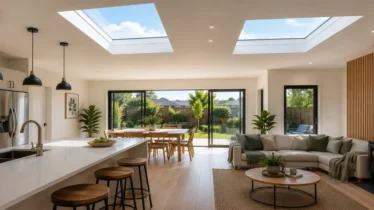
Instead of light entering from one side and fading quickly, it enters from above and spreads more evenly across the space. That is why on overcast days, a skylight can make a room feel consistently usable without turning into a spotlight.
3) Choose skylight types that suit diffuse light
Overcast light is already soft, so the best skylight choice is often the one that captures and distributes it efficiently.
A plain-English guide:
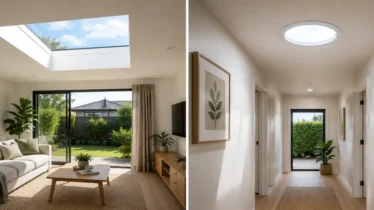
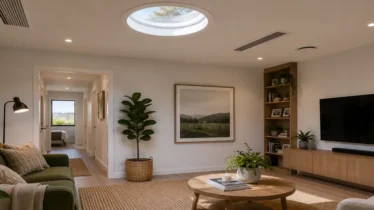
- Tubular skylights: often excellent for overcast days in smaller or internal spaces because they capture light from the roof and deliver it into targeted zones. Great for hallways, bathrooms, pantries, and entry areas.
- Fixed skylights: ideal when you want a larger patch of overhead daylight in living spaces and kitchens, especially if the room needs a broader spread of light.
- Opening skylights: useful when humidity and airflow are also part of the problem (bathrooms, some kitchens), but placement and weathertight detailing still matter most.
If you want to compare options in one place:
https://www.skylights.co.nz/types-of-skylights/
What makes light feel “consistent” inside
This is the bit people often miss. Consistency is usually created by a combination of:
- how evenly light spreads
- how few harsh contrasts you get
- how much of the ceiling and upper walls are gently lit
On Auckland’s overcast days, a room feels better when the ceiling is doing some of the work. A darker ceiling makes the whole room feel heavier and more enclosed.
A practical outcome to aim for:
- fewer gloomy corners
- fewer times you “need” lights for mood or clarity
- a room that feels steady across changing weather
Small upgrades that amplify overcast daylight
Not every improvement needs a major change. In many Auckland homes, these help the most:
- Light-coloured ceiling finishes (they bounce overhead daylight deeper)
- Reducing clutter near windows (grey light is easily blocked)
- Correct placement of skylights so the light lands in the working and living zones, not above dead space
- Avoiding overly dark feature walls in rooms you want to feel bright and calm year-round
These are not decoration tips. They are daylight physics in everyday language.
Illustrative Example Only: the “it’s daytime but it feels like evening” home
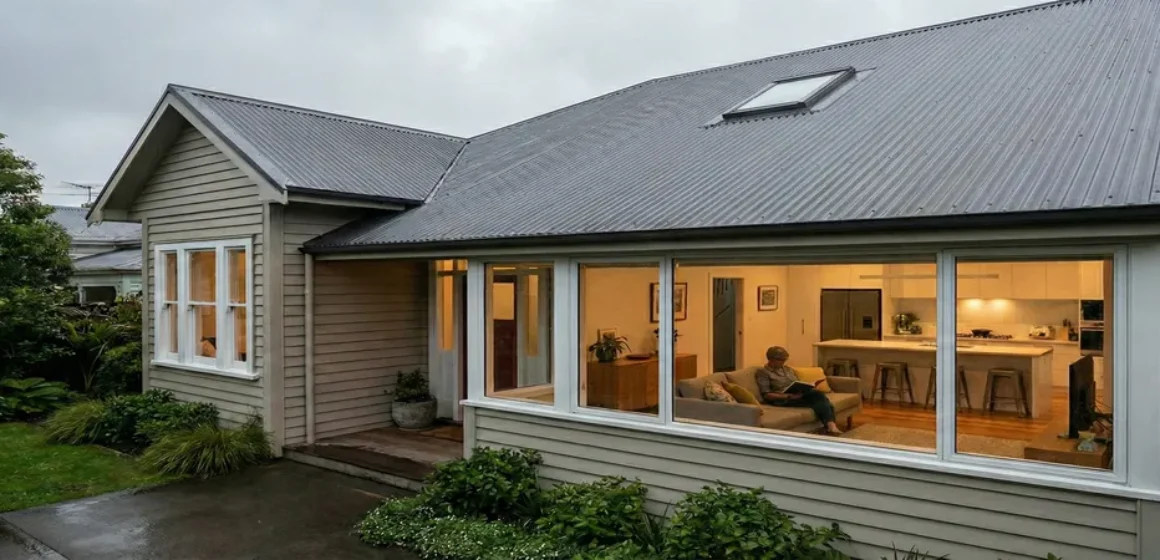
A homeowner in Greater Auckland described a living area that looked bright near the sliding doors, but the middle of the room felt dull on overcast days. The pattern was always the same: downlights on at 3pm, even in summer.
They did not need more windows. They needed the daylight to reach the centre of the space in a way that stayed steady when the sky went flat.
Their reflection afterwards was simple:
“It feels like the room holds onto daylight now, even when the weather changes.”
A quick planning checklist before you commit
If you are thinking about skylights Auckland-wide for consistent light, these questions keep decisions grounded:
- Which rooms feel flat on overcast days?
- At what time do you start turning lights on?
- Is the darkest area in the middle of the home?
- Do nearby buildings or trees limit side light?
- Are you trying to solve brightness, humidity, or both?
If you would like a clear recommendation based on your roof type, room layout, and where the light currently fails, you can start here:
https://inquiry.skylights.co.nz/inquiry
For Auckland coverage and context:
https://www.skylights.co.nz/skylights-auckland/
FAQs (unique to this topic)
Do skylights work on cloudy days in Auckland?
Yes. Auckland’s overcast sky still provides plenty of daylight, it is just more diffuse. Skylights can capture that overhead light and deliver it more evenly into the home.
Are tubular skylights better than flat skylights for overcast conditions?
They can be, particularly for smaller internal spaces where targeted, efficient light delivery matters most. For larger living areas, fixed skylights often provide a broader spread of overhead daylight.
Will a skylight make my room too bright on sunny days if I choose it for overcast days?
Not if it is planned properly. Placement and specification help balance performance across Auckland’s mixed weather. The aim is steady, usable light rather than a harsh bright patch.
Why do I still need lights in the afternoon if my room has big windows?
Because overcast daylight tends to stay near windows and loses strength quickly deeper into the room. Overhead daylight helps fill the middle of the space where side light struggles.
What rooms benefit most from skylights on grey bright days?
Hallways, internal bathrooms, stairwells, pantries, and central living zones often see the biggest improvement, especially in deeper Auckland floorplans.