Glare season is real: the west-facing room test for Auckland homes (and what to do if it fails)
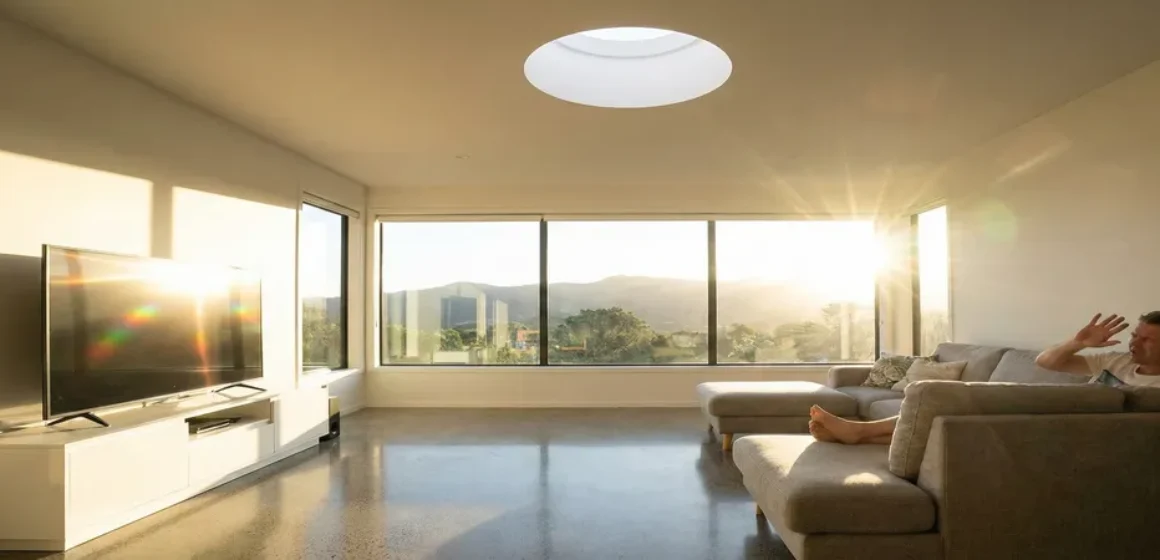
There’s a familiar late-summer Auckland scene: the lounge looks beautiful in the morning, then by mid to late afternoon the room turns harsh. The TV is hard to see. Someone shifts seats to escape the bright patch. Curtains get pulled, and suddenly the space feels dim and closed off even though it is still daytime.
That is not “just sunlight”. That is glare, and it is one of the biggest reasons people stop enjoying their best room during the warmer months.
The good news is this: glare is usually predictable, and it is often fixable without turning your home into a dark cave.
This guide gives you a simple homeowner test for west-facing rooms, then walks through what actually works for skylight glare reduction in Auckland homes.
First, what glare really is (in plain English)
Glare is not the same as brightness.
- Brightness is how much light is in the room overall.
- Glare is when light hits your eyes in a way that causes discomfort, squinting, or washed-out vision.
Glare usually happens when there is too much contrast, such as:
- a bright window next to a darker wall
- sun reflecting off a floor or coffee table
- low-angle light landing directly on screens
A room can be bright and comfortable. A room can also be bright and genuinely unpleasant. West-facing light is a common trigger in Auckland because afternoons can bring strong, low-angle sun and reflective glare, even when the day starts out cloudier.
The west-facing room test (takes 4 minutes)
Do this once on a sunny afternoon, ideally between 2pm and 6pm.
Step 1: Sit in your normal seat
Do not move to “make it better”. Sit where you normally relax.
Ask:
- Do I squint without realising it?
- Do I avoid looking towards one part of the room?
Step 2: Check your screen zones
Look at your TV or laptop from normal positions.
If you notice:
- a white haze across the screen
- reflections you cannot ignore
- you keep changing angles
That is glare behaviour, not a screen problem.
Step 3: Identify the bright patch
Stand up and look at where sunlight lands.
Common glare patches in Auckland lounges:
- the floor in front of a sliding door
- the wall opposite the window
- the couch armrest or backrest
- a glossy benchtop if your lounge flows into a kitchen
Step 4: The curtain test
Close the curtain or blind that controls the sun.
If the room instantly feels calmer but also becomes too dark to enjoy, you have a specific type of problem:
You rely on that west window for most of your usable daylight, even though it causes glare.
That is the key insight. The fix is often about changing where your usable daylight comes from.
If your room fails the test, here is what to do next
Think of glare solutions in the right order. Auckland homeowners often jump straight to “we need thicker curtains”. Curtains can help, but they can also create a new problem: a dark room from 3pm onwards.
Here is a smarter sequence.
1) Reduce reliance on the west window for daytime light
If the west window is both your main light source and your main discomfort source, you are stuck in a trade-off: glare or gloom.
This is where skylights can help by introducing top-down light that keeps the room usable when you need to tame the west sun. You are not trying to remove daylight. You are trying to change its direction and distribution.
For many Auckland homes, this shift alone improves comfort dramatically because you can manage the west sun without sacrificing the whole room.
If you want to compare skylight types that suit living areas, start here:
https://www.skylights.co.nz/types-of-skylights/
Skylight glare reduction: what changes when light comes from above
A well-planned skylight does not “fight” the window. It supports the room so the harsh side-light is no longer doing all the work.
Overhead daylight tends to:
- spread more evenly across ceilings and upper walls
- reduce the sharp contrast between window side and interior side
- keep the room pleasant when curtains are partially closed
A useful way to picture it:
- Window light is like a torch from the side on a bright afternoon.
- Overhead light is like an even ceiling glow that makes the room feel stable.
This is why skylight glare reduction is often less about a magical glass coating and more about giving the room a second, calmer daylight source.
The “glare map” that helps you place a skylight properly
A skylight placed in the wrong spot can create a bright patch, which is the opposite of what you want. Placement matters.
Here is a simple glare map you can apply:
Aim to light the “centre zone”
This is the area where people move and live, not the strip near the windows.
Good targets:
- central lounge seating zone
- open-plan middle zone between kitchen and lounge
- circulation areas that feel flat when curtains are drawn
Avoid lighting the “screen zone” directly
Skylights above screens or directly above glossy surfaces can create new reflections.
If your TV is a key feature of the room, plan daylight so it improves the room without interfering with viewing comfort.
Use the “soft landing” approach
The best results often come when overhead light lands on:
- matte walls
- ceilings
- textures that diffuse light gently
Highly reflective finishes can amplify glare.
The Auckland reality: roof type and ceiling depth affect glare outcomes
Two Auckland-specific factors often influence results:
- Common roof types (metal long run, concrete tile) affect how flashing and weathertight detailing is approached.
- Ceiling and shaft depth influences how light spreads.
A deeper shaft often softens light and reduces the chance of a harsh bright patch. Think of it like a lampshade for daylight. It shapes and calms the light rather than firing it straight down.
Illustrative Example Only: the lounge that became “unusable after 3pm”
A household in Greater Auckland described their lounge as perfect in the morning, then “sharp and annoying” in the afternoon. The pattern was consistent: blinds down, lights on, room feels closed off.
Their turning point was realising the issue was not too much daylight. It was where the daylight came from.
A simple line they shared later:
“We wanted to block the sun, but we did not want to lose the day.”
That is the balance a good plan aims for.
Quick checklist: are you solving glare, heat, or both?
These often overlap, but they are not identical.
You are mainly solving glare if:
- you squint, get headaches, or avoid certain seats
- screens are washed out
- the room feels harsh even if it is not especially hot
You are mainly solving heat if:
- surfaces warm up and stay warm
- the room feels stuffy even when light is controlled
- you feel the temperature rise, not just visual discomfort
Many Auckland west-facing rooms have both, which is why a combined plan works best: manage the west sun, and support the room with calmer daylight.
If you want a professional view of what would work in your home, start an enquiry here and mention “west-facing glare” in the notes:
https://inquiry.skylights.co.nz/inquiry
For Auckland coverage and guidance:
https://www.skylights.co.nz/skylights-auckland/
FAQs (unique to this topic)
How do I know if it is glare or just a bright room?
If you squint, avoid looking in certain directions, or screens become hard to see, it is glare. Brightness alone usually does not create discomfort or washed-out vision.
Do skylights reduce glare from west-facing windows?
They can, when planned correctly. Skylights provide overhead light that can reduce reliance on harsh side-light, so you can control the west sun without making the room feel dark.
Can a skylight create glare on its own?
Yes, if it is placed directly over screens or highly reflective surfaces. Good placement aims for even spread, not a bright hotspot.
Are blinds the best solution for west-facing glare?
Blinds help control direct sun, but they often make the room too dim if the window is your main daylight source. Many homes benefit from adding a calmer daylight source so shading does not ruin the room.
What is the biggest mistake people make when trying to fix glare?
Treating it as a curtain problem only. The more complete fix usually involves daylight direction, room layout, surface reflectivity, and how light is distributed.