Why Waikato Homes Feel Darker in Winter, and When a Skylight Can Help
Some Waikato homes do not feel truly dark until winter arrives.
In summer, the same hallway may seem acceptable. The kitchen may feel bright enough. The bathroom may get by with its small window. The spare room may be fine for storage or occasional use. Then June arrives, the days shorten, the sun sits lower, mornings feel grey, and rooms that once felt manageable begin to feel flat.
The lights stay on longer. Internal rooms feel closed in. Hallways lose their warmth. Bathrooms can feel cold and uninviting. Home offices feel tired by mid-afternoon. The house still functions, but it does not feel as alive as it should.
For many homeowners looking at skylights Waikato winter solutions, the real question is not simply, “Can I add more light?”
The better question is:
Which room is struggling, why is it struggling, and would overhead daylight solve the right problem?
A skylight can be a valuable daylight upgrade for some Waikato homes. So can a tubular skylight or Sky tube, especially in compact or internal spaces. But the right answer depends on the room, roof type, ceiling layout, placement, ventilation needs and the kind of daylight the homeowner actually wants.
This guide explains why Waikato homes can feel darker in winter, where skylights may help, and when another daylight or ventilation approach may be more suitable.
Why winter changes how a Waikato home feels
A room that feels acceptable in February may feel completely different in July.
That does not always mean the room has changed. It means the conditions around the room have changed.
In winter, Waikato homes can feel darker because of several overlapping factors:
- Shorter daylight hours
- Lower winter sun angles
- Grey or foggy mornings
- Shaded side boundaries
- Mature trees or neighbouring buildings
- Deeper eaves
- Small windows in older homes
- Internal hallways and utility rooms
- South-facing or shaded rooms
- Lights being used earlier in the day
Winter exposes weaknesses that may be easy to ignore for the rest of the year.
A hallway that feels fine when exterior doors are open in summer may feel gloomy when the house is closed up. A bathroom that gets a little daylight in warmer months may feel cold and shadowed when the winter sun does not reach it. A kitchen with side windows may rely heavily on artificial lighting because daylight does not travel far enough into the working area.
This is why winter is often when homeowners start noticing daylight problems clearly.
The house has not suddenly failed. It is simply showing where the natural light is not doing enough.
The difference between a dark room and a poorly lit room
Not every winter daylight issue needs a skylight.
Some rooms are genuinely dark because they lack useful natural light. Others have daylight, but it lands in the wrong place.
For example, a kitchen may have a window, but the light stays near the sink and does not reach the benchtop or island. A living room may have a large window, but the back half of the room remains dull. A bathroom may technically have a window, but it faces a fence or shaded side path. A hallway may have light at each end, but the middle section still needs the ceiling light during the day.
These are different problems.
A dark room may need a new daylight source.
A poorly lit room may need better placement of daylight.
A damp or stuffy room may need ventilation as well as light.
A cold room may need heating or insulation improvements rather than a skylight alone.
This distinction matters because a skylight should solve the room’s actual problem, not simply add brightness for the sake of it.
The Waikato winter daylight test
Before choosing a skylight, assess the room during the part of the day when the problem is most obvious.
For many homes, this is late morning or mid-afternoon in winter.
Stand in the room with the lights off and ask:
- Does the room feel dull even during daylight hours?
- Is artificial lighting needed most of the day?
- Does the room feel colder because it looks shadowed?
- Does the daylight reach the area where the room is actually used?
- Is the issue worse in winter than in summer?
- Does the room feel avoided or underused?
- Is the room internal, shaded or south-facing?
- Is privacy limiting how much window light can be used?
- Is the room dark, stuffy, damp-feeling, or all three?
These questions help separate emotional frustration from practical need.
A room may simply need better artificial lighting. But if the room consistently lacks useful daylight during the day, a skylight, tubular skylight or Sky tube may be worth considering.
Rooms where Waikato homes commonly struggle in winter
Winter daylight problems often show up in the same types of spaces.
Hallways
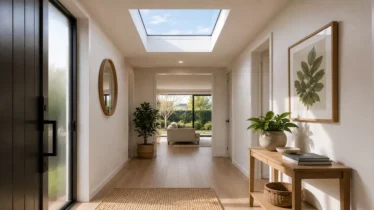
Hallways are one of the most common problem areas. Many Waikato homes have central hallways that receive borrowed light from bedrooms or living areas, but very little direct daylight.
The result is a passage that needs lights on during the day, especially in winter.
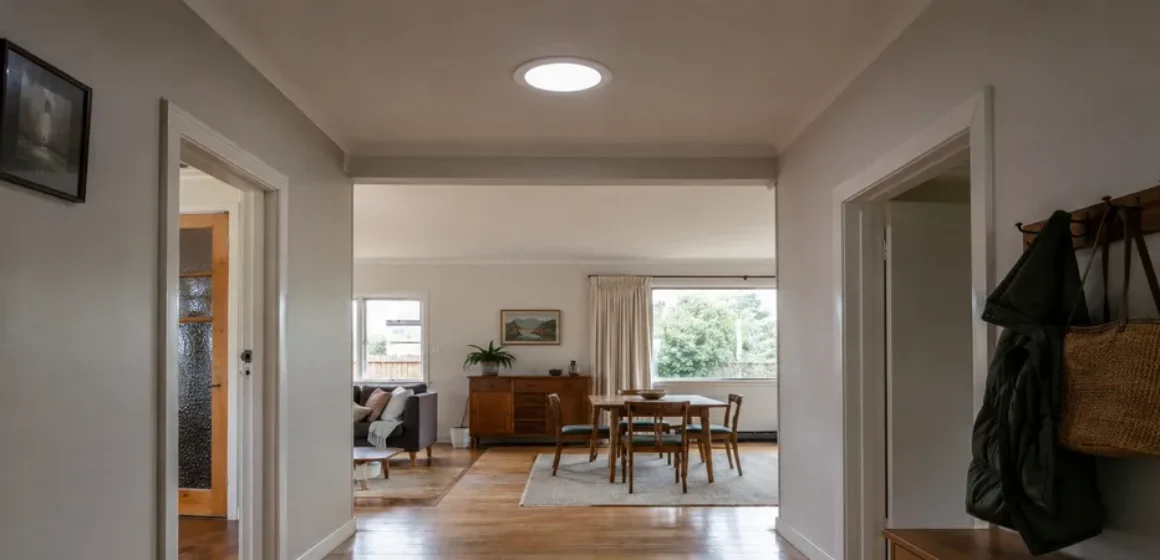
A tubular skylight or Sky tube can often be a practical option for hallways because it brings daylight from the roof to the ceiling diffuser without needing a large visible skylight opening.
For long hallways, placement matters. One daylight point may help, but a longer or segmented hallway may need more careful planning.
Bathrooms
Bathrooms need careful thinking because daylight and ventilation are not the same thing.
A skylight can improve natural light and privacy in a bathroom, especially where the existing window is small, shaded or overlooked. A vented skylight may also support airflow in suitable situations.
However, a skylight should not be treated as a complete moisture solution by itself. Bathrooms may still need suitable extraction, especially where steam, condensation or poor airflow are already issues.
Kitchens
Kitchens can feel dull in winter even when they have windows.
This often happens when the daylight stays near the wall window and does not reach the main work areas. Overhead daylight may help brighten a kitchen more evenly, especially above benches, islands or dining zones.
A fixed skylight may suit some kitchens. A vented skylight may be considered where airflow is also important, but it should not replace a proper rangehood where cooking ventilation is required.
Laundries
Laundries are often small, practical and easy to ignore.
In winter, they can feel especially flat because they may sit on the shaded side of the home, beside a garage, near a back door, or within a compact utility area. A tubular skylight or small skylight may help the room feel more usable during the day.
If moisture is an issue, ventilation still needs separate attention.
Home offices
Home offices expose winter daylight problems quickly because they are used for long periods.
A spare bedroom may have been acceptable before it became an office. Once it is used for screen work, video calls and focused tasks, weak daylight becomes more noticeable.
A skylight may help some home offices, but placement must consider glare, screen position and summer comfort.
Living rooms
Living rooms are more complex because they are larger and used at different times of day.
A skylight may help if the room has a deep floor plan, shaded windows or a dark back section. However, bigger is not automatically better. Glare, heat, privacy, ceiling shape and furniture layout should all be considered.
Why some Waikato homes feel darker than others
Two homes in the same suburb can have very different daylight conditions.
The difference may come down to layout, orientation, roof form, neighbouring buildings or landscaping.
Common reasons include:
South-facing rooms
South-facing rooms can feel calm in summer, but in winter they often receive weaker natural light. If the window faces a side fence, driveway or shaded garden, the room may feel dull for much of the day.
Deep floor plans
Some homes have living areas, hallways or utility rooms located deep within the floor plan. Window light may enter the outer rooms but fail to reach the centre of the home.
Older housing layouts
Older villas, bungalows and mid-century homes were not always designed around modern daylight expectations. Hallways, bathrooms, separate toilets and laundries may be smaller and more enclosed.
Modern privacy constraints
In newer subdivisions or compact sections, side windows may face fences, neighbouring homes or narrow outdoor areas. Privacy can limit how much natural light the room receives or how open the window coverings can be.
Roof and ceiling complexity
Some rooms appear ideal for a skylight from inside, but the roof above may include framing, ducting, wiring, valleys, low-pitch sections or other constraints. The roof has a say in what is practical.
This is why good skylight advice should consider both the room and the roof.
When a fixed skylight may help in a Waikato home
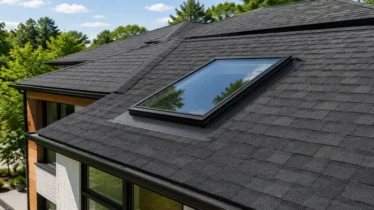
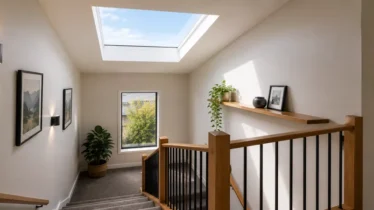
A fixed skylight may be worth considering when a room needs stronger natural daylight and does not require added airflow from the skylight itself.
It may suit:
- Kitchens
- Living rooms
- Dining areas
- Larger bedrooms
- Home offices
- Family rooms
- Renovated spaces
- Rooms where a sky view is wanted
A fixed skylight can make a room feel more open and naturally connected to daylight. In winter, this can be especially noticeable in rooms that otherwise feel flat or closed in.
However, placement must be handled carefully.
A fixed skylight should be considered around:
- Where the daylight will land
- Whether glare could become an issue
- Whether blinds may be needed
- Roof orientation
- Roof pitch and flashing requirements
- Ceiling shape and light well design
- Furniture or benchtop position
- How the room performs in summer as well as winter
A good skylight outcome is not simply a brighter ceiling. It is daylight that improves how the room feels and functions.
When a tubular skylight or Sky tube may be better
A tubular skylight or Sky tube may be a better choice when the room is compact, internal or mainly needs practical daytime brightness.
It may suit:
- Hallways
- Separate toilets
- Walk-in wardrobes
- Laundries
- Small bathrooms
- Pantries
- Internal study nooks
- Compact entries
These products bring daylight from the roof through a reflective tube to a ceiling diffuser. The result is often softer and more contained than a larger fixed skylight.
For some Waikato homes, this is exactly what is needed.
A hallway does not always need a large skylight feature. It may simply need enough daylight so the home does not feel switched off during the day. A separate toilet does not need a sky view. It may just need natural brightness. A walk-in wardrobe may need clearer visibility without adding another electrical fitting.
This is where tubular skylights and Sky tubes can be very practical.
They should still be assessed properly. Tube path, roof position, ceiling location, bends, obstructions and roof type all affect suitability.
When a vented skylight may be worth considering
A vented skylight may be suitable when daylight and airflow are both part of the room’s problem.
This may apply to:
- Bathrooms
- Kitchens
- Upper-level rooms
- Loft-style spaces
- Stuffier bedrooms
- Rooms with limited window opening
- Areas where warm air gathers near the ceiling
A vented skylight can support airflow by allowing air to escape from a higher point in the room. In suitable homes, this can be helpful.
But ventilation language needs to be clear.
A vented skylight is not the same as a full moisture-management system. A bathroom may still need extraction. A kitchen may still need a rangehood. A damp home may need broader ventilation, heating or building-condition review.
The value of a vented skylight is strongest when it is chosen for the right room, installed correctly, and used sensibly.
Skylights and damp-feeling rooms: what to be careful about
Many homeowners connect darkness with dampness.
That is understandable. A dark bathroom, laundry or hallway can feel colder, heavier and less pleasant in winter.
Better daylight may make a room feel fresher and more usable. It may reduce reliance on artificial lighting during the day. It may make surfaces easier to see and the room feel less closed in.
But daylight alone does not remove moisture.
If the room has condensation, mould, poor airflow or ongoing dampness, the cause should be considered separately.
Possible contributors may include:
- Inadequate extraction
- Poor heating
- Lack of insulation
- Window condensation
- Moisture from showers, cooking or drying clothes
- Poor subfloor or roof ventilation
- Leaks or weathertightness issues
- Infrequent air movement
A skylight may be part of a better room outcome, but it should not be sold or understood as a cure for dampness.
This honest distinction builds better decisions.
Roof type matters in Waikato skylight planning
A skylight is not just an interior feature. It becomes part of the roof system.
That means roof details matter.
For Waikato homes, common considerations include:
- Metal roofing
- Tile roofing
- Roof pitch
- Roof profile
- Flashing compatibility
- Roof age and condition
- Water flow direction
- Nearby valleys, ridges or gutters
- Existing roof penetrations
- Access for installation
- Ceiling cavity depth
- Rafters or trusses
- Internal finishing requirements
A room may be a strong candidate from the inside, but the roof may require a different product, different placement, or additional planning.
This is why photos are valuable when making an enquiry.
A clear photo of the room and ceiling helps explain the interior problem. A clear photo of the roof helps assess the practical path to solving it.
The danger of choosing by size first
When a room feels dark, it is natural to think a larger skylight will solve the problem.
Sometimes a larger skylight may be appropriate. But not always.
Bigger can also mean:
- More glare
- More heat gain in warmer months
- More visual impact on the ceiling
- More need for blinds
- More complex installation
- More cost
- More sensitivity to placement
In many rooms, placement matters more than size.
A smaller skylight in the right location may be more useful than a larger skylight in the wrong location. A tubular skylight may suit a hallway better than a large fixed skylight. A vented skylight may make sense in a bathroom, while a fixed skylight may be better in a living room.
The question is not, “How big can we go?”
The better question is, “What type and placement will solve this room’s actual daylight problem?”
The rooms that usually deserve priority
If you are considering skylights for a Waikato home, start with the rooms that affect daily comfort the most.
Good priority rooms often include:
1. The hallway everyone uses
If the hallway is dark, the whole home can feel darker than it really is.
2. The bathroom used every morning
A bathroom that feels gloomy in winter can affect the start of the day.
3. The kitchen work area
If food preparation areas need lights on during the day, overhead daylight may be worth assessing.
4. The home office
If the room is used for work several days a week, poor daylight becomes a daily issue.
5. The laundry
A small utility room can become more pleasant and practical with better daylight.
6. The main living room
If the living space feels flat in winter, skylight planning may be worth exploring carefully.
Start with the room that causes the most frustration, not necessarily the largest room.
Illustrative example only
A homeowner in Waikato has a central hallway that feels noticeably darker from June onwards. In summer, the hallway receives some borrowed light from the bedrooms and living room. In winter, the doors are closed more often, the sun is lower, and the ceiling light stays on through much of the day.
The homeowner first considers a large fixed skylight. After reviewing the room, a tubular skylight or Sky tube may be more suitable because the hallway does not need a sky view or a dramatic ceiling feature. It simply needs practical daylight in the right part of the passage.
In another part of the same home, the kitchen feels dull across the main working bench. In that room, a fixed skylight may be more appropriate because the goal is stronger daylight over an active living and working area.
The two rooms have the same broad complaint: “It feels dark.”
But they may need different skylight solutions.
That is why room-by-room thinking matters.
What to send when asking for Waikato skylight advice
A better enquiry leads to better advice.
If you are asking about a skylight, tubular skylight or Sky tube for a Waikato home, send:
- Photos of the room from several angles
- A photo showing the ceiling area
- A photo showing the darkest part of the room
- Photos of the roof above or near the room, if possible
- The room’s approximate size
- The type of room and how it is used
- When the room feels darkest
- Whether the issue is mainly daylight, airflow, privacy or moisture
- Whether you want a visible skylight or a subtle ceiling diffuser
- Whether there are ceiling lights, vents, fans or access hatches nearby
- Whether the home has a metal roof, tile roof or another roof type
- Whether any renovation or re-roofing work is planned
This information helps narrow down whether a fixed skylight, vented skylight, tubular skylight or Sky tube may be the better fit.
It also helps avoid generic recommendations.
When a skylight may not be the first answer
A skylight may not be the right first step in every dark room.
It may be worth reviewing other options first if:
- The room already receives good natural light
- The main issue is heating rather than daylight
- The problem is caused by poor artificial lighting
- The room is rarely used during the day
- Existing furniture or layout blocks window light
- The roof above is unsuitable
- Moisture or dampness needs a separate ventilation solution
- The room is about to be renovated and the layout may change
- Glare would be difficult to control
This does not mean a skylight is wrong. It means the timing or product choice may need more thought.
The best skylight decisions are made after understanding the room properly.
Why winter is a useful time to plan
Winter is often the best season to identify daylight problems because the house is being tested at its weakest point.
If a room feels comfortable and usable in winter, it will often perform well for much of the year. If a room feels dull, cold-looking or heavily dependent on lights in winter, that is useful information.
Planning in June, July or August can also help homeowners think ahead before spring renovation activity increases.
Winter planning can help clarify:
- Which rooms genuinely need daylight improvement
- Whether the goal is daylight, ventilation or both
- Whether a fixed skylight, vented skylight or tubular skylight is more suitable
- Whether roof access or roof condition may affect the work
- Whether blinds or light control should be considered
- Whether the project should align with painting, roofing or renovation work
Winter shows the problem clearly.
That makes it a valuable time to start the conversation.
A practical decision framework for Waikato homeowners
Before choosing a skylight, work through these five questions.
1. Which room is the real problem?
Avoid starting with the product. Start with the room.
2. What does the room need?
Does it need stronger daylight, softer daylight, privacy, airflow, or a combination?
3. How is the room used?
A hallway, bathroom, kitchen and office all need different daylight outcomes.
4. What does the roof allow?
Roof type, pitch, access, framing and flashing matter.
5. What would a good result feel like?
The goal may be a brighter kitchen, a less gloomy hallway, a bathroom that feels more inviting, or an office that is easier to work in after lunch.
Clear expectations lead to better choices.
Planning your next step
If your Waikato home feels darker through winter, the first step is not to choose a skylight size.
The first step is to identify the room’s actual daylight problem.
A fixed skylight may suit larger rooms where stronger natural light and openness are wanted. A vented skylight may suit some rooms where airflow also matters. A tubular skylight or Sky tube may be better for hallways, toilets, laundries, wardrobes and compact internal spaces.
Skylights NZ can help you consider which option may suit your room, roof type and desired outcome.
To start planning your options, use the Skylights NZ enquiry form:
https://inquiry.skylights.co.nz/inquiry
You may also find these useful:
FAQs
Why does my Waikato home feel darker in winter?
Waikato homes can feel darker in winter because of shorter daylight hours, lower sun angles, shaded rooms, foggy mornings, deeper eaves, small windows or internal layouts. Winter often reveals daylight problems that are less noticeable in summer.
Can a skylight help a dark Waikato home in winter?
A skylight may help if the room genuinely lacks useful natural daylight and has a suitable roof and ceiling layout. The best option depends on the room, roof type, placement, ventilation needs and whether a fixed skylight, vented skylight or tubular skylight is more suitable.
What rooms are best for skylights in Waikato homes?
Common rooms include kitchens, bathrooms, hallways, living rooms, laundries, home offices, separate toilets and walk-in wardrobes. The right product depends on how the room is used and what kind of daylight improvement is needed.
Is a tubular skylight good for a dark hallway?
A tubular skylight or Sky tube can be a practical option for a dark hallway, especially where the goal is useful daytime brightness rather than a large visible skylight. Long hallways may need careful placement or more than one daylight point.
Will a skylight fix condensation or dampness?
A skylight can improve daylight, and a vented skylight may support airflow in suitable rooms. However, condensation and dampness may also involve heating, extraction, insulation, moisture sources or ventilation issues. A skylight should not be treated as a complete moisture solution by itself.
What should I send for a Waikato skylight quote?
Send photos of the room, ceiling and roof area if possible. Include the room size, roof type, when the room feels darkest, whether airflow or moisture is also a concern, and whether you prefer a visible skylight or a subtle ceiling diffuser.