The spring daylight checklist: what to review before renovation season starts
Spring often reveals what winter made obvious.
The hallway still needs lights on during the day. The bathroom still feels enclosed after the morning rush. The kitchen bench still sits in shadow, even as the days get longer. The spare room still feels flat. The laundry still feels like a place to get through quickly rather than a room that works easily.
By the time spring arrives, many New Zealand homeowners start thinking about renovation season. Painting, roofing, bathroom upgrades, kitchen changes, outdoor work, insulation, ventilation, flooring and general home improvements all move higher on the list.
This is the right time to review daylight.
Not after the ceiling has been painted. Not after the new roof is finished. Not after the bathroom layout is locked in. Not after the kitchen lighting plan has already been chosen.
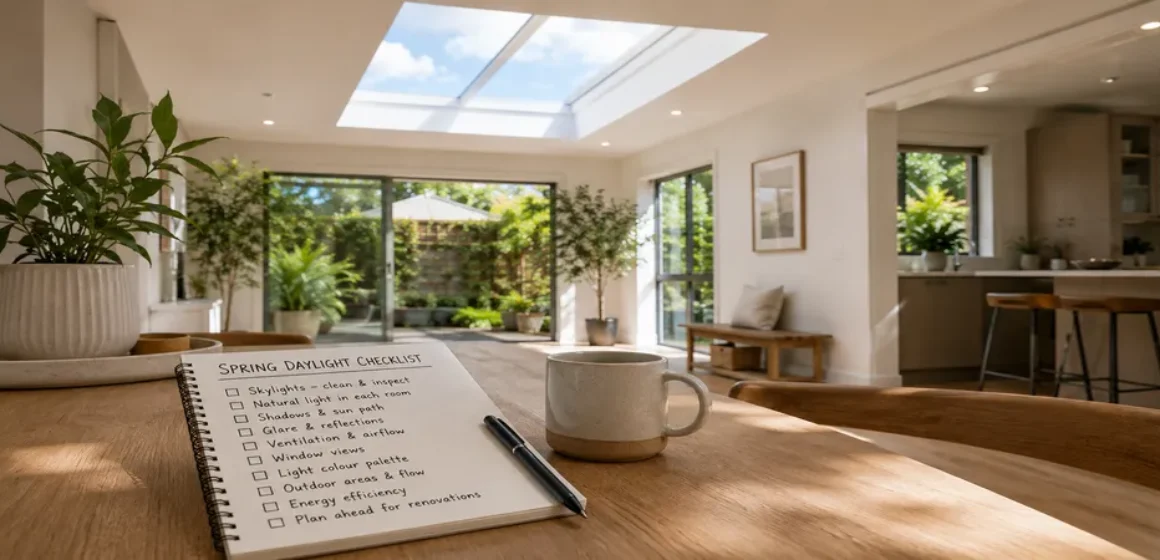
A spring home daylight checklist helps you identify which rooms need natural light before renovation decisions become harder or more expensive to change.
This guide explains what to review before spring and summer renovation activity begins, including dark rooms, skylight placement, roof timing, ventilation, glare, product choice and when a fixed skylight, vented skylight, tubular skylight or Sky tube may be worth considering.
Why spring is the right time to review daylight
Winter tends to expose the problem.
Spring gives you the chance to plan the solution.
During winter, dark rooms are harder to ignore because the days are shorter, mornings are slower and artificial lights are used more often. By spring, the home may feel lighter overall, but the problem rooms usually remain problem rooms.
Spring is useful because it sits before many homeowners begin:
- Re-roofing
- Bathroom renovations
- Kitchen renovations
- Interior painting
- Ceiling repairs
- Insulation work
- Ventilation upgrades
- Flooring changes
- Outdoor cover or deck projects
- General pre-summer home improvements
Daylight should be part of those conversations early.
If a skylight is likely, planning before renovation work begins can help with placement, internal finishing, roof access, flashing coordination and avoiding rework.
The goal is not to add a skylight to every renovation.
The goal is to avoid missing the moment when daylight should have been considered.
Start with a room-by-room daylight walk-through
Before choosing products, walk through the home during the day with artificial lights off.
Do this on a normal spring day, not only on the brightest sunny afternoon.
Review each high-use space:
- Kitchen
- Bathroom
- Hallway
- Living room
- Bedrooms
- Home office
- Laundry
- Entry
- Pantry
- Walk-in wardrobe
- Separate toilet
- Stairwell or landing
For each room, ask:
- Does this room need lights on during the day?
- Has this room felt dark through winter?
- Does daylight reach the part of the room we actually use?
- Is the room shaded by eaves, fences, trees or neighbouring buildings?
- Is privacy limiting the use of windows?
- Is the room dull, steamy, stale or underused?
- Would better daylight change how we use this room?
- Is any renovation, painting or roofing work planned nearby?
This walk-through helps you separate general seasonal dullness from rooms that genuinely need improvement.
Checklist item 1: Which room bothered you most through winter?
The first question is not technical.
It is practical.
Which room did you complain about most?
Common answers include:
- The hallway that always needs lights on
- The bathroom that feels dull and steamy
- The kitchen bench that stays in shadow
- The bedroom that feels flat even after curtains open
- The home office that relies on artificial light
- The laundry that feels dark and closed in
- The entry that makes the home feel gloomy on arrival
Winter is useful because it shows the weak points.
By spring, those rooms may feel slightly better, but the underlying daylight issue often remains. If a room was a daily frustration in winter, it deserves review before renovation season begins.
A skylight decision should start with the room that creates the strongest daily impact, not necessarily the largest room or the most visible room.
Checklist item 2: Which rooms use artificial lighting during the day?
This is one of the simplest daylight tests.
Walk through the home between late morning and mid-afternoon. Turn off the artificial lights. Notice which rooms become difficult to use.
Rooms that commonly fail this test include:
- Hallways
- Internal bathrooms
- Toilets
- Laundries
- Wardrobes
- Pantries
- Sculleries
- Home offices
- South-facing bedrooms
- Kitchens shaded by covered decks
If a room needs lights on during daylight hours, it may be a candidate for a daylight upgrade.
A tubular skylight or Sky tube may suit compact internal rooms. A fixed skylight may suit larger rooms needing stronger overhead daylight. A vented skylight may suit rooms where airflow is also part of the issue.
The light-switch test is not the whole answer, but it is a strong starting point.
Checklist item 3: Where should daylight actually land?
A skylight should not simply brighten the ceiling.
It should improve the part of the room that matters.
Before any quote, identify the daylight target.
Examples:
- Kitchen bench
- Island or preparation zone
- Bathroom vanity
- Shower approach
- Hallway centre
- Laundry work area
- Home office desk zone
- Bedroom wardrobe side
- Living room seating area
- Pantry shelves
- Stair landing
This matters because placement changes the result.
A kitchen skylight centred in the room may not help the bench. A hallway diffuser placed near an already bright entry may not help the dark middle. A bedroom skylight above the bed may not be as useful as daylight near the wardrobe or desk.
Spring is a good time to think about daylight landing zones before ceiling, lighting or painting decisions are finalised.
Checklist item 4: Is the room dark, or is it also damp or stuffy?
Some rooms have more than a daylight problem.
Bathrooms, laundries and kitchens often combine poor natural light with moisture, steam, odours or stale air.
Before choosing a product, separate the issues.
Daylight signs
- Lights are used during the day
- The room feels gloomy
- The window is small, frosted or shaded
- The room feels enclosed
- The main task area is in shadow
Ventilation or moisture signs
- Steam lingers
- The mirror fogs heavily
- Condensation appears
- Paint peels or bubbles
- Mould marks appear
- The room smells damp or stale
- Towels or washing stay damp too long
A skylight can improve daylight. A vented skylight may support airflow in suitable rooms. A tubular skylight or Sky tube can provide practical daylight in compact rooms. But moisture and ventilation still need to be addressed directly.
If spring renovation plans include bathrooms, laundries or kitchens, daylight and ventilation should be discussed together, not confused as the same problem.
Checklist item 5: Are you planning roof work?
If a re-roof or roof repair is being planned, daylight should be reviewed early.
This does not mean every roof project needs a skylight. But if any room below that roof is dark, the timing may be valuable.
Ask:
- Is the roof being replaced or repaired?
- Are flashings being renewed?
- Is access equipment or scaffolding being arranged?
- Are old skylights being retained or replaced?
- Are any roof penetrations being removed or added?
- Are solar panels being installed later?
- Is the roof material changing?
- Are there existing leak or staining issues?
A skylight installed during roof planning may be easier to coordinate than one added shortly after the new roof is completed.
The main advantage is cleaner coordination with roof material, flashing, water flow and access.
If a room needs daylight and the roof is already being worked on, raise the skylight question before the roofing scope is locked in.
Checklist item 6: Are you painting or repairing ceilings?
Ceiling work is another important timing signal.
If a ceiling is being repaired, painted, skim-coated or altered, it may be worth reviewing daylight before the finishing work happens.
This is especially relevant for:
- Fixed skylights that may require a light well
- Larger skylights that need internal lining
- Hallway diffusers for tubular skylights or Sky tubes
- Bathrooms where ceiling fans, lights or heat lamps may also change
- Kitchens where lighting and skylight placement need coordination
- Bedrooms and offices where glare and blinds matter
A skylight can often be installed outside major renovation work, but if the ceiling is already being touched, early planning can reduce rework.
The key question is:
Will we regret painting or finishing this ceiling before deciding whether the room needs daylight from above?
If the answer is yes, discuss the skylight first.
Checklist item 7: Are you renovating a bathroom?
Bathroom renovations are one of the best times to consider daylight properly.
A bathroom may need:
- Better natural light
- Better extraction
- Improved privacy
- Better mirror lighting
- A different ceiling layout
- New ventilation ducting
- Moisture-resistant finishes
- Heating or fan upgrades
Skylight planning should happen before the layout, ceiling services and finishes are fixed.
Ask:
- Does the bathroom need daylight during the day?
- Is privacy limiting wall-window light?
- Does steam linger?
- Is the existing extractor fan effective?
- Would a tubular skylight or Sky tube be enough?
- Would a fixed skylight suit a larger bathroom?
- Would a vented skylight make sense, or is extraction still the priority?
- Where should daylight land: vanity, centre, shower approach or separate toilet area?
A bathroom skylight should not be an afterthought once the ceiling has already been planned.
Checklist item 8: Are you renovating a kitchen?
A kitchen renovation should always include a daylight review.
Artificial lighting is important, but natural light affects how the kitchen feels and functions during the day.
Review:
- Bench placement
- Island position
- Scullery or pantry daylight
- Covered decks or eaves outside windows
- Existing window direction
- Morning light
- Screen or glossy surface glare
- Rangehood ducting
- Ceiling lighting layout
- Roof space above the kitchen
A fixed skylight may suit a kitchen where the bench or island needs stronger daylight. A tubular skylight or Sky tube may suit a pantry, scullery or compact kitchen zone. A vented skylight may be worth considering only if high-level airflow has a clear purpose.
The best time to plan kitchen daylight is before cabinetry, lighting and ceiling work are finalised.
Checklist item 9: Are you setting up or improving a home office?
Spring is a common time to improve home workspaces.
Before repainting, rearranging furniture or upgrading lighting, review natural light.
Ask:
- Does the office need lights on during the day?
- Is the desk in the right position?
- Does the screen already suffer from glare?
- Would overhead daylight help the room feel less flat?
- Would a fixed skylight, tubular skylight or Sky tube be more appropriate?
- Would blinds be needed?
- Is the room also a bedroom or guest room?
Home office daylight should be balanced.
The goal is not maximum brightness. It is comfortable working light without screen glare.
If the office is part of spring renovation planning, decide the desk position before deciding skylight placement.
Checklist item 10: Are hallways and entries making the home feel darker than it is?
Hallways and entries are often overlooked during renovation planning.
Yet they affect the whole home.
A dark hallway can make bedrooms feel disconnected, bathrooms feel less fresh and the home feel less welcoming. An entry that lacks natural light can weaken the first impression of the house.
Spring is a good time to assess whether a hallway or entry needs daylight before painting or flooring work begins.
Ask:
- Does the hallway need lights on during the day?
- Is the entry gloomy even when the front door is open?
- Does one end receive light while the middle stays dark?
- Is the hallway long or L-shaped?
- Would one tubular skylight or Sky tube be enough?
- Would multiple daylight points be better?
- Is the ceiling being painted or repaired?
A hallway upgrade may be one of the most valuable daylight improvements because it is noticed many times a day.
Checklist item 11: Are blinds, glare and summer comfort being considered?
Spring planning should include summer comfort.
A skylight that solves winter darkness should still feel good in summer.
Review glare and comfort in:
- Bedrooms
- Home offices
- Living rooms
- Kitchens
- Bathrooms with mirrors or glass
- Rooms with televisions or screens
- Rooms with glossy floors or benchtops
Ask:
- Could the skylight create glare?
- Would blinds be useful?
- Is the room already warm in summer?
- Where does the sun hit the roof?
- Does the product offer enough control?
- Would a tubular skylight or Sky tube provide enough daylight with less visual intensity?
The goal is year-round comfort.
A strong daylight plan should not treat summer as an afterthought.
Checklist item 12: Are older-home features being protected?
If you live in an older villa, bungalow, cottage or character home, spring renovation planning should include the home’s character.
Review:
- Original ceilings
- Cornices
- Timber trims
- High ceilings
- Hallway proportions
- Roof additions
- Older wiring
- Previous ceiling repairs
- Heritage or character-area considerations
A skylight may still be an excellent option, especially for central hallways, bathrooms and kitchens. But the product and placement should feel appropriate to the home.
A tubular skylight or Sky tube may be suitable where a subtle ceiling diffuser is preferred. A fixed skylight may suit some rooms where a stronger daylight feature can be integrated well.
Older homes benefit from careful assessment before final decisions are made.
Checklist item 13: Is the roof space likely to be straightforward?
Before assuming a skylight can go in a particular ceiling location, consider the roof space.
There may be:
- Trusses or rafters
- Wiring
- Plumbing
- Ducting
- Insulation
- Heat transfer systems
- Extractor fan ducts
- Rangehood ducts
- Ceiling access points
- Roof valleys or hips
- Solar panel fixings
This affects fixed skylights, vented skylights, tubular skylights and Sky tubes.
A fixed skylight may need a light well. A tubular skylight or Sky tube needs a workable tube path. A vented skylight needs suitable roof placement and operation planning.
Spring is a good time to identify whether a site visit is needed before renovation decisions progress too far.
Checklist item 14: Are you comparing product types too early?
Many homeowners begin with product names.
“I want a fixed skylight.”
“I need a vented skylight.”
“I think a tubular skylight will work.”
“Can we add a Sky tube?”
These may be good guesses, but the room should guide the product.
Before choosing, ask:
- Is the room compact or large?
- Does it need a sky view or practical daylight?
- Does it need airflow?
- Would a subtle diffuser be better than a larger feature?
- Is glare a concern?
- Is the roof suitable?
- Is one daylight point enough?
A fixed skylight may suit larger rooms. A vented skylight may suit rooms with a genuine airflow need. A tubular skylight or Sky tube may suit compact or internal spaces.
Choose the product after the room need is understood.
Checklist item 15: Is your quote request clear enough?
A better quote starts with better information.
Before submitting an enquiry, gather:
- Photos of the room
- Ceiling photos
- Photos of the darkest area
- Ground-level roof photos
- Photos of windows and what they face
- Photos of fans, vents, lights or heat lamps
- Photos of moisture marks or ceiling stains if present
- Notes about how the room is used
- Notes about when the room feels darkest
- Notes about ventilation, glare, privacy or heat concerns
- Any renovation, painting or roof plans
- Roof type if known
This helps the team understand whether the room may suit a fixed skylight, vented skylight, tubular skylight or Sky tube.
A vague request can still start the process, but a clear request makes the recommendation stronger.
The spring daylight priority ranking
If several rooms need daylight, rank them before requesting quotes.
Score each room from 1 to 5.
Daily use
1 = Rarely used
3 = Used most days
5 = Used many times daily
Daylight problem
1 = Slightly dull
3 = Noticeably dark
5 = Needs lights during the day
Renovation timing
1 = No work planned
3 = Some work likely
5 = Roof, ceiling, kitchen, bathroom or painting work planned soon
Practical impact
1 = Mostly cosmetic
3 = Improves comfort or usability
5 = Changes a daily routine
Feasibility confidence
1 = Unclear or complex
3 = Worth assessing
5 = Likely a strong candidate, subject to roof and site checks
Rooms scoring highest should be reviewed first.
This helps avoid decision fatigue and keeps the project focused.
Suggested room-by-room spring priorities
Highest priority rooms
These are usually strong candidates when they are dark and used often:
- Kitchen
- Bathroom
- Hallway
- Home office
- Main bedroom or bedroom-office
- Laundry used daily
Medium priority rooms
These may be worth reviewing depending on use:
- Guest bedroom
- Dining room
- Entry
- Stair landing
- Pantry or scullery
- Separate toilet
- Walk-in wardrobe
Lower priority rooms
These may wait unless renovation work is already planned:
- Storage rooms
- Rarely used spare rooms
- Garages
- Seasonal utility spaces
- Rooms with adequate natural light already
The best priority is the one that improves daily life, not simply the one that looks darkest once a year.
Spring planning and installation timing
Spring is often a busy season for home improvement.
If you are considering a skylight, it is better to start the enquiry early rather than wait until other trades are already booked.
Early planning helps with:
- Site visits
- Product selection
- Roof assessment
- Quote preparation
- Renovation coordination
- Re-roof planning
- Internal finishing
- Weather windows
- Scheduling
Skylight work involves the roof, so timing is affected by weather, access, product suitability and installation planning.
A responsible installation should not be rushed into unsuitable conditions.
Planning early gives the project more room to be done properly.
Common spring daylight planning mistakes
Mistake 1: Waiting until after painting
If a skylight may be needed, review it before ceiling or wall finishing happens.
Mistake 2: Treating daylight as decoration
A skylight should solve a room problem, not simply add a feature.
Mistake 3: Ignoring ventilation
Bathrooms, laundries and kitchens may need airflow and moisture control considered separately.
Mistake 4: Choosing product type too early
Room need, roof type and placement should guide product choice.
Mistake 5: Forgetting summer comfort
Glare, blinds and heat should be considered before installation.
Mistake 6: Not sending enough photos
Good photos help reduce assumptions and improve quote quality.
Mistake 7: Missing the re-roof window
If roof work is planned, raise the skylight question before the roofing scope is finalised.
Illustrative example only
A homeowner is planning spring painting and a bathroom refresh. The hallway has felt dark all winter, and the bathroom has both poor daylight and steam issues.
If they paint first and review skylights later, the ceiling may need to be disturbed after finishing. If they choose a bathroom skylight without reviewing ventilation, the steam issue may remain. If they ignore the hallway, the centre of the home may still feel gloomy after other work is complete.
A better approach is to review daylight before the renovation begins.
The hallway may suit a tubular skylight or Sky tube. The bathroom may need daylight and ventilation assessed separately. Ceiling finishing, fans, lighting and roof access can then be considered in the right order.
The result is not rushed.
It is better planned.
The practical takeaway
Spring is not only a season for starting renovations.
It is a season for checking whether the home’s daylight problems are being addressed before renovation decisions become fixed.
The rooms that bothered you in winter should be reviewed before ceilings are painted, roofs are replaced, bathrooms are tiled, kitchens are finalised and lighting plans are locked in.
A good spring daylight plan asks:
- Which rooms still need lights during the day?
- Where should natural light land?
- Is the issue daylight, ventilation or both?
- Is any roof, ceiling or renovation work planned?
- Which product best suits the room and roof?
When those questions are answered early, a skylight becomes part of a considered home improvement plan rather than a late addition.
Planning your next step
If you are preparing for spring renovation season, review the rooms that felt dark, enclosed or overly dependent on artificial lighting through winter.
Skylights.co.nz can help you consider whether a fixed skylight, vented skylight, tubular skylight or Sky tube may suit your room, roof type and renovation timing.
To start the process, use the Skylights.co.nz enquiry form:
https://inquiry.skylights.co.nz/inquiry
You may also find these useful:
FAQs
What is a spring home daylight checklist?
A spring home daylight checklist helps homeowners review which rooms need natural light before renovation season starts. It looks at dark rooms, roof work, ceiling work, ventilation, glare, product choice and quote readiness.
Why should I review skylights before spring renovations?
Skylights should be considered before roofing, ceiling painting, bathroom renovations, kitchen changes or internal finishing work are locked in. Early planning can reduce rework and improve placement decisions.
Which rooms should I check for skylight potential in spring?
Check kitchens, bathrooms, hallways, home offices, bedrooms, laundries, entries, pantries, wardrobes and separate toilets. Focus first on rooms that need artificial lighting during the day or affected you most through winter.
Is spring a good time to plan a skylight?
Spring can be a good time to plan a skylight because many homeowners are preparing renovations, roof work, painting or pre-summer upgrades. Starting early allows time for assessment, product choice and scheduling.
Should I choose a skylight before or after painting ceilings?
If a skylight may be needed, it is better to review options before painting or repairing ceilings. Some skylight installations may involve ceiling openings, diffusers, light wells, plastering or internal finishing.
What should I send for a spring skylight enquiry?
Send photos of the room, ceiling, darkest area and roof if possible. Also include notes about winter daylight issues, renovation plans, ventilation concerns, glare, privacy, roof type and when you would like the work considered.