Tile Roof Skylights in Cambridge Homes: Flashing, Placement and Product Suitability
Tile roofs are a familiar part of many Cambridge homes.
Some are older homes with concrete tiles. Some have terracotta tiles. Some have roof sections that have aged differently over time. Some have extensions, valleys, ridges, dormer-like sections, solar panels or roof areas that are harder to access. From the ground, a tile roof may look straightforward, but skylight installation still needs careful assessment.
A tile roof skylight Cambridge project is not just about choosing a skylight size.
The roof tiles, roof pitch, tile condition, flashing system, water flow, ceiling structure, internal finishing and room use all affect the final recommendation. A fixed skylight may suit some rooms. A vented skylight may suit rooms where airflow is also needed. A tubular skylight or Sky tube may suit hallways, wardrobes, toilets, pantries and compact internal spaces where practical daylight is the main goal.
The best skylight is the one that suits both the room below and the tiled roof above.
This guide explains what Cambridge homeowners should know before installing a skylight on a tile roof.
Why tile roof skylights need careful planning
Tile roofs can work with skylights, but they need the right product, flashing and installation approach.
Tiles are not the same as metal roofing. They overlap differently, shed water differently and may need different flashing details. Older tiles may be more fragile. Concrete tiles and terracotta tiles can behave differently during roof work. Some tiles may be weathered, cracked, repaired, mossy or harder to match if replacement tiles are needed.
This matters because a skylight becomes part of the roof system.
A tile roof skylight quote may need to consider:
- Tile type
- Tile condition
- Roof pitch
- Roof layout
- Flashing requirements
- Water flow direction
- Valleys, ridges and gutters
- Access and safety
- Internal ceiling structure
- Product suitability
- Whether the job is a new installation or replacement
A skylight should not be selected from inside the room alone.
The roof has to approve the idea too.
Concrete tile and terracotta tile roofs
Many Cambridge homes have concrete tile or terracotta tile roofs.
Both can look attractive and durable, but they need to be handled correctly during skylight work.
Concrete tile roofs
Concrete tiles are common and may vary in age, profile and condition. Some may be relatively straightforward to work around, while older or weathered tiles may need more care.
Terracotta tile roofs
Terracotta tiles can be more fragile than some concrete tiles, especially on older roofs. They may need careful handling to avoid breakage during access or installation.
For both types, the quote may need to consider:
- Whether tiles are in good condition
- Whether matching spare tiles are available
- Whether tiles are brittle or cracked
- Whether the roof has previous repairs
- Whether moss, lichen or age affects access
- Whether the skylight position avoids awkward roof details
Tile condition can affect the installation approach and quote.
If the roof is old or fragile, that should be known before work begins.
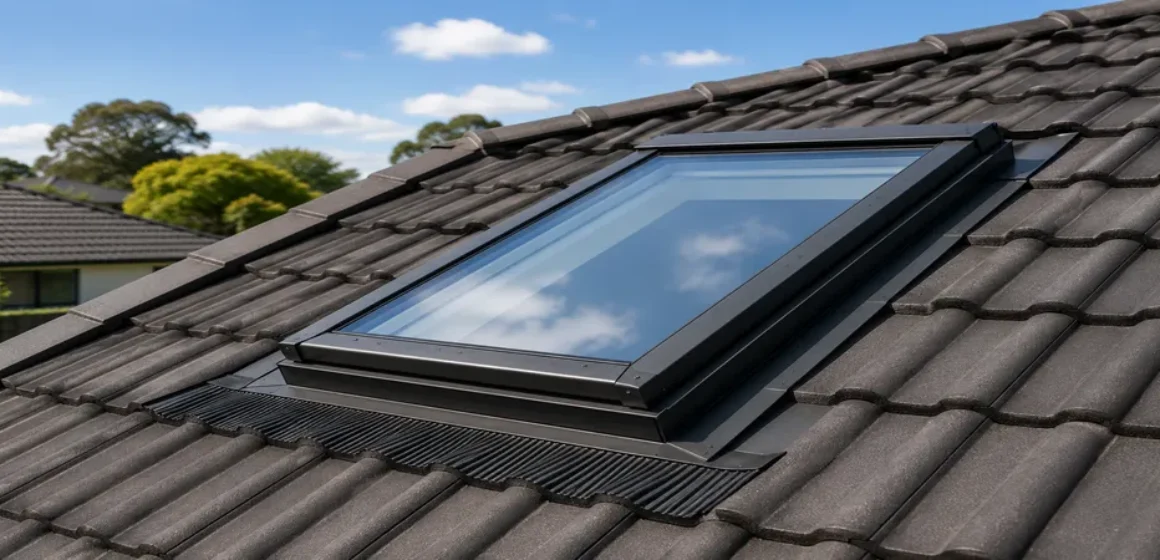
Flashing is critical on tile roofs
Flashing is one of the most important parts of a tile roof skylight installation.
The flashing manages water where the skylight meets the roof. On a tile roof, the flashing needs to work with the tile profile, roof pitch, product type and water flow.
A tile roof flashing approach may be affected by:
- Tile profile
- Tile thickness
- Roof pitch
- Skylight size
- Skylight type
- Existing roof layout
- Nearby valleys or ridges
- Nearby gutters
- Water flow direction
- Tile condition
- Whether replacement or repair work is involved
Flashing should not be treated as a small detail.
A skylight is only as reliable as its roof integration. If the flashing is not suited to the tile roof, the installation can become a problem later.
With skylights, weathertightness is part of the value.
A quote should make it clear that roof flashing is considered properly.
Roof pitch affects product suitability
Roof pitch matters for tile roof skylights.
A suitable pitch helps water move correctly around the skylight and flashing. Low-pitch sections, extensions, porches, lean-to roofs and complex rooflines may need closer review.
Roof pitch can affect:
- Whether a product is suitable
- Which flashing system is appropriate
- Where the skylight can be placed
- How water will move around the skylight
- Whether the internal shaft will be deeper or more complex
- Whether further assessment is needed
A skylight location that looks ideal from inside the room may not be ideal on the roof.
For example, the best ceiling location may sit under a roof area close to a valley, ridge, gutter or low-pitch section. That may change the recommendation.
Good skylight placement needs the room and roof to work together.
Placement should start with the room problem
The room below should guide the daylight goal.
A skylight should be placed where it helps the room, not just where it is easiest to install.
Ask:
- Where does the room feel darkest?
- Is the room used during the day?
- Is the skylight for daylight only or airflow as well?
- Is glare a concern?
- Is privacy a concern?
- Is the room a kitchen, bathroom, hallway, bedroom, living room or internal space?
- Would a tubular skylight or Sky tube be enough?
- Would a fixed skylight be more suitable?
- Does the room need blinds or light control?
- Is the room being renovated?
Once the room need is clear, the roof can be assessed to see what locations are practical.
This prevents a common mistake: choosing a skylight position because it looks neat on the ceiling, while ignoring roof water flow, tile condition or flashing complexity.
The best location solves the room problem and suits the roof.
Fixed skylights on tile roofs
A fixed skylight may suit a Cambridge tile roof home where the main goal is natural daylight.
Fixed skylights may be considered for:
- Kitchens
- Living rooms
- Dining areas
- Bedrooms
- Home offices
- Larger bathrooms
- Entries
- Open-plan spaces
- Wider hallways
A fixed skylight can bring stronger overhead daylight than a tubular skylight or Sky tube. It may suit rooms where homeowners want a clear daylight feature and a more open feeling.
For a fixed skylight on a tile roof, the quote may need to consider:
- Product size
- Tile roof flashing
- Roof pitch
- Roof access
- Internal shaft depth
- Ceiling finishing
- Glare and blinds
- Whether the room needs ventilation separately
A fixed skylight does not open.
If airflow is also part of the room problem, a vented skylight or separate ventilation solution may need discussion.
Vented skylights on tile roofs
A vented skylight may suit some tile roof homes where the room needs daylight and airflow.
This may be relevant for:
- Bathrooms
- Kitchens
- Upper-level bedrooms
- Rooms with limited window ventilation
- High-ceiling rooms
- Spaces where warm air gathers
- Rooms that feel stuffy as well as dark
A vented skylight can support airflow when opened, but it is not automatically the best option.
It may involve:
- Manual, electric or solar operation
- Controls
- Rain sensors, depending on product
- More product complexity
- Light control considerations
- Maintenance and access planning
- Higher quote complexity than a basic fixed option
A vented skylight should be chosen because airflow is genuinely useful for the room.
If the room mainly needs daylight, a fixed skylight, tubular skylight or Sky tube may be more appropriate.
For bathrooms and kitchens, ventilation should still be considered carefully. A vented skylight may support airflow, but extraction may still be required depending on the room.
Tubular skylights and Sky tubes on tile roofs
A tubular skylight or Sky tube may be a practical option for many compact rooms in Cambridge tile roof homes.
These products may suit:
- Hallways
- Separate toilets
- Walk-in wardrobes
- Laundries
- Pantries
- Sculleries
- Storage rooms
- Internal bathrooms
- Office nooks
- Garage entry areas
A tubular skylight brings daylight from the roof through a reflective tube and delivers it through a ceiling diffuser.
For tile roof homes, the quote may consider:
- Tile type
- Flashing suitability
- Roof pitch
- Tube length
- Number of bends
- Ceiling diffuser location
- Roof access
- Obstructions in the ceiling cavity
- Whether the room needs daylight only or airflow as well
A tubular skylight or Sky tube does not ventilate the room by itself.
If the room is stuffy, damp or affected by odour, ventilation needs separate review.
For many compact internal spaces, a tubular skylight may be more practical than a full fixed skylight.
Tile roof skylights for kitchens
Kitchens need daylight in the right place.
A Cambridge kitchen may have a window over the sink but still feel dull over the island, back bench, dining transition or scullery entrance. A skylight can help, but only if it supports the way the kitchen is used.
For a kitchen skylight on a tile roof, consider:
- Where the main preparation area sits
- Whether the island needs daylight
- Whether glare on benchtops could be an issue
- Whether pendant lights or downlights affect placement
- Whether rangehood ducting is nearby
- Whether the kitchen is being renovated
- Whether the roof above the preferred spot is suitable
- Whether blinds or light control may be useful
A fixed skylight may suit a kitchen where stronger daylight is wanted. A vented skylight may be discussed if airflow is also a genuine concern. A tubular skylight or Sky tube may suit a pantry or scullery.
The roof and kitchen layout should be considered together.
Tile roof skylights for bathrooms
Bathrooms need careful skylight decisions because daylight, privacy, steam and ventilation often overlap.
A bathroom may suit:
- A fixed skylight if daylight is the main issue
- A vented skylight if airflow is also genuinely needed
- A tubular skylight or Sky tube if the bathroom or ensuite is compact and mainly needs practical daylight
For a bathroom skylight on a tile roof, consider:
- Shower location
- Vanity location
- Existing window
- Privacy
- Extractor fan location
- Steam and condensation concerns
- Ceiling lights and vents
- Roof pitch and tile condition
- Whether the bathroom is being renovated
A skylight can improve daylight, but it should not be treated as a complete moisture solution.
Bathrooms may still need suitable extraction, heating and ventilation planning.
Tile roof skylights for hallways and entries
Hallways and entries often suit tubular skylights or Sky tubes.
Many Cambridge homes have central hallways or entry transitions where daylight does not travel far enough from windows or doors. In winter, these spaces can feel dull and overly dependent on artificial lighting.
A tubular skylight may suit a hallway where:
- The hallway is narrow
- The middle section feels dark
- A full skylight would feel too large
- The light is used during the day
- The roof-to-ceiling path is suitable
- The homeowner wants subtle practical daylight
A fixed skylight may suit wider entries or feature hallways where a stronger daylight opening is wanted.
The roof tile layout, flashing and tube path still need assessment.
The best placement is usually where the hallway actually needs daylight, not where the ceiling simply looks empty.
Tile roof skylights for living rooms and open-plan areas
Living rooms and open-plan areas need more balanced daylight planning.
A fixed skylight may suit a living room where the central or rear part of the space feels dull. It may also suit open-plan kitchens, dining areas or family rooms where wall windows do not reach the whole room.
For a living room or open-plan skylight on a tile roof, consider:
- Seating layout
- Television position
- Dining table position
- Kitchen island position
- Existing windows and doors
- Covered outdoor areas
- Glare on screens
- Reflective floors or benchtops
- Blind options
- Summer brightness
- Roof pitch and tile condition
A skylight should improve the room’s comfort, not create glare or harsh contrast.
In some cases, more than one smaller daylight point may work better than one large opening. In others, one well-placed fixed skylight may be enough.
The room should guide the decision.
Tile roof skylights for bedrooms and offices
Bedrooms and home offices need careful consideration because daylight can affect comfort.
A bedroom skylight may help a room feel brighter during the day, but blinds and sleep comfort may be important. A home office skylight may improve winter daylight, but screen glare must be considered.
For bedrooms and offices, consider:
- Bed position
- Desk position
- Screen direction
- Morning light
- Privacy
- Glare
- Blinds or light control
- Whether the room feels stuffy
- Whether a fixed, vented or tubular option suits better
A fixed skylight may suit larger bedrooms or offices where stronger daylight is wanted. A tubular skylight or Sky tube may suit smaller rooms, dressing areas or wardrobe zones. A vented skylight may be discussed where airflow is also a real issue.
The skylight should support the room’s function, not just brighten it.
Tile condition should be checked
Tile condition can affect installation.
Before installing a skylight, the roof should be considered for:
- Cracked tiles
- Brittle tiles
- Moss or lichen
- Previous repairs
- Missing or damaged tiles
- Weathered roof areas
- Loose tiles
- Old flashings nearby
- Roof sections due for maintenance
- Matching tile availability, where relevant
If the roof is old or fragile, extra care may be needed. If the roof is due for repair or replacement, it may be sensible to coordinate skylight work with roofing work.
Installing a skylight into a roof that needs major maintenance soon may create avoidable double-handling.
Good planning considers the roof’s condition, not just the new skylight.
Existing skylights on tile roofs
Some Cambridge homes already have old skylights on tile roofs.
Replacement may be considered if the skylight is:
- Leaking
- Cracked
- Yellowed
- Dated
- Poorly flashed
- Cloudy
- Damaged
- No longer opening properly
- No longer suited to the room
- Surrounded by roof or ceiling stains
A replacement can be like-for-like if the existing location, size and product type still make sense. But it may also be worth discussing whether a different product would work better.
For example:
- An old dome in a hallway may be replaced or changed to a tubular skylight or Sky tube
- A dated bathroom skylight may be upgraded to a fixed or vented option
- A poorly placed kitchen skylight may need a placement rethink
- A leaking unit may need roof and flashing assessment before product selection
Replacement should not be based on the old skylight only.
The roof, flashing and room outcome all matter.
Tile roof skylights during renovation
A renovation is a good time to plan skylights.
This is especially true for:
- Kitchen renovations
- Bathroom renovations
- Living room upgrades
- Bedroom changes
- Hallway improvements
- Laundry renovations
- Garage conversions
- Roof repairs
- Ceiling and lighting upgrades
Early planning helps coordinate skylight placement with:
- Ceiling lights
- Electrical wiring
- Extractor fans
- Ducting
- Plumbing
- Cabinetry
- Painting
- Plastering
- Internal lining
- Roof access
- Tile repairs
- Scaffolding, if already planned
If skylight planning happens late, the best position may be blocked by cabinetry, lighting, services or finished ceilings.
It is usually easier to plan daylight into a renovation than to add it afterwards.
Roof access and safety
Tile roof access needs care.
Tiles can be fragile, slippery or difficult to walk on depending on material, age, pitch and weather conditions. Some roofs may require additional access planning to avoid damage and keep the work safe.
Access may be affected by:
- Roof height
- Roof pitch
- Tile condition
- Boundary clearance
- Driveway access
- Landscaping
- Two-storey sections
- Pergolas or conservatories
- Solar panels
- Weather conditions
- Whether scaffolding or edge protection is required
Safe access may affect the quote.
This is part of doing the work properly, not an unnecessary add-on.
A tile roof skylight installation should be planned with both safety and roof protection in mind.
Internal structure and services
The ceiling below the tile roof also matters.
The roof space may contain:
- Rafters or trusses
- Insulation
- Electrical wiring
- Plumbing
- Ducting
- Extractor fan ducts
- Rangehood ducts
- Downlight wiring
- Heat transfer ducts
- Speaker wiring
- Smoke alarm wiring
For tubular skylights and Sky tubes, the tube path needs to be practical. For fixed and vented skylights, framing, ceiling opening and internal shaft design may need more planning.
A room may look simple from below, but the roof cavity may be busy.
This is why the final skylight position may need adjustment after assessment.
The ceiling location must work with the structure above it.
Internal finishing and painting
The internal finish should be clear before work begins.
Depending on the skylight type, the job may involve:
- Ceiling opening
- Shaft lining
- Trimming
- Plastering
- Painting
- Diffuser fitting
- Blind installation
- Ceiling repair
- Matching new finishing to existing surfaces
A tubular skylight or Sky tube may involve a ceiling diffuser and less visible internal construction than a larger fixed skylight. A fixed or vented skylight may involve a shaft or ceiling opening that needs finishing.
Not every quote includes painting, plastering or internal decoration.
Homeowners should check what is included and what is excluded.
A skylight should look properly integrated inside the room, not only on the roof.
What affects a tile roof skylight quote?
A tile roof skylight quote may be affected by:
- Product type
- Product size
- Fixed, vented or tubular option
- Tile type
- Tile condition
- Roof pitch
- Flashing requirements
- Roof access
- Internal ceiling height
- Ceiling cavity obstructions
- Internal finishing
- Number of skylights
- Whether the job is a new installation or replacement
- Whether electrical work is needed
- Whether blinds or controls are included
- Whether scaffolding or edge protection is required
- Whether roof repairs are needed
- Location within Cambridge or nearby areas
- Whether the work is part of a renovation
A quote should explain the scope clearly.
A cheaper-looking quote may not be better if it ignores flashing, access, roof condition or internal finishing.
The right quote should match the room and roof properly.
What photos help with a tile roof skylight quote?
Useful photos include:
- Photos of the room from several angles
- A photo of the ceiling
- A photo of the darkest area
- Photos of existing windows or doors
- Roof photos showing the area above or near the room
- Wider roof photos showing tile type, pitch and access
- Photos of nearby valleys, ridges, gutters, vents or solar panels
- Photos of any existing skylight, if replacing
- Photos of ceiling stains or damage, if present
- Photos showing access around the home
Do not climb onto the roof just to take photos.
Safe ground-level photos, driveway photos, photos from an upstairs window or photos from another safe vantage point are useful.
For tile roofs, wider roof photos are especially helpful because tile condition and roof layout can affect the recommendation.
What details should homeowners include?
Alongside photos, include:
- Cambridge suburb or general location
- Room type
- Approximate room size
- Roof tile type, if known
- Whether the tiles are concrete, terracotta or unsure
- Whether the roof is older or recently repaired
- Whether there are existing leaks or roof concerns
- Whether the room needs daylight only or airflow as well
- Whether the skylight is new or replacing an old one
- Whether the home is single-storey or two-storey
- Whether renovation work is planned
- Whether glare, privacy or blinds are concerns
- Whether you are considering fixed, vented, tubular skylight or Sky tube options
You do not need to know all technical details before enquiring.
A few clear photos and a short explanation of the problem are enough to start the discussion.
Common mistakes with tile roof skylights
Assuming all tile roofs are the same
Concrete and terracotta tiles can require different care and assessment.
Ignoring tile condition
Older, brittle or cracked tiles can affect installation planning.
Treating flashing as a minor detail
Flashing is central to weathertightness.
Choosing placement from inside only
The roof location also needs to work.
Forgetting internal finishing
The inside finish should be understood before approving the quote.
Choosing a large skylight when a tubular skylight would suit better
Compact spaces may only need practical daylight.
Choosing a vented skylight without a real airflow need
A vented option should solve a genuine room problem.
Not sending roof photos
For tile roofs, roof photos can be essential to understanding suitability.
Avoiding these mistakes helps homeowners get a clearer recommendation and better installation outcome.
When a tile roof skylight may not be the first answer
A skylight may not be the right first step in every situation.
Other matters may need attention first if:
- The roof is in poor condition
- Tiles are very brittle or damaged
- The roof is due for replacement
- The preferred location is unsuitable
- The room mainly needs better artificial lighting
- Ventilation or moisture is the main issue
- The ceiling cavity is too obstructed
- Glare would be difficult to manage
- Renovation plans are not yet confirmed
- Existing leaks need diagnosis before product selection
In these cases, roof work, lighting, ventilation or renovation planning may need to happen first.
This does not mean a skylight is unsuitable forever.
It means the correct order matters.
Illustrative example only
A Cambridge homeowner has a dark bathroom under a concrete tile roof. The room has a small frosted window, but the shower and vanity areas still feel dull. The homeowner asks whether a skylight can be installed.
A fixed skylight may be worth considering if daylight is the main issue and the roof pitch, tile condition and flashing requirements are suitable. A vented skylight may be discussed if airflow is also a real concern, but bathroom extraction should still be considered separately. If the bathroom is compact and mainly needs practical daylight, a tubular skylight or Sky tube may also be an option.
In another Cambridge home, the issue is a narrow hallway under a terracotta tile roof. A tubular skylight may suit the room, but tile condition and roof access would need careful review.
Both are tile roof homes, but they need different recommendations.
The best outcome for a tile roof skylight
The best result is not just getting daylight through the ceiling.
It is a skylight that works properly with the roof and improves the room below.
A good outcome may mean:
- The room receives useful daylight where it is needed
- The product suits the tile roof and room use
- Flashing is properly considered
- Tile condition is assessed
- Internal finishing is clear
- Glare, blinds and ventilation are discussed where relevant
- Access and safety are planned
- The quote explains inclusions and exclusions clearly
- The skylight improves the room without creating new issues
A tile roof skylight can be a valuable upgrade when the details are handled properly.
The roof, ceiling and room all need to be considered together.
Planning your next step
If you are considering a tile roof skylight in Cambridge, start by taking clear photos of the room, ceiling and roof area if safe to do so.
Include your room type, tile type if known, whether you want daylight only or airflow as well, and whether you are considering a fixed skylight, vented skylight, tubular skylight or Sky tube.
Skylights NZ can help review which option may suit your tile roof, room layout and desired outcome.
To start planning your options, use the Skylights NZ enquiry form:
https://inquiry.skylights.co.nz/inquiry
You may also find these useful:
- Skylight installation services
- Request a skylight quote
- Skylight options for NZ homes
- Skylight Installation Cost in Waikato: What Affects the Final Quote?
- Getting a Skylight Quote in Waikato: What Photos and Details Help Us Recommend the Right Option
- Metal Roof Skylights in Hamilton Homes: What Homeowners Should Know Before Installing
- Fixed or Vented Skylight for a Waikato Home: How to Choose Room by Room
FAQs
Can you install a skylight on a tile roof in Cambridge?
A skylight can often be installed on a tile roof if the roof pitch, tile type, tile condition, flashing requirements and ceiling structure are suitable. The roof and room should be assessed before finalising a quote.
What type of skylight is best for a tile roof?
The best option depends on the room. A fixed skylight may suit kitchens, living rooms and larger spaces. A vented skylight may suit rooms where airflow is also needed. A tubular skylight or Sky tube may suit hallways, toilets, wardrobes, pantries and compact internal rooms.
Why does tile type matter for a skylight?
Tile type affects flashing, handling, access and installation planning. Concrete and terracotta tiles may need different care, especially if the roof is older, brittle, cracked or weathered.
Does a tile roof skylight need special flashing?
A skylight on a tile roof needs flashing suited to the tile profile, roof pitch and skylight product. Flashing is critical for weathertightness and should be treated as a core part of the installation.
Can I replace an old skylight on a tile roof?
Yes, replacement may be possible, but the existing skylight, roof opening, tile condition, flashing and internal finishing all need assessment. A like-for-like replacement may suit some homes, while others may benefit from an upgrade.
What should I send for a tile roof skylight quote?
Send photos of the room, ceiling, darkest area and roof above or near the room if safe. Include the tile type if known, room size, Cambridge location, whether the skylight is new or a replacement, and whether daylight, ventilation, glare or blinds are concerns.