Comfort upgrades that reduce fan/AC reliance in summer
New Zealand summers are feeling different.
Longer warm spells.
More nights where the house holds heat.
And more people reaching for a fan — not because it’s a “heatwave”, but because the living room simply isn’t comfortable by late afternoon.
In 2026, this has become a cost-of-living conversation too.
Fans are cheap to run.
Air conditioning is not.
And once a home becomes “dependent” on cooling to stay liveable, summer comfort starts to feel like another bill.
This article covers passive cooling skylight NZ thinking in plain English: comfort upgrades that reduce reliance on fans and AC — and how roof glazing can support that goal when it’s designed correctly (and undermine it when it isn’t).
First: passive cooling is about reducing heat gain and improving heat release
Most summer discomfort comes from two patterns:
- Heat gain during the day (sun hitting glass, roofs, and walls)
- Heat retention into the evening (the house can’t shed heat fast enough)
Passive cooling is simply:
- reducing how much heat enters
- and improving how easily warm air can leave
The goal isn’t a “cold house”.
It’s a house that stays bright but liveable.
The skylight myth in summer: “More roof glass = more heat”
Sometimes.
But not always.
Roof glazing can increase heat gain if:
- it brings direct sun into a room
- it creates a bright hotspot on the floor
- and there’s no plan for diffusion or control
But roof glazing can also support comfort when:
- it delivers diffused daylight rather than harsh sun
- it’s positioned to spread light, not concentrate it
- it includes comfort control where needed
The key is not “skylight vs no skylight”.
The key is skylight design for NZ summer behaviour.
The comfort upgrades that reduce reliance on fans and AC
These upgrades work together. You don’t need all of them.
But you do need the right combination for your home.
1) Stop direct sun from becoming a ‘hot spot’
If a room overheats, it’s often because sun is hitting a surface for hours.
The fix is not always “remove glass”.
It’s often:
- change where light lands
- diffuse it
- or control it
For skylights, that can mean:
- choosing diffused light solutions
- planning placement carefully
- adding blinds when predictable afternoon sun is unavoidable
2) Use ventilation pathways that actually clear warm air
Warm air rises.
If it can’t escape, it sits at ceiling level and the house feels heavy.
Strategic ventilation matters.
In some homes, a vented skylight can contribute to releasing warm air — but it should be planned, not assumed.
3) Reduce stored heat in the roof space (the ceiling radiates it back)
A common NZ summer complaint is:
“The sun is gone, but the room still feels hot.”
That’s often stored heat radiating back through the ceiling.
Roof space behaviour, ceiling insulation, and ventilation all affect this.
A skylight does not fix a roof space that holds heat.
But a correctly planned roof glazing solution should consider it.
4) Spread daylight so you don’t rely on heat-generating lighting
This is a smaller factor than sun gain.
But when a home has poor daylight, people use lighting for long periods, and some lights add heat.
Better daylight reduces unnecessary lighting use and the “closed-up” feeling that often comes with hot afternoons.
5) Design for the afternoon (not the morning)
Many NZ homes feel fine at 10am.
The discomfort arrives at 3–6pm.
So any passive cooling plan should be tested against the afternoon reality:
- where does the sun hit?
- which rooms trap heat?
- where does warm air sit?
This is why skylight direction and placement matters more than people think.
Where skylights support passive cooling (yes, they can)
Here are the realistic ways skylights can help summer comfort:
1) Diffused daylight reduces the need for curtains closed all day
Some homes become dark because curtains are drawn to block sun.
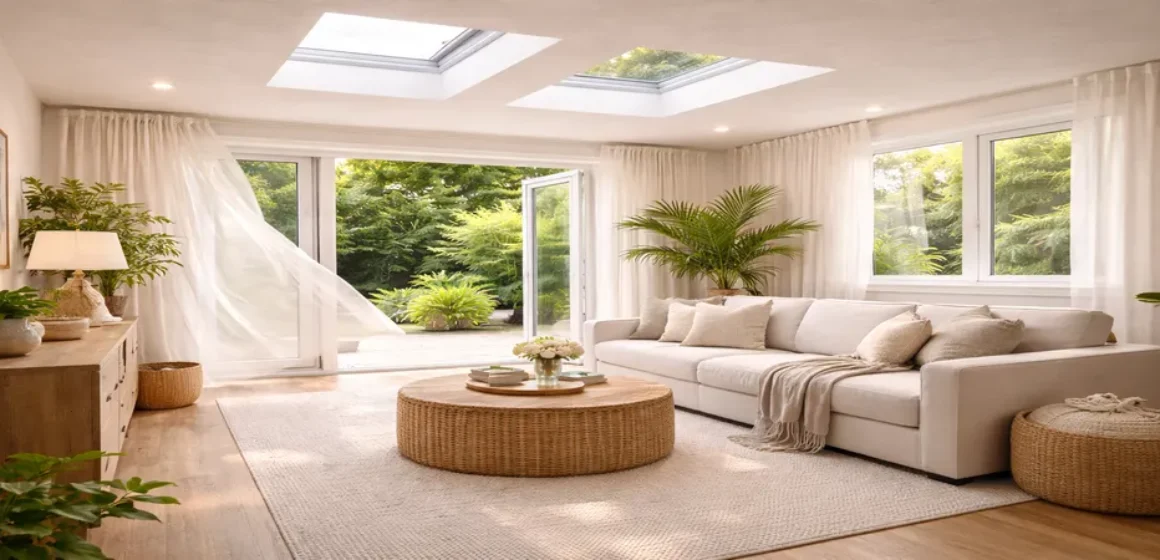
A diffused top-light approach can keep the home bright without relying on open windows that increase glare.
2) Vented skylights can assist warm-air release in the right setup
This is not a universal guarantee.
But in some layouts, high-level venting can help warm air escape — especially in spaces that trap heat near the ceiling.
3) Better daylight can reduce the “closed-in” feel that increases fan use
This is subtle but real.
Bright, well-lit rooms feel more breathable.
Dark rooms feel heavier and hotter.
That affects behaviour.
Where skylights can undermine passive cooling (and how to avoid it)
Skylights can make summer worse if:
- they deliver direct sun onto floors or furniture for long periods
- they create glare that forces blinds closed, making the room feel enclosed
- they are installed without a control plan for predictable summer angles
Avoiding this is not about fear.
It’s about designing for lived comfort:
- spread light
- diffuse when needed
- control when predictable
A bright room should still be usable at 5pm.
Illustrative example only: the living room that stopped needing the fan every afternoon
A homeowner in Nelson described a familiar pattern.
The living area was pleasant in the morning.
By mid-afternoon, it felt hot and bright in the wrong way — so the fan ran daily.
They didn’t want to live in a dark house.
They wanted a bright house that stayed comfortable.
By focusing on passive cooling principles — reducing hot spots, improving how warm air cleared, and planning light so it spread rather than concentrated — the room became more liveable.
The fan didn’t disappear.
But it stopped being the default.
That’s the goal.
A simple summer comfort checklist
If you’re trying to reduce fan/AC reliance, ask:
- Which room becomes uncomfortable after 3pm?
- Where does direct sun land for the longest?
- Do you keep curtains closed just to cope?
- Does warm air feel trapped near the ceiling?
- Would diffused daylight keep the home bright without the hot spot?
- Do you need comfort control (blinds) in predictable sun paths?
That set of answers usually reveals the best next upgrade.
A calm next step
If you tell us which room overheats, what time it becomes uncomfortable, and share a couple of photos (including ceiling and window positions), we can suggest passive comfort upgrades that keep the home bright and more liveable in NZ summers — including skylight options that support comfort rather than create new hot spots.
Start here: https://inquiry.skylights.co.nz/inquiry