Budget-first daylighting: how to prioritise (hallway vs kitchen vs living)
If you’re planning a skylight upgrade in 2026, there’s a good chance you’re doing it with a budget in mind.
Not because you want the cheapest option.
Because you want the upgrade that earns its place.
The most common question sounds simple:
“Where should we put the skylight first — hallway, kitchen, or living room?”
And the honest answer is:
It depends on which space will change your daily life the most.
This article is a skylight budget guide NZ homeowners can actually use — a prioritisation framework that helps you spend once, and spend well.
The core idea: don’t buy a skylight, buy an outcome
Skylights are not a decorative item you sprinkle across a roof.
They are a daylighting tool.
So before you choose a room, choose the outcome you want:
- fewer lights on in daytime
- a room that feels more open and calm
- better usability in a work zone
- privacy-friendly daylight in a bathroom
- a home that feels brighter in its centre
Once you name the outcome, the right room usually becomes obvious.
If you want the ROI lens, link it here: [ADD LINK]
Step 1: identify your “daylight pain points”
A simple exercise:
Over one week, notice:
- which lights you turn on between 10am and 4pm
- which rooms feel dim even on a bright day
- which spaces you avoid because they feel enclosed
These are your priority zones.
If you have the “lights-on-at-noon” article, link it here: [ADD LINK]
Step 2: rank rooms by daily frequency, not importance
Living rooms are important.
But frequency matters more than importance.
A hallway that’s used 30 times a day can outperform a living room that’s already bright.
A kitchen work zone you use every evening can outperform a lounge that only feels dim in winter.
Budget-first decisions should follow daily use.
Step 3: choose the room that removes the biggest daily friction
Now, the practical comparison.
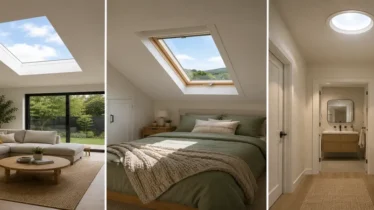
Option A: Hallway skylight (usually the highest budget ROI)
Hallways are often the strongest first pick because:
- they’re central
- they have no windows
- they force lights on in daytime
- and they influence how the whole home feels
A small top-light solution can lift the interior in a way side windows can’t.
If you have a hallway page, link it here: [ADD LINK]
Best when: your home feels dim in the centre, and you’re tired of switching lights on during the day.
Less compelling when: your hallway already borrows strong light from open-plan living areas.
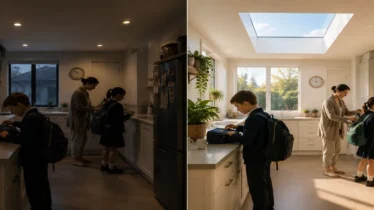
Option B: Kitchen skylight (best when daylight affects usability)
Kitchens are a different kind of value.
Not mood.
Function.
Kitchen skylights are worth prioritising when:
- benches sit in shadow for much of the day
- you keep task lights on for long periods
- the room feels darker than it should because of deep eaves, covered decks, or bulkheads
A well-planned skylight can improve clarity where you work.
If you have a kitchen page, link it here: [ADD LINK]
Best when: you have a specific dark work zone that affects daily cooking.
Less compelling when: the kitchen already gets strong daylight and the issue is more about layout or finishes.
Option C: Living room skylight (best when the room doesn’t ‘lift’ in daytime)
Living rooms can absolutely benefit from top light.
But the return depends on what’s missing.
A skylight is worth prioritising in the living room when:
- the lounge stays dim because of a veranda or deep roofline
- the room is long and light doesn’t reach the back
- winter light is limited and the space feels heavy
It’s less worth it when you already have large north-facing glazing and the room is naturally bright.
If you have a living room page, link it here: [ADD LINK]
Best when: the lounge is the heart of the home but still feels flat or shaded.
Less compelling when: brightness is already good and the real issue is summer overheating or glare (which needs a different approach).
The simplest prioritisation rule-of-thumb
If you’re stuck, use this.
- Choose the room where lights are on most during the day.
- If two rooms tie, choose the one in the centre of the home.
- If you still can’t decide, choose the one you use the most when you feel low-energy (mornings, winter afternoons).
Because that’s when daylight makes the strongest difference.
The budget trap: choosing the ‘prettiest’ room first
This happens all the time.
People choose the living room because it feels like the “main room”.
Then they realise the hallway and bathroom still feel like tunnels.
Budget-first daylighting works best when you start with the rooms that are currently missing daylight.
Not the rooms you already like.
Illustrative example only: hallway first, then everything felt easier
A homeowner in Wellington was deciding between a living room skylight and a hallway skylight.
The lounge looked like the obvious choice.
But their daily frustration wasn’t the lounge.
It was the centre of the home.
They turned on hallway lights every day, and the house felt dim even when the weather was clear.
Starting with the hallway changed the overall feel of the interior.
They didn’t upgrade the whole house.
They upgraded the one place that affected everything.
That’s what budget-first prioritising looks like.
A calm next step
If you tell us:
- which room you’re choosing between (hallway, kitchen, living)
- when it feels dim (morning, midday, afternoon)
- and share a couple of photos
we can recommend the most effective starting point and skylight approach — so your first upgrade delivers a real daily change, not a small improvement you barely notice.
Start here: https://inquiry.skylights.co.nz/inquiry