Kitchen comfort in February: why Auckland homes feel “sticky” under certain roof types
Late February in Auckland can feel deceptively mild. The temperature is not outrageous, the sky is bright one minute and overcast the next, and yet the kitchen still feels… sticky. Not “hot like a heatwave”, more like the air has weight. Benchtops feel slightly clammy. You cook dinner and the room holds onto moisture far longer than it should.
If that sounds familiar, it is usually not one single issue. In Auckland, that sticky kitchen feeling is often a mix of:
- humidity that lingers
- heat stored in the roof and ceiling build-up
- moisture from cooking that does not exit fast enough
- daylight patterns that change how the room dries and feels
And yes, roof type can be a major part of the story, especially when combined with an open-plan kitchen that has limited cross-breeze.
This guide explains why it happens and what actually shifts the comfort dial.
The “sticky scale”: what are you really feeling?
Before you change anything, it helps to name the sensation.
Auckland kitchens commonly fall into one of these patterns in late summer:
Pattern 1: Humid air that hangs around
You run the rangehood, but the air still feels damp. Tea towels never fully dry. The room smells “cooked” longer than expected.
Pattern 2: Warm ceiling, heavy air
The room is not roasting, but the ceiling feels warm and the air feels thick, particularly late afternoon and early evening.
Pattern 3: A mix of both
This is the most common. Cooking adds moisture, the roof has stored warmth, and the room cannot reset between meals.
A simple truth: sticky is often humidity plus slow drying, not just temperature.
Why roof type changes kitchen comfort in Auckland
Different roof types behave differently in sun, wind, and humidity. The kitchen sits directly under that behaviour.
Here are the big Auckland roof categories and what they tend to do.
Long-run metal roofing (common across Auckland)
Metal roofs can heat up quickly in sun breaks. If the roof build-up and ceiling insulation are not doing their job well, that warmth can be felt below as a “radiant” effect.
What homeowners notice:
- ceiling feels warm later in the day
- the room feels heavier even if windows are open
- comfort drops quickly when cooking starts
This is not an automatic flaw of metal roofs. It is about the full system: insulation coverage, roof colour, ventilation, and how the kitchen handles moisture.
Concrete or clay tile roofs
Tile roofs can behave like a slow-release heat store. They do not always spike quickly, but they can hold warmth and release it later.
What homeowners notice:
- the kitchen feels “stale warm” into the evening
- humidity from cooking lingers longer
- opening windows helps, but not enough on still days
Low-pitch or membrane roofs (where present)
These can trap heat differently depending on build-up and ventilation. Some spaces under low-pitch roofs struggle to shed warmth, and moisture management becomes more important.
What homeowners notice:
- the kitchen feels warm from above
- air feels trapped, especially in open-plan layouts
In all cases, the takeaway is the same: if the roof space and ceiling are slow to cool, the kitchen struggles to reset, particularly when Auckland humidity is already elevated.
The kitchen moisture problem nobody plans for
Even a simple evening meal adds moisture. Boiling water, dishwashers, simmering sauces, and multiple people moving through the space all lift humidity.
In Auckland, the outside air often starts humid. That means:
- opening a window may not dry the space as much as you expect
- the kitchen needs effective extraction and airflow, not just “a crack of fresh air”
- when moisture sits on surfaces longer, the room feels sticky and smells linger
This is why comfort can drop fast after cooking, especially when the ceiling is already holding warmth.
A quick home test: roof warmth or cooking moisture?
Try this on a typical February evening.
Step 1: Before cooking
Stand in the kitchen and note:
- does the air feel heavy already?
- do benchtops feel cool and dry, or slightly clammy?
Step 2: 15 minutes into cooking
Turn on the rangehood and then ask:
- is steam clearing quickly, or spreading through the space?
- does the room feel noticeably heavier?
Step 3: 30 minutes after cooking
If the kitchen still feels damp or “held”, you likely have a moisture exit issue, not just a heat issue.
This matters because the solution changes depending on which problem is dominant.
Where skylights come into this, without the hype
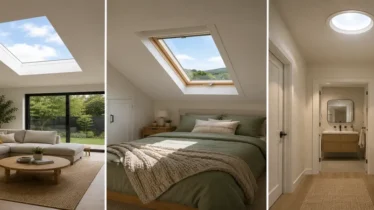
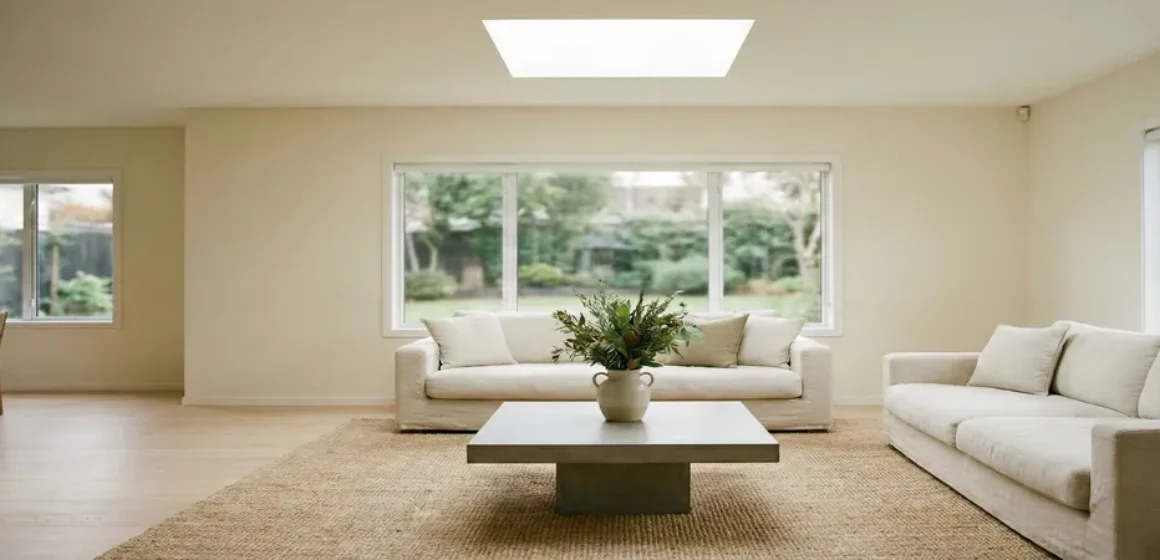
A kitchen skylight Auckland homeowners choose for comfort is rarely about making the kitchen “brighter”. It is about making the space feel lighter, drier, and more usable, especially when the sky is overcast or the kitchen sits deeper inside the home.
A well-planned skylight can help by:
- bringing daylight into the working zone so the room feels open, not enclosed
- supporting faster surface drying during the day (a subtle but real effect in damp-feeling spaces)
- improving the overall balance of the room so you are not relying on harsh side light or keeping curtains open for brightness
If ventilation is a key issue, an opening skylight can be part of a broader strategy, but it should always be planned alongside extraction and roof detailing.
For a simple overview of skylight options:
https://www.skylights.co.nz/types-of-skylights/
What actually improves “sticky” kitchen comfort
This is the practical action list that tends to work in Auckland kitchens.
1) Treat extraction as a performance system
- Is the rangehood actually extracting outside effectively?
- Are filters clean?
- Does steam clear quickly, or does it just move around?
If extraction is weak, the kitchen will always feel heavier after cooking.
2) Improve the room’s ability to reset
A kitchen that resets quickly feels calm. A kitchen that holds moisture feels sticky.
Reset improves when:
- moisture leaves faster (extraction and airflow)
- surfaces dry faster (daylight and warmth control)
- the ceiling is not radiating stored heat into the space
3) Plan daylight where the work happens
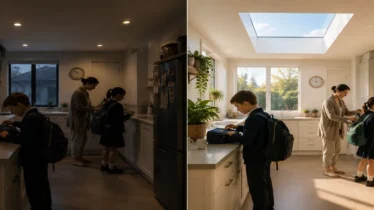
This is where skylights can be powerful. A kitchen can look fine near windows but still feel flat in the food prep zone, which encourages lights on early and a sense of “closed air”.
A skylight placed to support the central working area often makes the space feel lighter and less oppressive, especially on Auckland’s grey bright days.
For Auckland-specific guidance:
https://www.skylights.co.nz/skylights-auckland/
Illustrative Example Only: the open-plan kitchen that never felt fresh
A household in Greater Auckland described their open-plan kitchen as “fine in winter” but sticky through late summer. The room was bright near the sliding doors, yet the cooking zone felt heavy, especially after dinner.
Their real issue was not a single culprit. It was a combination:
- cooking moisture that lingered
- warm ceiling effect late in the day
- daylight that did not reach the centre of the kitchen well on overcast days
Once they treated comfort as a system, the kitchen started feeling like it could reset between meals instead of carrying the day’s humidity into the evening.
Their comment afterwards:
“It finally feels like a kitchen you can breathe in.”
If you want a clear recommendation for your kitchen
If your kitchen feels sticky in February, the most useful first step is to look at:
- roof type and exposure (sun breaks, late afternoon heat)
- where moisture builds up during cooking
- how daylight currently reaches the working zone
You can start an enquiry here and mention “sticky kitchen comfort” in the notes, along with your roof type if you know it:
https://inquiry.skylights.co.nz/inquiry
FAQs (unique to this topic)
Why does my Auckland kitchen feel sticky even when it is not very hot?
Because humidity can make air feel heavy and surfaces feel clammy. Cooking adds moisture, and Auckland’s summer air often starts humid, so the kitchen can struggle to dry out between meals.
Do some roof types make kitchens feel more uncomfortable in late summer?
They can. Roof build-up, colour, insulation coverage, and ventilation affect how much warmth is stored and released into the space. Some roofs hold warmth longer, which can amplify a sticky feeling.
Can a kitchen skylight reduce humidity?
A skylight does not remove moisture on its own. Extraction and airflow remove moisture. However, daylight can support a fresher-feeling space and help surfaces dry more reliably during the day when the kitchen is prone to dampness.
Is an opening skylight useful in kitchens?
It can be, especially if ventilation is part of the comfort issue. The best choice depends on roof type, placement, and how the kitchen currently handles cooking moisture.
What is the fastest way to tell if the problem is moisture or roof heat?
If the kitchen feels heavy after cooking and takes a long time to feel normal again, moisture exit is likely the main issue. If the ceiling feels warm and the room worsens later in the day even before cooking, roof heat storage may be contributing.