Hallway darkness, daytime fatigue: the small-space daylight plan that suits Auckland floorplans
There’s a certain kind of tiredness that has nothing to do with sleep.
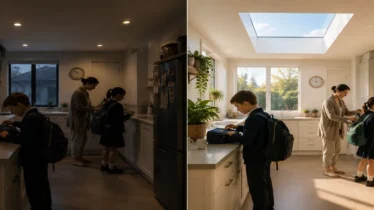
You walk through your hallway ten times a day. It is never truly bright, even on a “good” Auckland day. The lights come on out of habit. The home feels slightly more closed than it should. By mid-afternoon, everything feels a bit flatter, a bit heavier, and you cannot quite explain why.
In a lot of Auckland homes, the hallway is the quiet culprit.
Not because it is dramatic, but because it is constant. A dark corridor changes how the whole house feels. It affects mood, energy, and the sense of space far more than its square metres suggest.
This is a practical guide to diagnosing hallway darkness properly, then building a small-space daylight plan that suits common Auckland layouts, roofs, and weather patterns.
Why hallways are different from “dark rooms”
A dark lounge is obvious. A dark hallway is sneaky.
Hallways are:
- transition spaces you pass through repeatedly
- often central, away from windows
- usually long and narrow, so daylight falls off quickly
- the visual link between rooms, meaning they influence how “open” your home feels
In Auckland, this becomes more noticeable because many days deliver diffuse daylight. Side light from windows does not always penetrate deep into a corridor, especially with eaves, neighbouring homes, fences, or mature planting doing their thing outside.
The “hallway fatigue” effect is real (and it is not fluffy)
Humans respond to light levels. It is why a bright room can feel uplifting, and a dim one can feel slightly draining.
A dim hallway can create:
- a subtle “always indoors” feeling, even during the day
- more reliance on artificial lighting, which can feel harsh or clinical
- a home that feels smaller because the central spine is visually compressed
A simple reflection line many homeowners relate to:
When the hallway is dull, it feels like the day never fully enters the house.
Auckland hallway layouts that commonly struggle
You will recognise at least one of these.
1) The central corridor with bedrooms on both sides
Common in many older and mid-era Auckland homes. The corridor is internal and has little chance of getting side daylight.
2) The L-shaped hallway that turns away from windows
Light reaches the first section, then disappears around the bend.
3) The hallway that sits under roof complexity
Trusses, ducting, or roof geometry can keep the ceiling line visually heavy and limit opportunities for borrowed light from adjacent rooms.
4) The townhouse or narrow-site corridor
Daylight is available at the ends, but the middle stays dull for most of the day.
The small-space daylight plan (three steps)
Instead of jumping straight to products, use this plan. It helps you avoid doing “a bit of light” that changes nothing.
Step 1: Identify the dead zone
Stand at each end of the hallway during the day and look towards the middle.
The dead zone is the section that stays dull no matter what. That is the zone you want to solve, not the bits that already get some light.
Step 2: Decide whether you need overhead light or borrowed light
Borrowed light means:
- light pulled in from nearby rooms (glass doors, internal glazing, open-plan changes)
Overhead light means:
- light introduced from above (often the most effective solution when the corridor is central)
In many Auckland floorplans, borrowed light helps, but it rarely fixes a truly central corridor. That is where a hallway skylight becomes the most direct, reliable move.
Step 3: Plan for “spread”, not “spotlight”
The best hallway lighting feels natural and even.
That means:
- placing daylight so it brightens the corridor length, not just one patch
- avoiding harsh bright circles that make the rest of the corridor feel darker by contrast
- thinking about how the ceiling and walls will bounce light
This is where the skylight type and shaft design matter.
Why a hallway skylight often works so well in Auckland
Auckland gives you a lot of “soft sky” days. That is actually an advantage for hallways.
Overhead light on an overcast day is:
- diffuse
- gentle
- less likely to create harsh glare
- more consistent through the day than side-light in a corridor
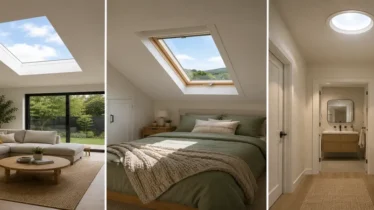
A hallway skylight can:
- reduce daytime light switching
- make the home feel more open
- improve the “link” between rooms
- lift mood in a way that feels subtle but real
If you want to compare skylight types (tubular, fixed, vented) in plain terms:
https://www.skylights.co.nz/types-of-skylights/
Which skylight type suits hallways best?
This depends on corridor width, ceiling height, and what you want the light to feel like.
Tubular skylights
Often a strong fit for hallways because they:
- deliver light efficiently to small and narrow spaces
- can be placed to target the dead zone
- suit homes where roof access is limited by framing
Fixed skylights
Often better when:
- you want a broader wash of light
- the corridor opens into a larger space (entry + living connection)
- you want the ceiling to feel “lifted”, not just brightened
The right choice depends on the hallway’s shape and the roof structure above it. A site assessment clarifies what is realistic and what will look right.
Illustrative Example Only: the hallway that made the house feel “closed”
A homeowner in Greater Auckland described a home that looked lovely in each room, but the house never felt open or bright overall. The hallway was the reason. It stayed dull even when the weather was fine, and lights were always on.
Once the corridor received reliable overhead daylight, the home felt different in a way visitors noticed immediately, even if they could not explain why.
Their comment afterwards:
“It feels like the house breathes now.”
A quick hallway checklist before you proceed
If you are considering a hallway skylight, these questions keep the plan practical:
- Where is the dead zone in the corridor?
- Is the hallway central, or does it have any borrowed light opportunities?
- Does the ceiling finish help bounce light, or absorb it?
- Are you trying to solve brightness only, or the “closed” feeling of the home?
- What roof type is above the hallway (metal, tile, low pitch)?
- Do you want a subtle lift, or a noticeable transformation?
If you want guidance specific to your Auckland home layout and roof type, start here:
https://inquiry.skylights.co.nz/inquiry
For Auckland service coverage:
https://www.skylights.co.nz/skylights-auckland/
FAQs (unique to this topic)
Why are hallways so dark even when the rest of the house feels bright?
Hallways are often central and narrow, with limited window access. Daylight drops off quickly away from openings, and Auckland’s diffuse light does not always travel far into a corridor.
Is a tubular skylight enough for a long hallway?
Often, yes, especially if placed to target the dead zone. Longer hallways may benefit from more than one light point depending on length and layout.
Will a hallway skylight create glare?
Hallways are less prone to glare than lounges because they typically do not have screens or long viewing positions. Glare risk is mainly influenced by placement, shaft design, and reflective surfaces.
Can I solve hallway darkness with downlights instead?
Downlights provide functional light, but they rarely replicate the “open, daytime” feeling of natural overhead light. Many homeowners want the corridor to feel naturally bright, not artificially lit.
What is the biggest mistake with hallway skylights?
Choosing a solution that is too small or poorly placed, so the hallway still feels dim. The goal is even, usable light through the corridor, not a single bright spot.